








What Are the Essential Components of an Active Shooter Response Kit?

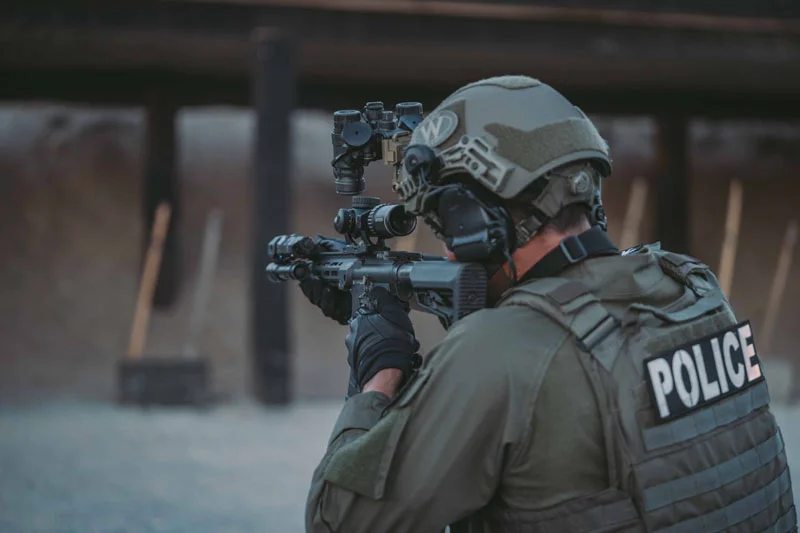
Agencies build active shooter response kits for patrol officers, school resource officers, hospital and facility security, and specialized tactical teams. A kit stored behind a spare tire, or carrying expired trauma supplies, or that nobody has donned against a clock, does not function as a kit, which makes storage and access as much a part of the design as the equipment list. This guide covers selection, organization, staging, and upkeep, and pairs with our active shooter emergency response overview and our breakdown of body armor for active shooter protection.
Quick Answer
An active shooter response kit combines rifle-rated armor and a carrier, a ballistic helmet, hemorrhage control supplies, a radio, a light, and visible identification, packaged so a responder can don it rapidly. Exact contents depend on role, agency policy, threat assessment, and training, not on a single universal packing list.
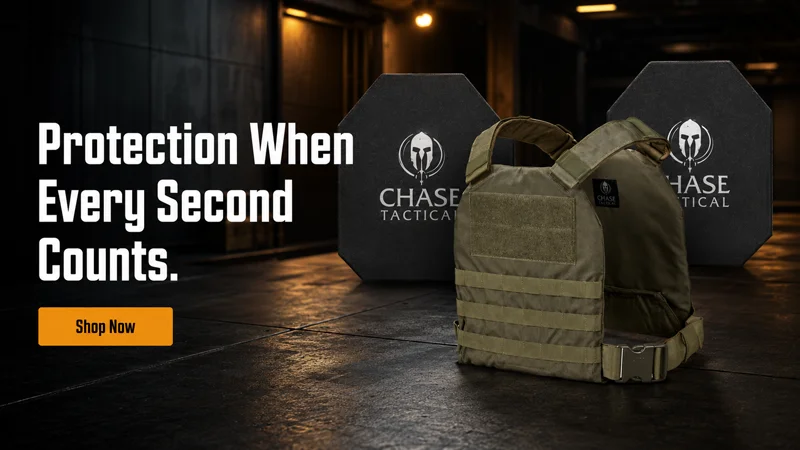
Building or refreshing kits for your agency? Chase Tactical supplies pre-assembled active shooter kits that pair a rapid-donning carrier with rifle plates, so armor, carrier, and fit are handled in one purchase order.
- MEAC active shooter response kit for modular team configurations
- QRC active shooter armor kit for patrol vehicle staging and fast donning
- Low visibility active shooter kit for plainclothes and school resource roles
Agency and department pricing is available on request.
Why Active Shooter Response Kits Matter for First Responders
Active threat incidents unfold on a compressed timeline. The Federal Bureau of Investigation, working with the Advanced Law Enforcement Rapid Response Training Center at Texas State University, designated 24 shootings as active shooter incidents in its 2024 report, down from 48 the year prior. Across the five years ending in 2024 it designated 223 incidents, roughly 70 percent above the preceding five-year span.
Two realities drive kit design. Many incidents resolve before or shortly after law enforcement arrives, so the burden falls on whoever reaches the scene first rather than on an assembled tactical team. And uncontrolled bleeding remains a leading cause of preventable death after injury, so a responder who can only move and shoot is less useful than one who can also treat.
No equipment configuration guarantees an outcome. Kits improve the odds that a trained responder can act; they do not replace policy, training, or interagency coordination. Agencies formalizing a program often work from NFPA 3000, which sets minimum planning and competency elements for active shooter and hostile event response.
Core Protective Equipment
Protective equipment in an active threat kit is chosen for rifle threats and rapid donning, a different problem from daily-wear concealable armor.
- Rifle-rated hard plates, sized to the wearer and selected against the agency threat assessment. Side plates where policy and mobility allow.
- A rapid-donning carrier, such as a quick response plate carrier, that goes on in a single motion. Our plate carrier setup guide covers layout.
- A helmet appropriate to the role, ballistic or non-ballistic bump. See our ballistic helmet ratings guide.
- Eye and hearing protection. Electronic hearing protection preserves situational awareness while attenuating gunfire.
- Agency panels front and back, plus low-light or IR markers where policy allows. Misidentification is a documented hazard in converging responses.
Selecting the Right Armor Protection Level
The National Institute of Justice sets the voluntary performance standard for law enforcement body armor. NIJ Standard 0101.07 replaced the Roman numeral system with descriptive designations and moved threat specifications into a companion document, NIJ Standard 0123.00.
- HG1 and HG2 cover handgun threats, corresponding broadly to former Level II and Level IIIA.
- RF1 covers rifle threats, corresponding broadly to former Level III.
- RF2 is a new intermediate tier adding the 5.56mm M855 steel-core round. No equivalent existed previously.
- RF3 covers armor-piercing rifle threats, corresponding broadly to former Level IV.
Legacy terminology remains valid. NIJ anticipates maintaining the 0101.06 Compliant Products List through at least the end of calendar year 2029, so older certified armor is not obsolete. Verify any model against the published Compliant Products List rather than relying on marketing language.
Beyond the rating itself, weigh the agency threat assessment against weight, since armor a responder cannot move in is not protection in practice. Confirm plate fit in the carrier and carrier clearance around the duty belt and radio. Our body armor fit guide covers sizing method, and our comparison of NIJ protection levels goes deeper on the threat data behind each tier. No single level is universally correct for every incident.
Medical and Trauma Care Components
Medical capability is the component agencies most often underweight. The Stop the Bleed program, developed by the American College of Surgeons, teaches three actions for life-threatening bleeding: direct pressure, wound packing, and tourniquet application. Kit contents should support those actions and match what the responder is trained and authorized to do.
Core medical checklist
- Commercially manufactured windlass tourniquet, at least one, ideally two
- Pressure dressing or emergency trauma bandage
- Hemostatic gauze and plain compressed gauze for packing
- Vented chest seals, packaged in pairs
- Trauma shears and nitrile gloves
- Casualty marking supplies
- Airway adjunct where authorized, and a hypothermia wrap
Separate the responder’s own supplies from casualty-treatment supplies. A personal IFAK exists so someone can treat the wearer; a bleeding control kit exists so the wearer can treat others. Mixing them means the personal kit is consumed on the first casualty. Our comparison of an IFAK vs. traditional first aid kit explains why standard first aid contents do not cover penetrating trauma.
Organization compensates for the loss of fine motor control under stress. Keep placement identical across the team so a responder can find a teammate’s tourniquet without asking. Mount tourniquets externally rather than sealed inside a pouch, test every pouch for one-handed access, label the outside of pouches, and use tear-away medical pouches so the whole package can be handed off. Capability is bounded by training and agency medical protocol, and our overview of hemostatic agents covers correct use and limitations.
Communication, Lighting, and Identification
Communication failures during multi-agency responses appear consistently in after-action reviews. The kit needs a primary radio programmed to the correct channels, charged spare batteries, a backup method such as a phone with agency contacts preloaded, and a helmet-compatible headset with a push-to-talk positioned for access while carrying a firearm.
Interoperability is an agency decision, not an individual one. Radios that cannot reach neighboring departments, or headsets incompatible with issued helmets, create failures no amount of individual preparation fixes. Our notes on emergency communication methods cover backup planning.
Lighting serves one primary purpose: positive identification of persons and hazards. A handheld light is the baseline, useful independent of weapon orientation, which matters for searching and for treating casualties. Weapon-mounted lights apply only where policy and law permit, with the understanding that pointing the light points the muzzle. Helmet-mounted lights free both hands for medical work. Carry dated spare batteries. Strobe functions cut both ways, disrupting an adversary’s vision and the responder’s own perception, so agencies should set policy rather than leaving it to preference.
Breaching and Entry Tools for Authorized Teams
Entry tooling is role-restricted equipment for trained and authorized personnel operating under agency policy, and most patrol responders carry none. Where teams do carry it, the common categories are pry tools sized to the structures the team works in, bolt cutters, compact manual breaching tools, and multi-purpose entry tools, all with retention lanyards. Distribute these across assigned roles rather than duplicating them on every member, and never issue tools the responder has not trained with.
Patrol Kit Against Team Response Kit
A patrol response kit is built for a single officer arriving alone or in small numbers, prioritizing speed of donning and immediate hemorrhage control. A team response kit is built for a trained unit operating together, adding shared equipment, greater medical capacity, and role-specific tools that require authorization and training.
| Factor | Patrol response kit | Team response kit |
| Primary user | Patrol officer, school resource officer, facility security | Trained tactical or specialized unit |
| Armor | Front and back rifle plates, rapid-donning carrier | Full coverage, soft armor backers, optional side and deltoid |
| Head protection | Helmet where issued | Helmet with rail system and accessory mounts |
| Medical | Personal IFAK and one or two tourniquets | Team medical bag, additional tourniquets, designated medical role |
| Communications | Duty radio and backup phone | Team net, headsets, push-to-talk, spare batteries |
| Entry tools | Typically none | Distributed across assigned roles |
| Training basis | Agency active threat protocol, bleeding control | Team tactics, low-light, breaching, sustained operations |
Equipment should track training, authorization, and mission. Issuing tactical-team equipment to responders who have not trained on it produces weight without capability. Our guide to body armor for law enforcement covers role-based selection, and teams evaluating shielded approaches can review the ballistic shield buying guide.
Filling gaps in an existing kit? Most agencies upgrade one component at a time rather than replacing a whole configuration. Chase Tactical carries the individual pieces behind both columns above.
- Rifle armor plates in stand-alone and in-conjunction-with configurations
- Ballistic helmets and helmet rail systems
- Rapid deploy IFAK pouches and tourniquet pouches for one-handed access
- Radio pouches sized to common duty radios
Contact the Chase Tactical team for sizing guidance and department quotes.
How Much Does an Active Shooter Response Kit Cost?
There is no universal price, and any figure quoted without context misleads. Cost varies by an order of magnitude between a single officer’s grab bag and a fully equipped tactical team member.
Armor is usually the largest line item, moved by rating, weight, and whether plates are stand-alone or in conjunction with. Ballistic helmets cost considerably more than bump helmets, and rails and mounts add to the base. Radios and headsets are often the second-largest category and are constrained by the agency’s existing system. Medical supplies are individually inexpensive but expire, making them recurring rather than one-time.
Model lifecycle rather than purchase price. Armor has a stated service life, medical supplies expire, batteries degrade, and training consumes hours, so budgeting only for acquisition produces kits that quietly become non-functional by year three. Standardizing across teams lets responders use each other’s equipment and cuts training time. Verify current grant eligibility directly with the administering agency, since programs and terms change.
Building a Staged Response Kit System
Staging distributes equipment across layers so no single responder carries everything while additional capability stays within reach.
- Officer-worn. Duty belt, concealable armor, personal tourniquet. Always present.
- Rapid-donning responder kit. A pre-assembled lightweight active shooter kit with rifle plates, helmet, medical, and identification, retrievable in under a minute.
- Patrol vehicle kit. The primary staging location for most agencies.
- Supervisor or team kit. Extra medical capacity, spare radios and batteries, casualty marking.
- Facility-based equipment. Bleeding control stations and staged trauma supplies positioned by the site’s own emergency plan.
Position vehicle kits where they can be reached from outside the vehicle rather than buried under other equipment, and document the trade-off between secure storage and access time in policy. Maintain accountability records and run unannounced donning drills against a clock.
Training Requirements
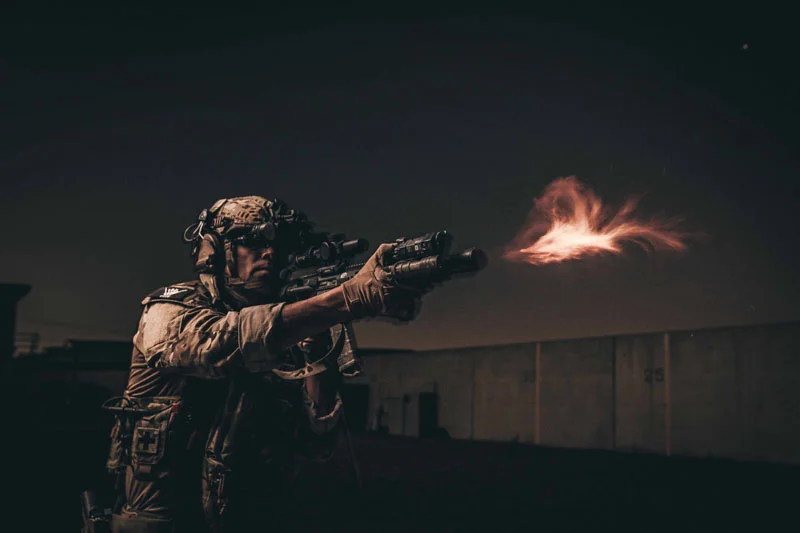
Owning equipment is not capability. At minimum, responders need timed donning drills practiced in the conditions the kit will actually be used in, including inside a vehicle and in darkness. Armor adjustment should be verified rather than assumed. Bleeding control training such as Stop the Bleed is the medical floor, with agency protocol layered on top.
Beyond that, add radio and channel-change practice under load, low-light identification and movement, and physical exertion before skill performance, since that is the real condition, and movement in full kit, including stairs, confined spaces, and casualty drags. Interagency exercises are where identification, radio, and command problems surface. Document proficiency and refresh it on a defined cycle.
Maintenance, Inspection, and Storage
Kits degrade silently. A defined rhythm is what catches it.
- Pre-shift. Kit present, radio powered and on the correct channel, light functional, tourniquet correctly stowed, no visible damage.
- Contents checked against the packing list, fasteners and hook-and-loop working, helmet retention and pads intact, spare batteries charged.
- Monthly, documented. Plates inspected for cracks, delamination, and cover damage; soft panels checked for moisture and folding damage; medical expiration dates recorded; radio range tested; inspection signed and filed.
- Armor service life reviewed against manufacturer dates, standardization audited, replacement schedule budgeted, training records reconciled.
Vehicle storage is the default for most kits and the harshest environment they face. Heat degrades medical adhesives, batteries, and some armor materials, so follow the manufacturer’s stated storage range rather than assuming a threshold. Cold reduces battery capacity. Soft armor covers are water-resistant, not waterproof, and moisture intrusion is a documented cause of performance loss. Keep kits out of direct sunlight and away from stored solvents and fuels. Never fold soft armor for storage or stack heavy equipment on plates, since both introduce damage that may not be visible. Follow manufacturer cleaning guidance, as the wrong agents damage ballistic materials. Our notes on body armor care and tactical gear maintenance cover the routine.
Matching Equipment to Role, Policy, and Training
An active shooter response kit is a system, not a shopping list. Agencies that treat kits as a procurement event end up with equipment that ages out unnoticed, while agencies that treat them as a program, with inspection cycles, standardized layouts, and training hours attached, end up with capability.
Frequently Asked Questions
What armor protection level is recommended for active shooter scenarios?
There is no single correct answer. Selection should follow the agency’s documented threat assessment, weighing likely rifle threats against mobility and weight. Under NIJ Standard 0101.07, rifle protection is designated RF1, RF2, and RF3, with RF2 added as an intermediate tier covering 5.56mm M855. Legacy Level III and Level IV armor remains valid.
How much does a complete active shooter response kit cost?
Cost varies widely, and no single figure applies. Armor is typically the largest item, followed by radios and helmets. Individual patrol kits cost substantially less than fully equipped tactical configurations. Budget for lifecycle rather than purchase price, since armor has a service life, medical supplies expire, and batteries need replacement.
How often should active shooter response kits be inspected?
Check pre-shift that the kit is present, the radio and light work, and the tourniquet is stowed correctly. Verify contents weekly. Conduct a documented monthly inspection covering armor condition, medical expiration dates, and radio function. Review the program annually against armor service life, training records, and replacement budgets.
How should medical components be stored to maintain effectiveness?
Keep supplies in sealed pouches protected from heat, direct sunlight, and moisture, and follow the manufacturer’s stated storage conditions. Vehicle interiors get hot enough to degrade adhesives and packaging, so check contents more often when kits live in vehicles. Replace anything crushed, discolored, expired, or with a compromised seal.