





Pentagon FORTRESS Plan Targets 90 Days of Base Self-Reliance

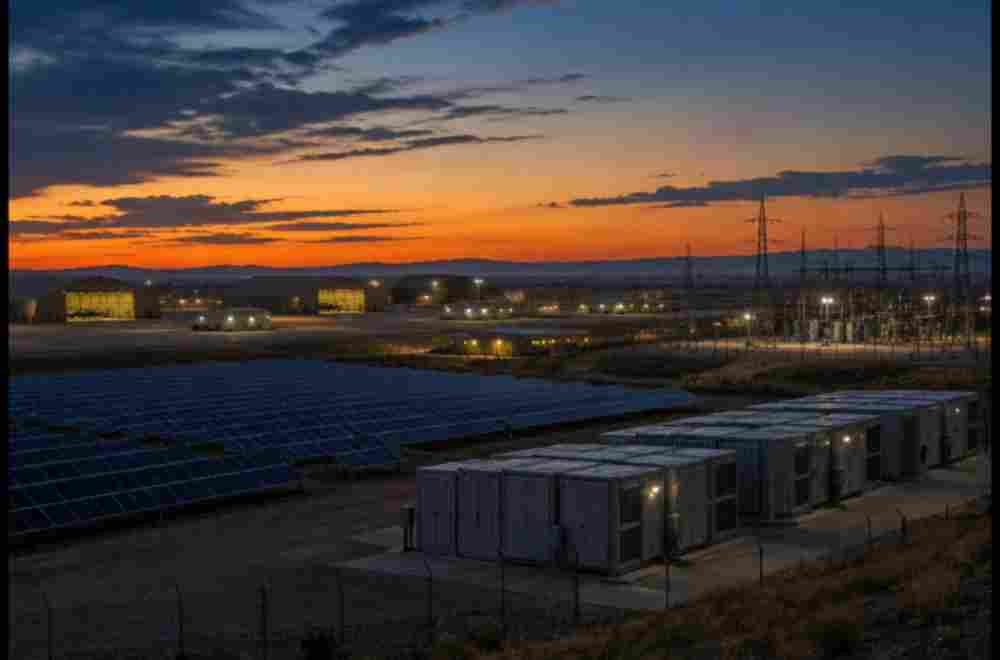
The Pentagon is preparing to ask its major installations in the continental United States to keep operating for three months with no help from the outside world. According to documents reviewed by Fox News Digital, every major base would be expected to sustain essential operations independently for at least 90 days, covering electricity, water, fuel and communications. The requirement is part of FORTRESS, a program Defense Secretary Pete Hegseth announced on Sept. 30 as a kind of national insurance policy for the homeland.
The 90-day figure is the part that has drawn the most attention this week. It is also the part that deserves the most careful reading, because the documents themselves have not been published.
The 90-day requirement traces to one outlet's reporting. Fox News published the story on Oct. 25, citing unnamed documents, and quoted Pentagon chief spokesperson Sean Parnell as saying, "Power is combat now." Parnell also said the department does not want to rely on civilian municipal infrastructure to run national defense.
Accounts differ on how firmly the Pentagon has stood behind the number. The Epoch Times reported that Parnell confirmed the reporting and shared the Fox story on X. The War Zone said it was unclear whether Parnell explicitly confirmed the 90-day target and noted it had asked the Pentagon for more information. Neither account includes the underlying document, a budget or a timeline. The most defensible reading is that the 90-day goal is a reported planning requirement that officials have not contradicted, not a demonstrated capability.
The program itself is on firmer ground. Hegseth unveiled FORTRESS in his Sept. 30 State of the Force address at Marine Corps Base Quantico. Its name is usually rendered as Federal Operations for Resilience, Troop Resources, Energy, Supply and Survivability, though outlets punctuate the last words differently. A memo dated Oct. 6 from Under Secretary of Defense Michael Duffey named Richard "Matt" O'Malley interim director of a FORTRESS America Program Office and set out five pillars: energy independence, supply chain and industrial base resilience, a strategic defense reserve, installation hardening and cyber resilience, and space and spectrum resilience.
Energy comes first. Air & Space Forces Magazine reported that a senior defense official told a Defense Writers Group roundtable on Oct. 20 that energy independence is the opening priority and that roughly 500 continental U.S. bases are under consideration. The official said approaches would vary by installation, with microgrids, battery storage, geothermal, solar, natural gas and nuclear microreactors all in play. That account does not mention the 90-day figure, and the official said costs are still being assessed and that full achievement could take decades.
The Fox report describes a wider design than electricity alone. It lists strategic reserves of munitions, fuel, critical minerals, electronics, spare parts and medical supplies, plus at least two qualified supply or production pathways for the most critical defense dependencies. A proposed Civil Reserve Manufacturing Network would identify commercial factories that could shift to defense production in a crisis, backed by recurring industrial stress tests. The plan also calls for hardening communications, navigation and satellite systems against GPS jamming and interference.
The War Zone points out that food for personnel is not addressed in the reporting, and that details on how water, fuel and communications would be sustained for 90 days remain unclear.
Base energy resilience has been a stated goal for years. The Army set a goal in 2022 of a microgrid at every base by 2035, and a 2024 Air Force plan targets new microgrids at 16 bases by fiscal 2030. Air & Space Forces cites Tyndall Air Force Base in Florida, rebuilt with hardened infrastructure and a microgrid after Hurricane Michael, as a model, and notes it cost about $5 billion. The War Zone adds that the Army and the Defense Innovation Unit signed deals in August with five companies to field more than 20 microreactors at bases beginning in 2028, though it cautions the technology is not yet fully proven.
What is new, if the Fox account is accurate, is the explicit 90-day yardstick and the bundling of power, supply chains and industrial mobilization under one program office.
FORTRESS is real and already organized under a named program office, though no budget has been published. The 90-day target is reported and has not been publicly contradicted, but the underlying document remains unpublished. Watch for a formal implementation plan, a budget request, and the first installations named for pilot projects. Those details will show whether FORTRESS becomes a durable change in how the military treats its homeland bases or a headline that outruns its funding.
FORTRESS: The Pentagon is preparing every major U.S. military base to survive 90 days without outside support — no civilian power grid, no global supply chains, no outside fuel or water.
— Fox News Politics (@foxnewspolitics) October 25, 2026
The initiative, revealed in documents reviewed by Fox News Digital, envisions portable… pic.twitter.com/PFbVTlkfgH