







Military Communication Methods and Systems

Effective communication in high-stakes environments like military operations relates to success or failure. A mission’s execution with clear and dependable communication will enable troops to coordinate effectively, respond appropriately to crises, and minimize casualties in combat situations. In any scenario, from high-intensity combat to disaster relief, securely and reliably transmitting information is vital to emergency management skills.
This guide explains the primary military communication methods, the systems and equipment that support them, and the protocols and training that keep units connected when it matters most.
What Is Military Communication?
Military communication is the secure exchange of orders, intelligence, and situational data between units, command, and allied forces. It depends on encrypted radio and satellite links, wired backups, and visual signals to keep command and control intact even when networks are jammed, degraded, or destroyed. Because a single lost message can change the outcome of a mission, military communication is built around three things: redundancy, security, and speed.
Types of Military Communication Systems
Military communication falls into five broad system types: radio, satellite (SATCOM), wired field telephone, visual and audio signaling, and digital mesh networks. Most units run several at once so that if one fails, another keeps them connected. The sections below break down each system, when it is used, and the gear that supports it.
Secure and Encrypted Communication
Modern military communication relies on encryption, frequency hopping, and cipher systems to resist interception. Secure voice and data links protect orders and intelligence from adversaries, even on contested or monitored networks, which is why encryption sits at the center of nearly every modern military communication system.
Historical Background Of Military Communications
Military communication has become highly advanced over time. The early methods depended on visual communications, such as flags and smoke, and were limited by distance and environmental conditions. The invention of the telegraph in the 19th century revolutionized communication, enabling messages to be quickly transmitted over long distances during the American Civil War. As the 20th century approached, reliable survival radios enabled near real-time battlefield communication.
Encrypted communication was introduced during World War II, heightening safety and security. In today’s digital era, military services leverage mobile technology, email, and text messaging, with secure satellite integration, to support global missions and crisis response.
1. Radio Communication
The most common means of communication in the military is two-way radio. The radios are designed to be rugged in military conditions, so that troops can continue communicating during severe weather, earthquakes, fire battles, or in heavily wooded or mountainous terrain. Real-time and direct team communication enables them to coordinate in rapidly changing situations.
Some military officers wear their radios in a radio pouch attached to their backpacks, bug-out bags, or tactical vests so that they may operate them quickly during operations. Radios’ primary advantage in emergency communication is their simplicity and reliability. In disaster zones or enemy territory, this type of communication can mean the difference between action and delayed response.

2. Satellite Communication (SATCOM)
SATCOM is essential for communication in remote areas where radio signals don’t reach. It addresses the issue of long-distance communication. SATCOM provides international satellite coverage, allowing military forces to communicate without geographic limitations. Communication over greater distances is required in the case of military forces like special forces and international operations.
SATCOM is increasingly integrated into tactical equipment, even packs for carrying communications equipment. Soldiers in the field can send critical information back to command centers, giving leadership an accurate picture of the battlefield or mission area. SATCOM also plays a crucial role in disaster relief missions, where most other means of communication are unavailable due to destroyed local infrastructure. In such events, SATCOM helps coordinate assistance, organize dispatch routes, and protect property and homes from further damage.
3. Field Telephones
Field telephones look archaic and do not compare with most modern methods of communication. Still, they have proved extremely effective in emergency communication, especially where other means of communication break down. Field telephones are wired communication systems that don’t rely on satellite or radio networks. This independence makes them less prone to jamming or hacking through any satellite or radio communication system.
Telephones are maintained between the units at military bases or field camps. This gives the troops safe communication lines. They are a system in which soldiers have been trained to mount and maintain these systems, especially when other means of communication are disrupted by electronic warfare. Their use is usually an integral part of other communication devices and is often a backup to primary systems when they fail.
4. Visual and Audio Signal Communication
The staff will have to use less advanced forms of communication during emergencies where technology is either unavailable or has broken down. These low-tech methods are essential when maintaining radio silence or navigating environments with electronic barriers.
A light may present color-coded signals, smokes, flares, or hand signals, and can be heard using whistles or other noise-making devices. In extreme danger or stealth operations, every soldier is trained like a professional to identify these signals for interpretation during communication.
Most military training programs emphasized silent, wordless communication in emergencies, especially during infiltration or rescue operations, where prompt, silent coordination is necessary.
5. Emergency Beacons and Locator Systems
Another vital form of communication in emergencies is the use of emergency beacons and locators. These gadgets emit distress signals that may help rescue teams quickly locate injured or stranded personnel. These emergency beacons are relatively small; hence, they can be fitted into any soldier’s bug-out bag or fixed to his tactical gear to ensure fast assistance.
These are the thin lines between life and death in danger zones or survival situations, helping to ensure that help can reach personnel in distress. Usually, the emergency beacons are fitted with GPS functionality, meaning location information is accurate and up to date.
6. Communication and Reconnaissance Drones
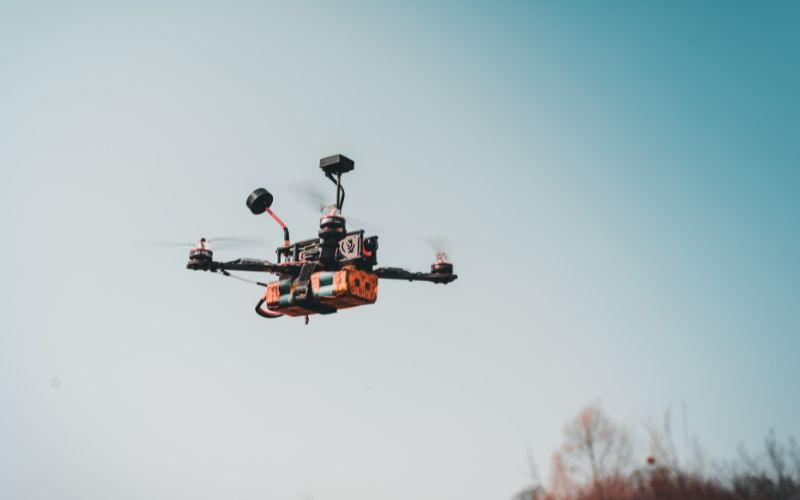
These drones have become crucial for military communication, drifting away from ordinary uses. They provide aerial surveillance and act like relays to boost signals. In emergencies when angry mobs disrupt the usual lines of communication, an army deploys drones equipped with signal-relay systems to fly over battlefields or disaster zones, creating temporary communication networks.
Drones assist in real-time data collection and notification to ground units. Training military personnel to use drones effectively is also normal, as access to key information and communication would be available even in the most challenging environments.
7. Mobile Apps
Cell phone apps are not only used for playing games and occupying children on long automobile drives; they can also be used during a disaster.
a. Life360
Life360 is a free family-location and messaging app. It is a civilian tool rather than a military system, but it shows how location sharing and automatic check-ins support coordination during an emergency.
b. FEMA app
This application provides users with readiness information, such as survival skills, emergency checklists, and meeting points, on their cell phones. It also allows users to access National Weather Service weather alerts customized for a specific area. Users can also get information on Disaster Recovery Centers, find locations of the nearest shelters, and apply for relief.
Mesh Networks
Mesh networks are decentralized communication networks that can operate without cellular or satellite infrastructure. Mesh networks in the military are critical to building a robust communication network. For example, when network failures or jamming attempts are anticipated, permanent communication is established.
Some mesh devices are an integral part of standard soldier bug-out bags and other tactical equipment, so units may continue to communicate even when they are separated from central command or operate in areas where more conventional forms of communication are interrupted. The utility of these networks is more pronounced during urban combat or disaster response in areas where existing structures may have been destroyed.
How Do Soldiers Communicate in Combat?
In combat, soldiers rely on real-time two-way radio for coordination and switch to silent hand and visual signals when radio silence is required. Field telephones and mesh links serve as backups, ensuring that a jammed or downed network never leaves a unit cut off. The exact mix depends on the mission, terrain, and threat, but the principle is constant: always maintain more than one means of communication.
Military Communication Protocols and Best Practices
Reliable communication depends on protocol as much as hardware. Standardised voice procedure, call signs, and the NATO phonetic alphabet keep messages clear under stress, while disciplined frequency management keeps traffic secure. The most important best practice is redundancy: a PACE plan (primary, alternate, contingency, and emergency) ensures that if the main method fails, three more are ready. For any team building a communication plan, the goal is the same: no single point of failure should be able to silence the unit.
Military Communication Challenges
Even strong communication systems face real limits. Two stand out.
Environmental Factors
Environmental factors and geographical challenges, such as mountains, forests, or urban warfare, all contribute to the signal’s resistance to reaching the recipient. Severe weather conditions like storms or fog can weaken the communication system. Robust infrastructure is necessary because damage to traditional lines from natural disasters can cause communication failures. A strong backup system thus ensures reliability in communication.
Cyber Threats
As digital platforms become the core of operations, the risk of cyberattacks rises with them. Weaknesses in secure messaging or satellite systems can expose sensitive traffic, which is why strong encryption and constant monitoring for interception are central to modern military communication.
Conclusion
Effective communication for emergencies in military operations is an essential skill. Whether using radios, drones, or mobile apps, the goal remains: keeping individuals, agencies, and services informed and connected. The right plan, tools, and training ensure troops’ safety, property protection, and effective response in any crisis or event.
Frequently Asked Questions
What do soldiers use to communicate?
Soldiers use two-way radios as their primary tool, backed by satellite communications for long-range communication, wired field telephones, hand and visual signals, and mesh network devices. Most carry several options, so they always have a backup.
What is military communication?
Military communication is the secure exchange of orders, intelligence, and situational information between units and command, usually over encrypted radio and satellite links with wired and visual backups.
What are the main types of military communication?
The main types are radio, satellite (SATCOM), wired field telephone, visual and audio signalling, and digital mesh networks.
How do soldiers communicate in battle?
In battle, soldiers use real-time radio for coordination and switch to silent hand and visual signals when they need to avoid detection, with field telephones and mesh links as backups.
What is the most secure military communication method?
Encrypted radio and satellite links with disciplined frequency management are among the most secure options, because encryption and frequency hopping make traffic much harder to intercept.
How do you communicate in an emergency with no signal?
Without a cell signal, options include two-way radios such as GMRS or ham, satellite messengers, signal mirrors and whistles, and pre-agreed meeting points. Keeping a charged backup device and a simple family plan makes a real difference.