








Ballistic Shield Buying Guide: Levels, Sizes & Use Cases

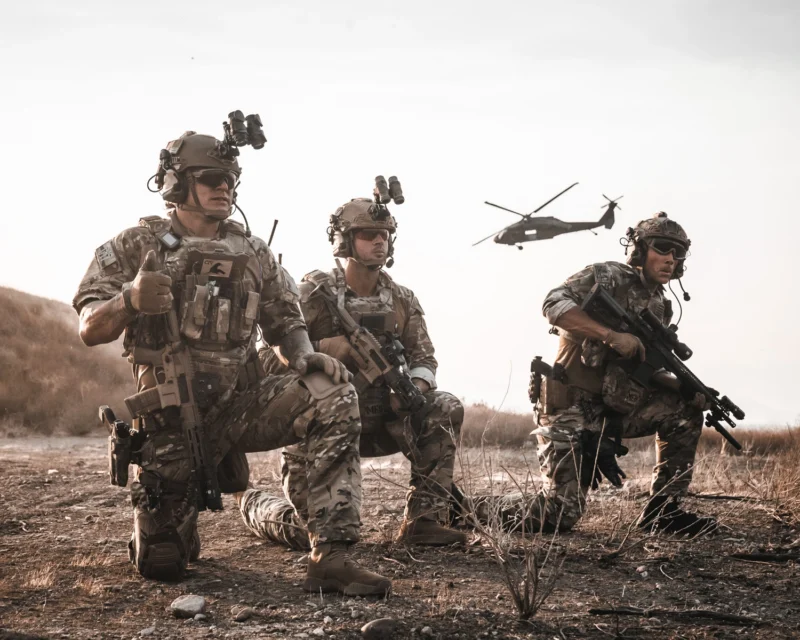
Ballistic shields are among the most critical pieces of protective equipment in law enforcement, SWAT operations, and tactical response. They are also among the most misunderstood. Buying the wrong shield for the wrong role does not just waste budget, it puts personnel at risk. This guide breaks down ballistic shield protection levels, sizing, use cases, and what to look for when selecting a shield for operational deployment.

What Is a Ballistic Shield?
A ballistic shield is a portable protective barrier designed to stop or reduce the energy of incoming projectiles, allowing the operator to advance, hold a position, or extract personnel under fire. Unlike body armor worn on the body, a ballistic shield is hand-held or arm-mounted and is typically used during dynamic entries, hostage situations, active threat response, and riot control.
Chase Tactical ballistic shields are tested to NIJ Standard 0108.01 through NVLAP-accredited third-party laboratories. This is the standard that matters for professional procurement. If a shield is not independently tested to NIJ 0108.01, it should not be trusted in the field.
Understanding Ballistic Shield Protection Levels
The NIJ 0108.01 standard defines protection levels for ballistic shields. Understanding these levels is the first step in selecting the correct shield for your threat environment.
Level IIIA
Level IIIA shields are rated to stop handgun threats, including .357 Magnum and .44 Magnum rounds. This is the most common protection level for law enforcement patrol, building entry operations, and corrections environments where the primary threat is handgun fire. Level IIIA shields are lighter and more maneuverable than rifle-rated options, making them well-suited for extended operations where fatigue is a real factor.
The Chase Tactical RDS Level IIIA Ballistic Shield, the MTS Level IIIA, the LTS Level IIIA, and the Bellfire FRS Level IIIA are all rated at this level and deployed with law enforcement SRT units across the United States.
Level III
Level III shields are rated to stop rifle threats, including 7.62x51mm NATO and 5.56x45mm rounds, at specified velocities. These are appropriate for high-risk warrant service, active shooter response, military operations, and any environment where rifle fire is a credible threat. Level III shields carry significantly more weight than IIIA options and require greater physical conditioning from the operator.
The Chase Tactical TITAN Level III Ballistic Armor Shield, MTS Level III, LTS Level III, and FRS Level III all meet this standard and are currently deployed with the U.S. Army, UN, and Allied forces.
Choosing Between IIIA and III
The right level of protection is determined by your threat assessment, not by cost alone. A IIIA shield in a rifle-threat environment is a liability. A Level III shield for patrol work adds unnecessary weight and reduces operator endurance. If your mission involves both handgun and rifle threats, Level III is the correct choice. For patrol, corrections, or standard LE entry work, Level IIIA provides the right balance of protection and mobility.
For a deeper breakdown of how these ratings apply to body armor as well, see the Chase Tactical Body Armor Levels reference page.
Ballistic Shield Sizes and What They Mean Operationally
Size is the most overlooked variable in shield selection. The available sizes in the Chase Tactical lineup range from 16×29 inches up to 24×51 inches. Here is how size maps to operational use:
Small Format Shields (16×29 to 18×24)
Smaller shields prioritize mobility and are suited for confined spaces, vehicle operations, and rapid deployment scenarios. They cover the operator’s core but leave more of the body exposed. These are often selected by operators who need to move quickly through narrow hallways, stairwells, or vehicle interiors.
Medium Format Shields (18×34 to 20×40)
Medium shields provide a balance between coverage and maneuverability. They cover the torso and a significant portion of the legs while still allowing the operator to advance at a controlled pace. This format is the most common choice for law enforcement SRT and SWAT entry teams.
Large Format Shields (24×36 to 24×51)
Large shields maximize coverage and are designed for team use, static cover positions, or high-threat entries where the operator is stationary or moving slowly. They are heavier and require higher physical capacity but provide coverage from the face down to the shins. These are frequently selected for active shooter response kits and high-profile protection details.

Shield Types by Design
Beyond level and size, shield design affects how the shield is used tactically.
Rectangular Shields
The most common design. Rectangular shields offer maximum ballistic coverage per square inch and are straightforward to deploy in team formations. They are well-suited for linear hallway entries and stacked team approaches.
Tower Shields
Extended-height shields, sometimes called tower or full-coverage shields, are designed to protect from the head to the knees. These are common in corrections, high-value prisoner extraction, and situations where the operator is stationary and under sustained fire.
Window Shields
Some designs incorporate a ballistic-rated viewport window, allowing the operator to observe the threat without exposing the face above the shield. This is a significant tactical advantage in barricaded-suspect situations and should be considered for any unit that conducts frequent warrant service or crisis-negotiation support.
Use Case Breakdown
The primary requirement is a Level IIIA shield in a medium format with a viewport. The shield needs to be maneuverable in standard residential and commercial entry points. Weight must be manageable throughout the entire operation. The FRS series from Chase Tactical is designed for this role.
SWAT and Tactical Units
SWAT environments demand Level III capability due to the nature of threats encountered. A medium- to large-format with a viewport is standard. Team formations in SWAT typically require shields that allow the operator to transition to a sidearm or be covered by a flanking shooter. Refer to the complete active shooter response kits for integrated solutions.
Military and Allied Forces
Military deployments require a minimum Level III rating and high durability in extreme environmental conditions. Chase Tactical shields are deployed with U.S. Army units, Allied forces in Iraq and Afghanistan, and the United Nations. The TITAN Level III and Bellfire B Level III are the primary options for these deployments.
Corrections and Institutional Security
Corrections environments typically see handgun and improvised weapon threats. Level IIIA in a medium or large format is the standard recommendation. The LTS Level IIIA is well-suited to this environment due to its extended coverage and lighter weight compared to Level III options.
Private Security and VIP Protection
High-profile executive protection teams and close protection details increasingly include a compact Level IIIA shield for vehicle extraction scenarios and building entry. A small- to medium-format with a viewport provides the best operational flexibility for this role.
Key Factors to Evaluate Before Purchase
NIJ Certification
Do not purchase a ballistic shield that is not independently tested to NIJ 0108.01 by an NVLAP-accredited laboratory. This is non-negotiable for professional use. All Chase Tactical shields meet this requirement.
Weight and Operator Conditioning
Heavier shields degrade operator performance over time. A Level III large-format shield carried by an operator who has not trained with it under stress is a liability, not an asset. Always match shield weight to your team’s conditioning program.
Viewport
A ballistic viewport allows target identification and threat assessment without exposing the operator’s face. For law enforcement entry operations, a viewport is strongly recommended.
Handle and Arm Strap System
The handle and arm strap system determines how the shield transfers weight to the operator and how stable it is under impact. A loose or poorly designed system will rotate under impact, reducing effective coverage. Test the handle system before operational deployment.
Compatible Lighting
Shield-mounted lighting is critical for low-light entry operations. Chase Tactical offers the FoxFury Taker B30 Ballistic Shield Light and the FoxFury B70 Ballistic LED Light with Handle, both purpose-built for ballistic shield use in dynamic-entry environments.
Pairing Your Shield With Body Armor
A ballistic shield does not replace body armor. It supplements it. In any high-threat entry, the operator behind the shield should still be wearing appropriate body armor and a ballistic helmet. The shield covers the forward-facing threat, but flanking fire, fragmentation, and transitions require full protection underneath. For guidance on pairing protection levels, see the Level IIIA vs Level III Body Armor article and the Can You Wear Soft Armor With Hard Plates? guide for layering strategies.
For complete tactical loadout integration, the Complete Tactical Loadout guide covers how shields fit into a broader equipment matrix.
Ready to Select Your Shield?
Chase Tactical ballistic shields are independently tested to NIJ 0108.01, deployed globally with law enforcement and military units, and built with materials from DuPont, DSM, and Honeywell. Whether your mission requires a compact Level IIIA for patrol entry or a full-coverage Level III for active threat response, the lineup has a proven option for your unit.
Shop Chase Tactical Ballistic Shields
Frequently Asked Questions
What NIJ standard applies to ballistic shields?
Ballistic shields are tested to NIJ Standard 0108.01, which is separate from the body armor standard (NIJ 0101.06). Always verify which standard a shield has been tested to before purchase.
Can Level IIIA shields stop rifle rounds?
No. Level IIIA is rated for handgun threats including .44 Magnum. For rifle threats, a Level III or higher shield is required.
What size shield should a patrol officer carry?
For most patrol and entry applications, a medium format shield (18×34 to 20×40 inches) in Level IIIA provides the right balance of coverage and maneuverability. Larger formats are better suited for static cover positions.
Do ballistic shields require maintenance?
Yes. Shields should be inspected regularly for delamination, cracks, and damage to the handle and strapping system. Do not deploy a shield that has taken a ballistic impact without inspection by the manufacturer or a qualified armorer, as multi-hit performance may be degraded.
Are Chase Tactical shields available for government purchase?
Yes. Chase Tactical sells through GSA and FedMall for government agencies. Contact the government sales team for procurement information.