





What Mil-Spec Body Armor Actually Means (And What It Doesn’t)

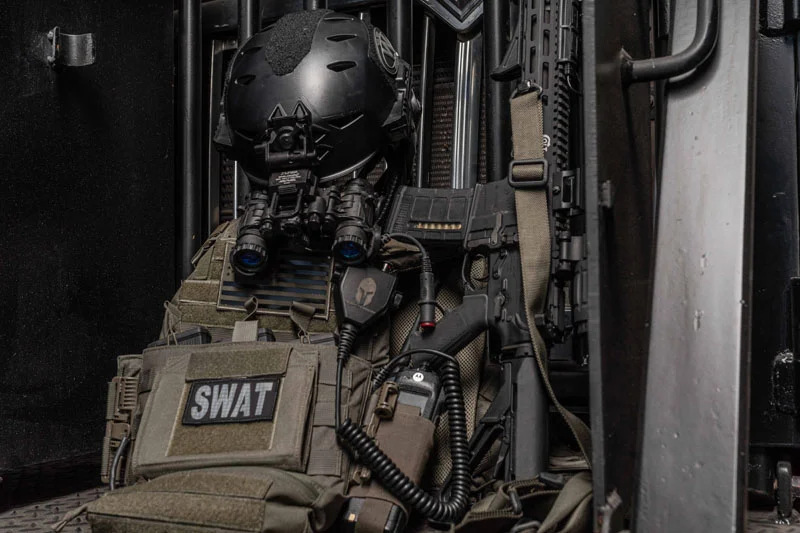
“Mil-spec,” “military-grade,” “NIJ tested,” and “NIJ certified” get used almost interchangeably in body armor marketing, but they describe different things. A plate carrier stitched to a military specification is not automatically the same thing as a plate tested against an NIJ protocol, and neither term guarantees the other. For law enforcement, military, security, and first responder buyers, that distinction is not academic. It affects how a claim should be verified before a purchasing decision is made.
This article breaks down what “mil-spec” actually refers to, how it relates to (and differs from) NIJ testing, and how to read a mil-spec claim critically instead of taking it at face value.
See the SP8 Level IV RF3 Rifle Armor Plate, an NIJ 06 compliant plate with documented testing behind the claim.
What Does Mil-Spec Mean
A military specification is a formal document that defines requirements for a product, material, or process. Depending on the specification, it may cover materials, dimensions, manufacturing steps, environmental durability, quality control procedures, packaging, labeling, inspection criteria, or testing procedures tied to a particular contract or procurement program.
There is no single, universal “mil-spec body armor” designation that applies across every armor product on the market. Which requirements apply, if any, depends on the specific contract, the procuring agency, the armor system in question, the intended threat profile, and the governing procurement document. A specification written for one program does not automatically extend to a different plate, carrier, or manufacturer simply because both are described as “mil-spec.”
Is Mil-Spec the Same as Military-Issued
Meeting a military specification is not the same as being military-issued. A product can be manufactured to satisfy a defined requirement without being purchased under a government contract, listed on an approved procurement schedule, or actually issued to military personnel. Commercial manufacturers frequently design products to mirror military-style requirements for durability or construction while selling those products entirely outside of any government program.
A body armor product advertised as “mil-spec” in a retail listing is not necessarily government-approved, contract-awarded, or currently in military service. Buyers should treat “mil-spec” as a claim about a manufacturing standard, not as proof of an official military relationship. For a closer look at how procurement paths and intended users differ, see this comparison of civilian vs military body armor.
Mil-Spec vs NIJ Certification
Military specifications and National Institute of Justice (NIJ) standards serve different purposes and come from different bodies. Military specifications are typically written by or for a branch of the armed forces or a defense procurement office, with requirements tailored to a specific program’s operational needs. NIJ standards are published by the National Institute of Justice for evaluating ballistic-resistant body armor primarily used by law enforcement, though many agencies and civilians reference NIJ ratings as a general benchmark.
The two frameworks differ in who sets the requirements, who the intended users are, how testing is conducted, how threats are defined, what documentation is produced, and what procurement rules apply. NIJ certification also applies only where a certification program actually exists for that product category, and only to the specific make and model listed on the relevant compliant-products documentation. Not every helmet, plate, or soft armor panel on the market has gone through this process, and a certification held by one model does not transfer to a similar-looking product from the same or a different manufacturer. It is also inaccurate to reduce this to “NIJ is civilian and mil-spec is military.” Both frameworks can apply to law enforcement and government buyers depending on the program. For a breakdown of what each rating actually covers, see our guide to NIJ protection levels, which this article intentionally does not repeat.
Tested to NIJ Standards vs NIJ Certified
Buyers should also read the difference between related phrases carefully. “NIJ certified” means a specific model has completed the formal certification process and appears on the applicable compliant-products list. “NIJ compliant” and “tested to an NIJ protocol” are sometimes used more loosely, and can describe testing conducted against NIJ methodology without formal certification. “Independently tested” and “manufacturer tested” describe who performed the evaluation, not whether it satisfies any certification body’s requirements.
These phrases are not interchangeable, and a product description that blends them together is worth a second look. Requesting the actual documentation, rather than relying on the wording of a listing, is the more reliable way to confirm what testing was actually completed.
View the CT Level IIIA Soft Armor Panel to see how documented specifications look for a concealable soft armor option.
When Mil-Spec Becomes a Marketing Term
Some listings use “mil-spec” or “military-grade” without naming the specification, its document number, its revision, the testing laboratory, the test date, the exact product model tested, the applicable contract, or the acceptance criteria used. Missing this information does not automatically mean a product is low quality, but it does limit how much a buyer can independently verify.
A specification claim that cannot be traced to a document is a claim, not evidence. The more identifying detail a manufacturer provides, the easier it becomes for a buyer or procurement officer to confirm what was actually tested and against what standard.
How to Verify a Mil-Spec Body Armor Claim
Before treating a mil-spec claim as a factor in a purchasing decision, look for the following:
- The exact military specification, contract requirement, or test protocol referenced
- The document number and revision date
- The exact product model that was tested
- Laboratory test reports from the testing facility
- Testing dates and lot information
- Threat type, projectile, velocity, and shot conditions used in testing
- Environmental conditioning requirements applied before testing
- Backface deformation or trauma measurements, where applicable
- Quality control and lot-acceptance procedures
- Warranty, inspection, and replacement guidance
- Traceable manufacturer information
- Applicable NIJ documentation, if NIJ claims are made alongside mil-spec claims
A test report tied to one model, material, size, or production lot does not automatically apply to a different product, even one from the same manufacturer. Confirm that the documentation actually matches the item being purchased.
What Buyers Should Consider Beyond the Label
Once a claim has been verified (or the buyer has decided documentation is sufficient), selection should come down to practical factors: armor type, coverage area, weight, thickness, mobility, concealability, multi-hit performance, special-threat testing where relevant, environmental resistance, compatibility with your plate carrier setup, sizing and fit, manufacturer transparency, warranty terms, inspection requirements, service life, and storage conditions. The same verification approach applies to ballistic helmets, not just plates and soft panels. Agency policy and procurement requirements will often dictate several of these factors before a personal preference ever comes into play.
No armor system eliminates all risk. Fit, coverage, and proper use matter as much as the rating on the label.
Red Flags to Watch For
- “Military-grade” language with no named specification
- No model-specific test report available on request
- Test documentation that references a different product than the one being sold
- No laboratory name or contact information provided
- No test date listed
- Vague protection claims without specific threat or standard references
- Any claim that armor is “bulletproof”
- Guarantees of complete protection under all conditions
- Language that blurs “tested” and “certified” together
- Military-style appearance presented as proof of ballistic performance
- No instructions for inspection, care, or replacement intervals
Does Mil-Spec Body Armor Offer Better Protection
Not automatically. Performance depends on the exact specification involved, the testing requirements behind it, the materials and construction of the product, the manufacturer’s quality control, and the threat it was built to address, not simply the presence of the words “mil-spec” on a listing. A mil-spec product built to a rigorous, well-documented standard can outperform a loosely tested commercial item, and the reverse can also be true. The label alone does not answer the question either way.
Choosing Armor for Your Mission
Start with a realistic threat assessment, applicable department or organizational policy, the required protection level for the role, expected operating conditions, weight and mobility needs, documentation requirements, applicable procurement standards, and compatibility with the rest of the loadout. Law enforcement teams working through police body armor requirements should follow their agency’s procurement and equipment policies rather than relying on marketing copy alone when selecting armor. Once a plate or panel is in service, extending body armor life through proper storage and inspection matters as much as the initial purchase decision.
Conclusion
“Mil-spec” only means something when it can be tied to an identifiable specification, test protocol, procurement document, or manufacturing standard. On its own, the phrase is not proof of NIJ certification, military issue, or any specific level of ballistic protection. Before making a decision, ask for the documentation behind the claim, confirm it matches the exact product being sold, and weigh that alongside fit, coverage, and your actual threat environment. For agencies and teams evaluating options, Chase Tactical’s armor plates, soft armor panels, and ballistic helmets include documentation buyers can review before making a procurement decision.
Frequently Asked Questions
What does mil-spec body armor mean?
It means the product was manufactured to meet a specific military specification document that covers materials, construction, or testing requirements. It does not by itself indicate NIJ certification, military issue, or a guaranteed threat rating.
Is mil-spec body armor NIJ certified?
Not necessarily. A product can be built to a military specification without going through NIJ certification, and vice versa. Each claim should be verified against its own documentation.
Is military-grade body armor better than civilian body armor?
Not automatically. Performance depends on the specific standard, materials, and testing behind the product, not on whether it is labeled military-grade or civilian.
How can I verify a mil-spec claim?
Request the specification document number, testing laboratory, test date, and the exact product model covered by the documentation, then confirm that the information matches the item being purchased.
What is the difference between NIJ tested and NIJ certified?
NIJ certified means a specific model appears on the applicable compliant-products list after completing the formal certification process. NIJ-tested or NIJ-compliant can describe testing against the NIJ methodology without that formal listing.
Does mil-spec guarantee ballistic protection?
No. A specification defines requirements a product is meant to meet, but protection depends on verified testing, proper fit, and correct use, not the label itself.
What documents should a body armor manufacturer provide?
Buyers should be able to request the referenced specification or protocol, laboratory test reports, test dates, the threat and shot conditions used, and lot or quality-control information for the specific model being purchased.