







Russia’s Jet-Powered Shaheds Outpace Kyiv’s Air Defenses Now

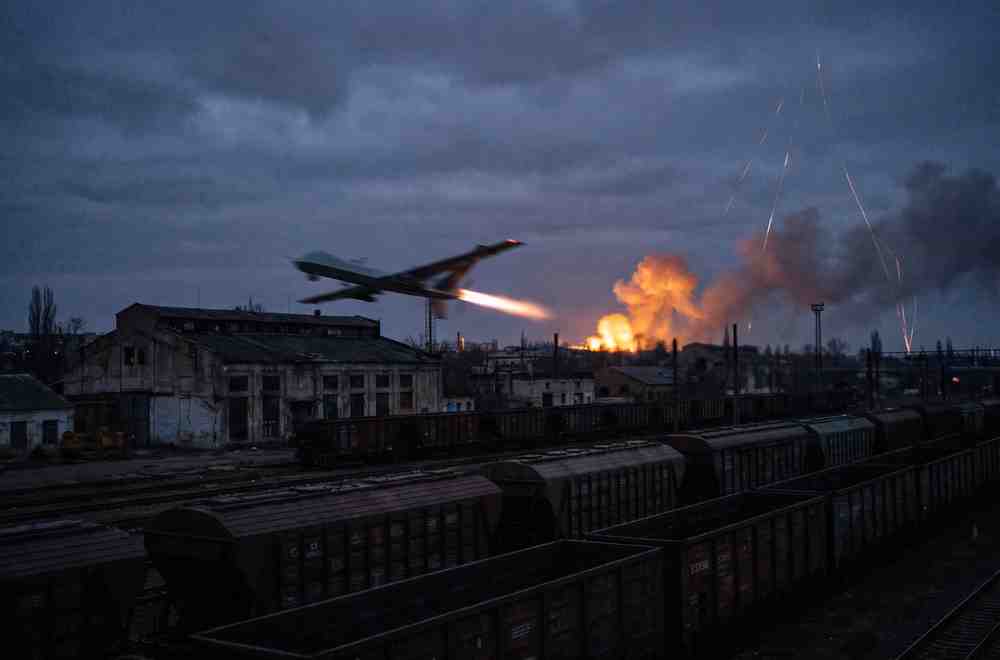
Since August 27, Russia has pounded Kyiv and its surrounding oblast with the heaviest sustained drone campaign the capital has faced this year, and Ukrainian officials say a growing share of the attacking aircraft are now flying too fast for existing defenses to reliably stop. Ukrainian Air Force Colonel Yurii Ihnat said Russia launched more than 1,500 drones at Ukraine over four days, and about 800 of them were jet-powered Geran variants — the highest concentration of the new high-speed weapon Ukrainian forces have faced since Moscow began fielding it at scale this summer.
Ukraine still intercepts roughly 88 to 90 percent of drones overall, Ihnat said, but that rate drops meaningfully against the jet-powered models, precisely because Kyiv's existing interceptor drones — which top out around 300 kilometers per hour — cannot physically catch a target moving two to three times faster at altitudes beyond the reach of mobile fire teams and portable air-defense missiles. Debris recovered from downed drones shows some were manufactured only two weeks before the strike, Ihnat added, evidence that Russian production is running without pause. The barrage began two days after CIA Director John Ratcliffe's visit to Moscow, which President Trump has said was tied to efforts to broker an end to the war.
Russia's jet-powered drones are modified descendants of the Iranian-designed Shahed-136, the propeller-driven loitering munition Moscow has fired at Ukraine by the thousands since 2022. The newer models swap the Shahed's piston engine for a turbojet, roughly doubling or tripling cruising speed. According to a Ukrainian military intelligence (HUR) official who showed recovered components to reporters, the mid-tier Geran-4 variant can reach around 350 kilometers per hour, while the largest version, the Geran-5, can fly as fast as up to 600 kilometers per hour with a range of nearly 950 kilometers and a warhead of roughly 90 kilograms. Separate reporting citing Russian production data puts the Geran-4's top speed closer to 500 kilometers per hour — a discrepancy likely reflecting different production batches rather than one fixed specification, and one this article flags rather than resolves.
Unlike earlier Shahed variants, which flew to pre-programmed coordinates, the newest jet-powered models can be steered in real time. Russian operators use mesh-networking modems, worth roughly $3,500 apiece, that relay a signal from control stations in Russia or occupied Ukraine through a chain of drones, letting an operator watch onboard video and redirect the weapon toward higher-value targets as it approaches. The drones typically cross the border at maximum speed and altitude, then drop low for the final approach, complicating both radar tracking and visual interception.
The scale-up has been rapid and, by multiple accounts, difficult to pin down precisely. The deputy commander of the Darknode anti-Shahed battalion, call sign Artes, said jet-powered drones now account for between 25 and 50 percent of all daytime launches, and Ukraine's deputy military intelligence chief, Vadym Skibitskyi, has said Russia's 2026 production order covers nearly 100,000 Shahed-type drones and decoys in total. Estimates of monthly jet-powered output have climbed sharply over the summer — from roughly 500 a month in early August to nearly 3,000 a month for the Geran-4 and -5 combined by month's end, according to figures Ukrainian outlets attribute to military-intelligence sources — underscoring how quickly Moscow has scaled a production line Ukrainian officials once doubted it could sustain.
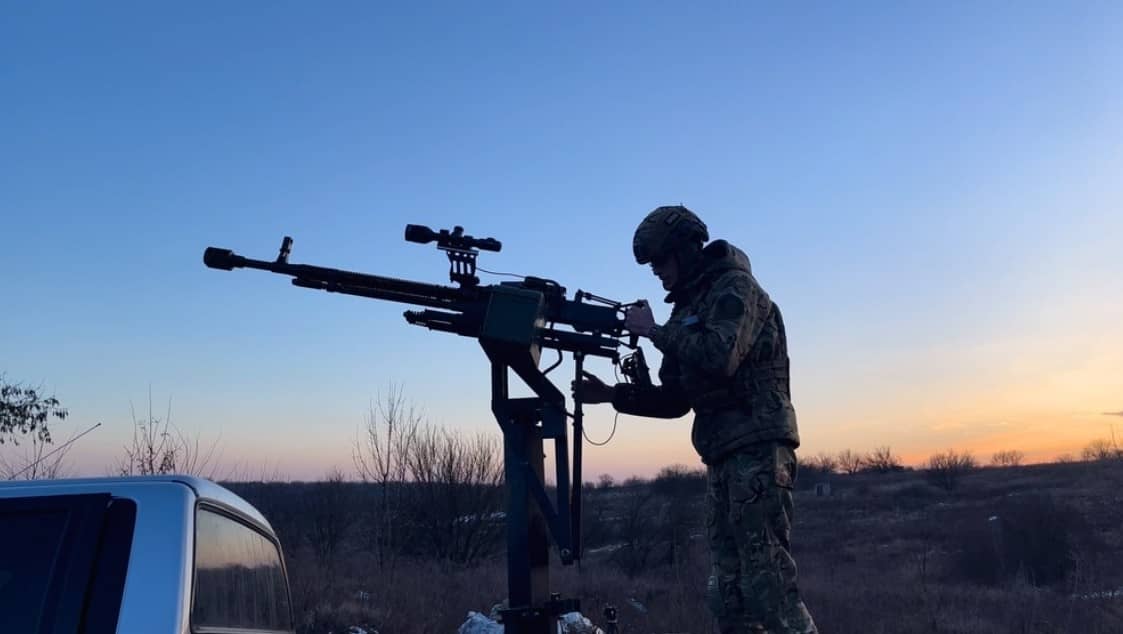
Kyiv's response is still taking shape. The Defense Ministry announced on August 21 that domestic manufacturers had produced the country's first purpose-built jet-powered interceptor, the Alexa Spatium, and deputy commander-in-chief Andriy Lebedenko has said Ukraine is simultaneously developing remote-controlled turrets, programmable-fuse munitions and upgraded surface-to-air missile systems. None of these has yet reached the scale needed to blunt the threat. Dara Massicot, a senior fellow at the Carnegie Endowment for International Peace who studies the Russian military, wrote on X that jet-powered Gerans are "a big emerging problem that will worsen through the winter" as Russia produces more, adding that countermeasures are in development. Video geolocated to Bucha district on August 28 showed a Geran-4 strike igniting a large fireball and secondary explosions at an ammunition depot near the M06 highway, illustrating the warhead's destructive reach even against defended military sites.
A Russian Geran-4 loitering munition struck an ammunition depot near the M06 Zhytomyr Highway in Bucha District, Kyiv Oblast.
— OSINTWarfare (@OSINTWarfare) August 28, 2026
Footage shows a large fireball and shockwave, followed by multiple secondary explosions as stored munitions detonated. pic.twitter.com/zkvsocKjTk