







DOJ Claims Reveal Russian-Owned Firm Sold Forensics to Feds

On September 20, 2026, federal agents arrested Lee Reiber, the American CEO of Oxygen Forensics Inc., near Boise, Idaho. Roughly 5,000 miles away, British authorities detained Oleg Sergeyevich Davydov, the Russian-born co-founder and chief technology officer of the same company, at London's Heathrow Airport as he prepared to board a flight to Istanbul. Three days later, on September 23, the Justice Department charged both men with conspiracy to commit wire fraud, which carries a maximum sentence of 20 years in prison.
The case does not allege Oxygen Forensics' software contained a backdoor or was used to spy on American targets; prosecutors say they found no evidence of malicious code or unauthorized access. What they allege instead is narrower, and for the defense and national-security community arguably just as unsettling: that the company hid from its own government customers who actually owned and built the tool they were buying.
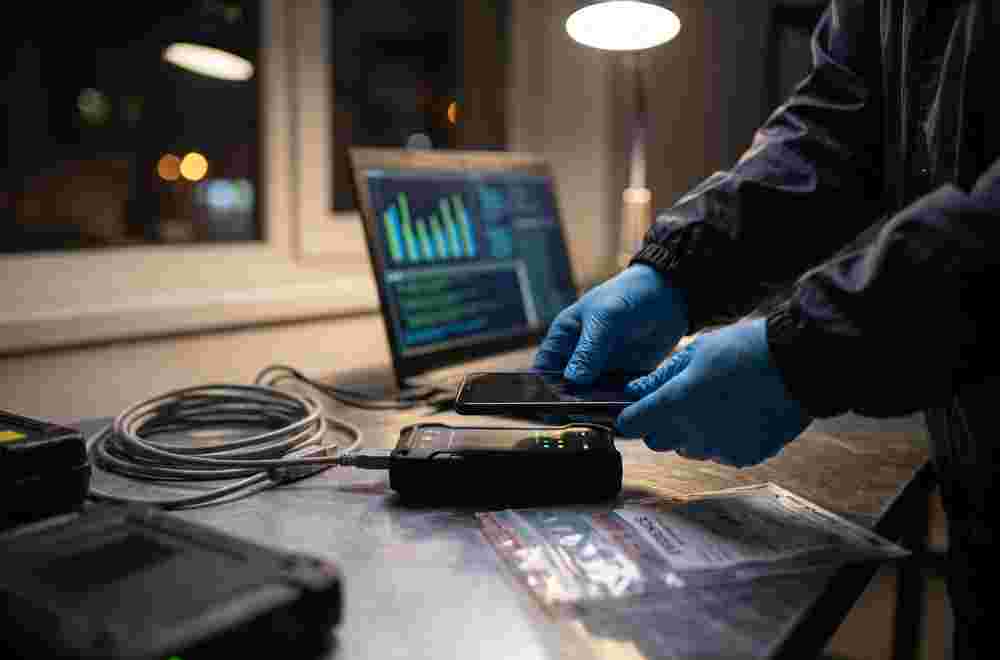
Oxygen Forensics makes "Oxygen Forensic Detective," a digital-forensics platform designed to circumvent security features and gather data from mobile phones, computers, and other electronic devices. Founded in Russia in 2000 as Oxygen Software, the company opened a Virginia-registered U.S. subsidiary in 2013 that grew into a trusted federal vendor. Its government customers have included the Pentagon, the Secret Service, Homeland Security Investigations, the DHS Office of Inspector General, and the National Computer Forensics Institute (NCFI), which trains state and local police in digital-evidence collection. NCFI signed a five-year contract worth up to $12 million with the company in September 2024.
Prosecutors say that contract, and others like it, rested on a lie. Reiber certified in December 2022 and again in October 2023 that Oxygen Forensics had no foreign owner and that its software was developed entirely in the United States. In July 2024, he allegedly made a similar certification to the Department of War, and as recently as March 2026 he reportedly told DHS personnel that no Russian had been involved in developing the software.
Investigators allege the real picture was very different. Five Russian nationals, including Davydov, secretly controlled Oxygen Forensics through a Cyprus holding company, even after U.S. filings were scrubbed of their names following Russia's 2022 invasion of Ukraine and the sanctions that followed. Reiber was installed as CEO around that time, prosecutors say, while a Russian engineering team led by Davydov kept writing the code, with builds compiled on U.S. cloud servers so Reiber could tell customers the work was done domestically. Court documents also describe the Russian subsidiary itself being renamed from Oxygen Russia to MKO-Systems around the same period, part of what prosecutors characterize as an effort to erase the paper trail back to its owners.
The government's case leans partly on warnings prosecutors say Reiber ignored. A Commerce Department special agent's affidavit states that Reiber knew as early as 2018 that federal officials had security concerns about Russian-developed forensic software, and that he was told in writing in January 2024 that foreign government customers "would not buy the forensic software if its development in Russia were disclosed."
On September 19, investigators obtained a warrant to seize company assets; the next day, authorities took control of dozens of domains tied to the firm, the same day both men were arrested. Davydov's extradition is pending; Reiber has been released on bond, and his attorney did not respond to reporters' requests for comment.
Prosecutors allege the same five owners also controlled MKO-Systems, which separately sold a comparable forensics product inside Russia to the FSB, the Investigative Committee, and the Ministry of Internal Affairs. Here the record gets murkier, and it is worth separating the government's careful language from outside commentary. Natalia Krapiva, senior tech legal counsel at the digital-rights group Access Now, argued the episode shows why ownership matters, saying "the same software sold to US law enforcement was used by the FSB to pull data off the phones of anti-war Russians and turn it into criminal charges". The Justice Department's complaint, by contrast, describes the Russian-market product as coming from a "separate" company under common ownership, not the identical tool used domestically by U.S. agencies. That distinction has not been resolved in the public record, and readers should treat Krapiva's stronger formulation as advocacy commentary rather than proven fact.
The US and UK arrested Oxygen Forensics executives accused of hiding Russian ties while selling software to American law enforcement.
— Visegrád 24 (@visegrad24) September 24, 2026
CEO Lee Rieber and co-founder Oleg Davydov face conspiracy-to-commit-fraud charges. Prosecutors say they concealed Russian owners and that the… pic.twitter.com/dYrfV2jU3u