








Army Fields First 390A Robotics Officers as AutoWarCom Looms

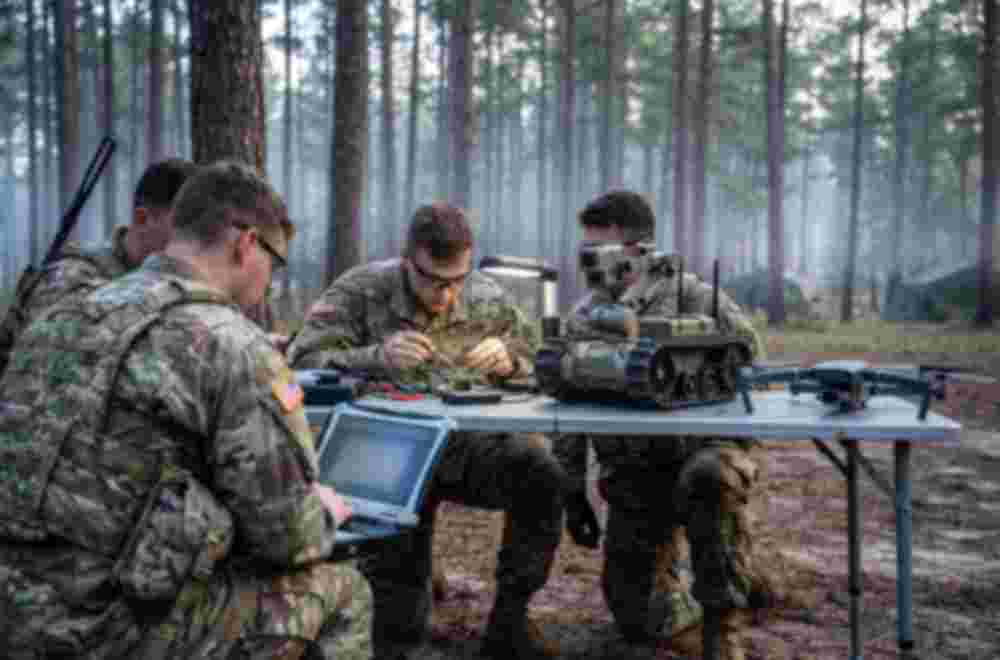
The Army has put its first robotics warrant officers on the books, and the timing is hard to miss. Ten graduates were inducted at Fort Bragg, North Carolina, on Oct. 2, a day after the service activated the 390A Robotics Technician military occupational specialty and within two days of War Secretary Pete Hegseth announcing a four-star Autonomous Warfare Command for the entire force.
The 390A is a warrant officer specialty, not an enlisted job. The Army describes its holders as systems architects for robotic and autonomous systems: they advise brigade and task force commanders, build solutions for contested communications and logistics, help train AI and machine-learning models, and develop countermeasures to enemy electronic warfare. Chief Warrant Officer 5 Gary Ostrander put the logic plainly: "Robotics is no longer a niche capability."
The 19-week course split into 14 weeks of technical training, two weeks of mission planning and three weeks of field work, at sites in North Carolina and Alabama. Students worked with ground robots, quadcopters, fixed-wing drones, sensors, electronic warfare gear and mesh networks, and screening included coding tests and interviews. DefenseScoop reports that the concept began in 2022, when the program's architect, Chief Warrant Officer 5 Michael Updike, identified integration gaps between the people who fly drones and the commanders who must employ them.
One detail matters for the special operations audience. Despite headlines tying the graduates to Special Forces, Task & Purpose reports the new technicians will not go through Special Forces selection. They are assigned to Army special operations formations as integrators and advisers, not as operators on a team. The distinction is a design choice: the specialty's advocates argue the job cannot be an extra duty for someone already on a detachment.
That argument has history. SOFREP notes that an earlier 18-week integrators course graduated its first class on May 29, so the October class is the first under a permanent specialty code rather than a pilot. Recruiting for the specialty opened in 2025, when Soldier Systems reported that applicants had to come from special operations units, hold a Secret clearance and commit to a three-year tour after graduation.
The robotics graduates arrive as the Pentagon sketches the structure meant to scale this kind of work. Hegseth used his State of the Force address at Marine Corps Base Quantico to unveil the new command; DefenseScoop reports that Hegseth announced the command on Sept. 30 and said a four-star commander would soon be named. The reporting puts the target for standing it up at Oct. 1, 2027, with an interim effort, Project Agincourt, led by Defense Innovation Unit Director Owen West and Navy SEAL Senior Chief Max Strasiser.
Air & Space Forces Magazine adds a line that bears directly on the 390A: each military service will establish new occupational specialties for autonomy careers. The Army's move is the first visible example. An Army spokesperson told DefenseScoop the service has voiced interest in scaling the program, and acting Army chief of staff Gen. Christopher LaNeve said the Army is scaling it across the force.
The command itself is not a done deal. DroneXL notes that the order names no commander and no budget and that Congress must act. The Senate's fiscal 2027 defense bill already contains a Robotic and Autonomous Systems Combatant Command, and DefenseScoop's coverage of the Senate Armed Services Committee's fiscal 2027 bill says it would carry limited acquisition and special test authorities. DroneXL says the Pentagon and Senate proposals still have to be reconciled on the scope of acquisition authority, and the sources reviewed do not say how the new command would relate to U.S. Special Operations Command or the existing Defense Autonomous Warfare Group.
The Pentagon is also not starting from zero. A Department of War article states that SOUTHCOM established its own Autonomous Warfare Command earlier this year to field unmanned and autonomous systems in its region, and that it would work with the Defense Autonomous Warfare Group during the buildup.
The Army has done something concrete while the Pentagon's broader command remains a plan. The first 390A officers are trained, coded and assigned, and the service says it intends to grow the specialty. The Autonomous Warfare Command still needs a commander, money and congressional approval. For the special operations community, the near-term signal is in the people pipeline, not the organization chart.