







Eight U.S. Marines Hurt in Iranian Missile Strike Kept Quiet

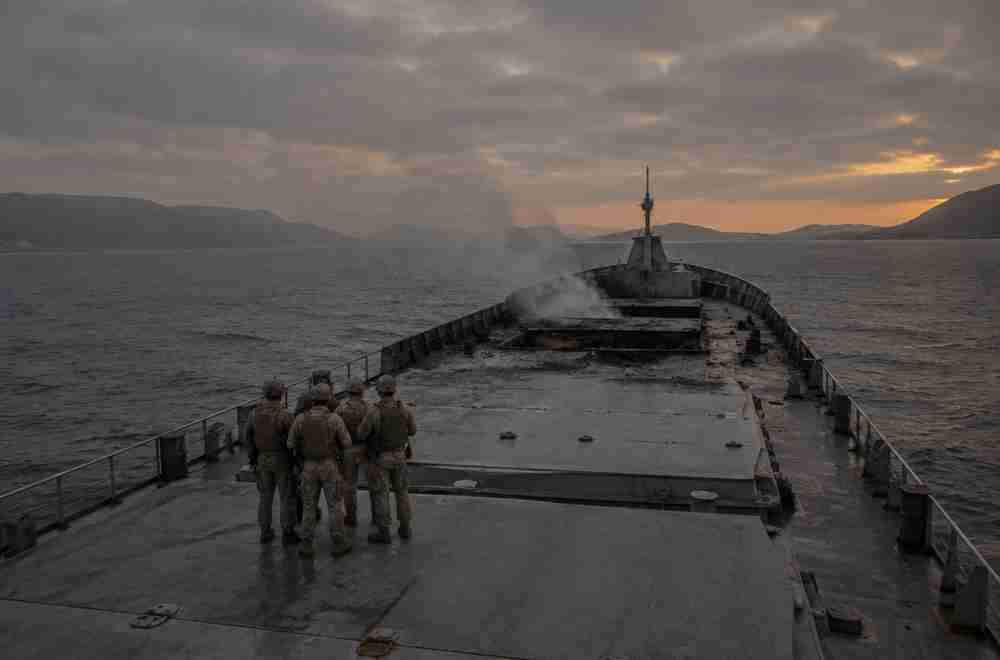
Eight U.S. Marines were injured on September 14 when an Iranian cruise missile struck a vessel carrying them through the Strait of Hormuz, and the public learned of it only two weeks later. NBC News reported the strike on September 28, citing three U.S. officials. The Marines belonged to a battalion landing team, the amphibious formation built around an infantry battalion, and the group was made up of seven enlisted Marines and one officer.
The reported injuries were smoke inhalation and possible traumatic brain injuries, with concussion symptoms such as headaches. Officials described the wounds as not serious, and all eight returned to duty shortly after the attack. The ship was not a U.S. Navy vessel, and the Pentagon has not said what kind of ship it was, who operated it, or where in the waterway it was hit.
A Pentagon spokesperson referred questions to U.S. Central Command, which did not immediately respond, Mediaite reported. CENTCOM's social media accounts posted about operations on September 14 and 15 without mentioning the strike, and CENTCOM has declined to comment on the NBC report.
The lasting question here is the silence around the missile. The eight Marines were added to the Pentagon's casualty database roughly ten days after the attack, and there was no public announcement when it happened. The Intercept reported that the Pentagon has not answered questions about when and where personnel were wounded, saying only that the casualties were fully validated and declining to name the units affected.
There is an innocent explanation on offer. Marine Insight relayed a U.S. official's explanation: injury reports can take time because symptoms may not appear or be reported right away. That is plausible for concussions, but it does not explain why the attack itself went unannounced.
The strike lands amid a running dispute over how the Pentagon tallies Iran war casualties. As of September 23, Task & Purpose reported the Pentagon's official count stood at 19 service member deaths since the war began on February 28, with more than 830 wounded, and noted that recent deaths are being reclassified under "overseas operations" after Operation Epic Fury ended. Task & Purpose dates that end to May, while the Intercept says July 7. Reporting a few days later put the wounded figure at 861, and the Intercept tallied 880 total casualties, 444 of them since July 7. Nearly 100 service members were wounded or killed in September alone. These numbers differ because outlets are counting on different dates and, in some cases, different categories.
The discrepancy is sharper for deaths. Citing six Defense Department officials, the Washington Post reported via La Voce di New York that the public toll omits at least four deaths, and that internal figures show 22 or 23 dead against the 18 then listed publicly. The Pentagon declined to address the discrepancy. Retired Marine spokesperson Joe Plenzler summarized the public mood plainly: all anyone is asking for is transparency in the process.
Iran closed the strait after the U.S.-Israeli attacks of February 28, and a June ceasefire collapsed over control of the waterway. On September 26, OPB reported that Iran had offered a seven-day plan to reopen the strait and restart negotiations, and that President Trump rejected it as unacceptable. Two days later, CENTCOM posted on X to rebut an IRGC commander's claim of full control over the strait, saying Iran has no navy because American forces sank it and that thousands of ships and more than a billion barrels of oil have passed through freely in recent months.
🚫 CLAIM: A senior Islamic Revolutionary Guard Corps commander said today that Iran has full control over the Strait of Hormuz through Iran’s “navy.” This is FALSE.
— U.S. Central Command (@CENTCOM) September 28, 2026
✅ FACT: Iran has no navy because American forces sank it. And Iran does not control the Strait of Hormuz as… pic.twitter.com/n1sE4goDY1
Iranian outlets have seized on the Marines story. Iran's state-aligned Tasnim News Agency repeated the NBC account and framed it around alleged Pentagon opacity, so readers should treat its framing as advocacy even where the underlying facts match Western reporting. Separately, an assessment cited by gCaptain rates the threat level in the strait as severe, with hostile action considered highly likely, although no confirmed attacks were logged in the most recent 72-hour reporting window.