





MOLLE Vs. Velcro Attachments for Plate Carrier


MOLLE vs Velcro comes down to one trade-off on a plate carrier: retention or speed. MOLLE webbing locks pouches in place and holds up under heavy loads. Velcro, the hook-and-loop system, lets you add, remove, and reposition gear in seconds.
The right pick depends on the weight you carry, how often you change your layout, and the conditions you work in. Below, we explain how each system works, compare them side by side, and show how to combine them on one carrier.
How MOLLE Webbing Works on a Plate Carrier
MOLLE stands for Modular Lightweight Load-carrying Equipment. The system uses rows of heavy nylon webbing, known as PALS (Pouch Attachment Ladder System), stitched across the face of a plate carrier. Pouches attach by weaving their straps through the rows in an interlocking pattern that holds them firmly in place as you move.
The U.S. military adopted the system in the late 1990s, and it is now widely used on tactical vests, packs, and plate carriers. That grid lets you attach your plate carrier accessories securely, exactly where you want them. If you want the full background on how the two terms relate, see our guide on the differences between MOLLE and PALS.
Because the webbing carries pouches of different sizes, you can arrange magazines, medical gear, and utility pouches to suit your role and keep the carrier balanced under load. That balance is the difference between a rig that stays stable and one that shifts as you move. For layout ideas, read our guide on how to maximize MOLLE real estate on any carrier.
MOLLE Meaning: Webbing, Loops, and Strips
People use several terms for the same system. The rows of PALS webbing are sometimes called MOLLE strips, and the woven loops created when a pouch strap passes through those rows are what secure the item. Strictly speaking, MOLLE describes the whole system of webbing, pouches, and straps, while PALS describes the webbing grid. Knowing the difference makes it easier to read product listings and check compatibility.
MOLLE Pros
- Extremely secure: Strong retention for rough use and combat scenarios.
- Highly customizable: Place pouches, accessories, or patches wherever you need them.
- Durable construction: Built for field abuse and heavy deployment.
MOLLE Cons
- Weaving MOLLE straps through webbing takes time.
- It is not ideal for quick changes or on-the-fly adjustments.
- The webbing adds some bulk compared with a flat Velcro panel.
How Velcro Works on a Plate Carrier
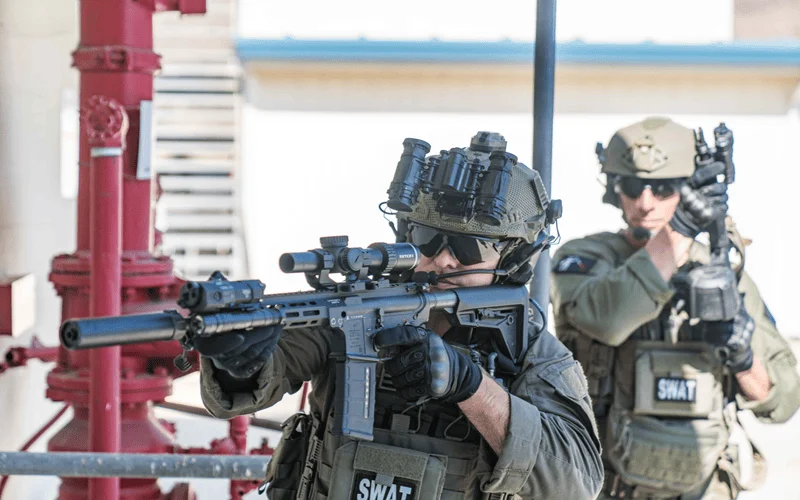
Velcro is a brand name that most people use for hook-and-loop fasteners. On a plate carrier, it usually means a loop panel on the carrier and hook-backed gear that presses on and peels off. MOLLE provides structure and stability, while Velcro adds a different kind of flexibility to your plate carrier setup. You can reposition gear quickly and change pouch placement whenever you need to, which is useful for items you reach for often.
Velcro does have limits. It loses grip over time, which makes it less effective for securing heavy items. If you carry heavier gear, MOLLE is the better choice for those items. If you want a layout you can rearrange fast, with the most frequently used gear within easy reach, Velcro earns its place. Just keep the weight of your gear and your operating conditions in mind.
Velcro Pros
- Press to attach, peel to remove.
- Well suited to patches, organizers, and admin pouches.
- Lightweight and user-friendly.
Velcro Cons
- Less secure than MOLLE in rugged conditions.
- Over time, Velcro can lose its grip due to dirt or wear.
- Noise factor: Not great for silent deployment.
Velcro Pouches, Panels, and Placards on a Plate Carrier
Velcro works best for light items you access often. If you are choosing a Velcro pouch for a plate carrier, these are the usual candidates:
- Patches and ID panels: Flat items that sit on a loop field without adding bulk.
- Admin pouches: Small pouches for items you reach for during a mission.
- Hook-and-loop magazine pouches: Our comparison of hook-and-loop vs bungee mag pouches explains the trade-offs, and the Triple 5.56 Hook and Loop Mag Pouch is one option to look at.
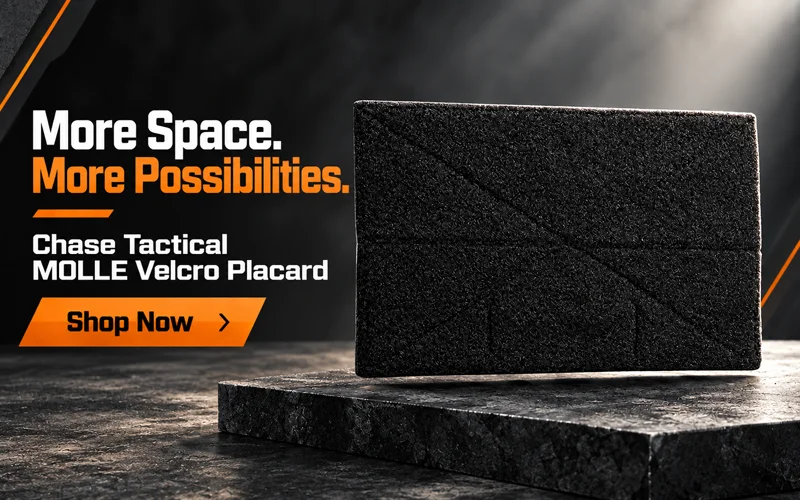
A placard is a front panel that carries pouches, most often magazines. Depending on the design, it can attach with Velcro, MOLLE, or both. Velcro placards make it easy to swap a front panel without rebuilding your whole layout.
Our guide to Velcro placards for plate carriers covers how they work in more detail. If you want a front panel that pairs both systems, see the CT MOLLE Velcro Placard. Chase Tactical also lists a MOLLE clip placard if you prefer a clip-based mount.
Can You Attach Velcro Gear to MOLLE Webbing?
Not directly. MOLLE webbing is a grid of woven loops built for straps, not a hook-and-loop surface, so Velcro-backed gear has nothing to grip. You have three practical options:
- Choose pouches that use MOLLE straps for the webbing areas of your carrier.
- Use a carrier that includes a Velcro panel for hook-backed gear.
- Look for a panel or adapter designed to bridge the two systems, and check its stated compatibility before you buy.
The same logic applies in reverse. A pouch with MOLLE straps needs webbing or a compatible adapter to mount securely.
MOLLE Velcro Panels for Plate Carriers
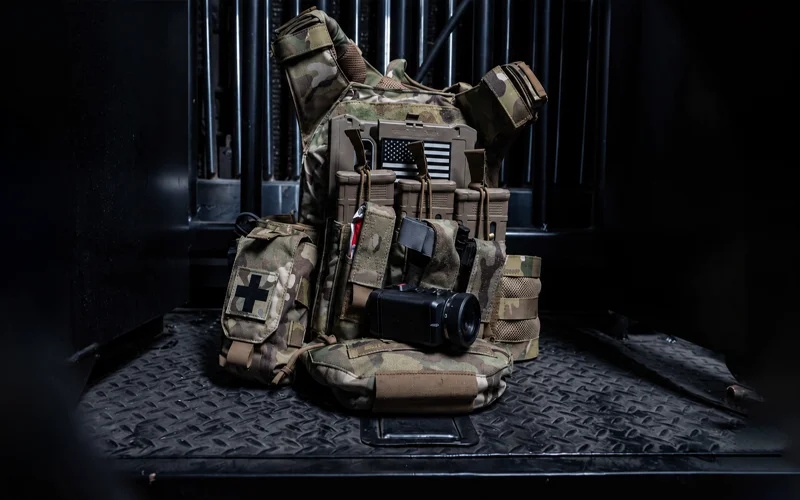
A panel adds a mounting surface to your carrier. Two designs come up most often. A Velcro panel is a hook or loop field that holds hook-backed pouches and patches. A MOLLE panel is a section of PALS webbing for pouches that use straps.
Some panels combine both, with MOLLE webbing on the face and a hook-and-loop back so the panel mounts to a Velcro field on a carrier or chest rig. This is a common answer to the search for a MOLLE Velcro adapter or a Velcro-backed MOLLE panel, because it adds webbing to a carrier that only has a loop front.
Where Panels Fit on a Carrier
The front of the carrier is the most common place for a Velcro panel, since that is where you reach for gear most often. Cummerbunds and chest rigs can also offer Velcro or MOLLE surfaces, so check the listing for each one.
If you are unsure what a cummerbund does for your setup, read our explanation of what a cummerbund is on a plate carrier. For chest rigs, our guide on how to choose the right chest rig for your mission covers the decision in more depth.
Panel Mounting Checklist
- Mounting method: Confirm whether the panel attaches with Velcro, MOLLE straps, or both.
- Compatibility: Check that the panel fits the loop field or webbing on your carrier.
- Load: Keep heavy items on MOLLE webbing and use Velcro panels for light, frequently used gear.
Velcro Placard vs MOLLE Placard
When people compare a placard with MOLLE webbing against a Velcro placard, they are really asking how often they will change their front layout. A Velcro placard keeps a lower profile and makes it quick to swap a whole panel. A MOLLE placard gives you webbing, so you can place and secure each pouch where it works best for you. Some designs combine both, which is why a MOLLE Velcro placard is a popular search.
Choose a Velcro placard if:
- You reconfigure your front panel often.
- You want a low-profile, lightweight front.
- You mostly carry items that suit hook-and-loop attachment.
Choose a MOLLE placard if:
- You want precise control over where each pouch sits.
- You carry heavier items on the front and want stronger retention.
- You prefer a layout that stays fixed once it is set.
MOLLE Straps and Velcro Straps: How Pouches Lock On
The way a pouch locks to your carrier depends on its straps. Most MOLLE pouches use straps that weave through the PALS webbing and then close with a snap or a hook-and-loop closure. Some use rigid MOLLE clips instead of woven straps, so check how a pouch attaches before you buy. Different attachment options suit different loads:
- Woven MOLLE straps: The most stable choice for heavy items, but slower to install and remove.
- MOLLE clips: A hardware-based alternative to weaving. Confirm that the clip fits your webbing.
- Hook-and-loop wrap straps: Reusable wraps, often called one-wrap straps, can tie light accessories to webbing quickly. Treat them as a convenience for light items, not a retention method for magazines or trauma kits.
- Velcro-backed panels: Best for patches, admin pouches, and quick-access gear on a loop field.
MOLLE and Velcro Comparison

When you choose between MOLLE and Velcro on a plate carrier, each system has clear advantages and disadvantages. Here is how they compare:
| Factor | MOLLE | Velcro |
| Retention / security | Excellent under load and rough use | Moderate, weakens over time |
| Speed of changes | Slow, straps must be woven | Instant, press on and off |
| Weight and profile | Adds bulk and webbing | Low profile and lighter |
| Noise on deployment | Quiet once set | Loud to detach |
| Long-term durability | Years of hard use | Grip fades with dirt and wear |
| Best for | Magazines, trauma kits, heavy pouches | Placards, patches, admin pouches |
Security and Durability
MOLLE: The woven strap connection keeps gear firmly in place under tension and in rough environments. Even after months or years of hard use, it stays secure, which is why it suits heavy loads such as magazines and trauma kits.
Velcro: It is very easy to use, but it does not match MOLLE for retention or long-term reliability. Dirt, water, and abrasion wear down the grip over time, and heavier items are the first to feel it.
Adaptability and Speed of Changes
MOLLE: A plate carrier with MOLLE gives you precise, organized placement for gear of many sizes, which is ideal for complex setups that need careful planning. The trade-off is time, because arming up or changing your layout means weaving straps through the webbing.
Velcro: It excels at fast repositioning. Gear attaches and detaches in seconds, so you can adjust your presentation or reconfigure on the fly.
Weight, Profile, and Noise
MOLLE: The webbing adds bulk and a little weight. The added weight is minimal in most cases, but it contributes to a bulkier profile when carrying a full loadout. Once your straps are secured, MOLLE stays quiet.
Velcro: It has a lower profile and weighs less on your carrier, which suits streamlined setups. The trade-off is sound, since pulling Velcro apart is loud.
MOLLE vs. Velcro: Which One Wins?
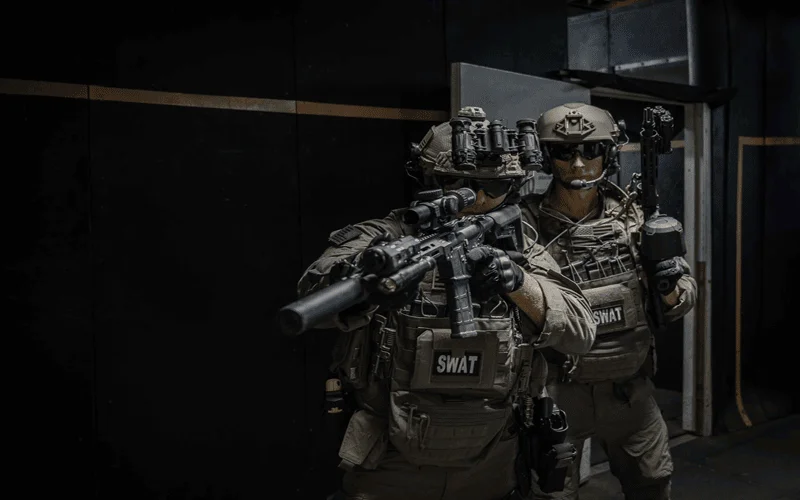
Both systems have their place depending on your mission, environment, and gear type.
Choose MOLLE if:
- You need maximum retention and durability.
- You carry heavier items like rifle magazines, pistol pouches, or AR-related accessories. Our guide to magazine pouch types can help you match pouches to your setup.
- You are building a rugged, combat-ready loadout.
Choose Velcro if:
- Speed and ease of use matter more than security.
- Your plate carrier needs regular reconfiguration.
- You prioritize a lightweight, low-profile setup for urban or short-term use.
Combining Both for a Mixed Loadout
The best setups often mix both systems. Many modern plate carriers put MOLLE on the back and sides with a Velcro panel on the chest for patches or quick-access pouches. That gives you retention where the load is heaviest and speed where you reach most often.
Modern carriers also blur the line. Laser-cut MOLLE replaces stitched webbing with slots cut from a single laminate panel, reducing weight and bulk while remaining compatible with standard MOLLE straps.
For a chest rig built on that approach, see the Laser Cut Modular Chest Rig MCR1. Velcro placard systems let you swap a whole front panel of pouches in seconds. Cummerbunds and side panels are also worth checking, so read our guide to the plate carrier cummerbund to see which attachment options suit your carrier.
If you run a mixed kit, mount load-bearing items like magazines and trauma gear on MOLLE, and keep patches, ID, and admin pouches on the Velcro field. For a full walkthrough, see our guides on the mixed loadout on your plate carrier and how to set up a plate carrier.
Look for products that support modularity and adaptability. Some vests and chest rigs offer interchangeable panels, so check each product’s listed attachment system before you buy.
What to Check Before You Choose a System
Before you commit to MOLLE, Velcro, or a mix, a few details decide whether a setup works in practice. Customization is only useful if the parts fit together, and efficiency depends on putting each item on the system that suits it.
Compatibility and Attachment Points
Check how each pouch and panel attaches and where your carrier has attachment points. Pouches from different manufacturers can attach differently, so read the attachment details in each listing. Quick-release buckles and cummerbund fasteners also affect how the carrier comes off and goes on, which our guide to quick-release plate carriers covers.
Materials and Stitching
MOLLE webbing is made from nylon, and the strength of a webbing row depends on how well it is stitched to the carrier. Hook-and-loop fabric wears with use, so look at the quality of the loop field and hook material on anything you plan to rely on. Strong materials and clean stitching matter more as the load increases.
Role and Environment
A training day, a patrol shift, and a long hike place different demands on your gear. Dirt, moisture, and debris reduce the grip of hook-and-loop over time, so wet or dusty conditions favor MOLLE for the important items. Water adds weight, so a hydration pouch belongs on a secure system. If you also run a duty or range belt, our tactical belt setup guide shows how to balance weight between belt and carrier.
Final Verdict: MOLLE or Velcro?
MOLLE and Velcro are the two attachment systems you will see most often on plate carriers, and your needs should decide which one you lean on. If you need stable, secure placement for heavy gear, MOLLE is the way to go. If instant access and easy rearrangement matter most, Velcro is the stronger choice. For most people, the answer is a mix: MOLLE for what is heavy and critical, Velcro for what is light and used often.
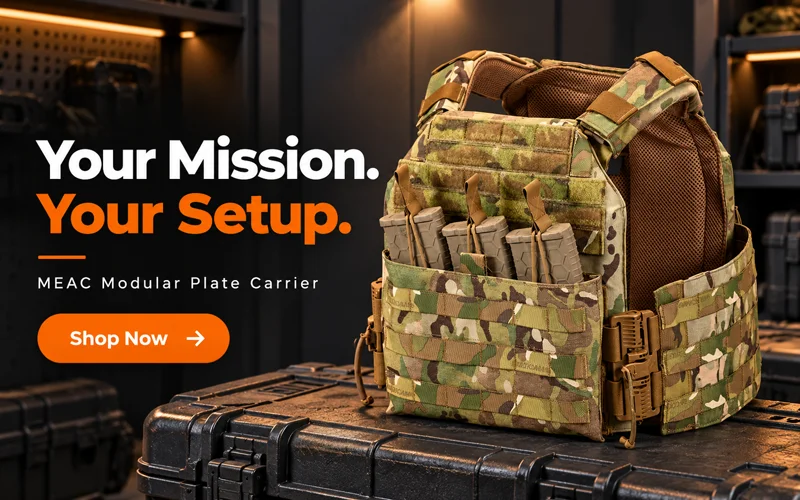
Ready to build your setup? Browse the Chase Tactical shop for plate carriers, pouches, and placards, or take a look at the Modular Plate Carrier MEAC. The CT MOLLE Velcro Placard covered above is the option to check if you want both systems on your front panel.
Frequently Asked Questions
Is MOLLE or Velcro better for a plate carrier?
It depends on your mission. MOLLE wins for secure retention and heavy gear, while Velcro wins for speed and quick repositioning. Many operators run both, with MOLLE on the sides and back for load-bearing pouches and a Velcro panel on the front for placards and patches.
Does Velcro hold gear as securely as MOLLE?
No. Velcro is fast and convenient, but it loses grip over time as dirt, moisture, and wear build up. For heavy items like rifle magazines or trauma kits, MOLLE webbing gives far better retention and weight distribution.
Can I use Velcro and MOLLE attachments on the same plate carrier?
Yes. Many modern plate carriers combine both systems, with MOLLE webbing for load-bearing pouches and a Velcro field for placards and quick-access items. This hybrid setup balances secure retention with fast configuration.
Can I attach Velcro-backed gear to MOLLE webbing?
Not directly. MOLLE webbing is a grid of woven loops built for straps, not a hook-and-loop surface, so Velcro-backed gear has nothing to grip. Choose pouches with MOLLE straps, use a carrier with a Velcro panel, or look for a panel or adapter designed to bridge the two systems and check its stated compatibility first.
What is a MOLLE Velcro panel?
A MOLLE Velcro panel is a panel that combines MOLLE webbing with a hook-and-loop back or front. It lets you add webbing to a carrier or chest rig that has a Velcro field, or add a Velcro surface to a webbing-based setup. Check the product’s stated mounting method and size against your carrier before you buy.
What is the difference between a Velcro placard and a MOLLE placard?
A Velcro placard attaches with hook-and-loop, which keeps the profile low and makes swapping the whole front panel quick. A MOLLE placard uses webbing, which lets you place and secure each pouch individually. Some placards combine both systems.