






Tactical Belt Setup Guide: How to Organize a Duty Belt

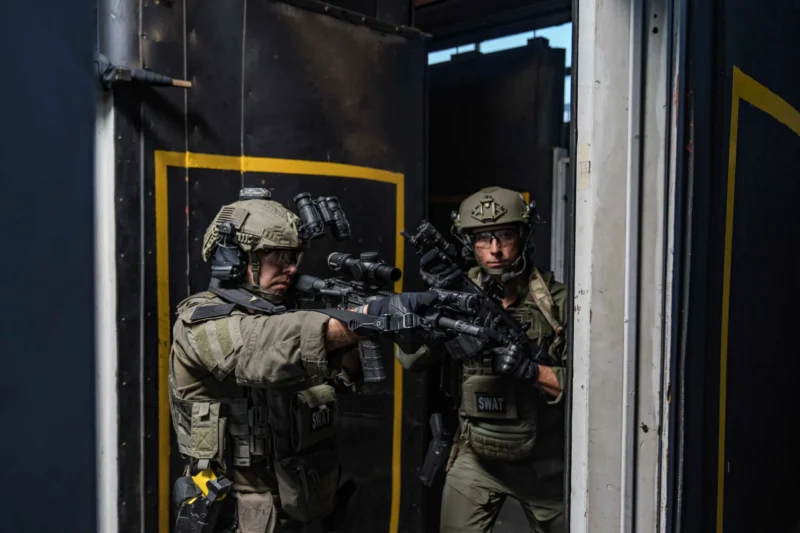
A disorganized duty belt is not an inconvenience. In a fast-moving, high-stress environment, the difference between a well-configured belt and a cluttered one is the difference between a clean draw and a fumble at the worst possible moment. Operators who have worked the street, the stack, or the wire know this. Gear placement is not a preference. It is training, muscle memory, and operational logic.
This guide covers the principles behind effective duty belt organization, the equipment categories that belong on a belt, and how to use MOLLE compatibility to build a setup that works for your mission profile.
Why Belt Organization Matters More Than You Think
Under stress, fine motor skills degrade significantly. Cognitive load spikes. The body defaults to trained behavior. This means every piece of gear on your belt needs to be in the same position every single time you put that belt on. If it moves, you retrain. If you retrain incorrectly, you fail under pressure.
Military and law enforcement professionals who have operated under fire consistently report the same lesson: gear that is not where you trained to find it does not exist when you need it. Configuration is commitment.
A properly organized duty belt gives you:
- Immediate access to primary tools without visual confirmation
- Balanced weight distribution to reduce fatigue over a full shift or patrol
- Zero interference between equipment draws
- Modular adaptability as mission requirements change
The Core Zones of a Duty Belt
Before placing any single pouch or piece of equipment, understand the three operational zones of a duty belt.
Strong-Side Zone (Dominant Hand Side)
This is where your primary weapon, primary magazine pouches, and handcuff case belong. Everything in this zone is designed for immediate access with your dominant hand. No secondary equipment should crowd this area. The draw must be clean, unobstructed, and consistent.
Support-Side Zone (Non-Dominant Hand Side)
Less-lethal tools, secondary restraint equipment, a flashlight, and non-critical utility items belong on the support side. Some operators also position a secondary medical item here for cross-draw access.
Rear/Center Zone
The small of the back and rear flanks are reserved for infrequently accessed items: secondary restraints, additional magazine capacity, or a compact utility pouch for administrative tools. Heavy items here shift your center of gravity and can cause fatigue over long wear, so keep the weight in this zone minimal.
Essential Equipment Categories for a Duty Belt
Magazine Pouches
Magazine pouches belong on the strong side, forward of the holster, within a single motion of your firing hand. Whether you run double-stack or single-stack, the orientation should be consistent with your reload drill every time.
Chase Tactical’s MOLLE-compatible mag pouches attach securely to any MOLLE/PALS webbing platform, ensuring your magazines do not shift under physical exertion or vehicle entry and exit.
Tourniquet Pouch
A tourniquet belongs on the belt, not buried in a bag. Placement should allow self-application with either hand. Most operators position the tourniquet pouch on the non-dominant side or at the front of the belt for cross-draw access.
A tourniquet in an IFAK pouch inside a vehicle bag is not accessible. If you carry one, carry it where you can reach it while compromised.
Chase Tactical carries tourniquet pouches in multicam and other colorways compatible with most duty belt and plate carrier setups. These MOLLE-compatible pouches integrate seamlessly into a full belt configuration.
Utility Pouches
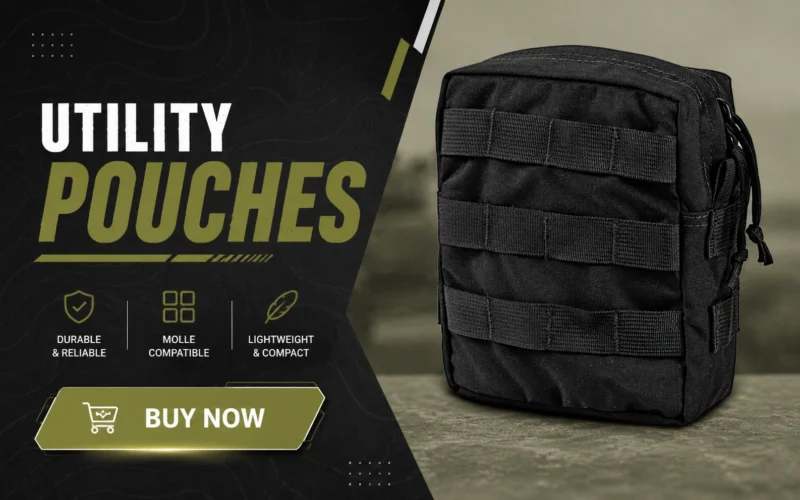
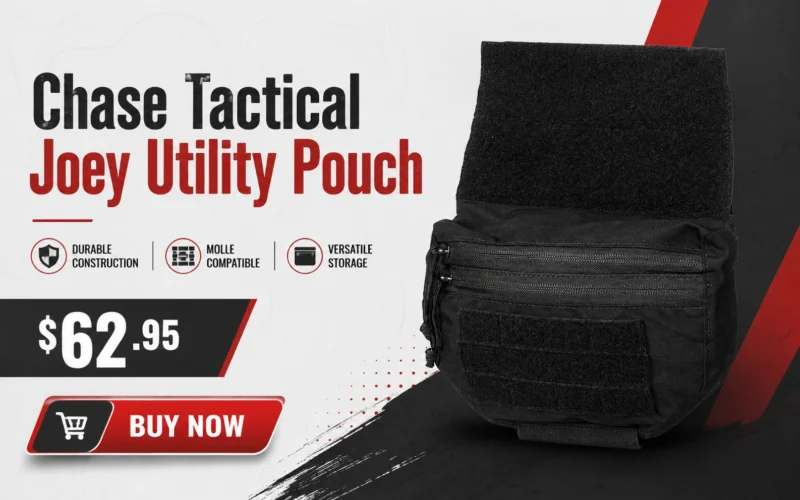
Not every item carried on patrol needs its own specialized pouch. Chase Tactical’s utility pouches handle the administrative and secondary gear that supports a patrol: gloves, medical supplies, restraints, documentation tools, and more.
The key principle for utility pouch placement: put items you access frequently in front. Put items accessed rarely in the rear zone. Never stack utility pouches in a way that blocks access to a primary tool.
Radio Pouch
Communication equipment needs a dedicated mount. A radio clipped to a collar or belt loop is a radio waiting to fail. A properly secured radio pouch positions the unit so the antenna does not interfere with helmet wear, and protects the radio body from impact.
MOLLE vs. Traditional Belt Loops: Why MOLLE Wins
Traditional duty belt setups use fixed loops that dictate placement. Once the pouch is threaded onto the belt, it stays there. Changing the layout requires removing the belt, unthreading the pouch, and re-threading it in the new position.
MOLLE (Modular Lightweight Load-carrying Equipment) attachment systems allow pouch repositioning in minutes. As mission requirements change, so does your configuration. Need to add a second magazine pouch for a long patrol? MOLLE accommodates it. Switching from patrol to vehicle ops and need to clear the rear zone? MOLLE lets you adapt.
Chase Tactical’s entire nylon and pouch line is MOLLE-compatible. Building your belt setup around MOLLE from the start means never having to replace your pouches when your mission changes – only reposition them.
Common Duty Belt Configuration Errors
Error 1: Mirroring Your Training Partner’s Setup. Your partner’s dominant hand is not your dominant hand. Their draw mechanics are not your draw mechanics. A setup that works for them may actively interfere with yours. Configure for your body and your training.
Error 2: Overloading for Every Possible Scenario. A belt loaded with every conceivable piece of equipment slows you down and exhausts you over a full shift. Configure for the mission profile, not maximum theoretical capacity.
Error 3: Inconsistent Placement Between Setups. If your IFAK moves between your patrol belt and your plate carrier belt, your muscle memory is split. Wherever possible, maintain consistent placement across configurations.
Error 4: Ignoring Weight Distribution. Heavy items concentrated on one side will cause your belt to sag and shift under movement. Distribute weight evenly and use a belt that holds its position under load.
Integrating Your Belt With a Plate Carrier
A duty belt does not operate in isolation on high-threat callouts. When you add a plate carrier to the configuration, the two systems need to work together rather than compete.
Standard integration principles:
- Items accessed while wearing body armor should be positioned above the armor’s cummerbund to avoid interference
- The belt should not ride on top of the carrier’s lower edge
- Magazine pouches on the belt should not duplicate what is already on the carrier’s chest rig or placard – you want accessibility and redundancy, not dead weight
Chase Tactical’s plate carriers feature MOLLE webbing throughout, and the same MOLLE pouches that configure your belt integrate directly onto your carrier for a cohesive system.
Conclusion
A well-configured duty belt is not assembled once and forgotten. It is refined through training, adjusted as missions change, and rebuilt when roles evolve. The operators who perform best under stress are the ones who have put real thought into where every piece of gear sits – and trained to that configuration until it is automatic.
MOLLE-based systems make that process easier. Chase Tactical’s full line of MOLLE-compatible pouches, belts, and nylon gear gives operators and officers the platform to build a duty belt that fits their body, their role, and their mission and to adapt it without starting over. Position is commitment. Build it right, then train for it.
For evidence-based guidelines on officer equipment standards, the National Institute of Justice’s law enforcement technology resources provide research-backed reference material.
Gear Up With Chase Tactical MOLLE Pouches and Nylon
FAQs
What is an LBE MOLLE setup?
LBE stands for Load Bearing Equipment. An LBE MOLLE setup is a belt or harness system that uses MOLLE/PALS webbing to attach and configure pouches, holsters, and other equipment in a modular arrangement. Chase Tactical’s nylon and pouch line is built around MOLLE compatibility for exactly this type of configuration.
How many magazine pouches should I carry on a duty belt?
The minimum standard for law enforcement patrol is typically two additional magazines beyond the one in the weapon. Mission profile, threat environment, and departmental policy determine whether additional capacity is warranted.
Should a tourniquet pouch go on a belt or plate carrier?
Ideally, both, if mission requirements allow. A tourniquet on your belt is accessible when you are not wearing your carrier. A tourniquet on your carrier is accessible when you are. Self-application capability should inform placement on both systems.
Can Chase Tactical pouches attach to any duty belt?
Chase Tactical’s pouches use MOLLE/PALS attachment systems compatible with any belt or carrier that features standard MOLLE webbing. Verify that your belt platform includes MOLLE webbing before ordering.
What is the difference between a duty belt and a patrol belt?
The terms are often used interchangeably in law enforcement. Both refer to the outer belt worn over a garrison belt that carries duty equipment. Configuration depends on role, department policy, and mission requirements.