








Magazine Pouch Types Explained: Open Top, Flap, and MOLLE Mags

Your magazine pouch is one of the most consequential decisions on your entire kit. Get it wrong and you are fighting your own gear every time you need to reload. Get it right and reloads become a non-issue. The problem is that magazine pouches come in more configurations than most people realize, and terms like “open top,” “flap,” and “MOLLE mag” get used loosely in ways that obscure what actually matters: how does the pouch hold the magazine, how fast can you get to it, and will it stay put when you need it to. This guide walks through the main types, what distinguishes them, and how to match the right pouch to the right application.
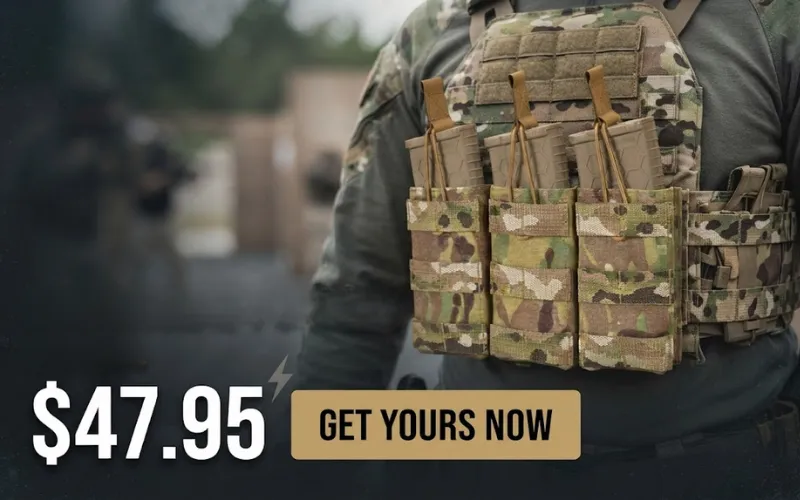
Chase Tactical’s Triple 5.56 Mag Pouch fits three 30-round 5.56mm magazines with Mil-Spec elastic bungee retention.
Why Magazine Pouch Design Matters
The job of a magazine pouch is to hold your magazines securely until you need them and then release them cleanly when you do. Every design feature, from closure type to attachment method to the number of mags carried, is an engineering tradeoff between retention security, draw speed, and profile. There is no universally correct answer. The right pouch depends on your role, your environment, your weapon system, and how your kit is configured around it.
A magazine pouch also plays a role in how your overall loadout balances. A triple pouch carrying three 30-round 5.56mm magazines at the front of a plate carrier positions the weight high and central. Single pouches distributed across a belt or carrier distribute that weight differently. Understanding pouch types helps you make these decisions deliberately rather than by default.
Open-Top Magazine Pouches
Open-top magazine pouches have no closure over the magazine mouth. The magazine sits in the pouch with the base or the feed end exposed, retained by friction, by elastic bungee loops, or by the geometry of the pouch body itself. The defining advantage is draw speed. Without a flap, snap, or closure to clear, the magazine is out of the pouch in a single motion. For trained shooters performing timed reloads, the difference between a flap pouch and a properly tensioned open-top pouch is measurable.
The tradeoff is retention security. An open-top pouch relies on its retention mechanism to keep the magazine in place during dynamic movement, vehicle operations, or a fall. Bungee retention systems, where one or two elastic loops cross the face of the magazine, add security while preserving most of the speed advantage. The Chase Tactical Triple 5.56 Mag Pouch uses Mil-Spec elastic bungees in a kangaroo-style configuration that securely retain magazines during movement while still allowing a clean one-handed draw.
Open-top pouches are the dominant choice for combat-use plate carrier setups, competition shooting, and law enforcement duty configurations where reload speed is a priority and the carrier is worn in a way that keeps the pouches relatively stable.
Flap Magazine Pouches
Flap pouches add a fold-over or hinged cover over the magazine opening, typically secured with hook-and-loop (Velcro), a snap, or a combination of both. The flap provides maximum retention security. The magazine will not come out during water crossings, extended prone work, or physical altercations where the pouch is subject to pressure and movement from multiple directions. Military units operating in austere environments or high-contact scenarios have historically favored flap designs for this reason.
The cost is draw speed. Clearing a flap under stress, especially with gloves on, adds a step to the reload sequence. Hook-and-loop closures require deliberate peeling action. Snaps require precise button manipulation. Training can minimize the time cost, but the mechanical step is always present. For applications where retention matters more than draw speed, such as mounted operations, long patrols through heavy vegetation, or any environment where a loose magazine is a serious problem, the flap pouch is the appropriate choice.
Some flap designs use a bungee or elastic retention inside the pouch body in addition to the external flap, providing a redundant retention layer while allowing the flap to remain open when access speed becomes more important, giving the user flexibility in how they configure the pouch for different phases of an operation.
Hybrid and Bungee-Retention Pouches
Hybrid designs aim to combine the security of a flap pouch with the speed of an open-top pouch. The most common approach uses a bungee cord stretched across the front face of the magazine in place of a rigid flap. Under a normal draw, the bungee deflects easily, and the magazine clears cleanly. Under incidental pressure or movement, the bungee holds the magazine in place. The limitation is that bungee retention is directional. It resists forces from the front but does not prevent the magazine from shifting laterally if the pouch walls are loose.
Some hybrid designs add a secondary hook-and-loop retention tab at the top of the pouch that can be used when maximum security is needed and peeled back when speed is the priority. This gives the operator a field-adjustable retention level that neither a purely open-top nor a purely flap pouch can offer.
MOLLE Magazine Pouches
“MOLLE mag pouch” is a descriptor about how the pouch attaches to the carrier or belt, not about the pouch’s retention mechanism. MOLLE (Modular Lightweight Load-carrying Equipment) attachment uses a series of woven straps that thread through the PALS webbing grid on the carrier or belt platform. The result is a very secure, stable attachment that does not rely on hook-and-loop or clips and does not shift under movement once properly threaded.
MOLLE-attached pouches can be open-top, flap, or hybrid. The attachment method is a separate variable from the retention method. When people refer to “MOLLE mags,” they usually mean magazine pouches that use MOLLE attachment rather than hook-and-loop or placard-based systems. The distinction matters because MOLLE attachment requires more setup time to position and reposition pouches than hook-and-loop systems, but it provides significantly better stability during sustained use.
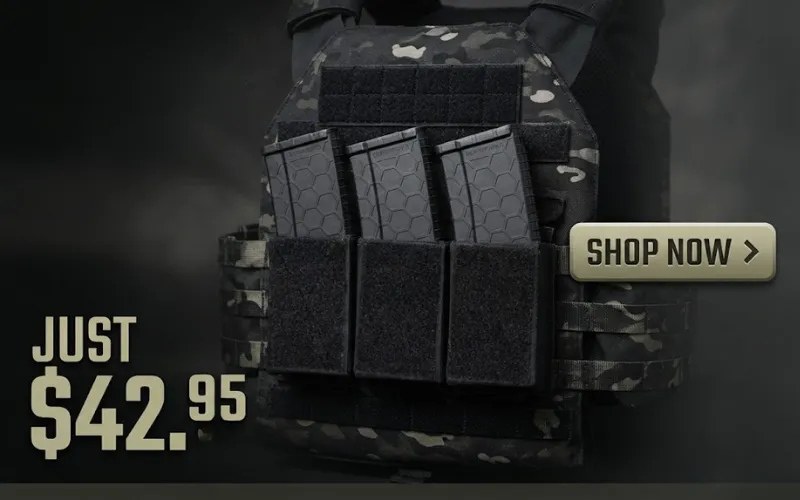
Hook-and-loop attachment systems, by contrast, allow rapid repositioning of pouches without threading straps. The Chase Tactical Triple 5.56 Hook-and-Loop Mag Pouch uses this system, attaching directly to the front of a plate carrier via hook-and-loop for fast position adjustment while still providing reliable retention under normal operational conditions. For more on choosing between MOLLE and hook-and-loop attachment, the Chase Tactical mag pouch selection guide covers this in detail, noting that PALS refers to the webbing grid while MOLLE refers to the attachment system that interfaces with it.
Single, Double, and Triple Mag Pouches
Beyond retention and attachment method, the number of magazines a pouch carries is a primary selection variable. Each configuration involves a tradeoff between ammunition availability, weight concentration, and profile.
Single Mag Pouches
Single magazine pouches carry one magazine and offer the lowest profile and weight per pouch. They are useful for supplementing a primary multi-mag pouch, filling specific positions on a belt or carrier where a triple pouch would not fit, or building a minimalist kit where weight and bulk are the priority. Their limitation is that, with only one magazine per pouch, a full combat load requires more pouches spread across additional positions, increasing setup complexity.
Double Mag Pouches
Double pouches provide a middle ground between the compactness of a single pouch and the capacity of a triple pouch. They are common on belt setups and for secondary magazine positions that are not the primary reload source. A double on the belt alongside a triple on the front panel is a widely used configuration that balances primary reload speed with additional capacity without concentrating too much weight in a single position.
Triple Mag Pouches
Triple pouches carry three magazines, which, for a 5.56mm AR-platform rifle, means 90 rounds accessible from a single front-panel position. They are the most common configuration for plate carrier front panels for exactly this reason. The tradeoff is weight concentration. Three 30-round 5.56mm magazines weigh roughly three pounds fully loaded, and placing all of that weight at the front center of the carrier creates a specific balance profile that affects how the carrier sits during extended wear.
The Chase Tactical Triple 5.56 Hook-and-Loop Mag Pouch attaches quickly and holds its position on any plate carrier front panel.
Matching Pouch Type to Application
Duty and Patrol Carry
Law enforcement patrol configurations typically favor bungee-retention open-top or hybrid pouches on a belt or plate carrier, prioritizing draw speed while maintaining enough retention for extended vehicle time and dynamic movement. Flap pouches are used less in these roles because the speed cost is considered too high for the scenarios most patrol officers encounter.
Military Combat Roles
Combat configurations vary widely by unit doctrine, environment, and mission type. Patrol bases and mounted roles that involve extended movement through vegetation or vehicles often favor flap or hybrid designs for their retention security. Direct action roles where rapid reloading is critical tend toward open-top or bungee designs. Most modern military magazine pouches are MOLLE-attached for stability under sustained use.
Range Training
For range use, the priority is usually practicing realistic reload procedures in a way that translates to the operational configuration. Running the same pouch type on the range as you would in operational use is standard practice. Open-top and bungee pouches dominate range setups for their draw speed, which makes timed reload drills more useful as training tools.
Minimalist and Rapid Response
Quick-response configurations, such as home defense or vehicle-borne response setups, typically use hook-and-loop-attached front-panel pouches for fast donning and a low profile. The priority is a carrier that goes on quickly and provides immediate access to a primary magazine load. For this application, see also the Chase Tactical QRC, which is designed specifically for rapid donning in active-threat scenarios.
Material and Durability Considerations
Most quality magazine pouches are constructed from nylon, typically 500D or 1000D Cordura. Nylon is the correct choice for tactical pouches because it is lightweight, MOLLE-compatible by design, abrasion-resistant, and can accommodate elastic bungee, hook-and-loop, and snap closures within the same design. It also tolerates moisture better than leather and does not degrade with UV exposure the way some synthetic alternatives do.
Denier rating (the D in 500D and 1000D) refers to the weight of the yarn used in the fabric construction. Higher denier means heavier and generally more abrasion-resistant fabric. 500D Cordura is the standard for most pouches because it offers adequate durability without unnecessarily burdening the carrier. 1000D Cordura is used in applications where maximum durability is the priority and weight is a secondary concern.
For a more detailed breakdown of material selection across mag pouch types, the Chase Tactical ammo pouch selection guide explains how nylon construction enables multiple fastening options and multiple compartments in ways that leather and other materials do not.
Frequently Asked Questions
What is the difference between an open-top and flap magazine pouch?
An open-top pouch has no closure over the magazine, providing faster draw speed at the cost of some retention security. A flap pouch covers the magazine with a fold-over closure, providing maximum retention security at the cost of draw speed. The right choice depends on the balance between speed and security required for the application.
What does MOLLE compatibility mean for a magazine pouch?
MOLLE compatibility means the pouch uses woven attachment straps that thread through PALS webbing grids on tactical vests, plate carriers, and belts. It describes how the pouch attaches to the platform, not how it retains the magazine. A MOLLE pouch can be open-top, flap, or hybrid.
How many magazines should I carry on a plate carrier?
A standard combat load for a 5.56mm rifle is typically seven magazines, with three on the front panel of the carrier and the remainder distributed on a belt or additional pouch positions. For law enforcement patrol, two to four magazines is a common configuration depending on department policy and role. The right number depends on mission requirements, weight limits, and operational duration.
What is bungee retention in a magazine pouch?
Bungee retention uses one or two elastic cords stretched across the magazine’s face to hold it in the pouch. It provides greater retention security than a purely friction-fit open-top pouch while preserving most of the draw-speed advantage over a flap design. It is the most common retention method on current military and law enforcement magazine pouches.
What is the difference between MOLLE and hook-and-loop mag pouch attachment?
MOLLE attachment uses woven straps threaded through PALS webbing for maximum stability and security. Hook-and-loop attachment allows faster positioning and repositioning of pouches on a compatible carrier surface. MOLLE is more stable for sustained use; hook-and-loop is faster to set up and adjust. Many carriers support both systems, depending on the front panel configuration.
What caliber-specific considerations apply to magazine pouch selection?
Pouch dimensions are caliber-specific. A 5.56mm pouch will not properly retain a 7.62mm magazine and vice versa. Pistol caliber magazines are shorter and narrower than rifle magazines and require dedicated pistol mag pouches. Always verify that the pouch you select is rated for your specific magazine dimensions before purchasing.