








Quick-Release Plate Carriers: How They Work and When You Need One

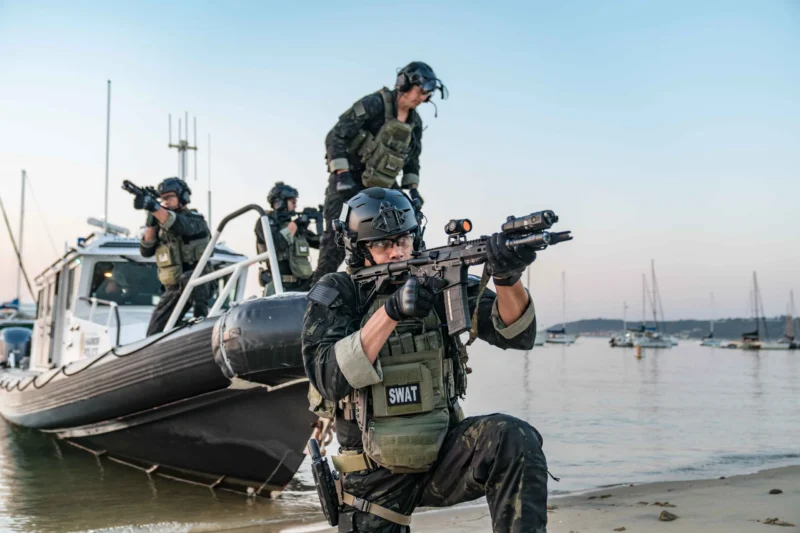
A plate carrier that protects you is a good plate carrier. A plate carrier that protects you and can come off in under three seconds when a medic needs access to your chest is better. Quick-release plate carriers are no longer a specialty niche. They are standard issue thinking for military units, law enforcement entry teams, and serious civilian operators who understand that getting the carrier off can be just as critical as wearing it in the first place. This article breaks down exactly how quick-release systems work, the different mechanisms available, who needs them, and what to look for when buying.
Need a reliable, quick-response carrier right now?

What Is a Quick-Release Plate Carrier?
A quick-release plate carrier is a tactical vest built around a dedicated release mechanism that allows the entire carrier to be removed from the wearer with a single- or two-step motion, without sequentially unbuckling shoulder straps, the cummerbund, or any additional hardware. The goal is speed under stress. Standard plate carriers can take 30 seconds or more to remove when someone is injured, panicked, or working with one hand. A functioning quick-release system brings that window down to two or three seconds.
It is important to distinguish between two things that are sometimes confused. A buckle that makes a carrier easier or faster to put on is not the same as a genuine quick-release emergency egress system. A true quick-release mechanism is engineered around rapid removal under stress, not just convenient donning. If a product description only talks about how quickly you can gear up, that is not a quick-release carrier in the operational sense.
How Quick-Release Systems Work
Most quick-release designs rely on one of three activation methods: a pull cord, a pull tab connected to tubular buckles, or a dedicated release strap running across the shoulder or cummerbund. When activated, these mechanisms either cause the carrier to split along the rear seam and fall forward or release all attachment points simultaneously so the vest drops away from the body. Some systems are designed so that a single pull from either shoulder activates the full release. Others require simultaneous activation at two points, which trades a small amount of speed for reduced risk of accidental release.
The cummerbund connection is where most quick-release designs focus their engineering. Standard cummerbunds use hook-and-loop or fixed buckles that require deliberate, sequential manipulation. Quick-release cummerbunds replace these with systems such as tubular buckles or proprietary rapid-disconnect hardware that open under a single directed pull. The Chase Tactical Rapid Disconnect Cummerbund uses this approach, incorporating a Rapid Disconnect System (RDS) for immediate detachment while still providing three rows of PALS/MOLLE webbing for full pouch attachment.
Types of Quick-Release Mechanisms
Pull-Cord Systems
Pull-cord designs route a cord through the carrier structure so that a single pull separates the vest along a predetermined split line, usually at the rear. The carrier falls forward and away. These systems are popular in high-threat military applications where one-handed, eyes-off-the-carrier operation is a real possibility. The cord is typically routed to a handle at one or both shoulders.
Tubular Buckles (FirstSpear Tubes and 2M ROC Style)
Tubular buckle systems replace the standard cummerbund buckle with a mechanism that releases by pulling a tab outward and then sliding off the male end. They are widely used because they can be retrofitted onto many existing carrier platforms without redesigning the entire vest. The tab requires a deliberate pull rather than an aggressive yank, reducing accidental release while still allowing rapid, intentional doffing. These are among the most common quick-release hardware choices on the current market.
Multi-Point Simultaneous Release
Some carriers use four dedicated release points distributed across the shoulder and cummerbund connections. When activated, all four release simultaneously or in rapid sequence, allowing the carrier to clear the body completely in seconds. This architecture is favored for emergency casualty doffing and for scenarios in which the wearer may need to self-doff with one functional hand, or in which a medic needs to clear the carrier from an incapacitated patient.
Drag Handle Integration
A related feature found on most quality quick-release carriers is an integrated drag handle, typically positioned at the top rear of the carrier. The drag handle serves a separate but complementary function: it allows a teammate to extract an incapacitated operator by grabbing and pulling, even if the quick-release has not been activated. When both features are present and properly positioned, the carrier covers both extraction and medical-access scenarios.
Who Needs a Quick-Release Plate Carrier
Military and Combat Personnel
For personnel in active combat roles, quick release is as much a force-protection feature as a personal-safety feature. A teammate who can remove a casualty’s carrier in two seconds versus thirty seconds has a direct impact on medical outcomes in thoracic injury scenarios. Modern military body armor programs in multiple countries have incorporated quick-release requirements into their standard specifications for exactly this reason.
Law Enforcement Entry Teams
SWAT and entry team operators move through confined spaces and dynamic environments where the ability to rapidly shed gear matters. Beyond medical access, a quick-release system reduces the risk of carrier snagging during exfiltration and gives individual officers an emergency option if their carrier becomes a liability in a vehicle entrapment or similar scenario.
First Responders and Rescue Task Force
Rescue task force operators working warm-zone incidents often need to remove body armor from casualties to provide care. Quick-release carriers on the casualty side dramatically reduce the time-to-treatment for chest injuries that require direct access to the thorax. First responders wearing quick-release carriers themselves can also self-doff for patient assessment in controlled environments.
Civilians in High-Risk Roles
Armed civilians, security contractors, and close-protection professionals who wear plate carriers regularly benefit from quick-release systems for the same reasons as law enforcement. Beyond emergency scenarios, the ability to remove a carrier quickly also has practical value for temperature management during extended operations, something that does not apply in a firefight but matters significantly during long patrol or surveillance work.
Want a modular carrier with quick-release cummerbund compatibility?
What to Look for When Buying
Activation Location and Handedness
The release handle or pull tab should be reachable with either hand from a natural position. Shoulder-mounted handles are generally preferred over cummerbund-only releases because the shoulder is accessible even when a wearer is on their back or being dragged. Some carriers offer left- or right-hand-dominant configurations. Verify this before purchasing if you have a strong hand preference for your draw side.
Reset and Re-donning Capability
A quick-release system that cannot be reset in the field is a single-use training liability. Before purchasing, confirm that the release mechanism can be reset without special tools or replacement hardware. Pull-cord systems in particular vary widely here. Some reset in under a minute with a simple re-thread; others require component replacement. For training environments where the release may be used repeatedly, this matters considerably.
Compatibility with Existing Gear
Quick-release cummerbunds are often sold separately from the main carrier. If you are adding quick-release capability to an existing setup, check that the replacement cummerbund is compatible with your carrier’s rear pass-through pocket dimensions and attachment method. The Chase Tactical RDS Cummerbund is compatible with the MEAC, LOPC, and LVPC-E plate carriers, as well as most carriers featuring standard rear pass-through cummerbund pockets.
Retention Security During Normal Wear
An overly sensitive quick-release system will increase the risk of accidental release during dynamic movement, vehicle operations, or close-contact scenarios. The mechanism should require a deliberate, directed motion to activate, not a random pull. If you are evaluating a carrier in person, test the retention security before testing the release speed. Both characteristics matter equally.
MOLLE Compatibility
A quick-release carrier should not compromise your ability to run a full loadout. Confirm that the cummerbund and front/back panels offer adequate MOLLE webbing for your required pouches. Losing two rows of MOLLE attachment space to accommodate a quick-release mechanism defeats part of the purpose of a modular carrier. Most quality designs maintain full MOLLE coverage while integrating the release hardware.
Quick-Release vs. Standard Plate Carriers: Practical Tradeoffs
Quick-release systems add cost and, on some platforms, a small amount of weight due to the hardware. They also introduce a mechanical component that requires periodic inspection. Pull cords can fatigue. Tubular buckle pull tabs can wear at the cord connection point if handled aggressively. Neither failure mode is difficult to address with routine inspection, but it does mean a quick-release carrier requires slightly more maintenance attention than a fixed-buckle platform.
For roles where emergency doffing is a realistic operational requirement, these tradeoffs are straightforward. For recreational shooters or range use where the carrier never needs to come off quickly, a standard platform may be sufficient. The decision comes down to an honest assessment of how the carrier will actually be used. If the answer involves any scenario where a medic might need chest access in the field, the quick-release option is the correct choice.
Integrating a Quick-Release Carrier Into Your Full Kit
A quick-release carrier works alongside the rest of your loadout rather than replacing it. Your magazine pouches, medical kit, and any utility pouches attach to the carrier’s MOLLE system the same way they would on a standard platform. The difference is that when the carrier comes off in an emergency, it takes everything attached to it with it, which is by design. This means your emergency medical supplies should be positioned accordingly. Critical items that need to remain accessible after a carrier is doffed, such as a tourniquet, are better positioned on a belt or lower body platform rather than exclusively on the carrier.
For additional guidance on building out a complete plate carrier setup, see the Chase Tactical articles on integrating plate carrier accessories and the best plate carrier accessories. For information on how a cummerbund affects the full carrier system, this overview of cummerbund plate carriers covers the different types and their respective applications.
Frequently Asked Questions
What is a quick-release plate carrier?
A quick-release plate carrier is a tactical vest with a dedicated release mechanism that allows it to be removed rapidly through a single or two-step motion. It is designed for emergency scenarios where standard sequential unbuckling would take too long.
How fast can a quick-release plate carrier be removed?
A properly designed quick-release system allows the carrier to be removed in two to three seconds. Multi-point simultaneous release designs can achieve this even when the operator is working with one hand or is being assisted by a teammate.
Is a quick-release cummerbund the same as a quick-release carrier?
Not exactly. A quick-release cummerbund upgrades the side attachment system for rapid release but does not address shoulder retention. A full quick-release carrier incorporates rapid-release hardware across all major attachment points, including both the cummerbund and shoulder connections.
Can I add a quick-release system to my existing plate carrier?
In many cases, yes, by replacing the cummerbund with a quick-release compatible version. Compatibility depends on your carrier’s rear pass-through pocket dimensions and attachment method. Verify fitment before purchasing a replacement cummerbund.
Do quick-release plate carriers require more maintenance?
They require periodic inspection of the release cord or pull-tab hardware. Pull cords can fatigue over time, and tubular buckle tabs should be checked for wear at the cord attachment point. Neither issue is difficult to address, but routine inspection is recommended.
Who should use a quick-release plate carrier?
Military personnel, law enforcement entry teams, rescue task force operators, security contractors, and any individual who may need emergency medical access to the torso in the field. For recreational range use without operational requirements, a standard carrier is typically sufficient.