







Iran Used Chinese Spy Satellite to Target U.S. Bases

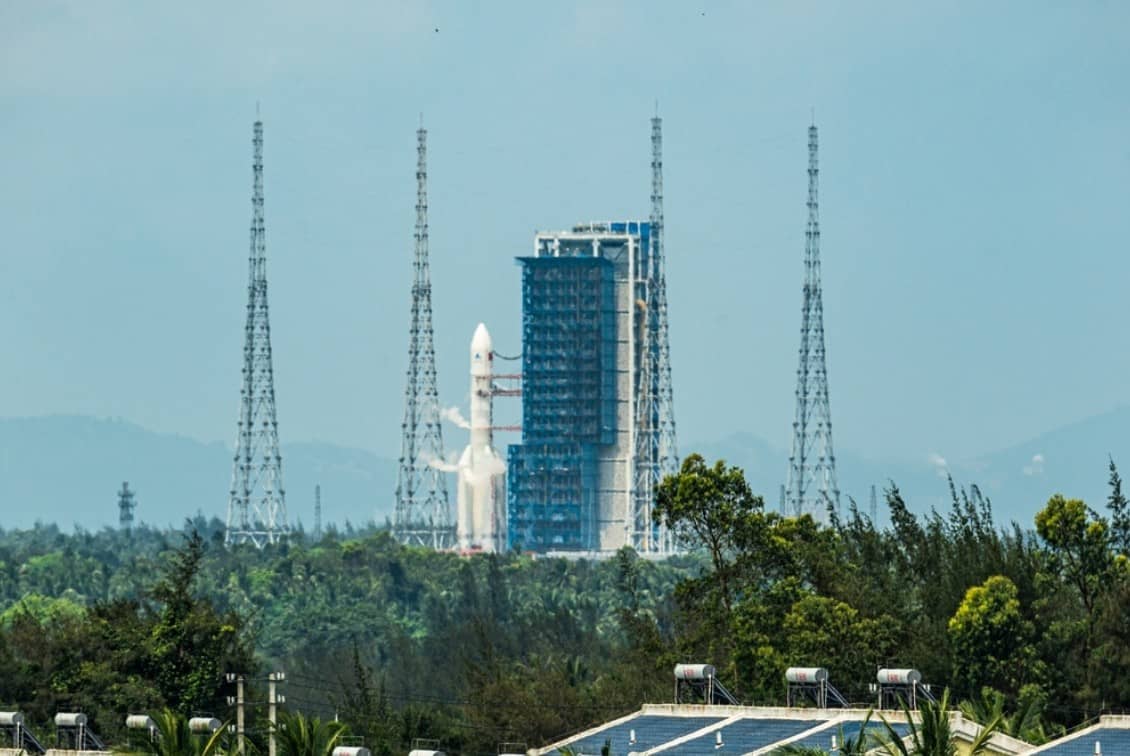
Iran used a Chinese-built satellite to monitor and target U.S. military bases across the Middle East during the recent conflict, the Financial Times reported, citing leaked Iranian military documents.
The TEE-01B satellite, developed and launched by Chinese company Earth Eye Co., was purchased by the Islamic Revolutionary Guard Corps’ (IRGC) Aerospace Force in 2024 after China launched it into space, according to the report.
Under the deal, the IRGC was given access to commercial ground stations run by Emposat, a Beijing-based company that provides satellite control and data services through a network across Asia, Latin America and other regions.
Iranian commanders reportedly used the satellite to monitor Prince Sultan Air Base in Saudi Arabia, capturing images on March 13, 14 and 15. During that same period, President Donald Trump confirmed that American aircraft at the base were hit.
The report said the satellite also captured images of Muwaffaq Salti Air Base in Jordan, sites near the U.S. Fifth Fleet headquarters in Manama, Bahrain, and areas around Erbil airport in Iraq around the time of reported Iranian attacks.
China’s Foreign Ministry denied the report. “Recently, some forces have been keen on fabricating rumors and maliciously associating them to China,” the ministry said in a statement obtained by Reuters. “China firmly opposes this kind of practice driven by ulterior motives.”
The Pentagon has not yet commented on the report.
President Donald Trump on Sunday warned countries that supply military equipment to Iran that they could face a possible 50% tariff on imports to the United States. He made the warning after reports emerged that China is preparing to deliver man-portable air-defense systems (MANPADS) to Iran within weeks.
“If we catch them doing that, they get a 50 percent tariff,” Trump said in an interview on Fox Business Network’s “Sunday Morning Futures” with Maria Bartiromo.
Trump said he does not expect China to take such steps. “I doubt they would do that because I have a relationship and I think they wouldn’t,” he said.
The comments came days after it was reported that China played a quiet role in supporting efforts that led to a two-week ceasefire between the United States and Iran.
Previous reports have said Iran also received Russian intelligence satellite imagery of U.S. and Israeli targets following the start of a U.S.-Israeli bombing campaign on Feb. 28.
This revelation highlights the growing complexity of modern conflicts, where commercial satellite technology is increasingly being repurposed for military intelligence gathering. The TEE-01B satellite, while marketed as a civilian Earth observation platform, appears to have provided Iran with high-resolution imagery that could have aided in planning strikes or assessing damage on U.S. and allied positions. Experts suggest that the integration of such dual-use technology blurs the line between commercial space activities and strategic military support, raising serious questions about export controls and international oversight in the satellite industry.
Analysts point out that China’s involvement, even if indirect through private companies like Earth Eye Co. and Emposat, fits into a broader pattern of Beijing expanding its influence in the Middle East while maintaining plausible deniability. By offering advanced remote sensing capabilities to nations like Iran, China not only strengthens its economic ties but also positions itself as a key player in regional power dynamics. This development could strain U.S.-China relations further, especially as Washington continues to pressure Beijing over technology transfers and military assistance to adversarial states.
The Trump administration’s response, including threats of steep tariffs, reflects a hardline approach aimed at deterring potential arms shipments. However, the president’s emphasis on his personal relationship with Chinese leadership also indicates a preference for diplomacy alongside economic leverage. The two-week ceasefire brokered with quiet Chinese support demonstrates how Beijing can act as a behind-the-scenes mediator when it serves its interests, such as protecting vital energy imports from the Gulf or preventing a wider regional war that could disrupt global trade routes.
Meanwhile, the involvement of Russian satellite intelligence adds another layer to the axis of cooperation among Iran, Russia, and China. This emerging alignment challenges the traditional dominance of Western intelligence capabilities in the region. As satellite technology becomes more accessible and affordable, smaller nations and non-state actors may increasingly rely on such tools, potentially escalating the risk of miscalculation and rapid escalation in future crises.
In the coming weeks, U.S. officials are expected to review satellite data-sharing agreements and push for stricter international regulations on dual-use space technology. Congressional leaders from both parties have already called for hearings to examine the extent of Chinese and Russian support to Iran during the recent hostilities. The Pentagon’s silence so far may indicate ongoing assessments of the damage caused and the accuracy of Iranian targeting based on foreign satellite feeds.
Overall, this episode underscores the shifting nature of global conflicts in the space domain. What was once the exclusive realm of superpowers is now accessible to a wider array of actors, forcing nations like the United States to adapt its strategies in both military operations and diplomatic engagements. The full implications of these leaked documents will likely unfold in the months ahead as more details emerge from intelligence briefings and public disclosures.