







Pentagon’s Drone Plan Hits Supply Wall as China Controls 98 Percent of Magnets


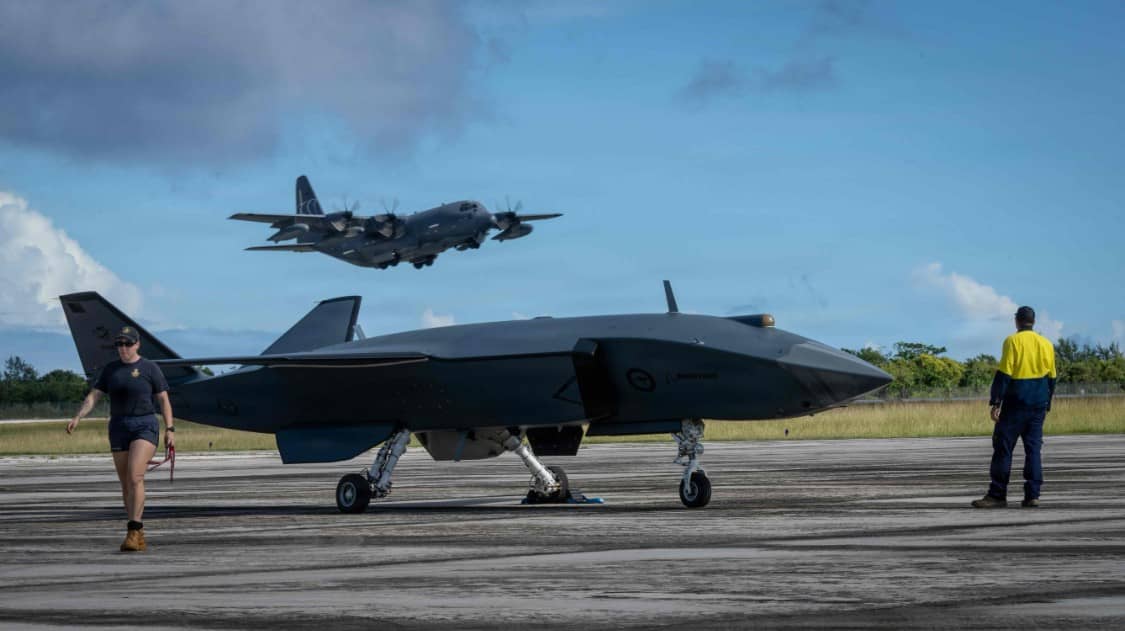
The Pentagon has ordered 30,000 one-way attack drones and plans to scale production beyond 300,000 units by early 2027 as part of a broader push to strengthen U.S. autonomous warfare capabilities.
Mountain Horse Solutions, a Global Ordnance company, along with partners AG3 Labs and Draganfly, has been invited to compete in two mission areas using separate drone platforms designed for long-range strike operations and close-quarters urban combat.
The effort comes amid reports of a Pentagon ban on the use of China-origin rare earth magnet materials in U.S. military platforms starting in January 2027. Nearly all modern drones rely on rare earth magnets, and industry estimates suggest China produces about 98% of the global supply.
Pentagon estimates show that roughly 80,000 components across 1,900 U.S. weapons systems depend on Chinese-sourced rare earth materials, including drone motors, missile guidance systems and aircraft components. Experts warn it could take years for the U.S. to build a fully independent supply chain.
The Financial Times reported that defense companies are urging Washington to delay prohibition on using Chinese samarium-cobalt and neodymium-iron-boron magnets in War Department contracts.
The Pentagon has already started working to secure alternative supply chains. Until last year, the United States had only one major rare earth mine in operation, Mountain Pass in California, operated by MP Materials. In July 2025, the Pentagon took a $400 million equity stake in the company, becoming its largest shareholder.
In July, U.S.-based Ramaco Resources opened the Brook Mine in Wyoming, the first new rare earths mine in more than 70 years, though it has yet to begin production. Additional projects are also under development in Montana, Wyoming and Nebraska.
The Trump administration has also pursued overseas partnerships, including facilitating the acquisition of Brazilian producer Serra Verde by startup USA Rare Earth, in which the U.S. government took a 10 percent stake in January.
Analysts say these moves represent a multi-pronged strategy to mitigate supply chain vulnerabilities while accelerating drone deployment. The Pentagon’s Replicator initiative, which aims to field thousands of attritable autonomous systems, has placed heavy emphasis on rapid iteration and domestic manufacturing. Industry insiders note that Mountain Horse Solutions’ platforms are particularly well-positioned, with their long-range variant capable of exceeding 1,000 kilometers and the urban combat model optimized for tight-quarters operations with advanced AI-enabled target recognition.
However, challenges remain significant. Beyond magnets, battery technology, advanced semiconductors, and composite materials also present bottlenecks. Defense contractors warn that full decoupling from Chinese supply chains could increase per-unit drone costs by 25-40% in the short term, potentially straining budgets even as Congress has approved supplemental funding for autonomous systems.
Geopolitically, the push comes as Ukraine’s experience with mass drone warfare has reshaped Pentagon doctrine. U.S. planners are now prioritizing “human-in-the-loop” systems that can operate in contested electromagnetic environments while maintaining cost-effectiveness. Experts project that by 2028, autonomous platforms could constitute up to 40% of tactical strike capability in high-intensity conflicts.
Meanwhile, Mountain Pass and Brook Mine are ramping up processing capabilities. MP Materials recently announced plans to expand its downstream magnet manufacturing facility in Texas, aiming to produce enough NdFeB magnets for over 100,000 motors annually by late 2027. Ramaco’s Wyoming operation is expected to contribute additional heavy rare earth elements critical for high-temperature applications in military systems.
The race to onshore rare earth production underscores a larger strategic shift. As tensions with China continue, Pentagon officials emphasize that true technological superiority depends not only on innovation but on resilient industrial foundations. With over $2 billion in new investments already allocated, the coming years will test whether the U.S. can successfully rebuild critical mineral independence while maintaining its edge in the rapidly evolving domain of autonomous warfare.