







SOCOM Commander Says Special Operations Needs ‘PhDs Who Can Win a Bar Fight’

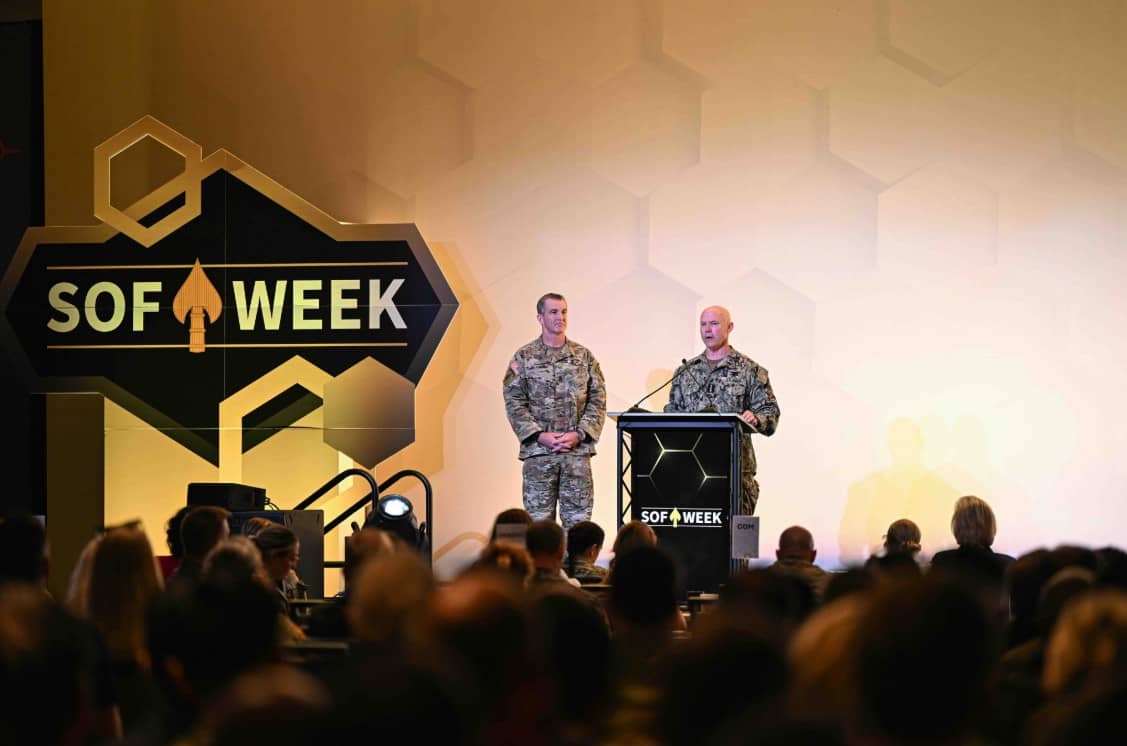
U.S. special operations forces need troops who are both combat-ready and technologically skilled as warfare becomes increasingly shaped by digital systems and advanced technologies, the head of U.S. Special Operations Command (SOCOM) said Tuesday.
Speaking during SOF Week 2026 in Tampa, Florida, Navy Adm. Frank M. Bradley said modern special operators must be “both lethal but also technically fluent.”
“This environment demands exactly what Wild Bill Donovan said 80 years ago: We need PhDs who can win a bar fight,” Bradley said, referring to the famed World War II intelligence leader and founder of the Office of Strategic Services, the predecessor to the CIA.
Bradley said the traditional basics of special operations, including shooting, moving, communicating and medical care, are still vital, but operators must now pair those skills with technical knowledge.
“To communicate today requires understanding of network architectures,” Bradley said. “To move requires evading multispectral surveillance. You can’t be brilliant with the modern basics on this muscle memory alone. You need the technical education and training to be able to master the electromagnetic spectrum in the virtual domain, as well.”
During the Pentagon-hosted panel discussion, Bradley also said the special operations community is trying to recruit more service members with science, technology, engineering and mathematics, or STEM, backgrounds.
Bradley said attracting STEM-oriented recruits starts with offering meaningful challenges.
“You have to provide challenges for people who are STEM-oriented to solve, [and] the good thing is the world’s providing plenty of those [challenges] for us,” Bradley said. “I don’t have to create new challenges to attract STEM-oriented professionals who want to fight and use their intellect to solve those problems, [because the problems] are abundant.”
He also stressed the importance of exposing children to STEM fields early to help build the next generation of military talent.
As an example of efforts to encourage interest in STEM among children, Bradley pointed to the military’s partnership with Congress and other policymakers to direct STEM outreach funding toward academic institutions with strong STEM programs.
“We need to realize that tomorrow’s recruits coming into the military are sitting at your kitchen tables,” Bradley said. “And so, if you want more recruits in the future who are STEM-oriented in the military, we need to give our families an opportunity to be exposed and inculcated with an interest in [STEM].”
During the discussion, Marine Corps Gen. Francis L. Donovan stressed that despite the military’s increasing focus on technology and STEM-related capabilities, troops must still possess the resilience and combat mindset needed for difficult missions.
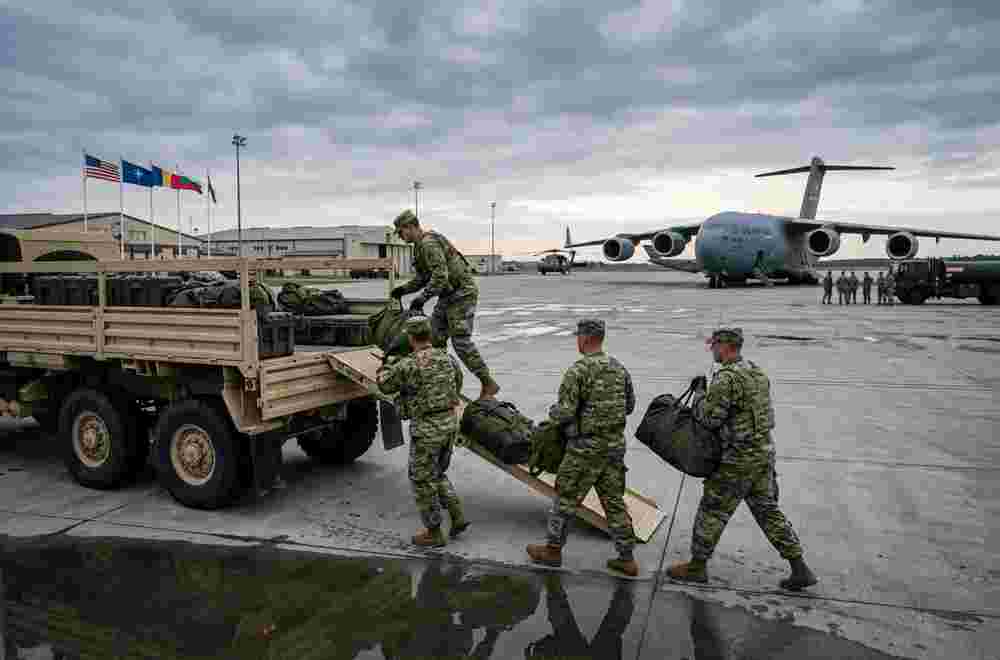
“Because I still think whether it’s SOF or conventional forces, we have to have young Americans that … when the chips are down, they leave that ramp in the back of a [military vehicle] and move into the hardest day of their lives; and they need teammates from the left and right that [also] have the grit to see the mission done,” Donovan said.
Donovan also said advanced technologies and STEM expertise should support military operations, but not replace humans.
“Someone still has to place their foot on a piece of ground to declare victory, and that will never go away,” he said.
The War Department has supported STEM initiatives in various forms since 2005. According to its website, the department’s STEM program mission aims to “inspire, cultivate, and develop exceptional STEM talent” to prepare the current and future defense workforce for evolving technological challenges.