







The Best Ways to Organize Ammo on Your Plate Carrier

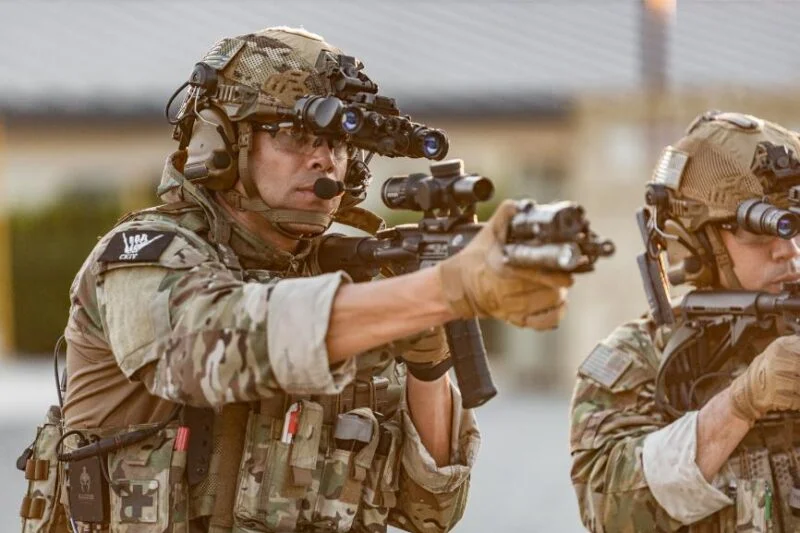
How you organize ammo on your plate carrier, your mag pouch setup, directly impacts your reload speed, movement efficiency, and performance under stress. A poorly configured loadout forces you to search for magazines, introduces fumbling during transitions, and shifts your center of gravity in ways that slow you down when it counts most.
Getting it right means thinking through ammo pouch selection, placement sequencing, weight distribution, and how your hands naturally move during a reload before you ever step into a high-pressure situation. This guide breaks down the key decisions so you can organize your ammo and build a plate carrier mag pouch setup that works with your movement, not against it.
Choosing the Right Magazine Pouch
The foundation of how you organize ammo on a plate carrier is selecting the right pouch for your primary caliber and mission profile. For 5.56mm rifle magazines, you have three main configurations to consider: single, double, and triple magazine pouches. Single pouches minimize bulk and suit operators who prioritize mobility over sustained fire.
Double and triple configurations give you more on-body ammo storage and capacity without needing to reach a battle belt, which matters in fast-moving engagements where every second counts. For a closer look at how these compare, see our guide to magazine pouch types.
Retention method is equally important. Open-top pouches with bungee retention allow fast one-handed access and are well-suited for dynamic environments. Hook-and-loop (velcro) attachment systems offer a different advantage: they offer quick-release removal, letting the pouch itself be stripped and replaced, or mounted directly to the loop field of a plate carrier without additional hardware.
For a full side-by-side comparison, see our breakdown of hook-and-loop versus bungee mag pouches. For a deeper breakdown of pouch types, retention systems, and compatibility considerations, see our guide to choosing the right mag and ammo pouch.
Pouch material also determines long-term durability and reliability. MIL-Spec 500D Cordura nylon offers the abrasion resistance and structural integrity needed for duty use. Hypalon pull tabs provide grip during rapid magazine retrieval, even with gloves on, a detail that sets purpose-built tactical pouches apart from general-purpose alternatives.
Configuring Mag Pouches for Different Calibers and Magazine Types
Not every loadout runs on 5.56mm alone. Mag pouch sizing and spacing has to match the actual magazine you are carrying, whether that is a 7.62mm battle rifle magazine, a pistol magazine for a sidearm, or shotgun shell loops for a less-lethal or breaching setup. A pouch built for 5.56mm magazines will often ride loose on shorter pistol mags or fail to seat a longer 7.62mm magazine, so check caliber compatibility before mixing magazine types on the same carrier.
Pistol mag pouches are typically sized smaller and mounted lower on the carrier or on a battle belt, keeping them out of the way of rifle mag pouches on the front panel. Mixed-caliber setups, rifle plus pistol, or rifle plus shotgun, work best when each pouch type is grouped separately rather than interleaved, so your hand always knows which row to reach for under stress. Configuring pouch capacity around your actual caliber mix, rather than defaulting to whatever single-caliber configuration is most common, keeps the whole setup consistent and predictable.
Attaching a Mag Pouch: MOLLE Threading and Hook-and-Loop Mounting

Most plate carriers use MOLLE (PALS) webbing to mount mag pouches. To attach a mag pouch via MOLLE, weave the pouch’s straps through the horizontal webbing rows on the carrier, over one row and under the next, then close the strap’s snap or hook-and-loop tab on the back of the pouch. This threading locks the pouch in place and keeps it from shifting during movement. For tips on getting the most out of your available panel space, see our guide to maximizing MOLLE real estate on any carrier.
For operators running plate carriers with a loop field on the front panel, hook-and-loop mag pouches offer a low-profile, modular mounting option that eliminates the need for MOLLE threading. The pouch attaches directly to the carrier’s loop surface, and on compatible systems, the elastic side sections of the cummerbund can overlap the top of the pouch, securing it further and making the configuration jumpable for airborne operations. For a full overview of how MOLLE webbing works and what it enables across a full plate carrier setup, see our guide to MOLLE-compatible plate carriers.
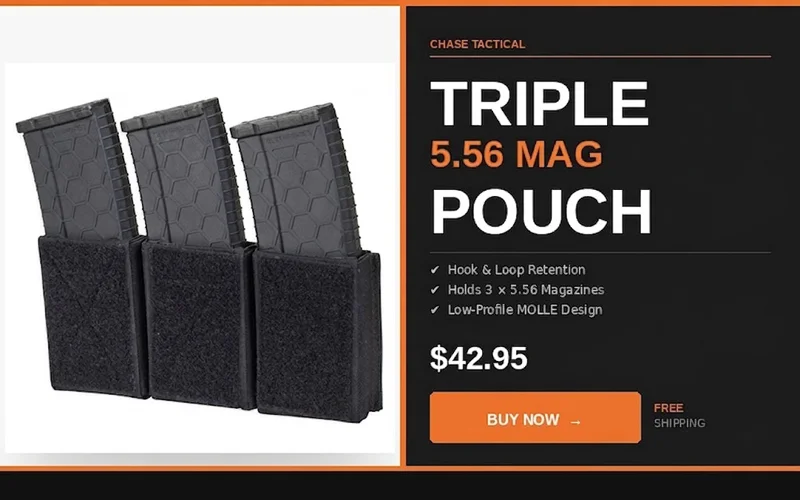
The Chase Tactical Triple 5.56 Hook & Loop Mag Pouch is built specifically for this role. It attaches to the front loop field of a plate carrier via hook-and-loop and holds three 30-round 5.56mm magazines. Double-layer MIL-Spec elastic with non-slip interior material secures each magazine independently, preventing rattle and movement without sacrificing draw speed. The pouch is designed to work natively with the Chase Tactical LVPC line and is backed by a limited lifetime warranty.
Fastening Systems for MOLLE-Compatible Gear
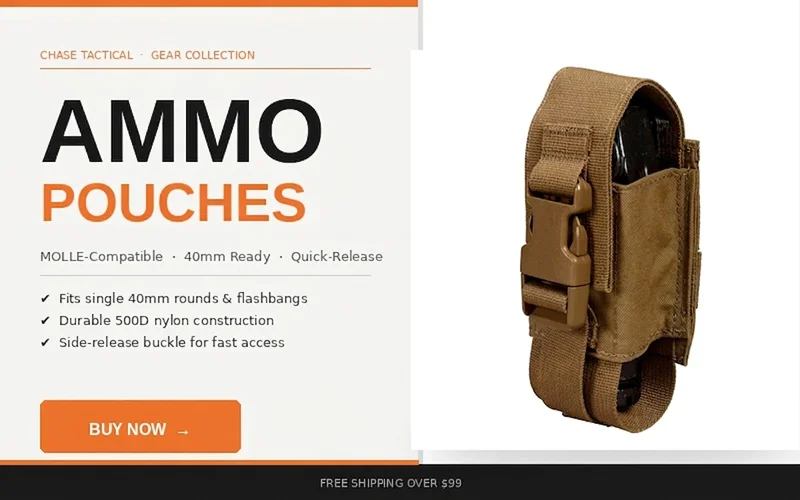
Beyond basic MOLLE threading, several fastening hardware options integrate with MOLLE-compatible gear and change how quickly a pouch can be attached, removed, or repositioned. Snap-fit polymer clips thread through a single PALS row and lock with a friction pin, letting you attach or remove a pouch in seconds without weaving webbing at all.
Traditional woven-strap MOLLE with a hook-and-loop retaining tab is slower to attach but offers rigid, no-shift mounting for pouches you do not plan to move often. Hook-and-loop panels, covered above, skip MOLLE hardware entirely in favor of a loop-field surface.
Matching the fastening system to how often you expect to reconfigure your setup, rarely versus frequently, is often a bigger factor in day-to-day usability than the pouch itself. A carrier built around quick-swap clips suits operators who rotate between mission profiles, while permanently threaded MOLLE suits a fixed, rarely-changed loadout.
Pouch Placement and Reload Sequencing
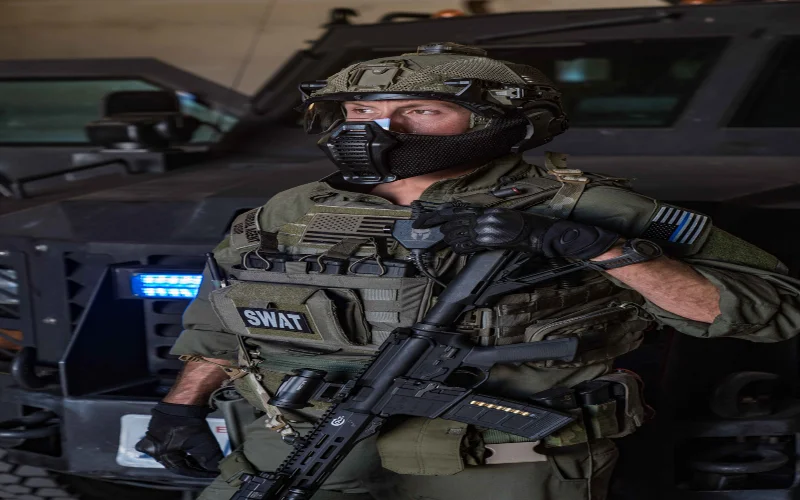
Magazine placement, sometimes searched as munition placement, on a plate carrier determines how naturally and quickly you can access your ammo under stress. For right-handed shooters, your primary magazine pouch should be positioned on the support side furthest to your left, so your support hand can reach it without interfering with your firing grip or rifle position. From there, additional magazines are arranged sequentially toward the centerline. Number your magazines left to right, with Magazine 1 being your first reload source on the support side.
If you are running both a plate carrier and a battle belt setup, exhaust your battle belt magazines first before transitioning to the plate carrier. This keeps your heavier, body-mounted load intact longer and reduces fatigue from upper-body weight early in an engagement. On the plate carrier itself, the sequencing reverses: from a battle-belt start, it works inward from the furthest point on the support side, toward the centerline.
Consistent munition placement also means your hands instinctively find the right pouch, even in low light or under cognitive load. A setup you can navigate without looking is one built for accessibility you can rely on in the field. If you are still dialing in your carrier fit before configuring pouches, start with our guide on how to wear a plate carrier. Correct plate height and cummerbund tension are the baseline; everything else is built around it. According to U.S. Army doctrine on individual equipment, tactical performance under stress is directly tied to how well trained and predictable a soldier’s equipment layout is.
Weight Distribution and Load Balance
Weight placement on a plate carrier affects posture, fatigue, and how efficiently you can move. Heavy loads positioned too far forward create a forward lean that strains the lower back and shoulders over extended wear. The goal is to keep the majority of your loaded weight centralized and close to your body’s natural center of gravity, roughly inline with your sternum and spine.
Distribute the magazine’s weight evenly across the front panel rather than stacking it all on one side. For operators running side-plate pockets on their cummerbund, be mindful of lateral weight asymmetry, as unbalanced side loads affect how you pivot, sprint, and transition between positions.
A balanced kit is a faster, more comfortable kit. Arrange your pouches in a single layer where possible, avoiding stacked configurations that push your profile outward and catch on obstacles in confined spaces. For environment-specific loadout guidance (urban, woodland, or desert), see our plate carrier setups for different environments guide.
Training Your Reload Sequence
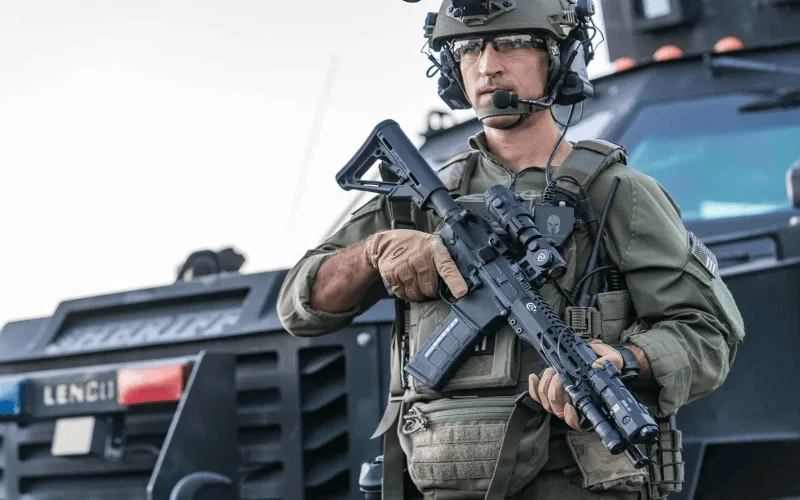
Even the best-configured plate carrier will underperform if the operator has not trained the reload sequence to the point of automaticity. The physical layout of your pouches is only half the equation; the other half is repetition. Practice dry reloads from your exact pouch configuration regularly, including transitions from your support-side primary pouch through to your secondary and tertiary magazines.
Use tactile and visual markers to differentiate your magazines. Numbered tape, color-coded mag base plates, or simple position memory all serve the same function: allowing you to identify and retrieve the right magazine without cognitive effort during a reload.
Incorporate these drills into your range routine so that the movements become as reliable as any other fundamental. If you are running a mixed loadout of pouch types, drill each attachment method separately so your hands don’t hesitate between a MOLLE pouch and a hook-and-loop one under stress.
Maintenance and Care of Mag Pouches
A mag pouch is only as reliable as its retention hardware, so periodic maintenance keeps a setup performing the way it did on day one. Inspect hook-and-loop surfaces regularly; lint and debris buildup in the hook fibers reduces holding strength over time, and a quick brush-out restores most of the original grip. Check bungee retention cords and elastic for stretching or fraying, since worn retention hardware is a common cause of a magazine working loose during movement.
Stitching at stress points, particularly where the pouch body meets the MOLLE straps, is worth checking before any extended operation; loose or frayed thread there is an early warning sign rather than something to address after it fails. Rinse nylon pouches with fresh water after exposure to saltwater, mud, or sand, and let them air dry fully before storage to protect the fabric’s durability over repeated use.
Conclusion
Organizing ammo on your plate carrier is not a one-size-fits-all decision; it requires matching your pouch selection, placement, and weight distribution to your specific mission profile, dominant hand, and gear system. The principles remain consistent: a primary pouch on the support side, a sequential arrangement toward the centerline, balanced weight close to the body, and a mounting configuration you can adjust and access without searching.
A hook-and-loop setup offers speed and modularity for carriers with a front loop field. A MOLLE-mounted triple pouch holds three magazines in a single fixed location. What matters most is that the system is intuitive, rehearsed, and built around the way your hands actually move.
Beyond the hardware, the variables that separate a functional loadout from a high-performance one are customization and training. The best pouch in the right location still fails if the operator has not drilled the sequence to the point of automaticity. Build your kit deliberately, test it under movement, and train with it regularly, that is what makes the difference when the situation demands it.
Ready to build your setup? Shop Chase Tactical’s ammo pouches in single, double, and triple configurations. The Single 5.56 Mag Pouch keeps things minimal, the Double 5.56 Mag Pouch splits the difference, and the Triple 5.56 Hook & Loop Mag Pouch gives you a jumpable, front-panel setup.
Frequently Asked Questions
How many magazines should I carry on my plate carrier?
Most operators carry three to six rifle magazines on their plate carrier, depending on mission length and threat environment. A triple magazine pouch on the front panel gives you three immediately accessible reloads without significantly impacting mobility. Additional magazines can be staged on a battle belt for sustained engagements.
What is the difference between MOLLE and hook-and-loop mag pouches?
MOLLE (Modular Lightweight Load-carrying Equipment) pouches thread through PALS webbing rows and lock into position, offering a very secure attachment that does not shift under heavy movement. Hook-and-loop pouches attach to a loop field surface on the carrier, allowing faster repositioning and removal. For carriers with a dedicated front loop panel, like the Chase Tactical LVPC line, hook-and-loop pouches can also be made jumpable by overlapping the cummerbund over the pouch top.
Should my magazine pouches be on the plate carrier or battle belt?
Both platforms serve different functions. Plate carrier pouches keep your primary reloads at chest height for fast access while standing or kneeling. Battle belt pouches distribute weight to the hips, which can reduce upper-body fatigue over long operations. Most setups use both a plate carrier for initial reloads and a belt for secondary. The sequencing between them should be trained consistently so that transitions are automatic.
Can I mix different pouch types on the same carrier?
Yes, and many operators do. A common configuration pairs a hook-and-loop triple mag shingle on the front panel with MOLLE-mounted utility or pistol pouches on the sides. The key is ensuring the arrangement does not create access conflicts, pouches that block each other, or require awkward hand positions, which defeat the purpose of modular configuration.
Where should I place mag pouches on my plate carrier?
Most operators place the primary magazine pouch on the support side of the carrier, farthest from the centerline, so the support hand can reach it without crossing the body. Additional pouches are arranged sequentially toward the centerline. This magazine placement keeps your first reload accessible while your dominant hand stays on the rifle.
How do I attach a mag pouch to a plate carrier?
Most mag pouches attach through MOLLE (PALS) webbing: thread the pouch’s straps over one row and under the next, then close the retaining strap on the back. Pouches built for a loop-field front panel attach with hook-and-loop instead, pressing directly onto the carrier’s loop surface without any threading.