







Air Force Tests Special Ops Plane Designed for Rapid Assembly in the Field

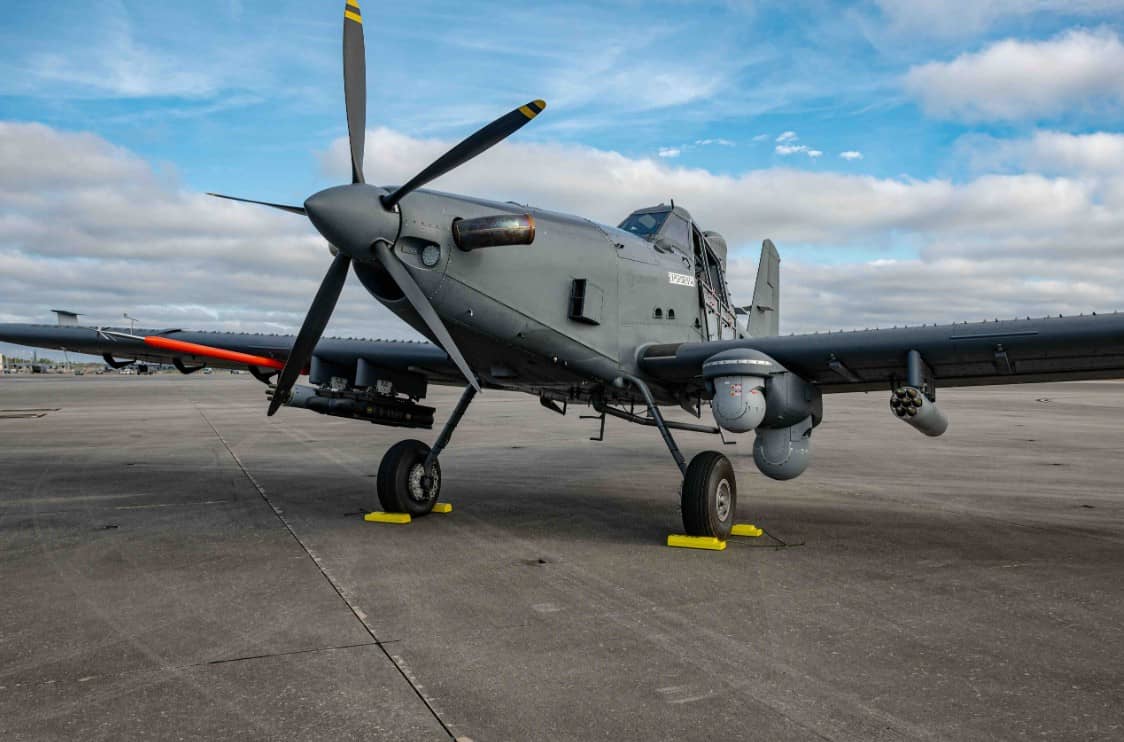
The U.S. Air Force Special Operations Command (AFSOC) is testing whether its new OA-1K Skyraider II aircraft can be rapidly disassembled, transported aboard cargo planes and reassembled in the field as part of a push to improve deployment flexibility for special operations missions.
Officials discussed the effort this week during Special Operations Forces Week in Tampa, Florida, saying the aircraft is designed to support missions ranging from counterterrorism operations to larger-scale conflicts.
The single-engine turboprop aircraft, based on the Air Tractor AT-802 crop duster, is intended to provide armed reconnaissance, close air support and precision strike capabilities for special operations forces operating from austere locations.
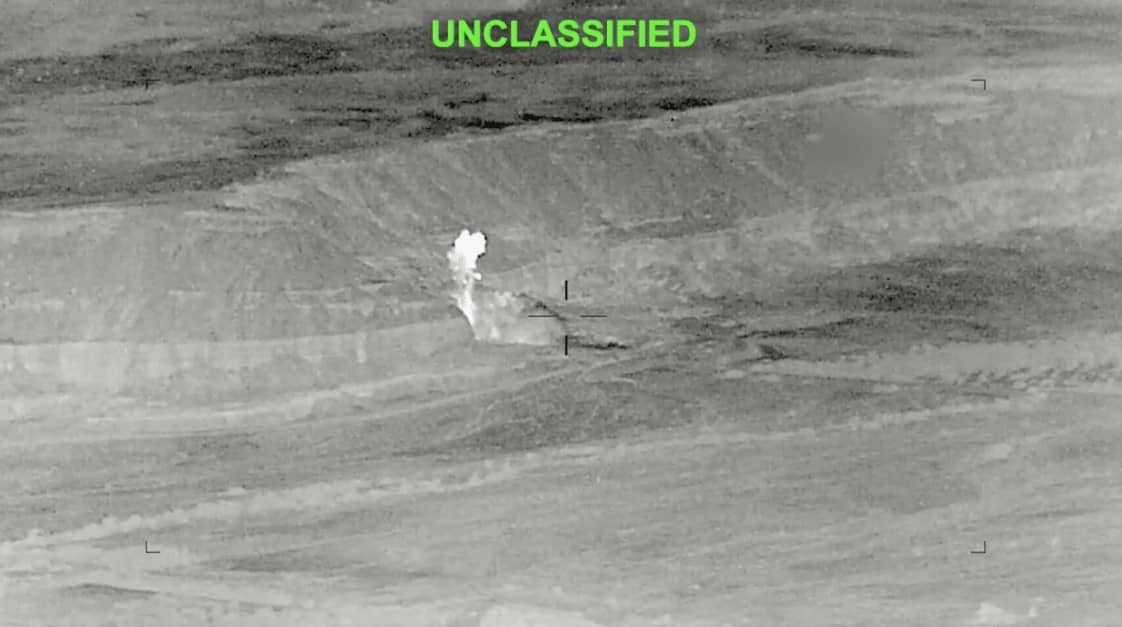
The aircraft is capable of carrying weapons including Advanced Precision Kill Weapon System laser-guided rockets, and officials are also considering arming it with Red Wolf cruise missiles.
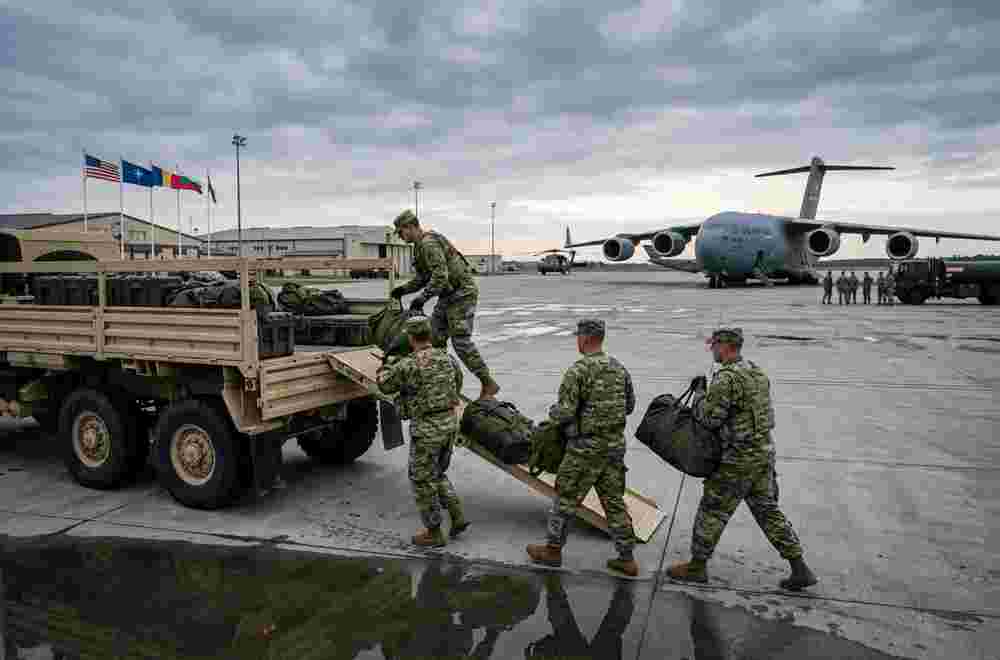
“Rapid disassembly and reassembly means, in a matter of hours, the aircraft can be loaded into mobility aircraft like a C-5 or C-17 for worldwide deployment,” Lt. Col. Robert Wilson, Air Force Special Operations Command’s armed overwatch requirements branch chief said in an Air Force Special Operations Command release. “With the OA-1K, ‘any place, any time, anywhere’ is not just a motto, but an actual capability.”
Wilson said the OA-1K is not intended to replace older aircraft such as the U-28 or MC-12, but instead serves as “a new, purpose-built solution for today’s complex environments.”
“The OA-1K represents a new era for AFSOC, with the flexibility to support not only counter-terrorism-like missions, but also crisis and contingency response, competition with more advanced adversaries, and even aspects of full-on conflict,” Wilson said. “To meet this wide range of mission sets, OA-1K is a multi-role capability platform that is essentially a Swiss Army knife of airborne capability.”
Lt. Gen. Mike Conley, commander of the AFSOC said the aircraft provides “a unique and modular solution for a wide range of operations, including armed overwatch, at a fraction of a cost of other platforms.”
The Air Force currently has 18 OA-1K aircraft and expects to receive “a handful more” by October.
Air Force officials said the aircraft is still undergoing developmental and operational testing, while pilot and crew training continues.
Wilson declined to provide a timeline for its first combat deployment but said the aircraft is expected to conduct missions “in the coming years.”
“I can’t get too specific in terms of operationally when it will employ,” Wilson said. “There’s obviously a sequence in terms of developmental test, operational test, and then employment. So, we’re looking for in the coming years, and it will be dependent on that sequence and how that unfolds.”
Wilson declined to provide a timeline for its first combat deployment but said the aircraft is expected to conduct missions “in the coming years.”
“I can’t get too specific in terms of operationally when it will employ,” Wilson said. “There’s obviously a sequence in terms of developmental test, operational test, and then employment. So, we’re looking for in the coming years, and it will be dependent on that sequence and how that unfolds.”
The OA-1K’s modular design draws heavily from its civilian agricultural roots, inheriting the AT-802’s proven durability in harsh environments. Its reinforced landing gear and high-wing configuration allow operations from unimproved dirt strips as short as 1,500 feet, making it ideal for forward arming and refueling points (FARPs) deep in contested territory. This capability addresses long-standing AFSOC challenges with traditional fixed-wing assets that require more infrastructure and longer logistical tails.
Industry analysts note the program’s cost-effectiveness as a major advantage. At an estimated unit cost well below $10 million—compared to $30 million or more for legacy turboprops—the Skyraider II enables AFSOC to rapidly scale its light attack fleet amid growing peer competition with China and Russia. The aircraft’s open-architecture avionics also facilitate swift integration of new sensors, electronic warfare pods, and networked data links, ensuring relevance across evolving threat environments.
Looking ahead, AFSOC plans to explore swarm tactics where multiple OA-1Ks operate in concert with uncrewed systems, extending reach while minimizing risk to manned crews. As testing progresses, the Skyraider II could become a cornerstone of distributed operations, allowing small special operations teams to project airpower from virtually any austere location worldwide. With additional aircraft deliveries on track and iterative upgrades already in planning, the OA-1K signals a shift toward more agile, affordable, and expeditionary air support for America’s most demanding missions.