








Level IIIA vs Level III Body Armor: Which Do You Need?

One of the most common points of confusion when buying body armor is the difference between Level IIIA and Level III. The names look nearly identical, but the two protection levels could not be more different in terms of what they stop, how they are built, and who they are designed for. Choosing the wrong level for your threat environment is not just a poor investment; it is a safety risk.
This guide breaks down exactly what distinguishes Level IIIA from Level III, how each performs against real-world threats, and which is the right choice for your role, environment, and operational requirements.
Why the Naming Is Confusing and Why It Matters
The NIJ protection-level naming convention causes genuine confusion because Level IIIA appears to be a subtype of Level III, as if it adds something to Level III. It does not. Level IIIA is actually a lower protection level than Level III, and the two armor types are built from completely different materials, intended for different threats, and worn in completely different ways.
Understanding this distinction before you purchase could literally save your life. A patrol officer or civilian who buys Level IIIA soft armor expecting rifle protection will not get it. A security professional who buys Level III hard plates expecting a lightweight concealable vest will receive neither. Getting this decision right requires understanding both levels on their own terms.
What Is Level IIIA Body Armor?
Level IIIA is the highest protection rating available in the soft armor category. Under the NIJ 0101.06 standard, Level IIIA armor is tested to stop .357 SIG FMJ flat nose rounds at 1470 feet per second and .44 Magnum semi-jacketed hollow point rounds at 1430 feet per second. In practical terms, Level IIIA stops virtually all common handgun threats.
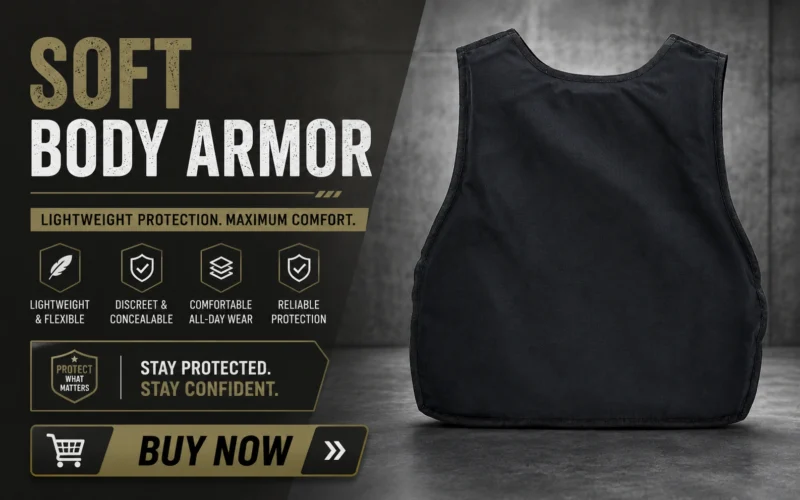
Level IIIA soft armor is constructed from high-strength para-aramid fibers woven into flexible ballistic panels. Because it is soft and flexible, it can be shaped to fit the body, worn comfortably for extended periods, and concealed under clothing. This makes it the standard choice for patrol law enforcement, plainclothes officers, security professionals, and civilians who need daily protection against handgun threats.
Chase Tactical’s NIJ-certified Level IIIA soft body armor is used by law enforcement agencies and military units worldwide. Available in multiple cuts, including full-torso coverage and shooter-cut configurations, the panels are certified to NIJ 0101.06 standards and undergo additional V50 and special-threat testing beyond the baseline NIJ requirements.
What Level IIIA Does Not Stop
Level IIIA soft armor is not rated for rifle threats. It will not reliably stop 5.56mm, 7.62mm, or other rifle-caliber rounds. Officers or civilians who face potential rifle threats need to supplement Level IIIA soft armor with hard armor plates or choose a higher protection level entirely.
What Is Level III Body Armor?
Level III is the entry point into rifle-rated hard armor. Under the NIJ standard, Level III plates are tested to stop six rounds of 7.62x51mm NATO FMJ (M80 ball) at a minimum velocity of 2780 feet per second. This covers a wide range of common rifle threats including 7.62x39mm and most 5.56x45mm rounds.
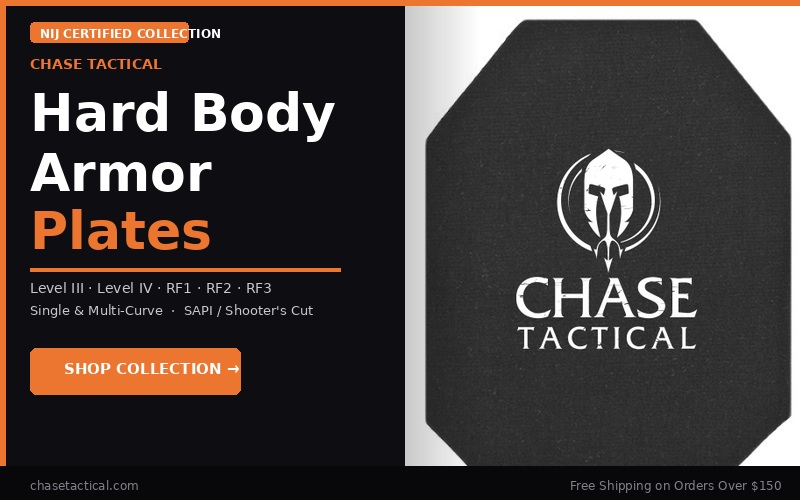
Level III armor is hard armor, meaning it is manufactured as rigid plates from materials such as polyethylene, ceramic composites, or steel. These plates are inserted into a plate carrier system rather than worn as a standalone vest. Because of their rigidity and weight, Level III plates are not concealable and are not designed for extended daily wear in low-threat environments. They are purpose-built for high-threat scenarios where rifle fire is a realistic possibility.
Chase Tactical’s Level III hard armor plates are built to NIJ-certified standards and available in shooter-cut and full-cut configurations for use with a range of plate carrier systems. They are designed for law enforcement tactical units, military operators, and serious civilian preparedness setups.
What Level III Does Not Stop
Standard Level III plates are not rated for armor-piercing rounds. Threats such as .30-06 M2 AP require Level IV armor. Some Level III plates are also not rated for green-tip 5.56mm M855 rounds, so if that is a specific threat concern, verify the plate’s tested threat list or consider Level III+ or Level IV.
Level IIIA vs Level III: Head-to-Head Comparison
| Factor | Level IIIA | Level III |
| Armor type | Soft armor (flexible panels) | Hard armor (rigid plates) |
| Primary threat | Handgun rounds up to .44 Magnum | Rifle rounds up to 7.62mm FMJ |
| Weight (typical) | 1 to 2 lbs per panel | 5 to 8 lbs per plate |
| Concealable | Yes, under clothing | No, requires plate carrier |
| Worn with | Carrier vest or soft armor carrier | Plate carrier system |
| Daily wearability | Designed for full shift wear | Mission or deployment use |
| NIJ standard | NIJ 0101.06 Level IIIA | NIJ 0101.06 Level III |
| Best for | Patrol officers, security, civilian daily use | Tactical units, military, active shooter response |
Can You Use Level IIIA and Level III Together?
Yes, and many tactical operators do exactly this. A Level IIIA soft armor backer combined with a Level III hard plate provides layered protection that is greater than either component alone. The soft armor backer adds coverage for areas outside the hard plate footprint, provides additional trauma protection behind the plate, and reduces backface deformation. This combination is commonly used in plate carrier setups for tactical law enforcement and military personnel who need both coverage and rifle-rated protection.
Which Level Is Right for You?
The correct choice depends entirely on the threats you are realistically likely to face. Use the following framework to guide your decision.
Choose Level IIIA if your primary threat environment involves handgun rounds and you need protection you can wear all day, every day, without drawing attention or sacrificing mobility. This covers the majority of patrol law enforcement, security professionals, and civilians seeking daily protection.
Choose Level III if your role involves potential exposure to rifle threats and you are willing to use a plate carrier system as part of your kit. This is the right choice for tactical units, military personnel, active shooter responders, and anyone building a home defense setup where rifle threats are a consideration.
Choose both if your operational requirements demand maximum coverage. A Level IIIA soft armor panel worn as a backer behind a Level III plate gives you the benefits of each in a single system. Review the NIJ body armor levels guide to understand how all five protection levels fit together before making your final decision.
Conclusion
Level IIIA and Level III are not two versions of the same protection. They are built from different materials, stop different threats, and serve fundamentally different roles. Level IIIA soft armor is the daily standard for handgun threat environments. Level III hard armor is the tactical solution when rifle threats are a realistic concern. Know your threat environment, verify NIJ certification, and choose the system that matches your actual operational requirements.
Frequently Asked Questions
Is Level IIIA better than Level III?
No. Level III provides significantly higher ballistic protection than Level IIIA because it stops rifle rounds. Level IIIA is not a subset of Level III. It is a lower level of protection designed for a different threat category. The naming convention is confusing, but the difference in protection is substantial.
Can Level IIIA soft armor stop rifle rounds?
No. Level IIIA soft armor is tested only against handgun threats. It is not rated to stop rifle-caliber rounds. If rifle protection is needed, Level III or Level IV hard armor plates are required.
How heavy is Level III body armor?
A standard Level III hard armor plate weighs between five and eight pounds, depending on the material and cut. Polyethylene plates are generally lighter than ceramic or steel, but all hard plates add significant weight compared to soft armor panels.
Do I need a plate carrier for Level III armor?
Yes. Level III hard armor plates cannot be worn as standalone vests. They require a plate carrier to hold them in position over the torso. A properly fitted plate carrier distributes the weight of the plates and allows for additional pouches and accessories.
What is Level III+ armor?
Level III+ is not an official NIJ certification level. It is a marketing term used by some manufacturers to indicate that a plate exceeds the minimum Level III standard and has been tested against additional threats such as 5.56mm M855 green-tip rounds. Always request the specific tested threat list for any plate marketed as Level III+.