







Trump Declares Naval Blockade of Strait of Hormuz After Ceasefire Collapse

President Donald Trump on Sunday said the U.S. would block vessels traveling to and from Iranian ports from transiting the Strait of Hormuz after high-level talks between the U.S. and Iran ended without an agreement.
“Effective immediately, the United States Navy, the finest in the world, will begin the process of blockading any and all ships trying to enter, or leave, the Strait of Hormuz,” he said on Truth Social.
“I have also instructed our Navy to seek and interdict every vessel in International waters that has paid a toll to Iran. No one who pays an illegal toll will have safe passage on the high seas,” he added.
The announcement came after ceasefire talks in Pakistan failed to produce an agreement. Vice President JD Vance, who led the U.S. delegation, said Iran declined U.S. demands, including abandoning efforts to develop nuclear weapons.
Vice President JD Vance gives an update in Pakistan:
— The White House (@WhiteHouse) April 12, 2026
"The simple fact is that we need to see an affirmative commitment that they will not seek a nuclear weapon, and they will not seek the tools that would enable them to quickly achieve a nuclear weapon." pic.twitter.com/il4THN5DwV
For its part, Iran said the two sides had “reached an understanding on a number of issues, but ultimately the talks did not lead to an agreement.”
No new round of talks has been scheduled but The Wall Street Journal, citing a foreign ministry spokesman, reported that diplomacy will continue.
The U.S. Central Command (CENTCOM) said Sunday the blockade will begin at 10 a.m. ET Monday.
It said the measure will be enforced impartially against vessels of all nations entering or departing Iranian ports and coastal areas, including all Iranian ports in the Arabian Gulf and Gulf of Oman.
CENTCOM added that its forces will not impede freedom of navigation for vessels transiting the Strait of Hormuz to or from non-Iranian ports.
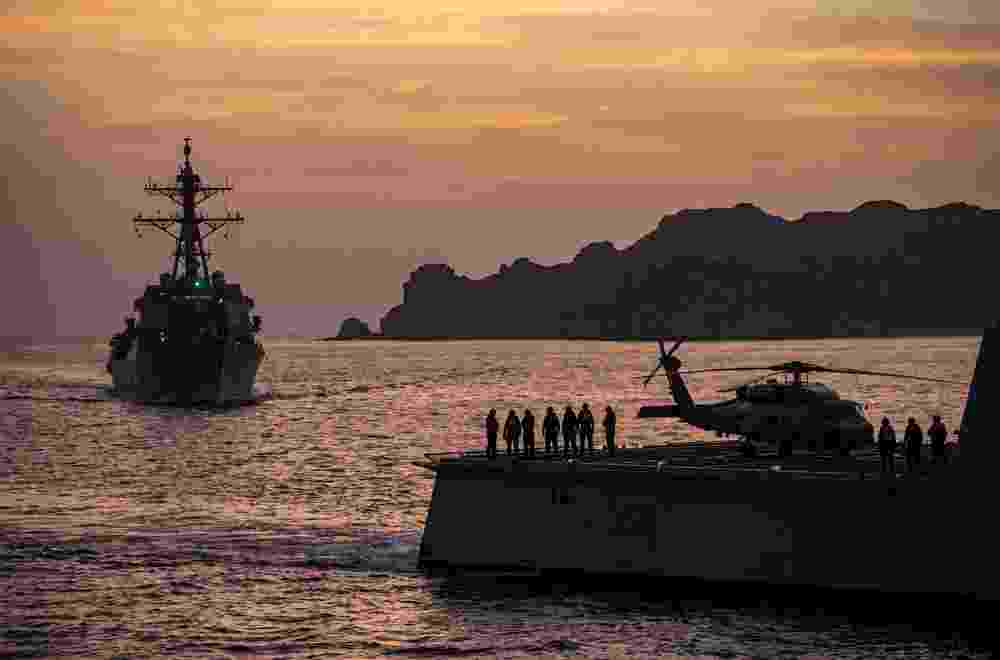
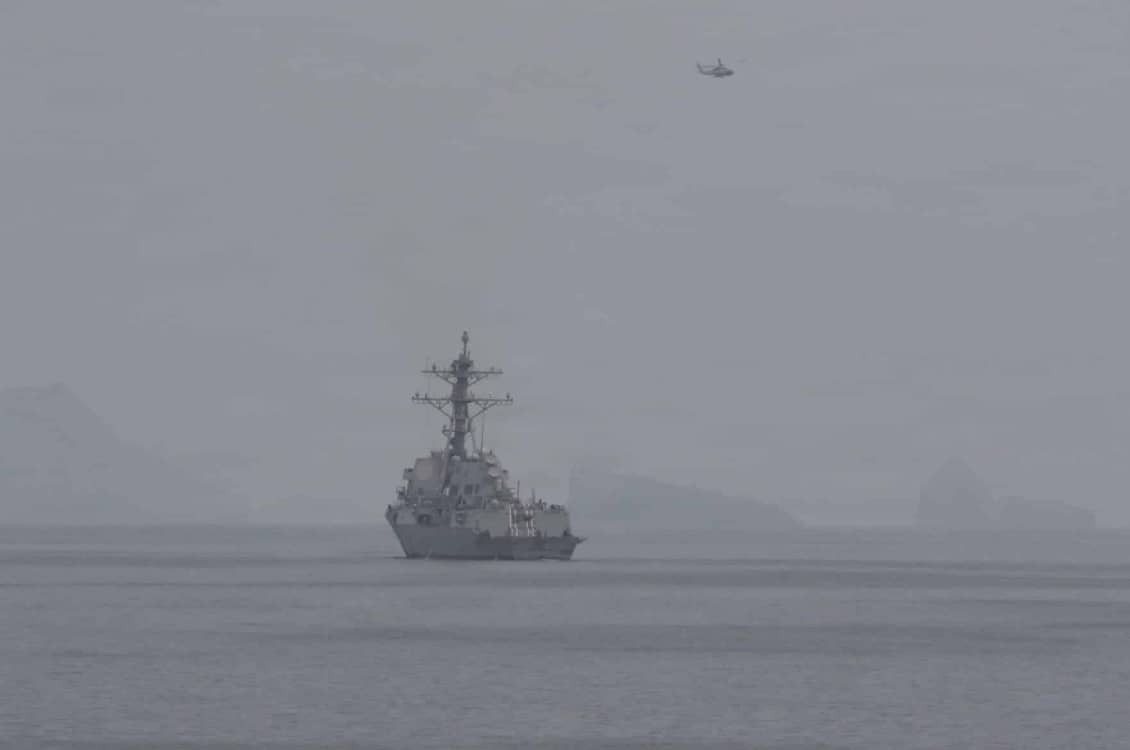
The announcement comes a day after CENTCOM said two guided-missile destroyers, the USS Frank E. Petersen Jr. and the USS Michael Murphy, transited the Strait of Hormuz “as part of a broader mission to ensure the strait is fully clear of sea mines previously laid by Iran’s Islamic Revolutionary Guards Corps.”
The Iranian government reportedly called the crossing a ceasefire violation and threatened to attack the ships, according to state media reports. A U.S. official told Axios Washington received no such warning.
Reports said additional U.S. forces, including underwater drones, are expected to join the clearance effort in the coming days.
The Strait of Hormuz is one of the world’s most important maritime chokepoints, carrying roughly 20% of global oil and liquefied natural gas trade, making it critical to global energy security. Its closure following the conflict between the U.S. and Iran has disrupted global energy markets and shipping.
A two-week U.S.-Iran ceasefire agreed last week included a provision guaranteeing “safe passage” through the Strait of Hormuz.
However, recent reports stated that only a small number of ships have managed to transit the waterway over the past three days, with vessels in the area also receiving warnings that they would be “targeted and destroyed” if they attempt to cross without authorization.
According to a BBC analysis of ship-tracking data from MarineTraffic, as of April 10, only 19 ships had been tracked passing through the Strait of Hormuz since the ceasefire. Of those, four were tankers carrying oil, gas or chemicals, while the remainder were bulk carriers or container ships of various types.
The news outlet however noted that some additional vessels may have transited the area without broadcasting their location.
The Wall Street Journal, citing data from Lloyd’s List Intelligence, reported that 100 ships have crossed the Strait of Hormuz over the past month. The outlet said non-Iranian vessels are paying Iranian authorities toll fees that can reach up to $2 million per ship to pass through the strait.
An average of 138 ships passed through the strait each day before the U.S.-Iran war began on Feb. 28.