








Tigray War Returns as TPLF Seizes Airports, Pushes Into Afar

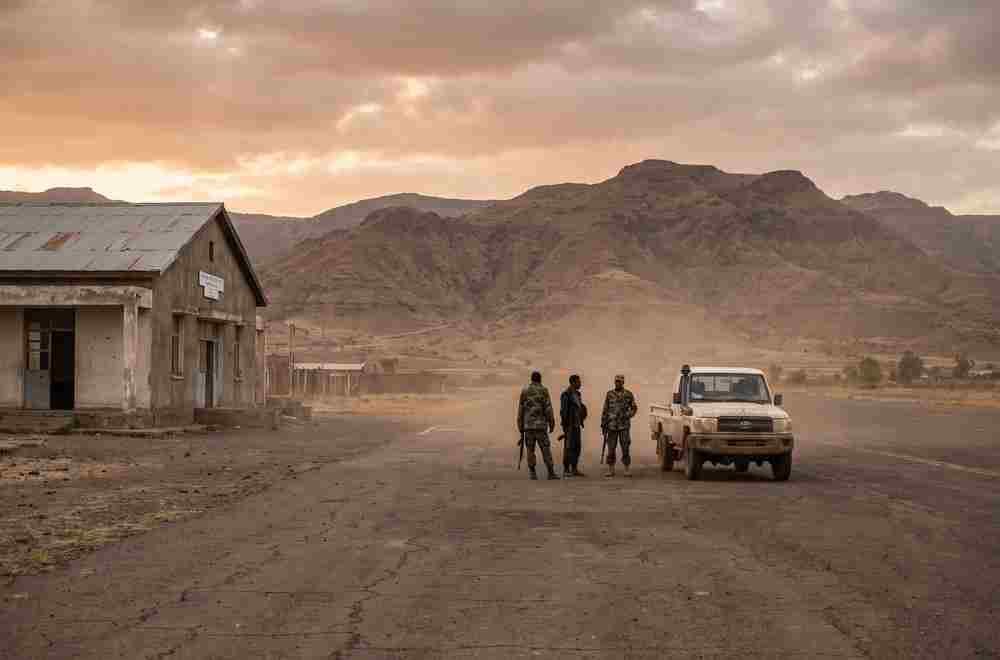
Four years after the Pretoria Agreement ended one of the deadliest wars of the century, northern Ethiopia is fighting again. Overnight on Sept. 22-23, forces loyal to the Tigray People's Liberation Front (TPLF) took control of the airport in the regional capital, Mekelle, and fought federal troops at two locations in the Afar region. Airports in Axum and Shire were also reported seized. By Wednesday morning, both sides were calling it war, and each was blaming the other for starting it.
For civilians, the first visible sign was the airline schedule. In a Telegram post, Ethiopian Airlines said it had temporarily suspended flights to Mekelle, Axum and Shire because of the "current situation in the Tigray region." An employee at Mekelle's Alula Aba Nega Airport told AFP that staff heading to work were told the airport had been taken over by Tigrayan forces.
The ground fighting started in Afar, not Tigray. Humanitarian workers told AFP that clashes broke out late Tuesday in Abala, a town in the mountains along the Tigray border where federal forces have been based, and in Erebti, about 100 kilometers deeper into Afar. A foreign security source said the TPLF controlled Abala. A former senior TPLF official claimed the rebels held Berhale, Erebti, Abala, Megale, Dalul and Konoba, and said federal forces were "fast-retreating", but AFP could not confirm that. For now it is a TPLF claim, not established fact.
Fighting has also been reported in Amhara, where Tigrayan units are said to be operating with Fano militia, but details there remain thin.
The two sides tell sharply different stories. The TPLF-led regional administration said it was responding to an "intensification of the invasion" by the federal government, and said Tigray's forces had been instructed to counter the attack and "have entered a defensive war". Tigrayan authorities also say federal forces attacked Tigray on Tuesday. That claim has not been independently verified.
Addis Ababa's account runs the other way. Getachew Reda, an adviser to Prime Minister Abiy Ahmed, wrote on X that the TPLF had launched an "all out offensive" against government positions in Afar and Amhara and seized the federally controlled airports. Getachew is a former TPLF official who once led Tigray's interim administration, which gives his accusation a sharp edge. Spokespeople for Abiy and the federal government did not immediately respond to requests for comment on Wednesday, while Afar's regional government said its forces would defend themselves alongside allies.
On Sunday, the TPLF announced it had joined a seven-group coalition, the Ethiopian Peoples' Forces Alliance for Survival, which aims to overthrow Abiy's government and install a transitional administration. Its members include Amhara's Fano militias, which fought against the TPLF in 2020-2022, and the Oromo Liberation Army, and they come from half of Ethiopia's 12 regional states.
Tigray's forces are not a lightly armed insurgency. The Tigray Defence Forces retain much of the arsenal inherited from the TPLF's years running Ethiopia's military, including tanks, artillery, long-range guided rockets and ballistic missiles documented by open-source analysts during the last war.
Eritrea is the most dangerous variable. Abiy's spokesperson, Billene Seyoum, has accused the new alliance of working with Eritrean financial backing, and ACLED assessed earlier this year that Eritrea was arming and hosting Tigrayan fighters. Asmara denies supporting Ethiopian armed groups. The International Crisis Group's Alan Boswell said Eritrea "is backing the TPLF," warning of "major risk of conflict between Ethiopia and Eritrea" if the war expands. In the last war, Eritrean troops fought alongside the federal army against Tigray.
Washington's position is complicated. U.S. Ambassador Ervin J. Massinga called the offensive an "unwinnable fight" and warned that the United States has tools to sanction leaders who push Ethiopia toward war. His statement also noted that the U.S. had already sanctioned TPLF leadership earlier this year. Yet just four days before the fighting, the U.S. let its 2021 sanctions on Eritrea's ruling party and military lapse "to advance US regional interests" in the Red Sea. That was the same sanctions program imposed over Eritrean atrocities in Tigray.
The African Union moved quickly. AU Commission Chairperson Mahmoud Ali Youssouf called the seizure of the three civilian airports "inconsistent with" Pretoria Agreement commitments, urged neighboring states to stay out, and asked former Nigerian President Olusegun Obasanjo to engage both sides urgently.