







Greenland Deal Hands US Military Two New Bases in the Arctic

After months of annexation talk and a NATO rift, the United States left the UN General Assembly with something narrower than ownership of Greenland, and arguably more useful: written permission to put more forces on the island.
On Tuesday, Sept. 22, President Donald Trump, Danish Prime Minister Mette Frederiksen and Greenland Prime Minister Jens-Frederik Nielsen signed an agreement that amends the 1951 U.S.-Denmark pact on the defense of Greenland. The White House has published the full text of the agreement. It opens two new U.S. defense areas, loosens access rules across the island, and locks non-NATO militaries out of Greenland for good. It does not hand any territory to Washington.
The core of the deal is Article IV. It allows the U.S. to "modernize and expand its activities" at Pituffik Space Base and to establish an additional defense area at Narsarsuaq and Mestersvig "in accordance with modalities and technical details to be mutually agreed by the Parties." The sites are approved; what gets built there is not settled.
Any further base needs a formal proposal and talks in a standing trilateral committee. If there is no agreement within 90 days, the issue moves to deputy ministers and then to ministers. As ABC News noted in its read of the text, the agreement does not say what happens if those talks still end without consensus.
Other provisions matter more to operators than the headline bases:
- Overflight and undersea access. U.S. aircraft may fly over and land anywhere in Greenland, and U.S. government vessels get undersea access to Greenland's territorial waters, "without restriction except as mutually agreed."
- Unmanned sites. Requests for unmanned military installations outside the defense areas get "accelerated governmental approval procedures."
- Counterintelligence. The parties commit to "work together to counter espionage in Greenland."
- Third-country lockout. No non-NATO state may build manned or unmanned military installations or keep a persistent military presence on the island unless all three parties agree.
- Investment screening. Investors from outside NATO, NATO partner nations or the EU cannot control "Particularly Sensitive Sectors" such as critical infrastructure and mining.
The pact has no end date. If Greenland becomes independent, Copenhagen and Nuuk must ensure the new state stays in NATO and takes on these obligations. It takes effect only after the Danish and Greenlandic parliaments approve it.
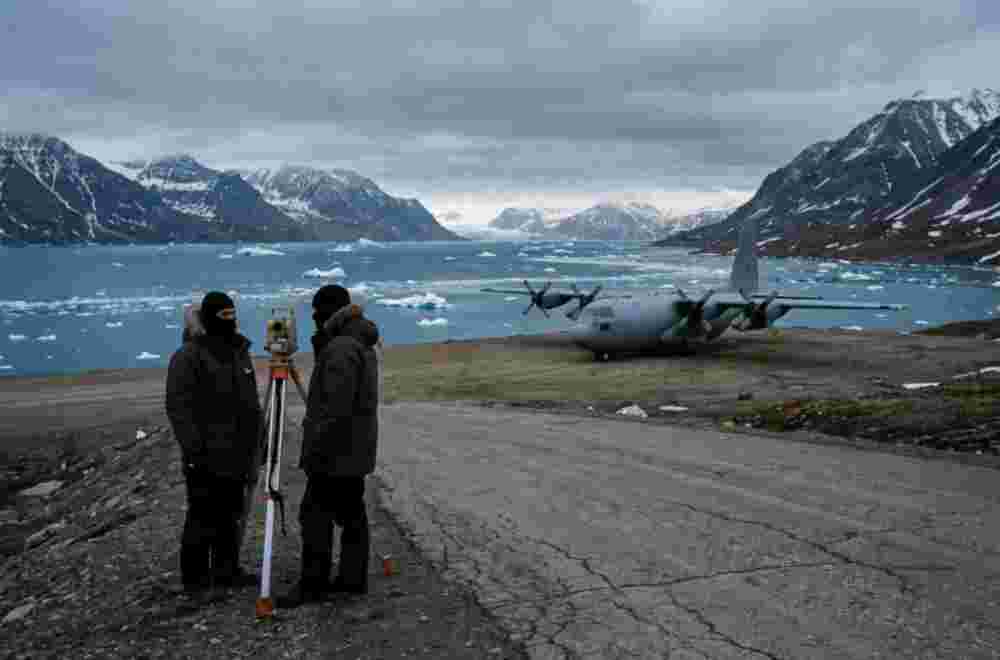
Narsarsuaq, in southern Greenland, was once Bluie West One, a major U.S. air base that closed in the 1950s. Its population has since shrunk to a few dozen people, according to Reuters reporting carried by Defense News. Mestersvig, on the east coast, is an outpost used by the Sirius Dog Sled Patrol, a Danish special forces unit that enforces Danish sovereignty across the island's remote northeast.
Ground work began before the signing. Last week, U.S. Northern Command confirmed to Danish broadcaster DR that a team was carrying out technical surveys of the Narsarsuaq runway and facilities to assess "future operational possibilities." The team was made up of Navy Seabees and was sent by Special Operations Command North.
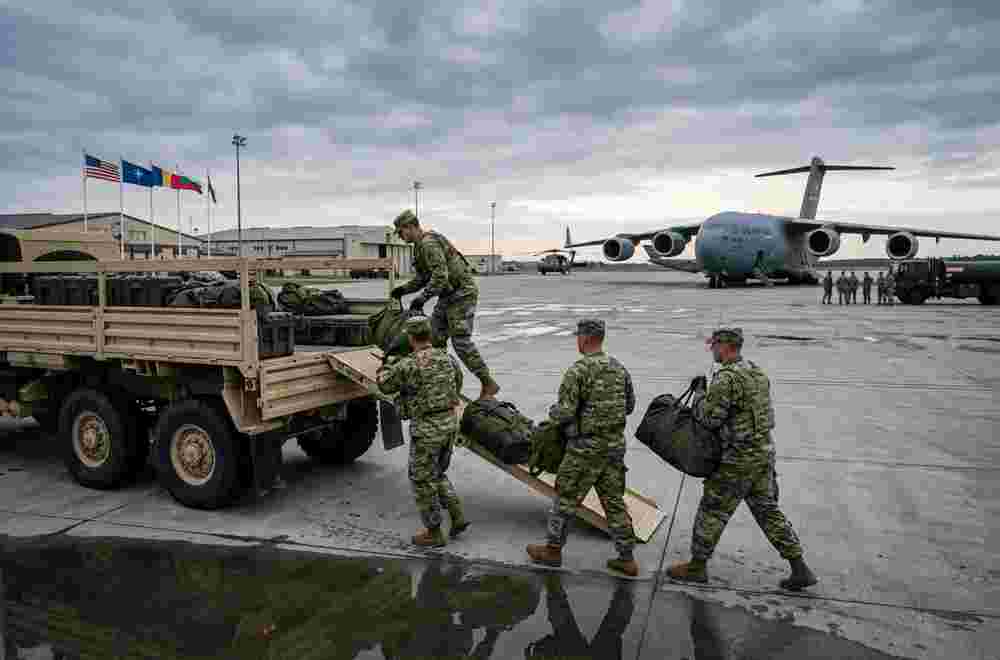
Today the U.S. has one base on the island. Pituffik, formerly Thule Air Base, hosts the 12th Space Warning Squadron's missile early-warning radar and a satellite control network, according to Air & Space Forces Magazine. Reuters puts the permanent U.S. presence there at about 150 personnel. During the Cold War, the U.S. ran 17 installations in Greenland with more than 10,000 troops.
Trump spent much of this year saying the U.S. should control Greenland, at times refusing to rule out force. Tensions peaked in January, when European NATO members sent troops to the island. After talks with NATO Secretary General Mark Rutte, Trump backed off military action and dropped a threat of 10% tariffs on eight European countries, Al Jazeera reported.
At the signing, Frederiksen called the pact "bigger and better" than the 1951 deal. Nielsen called it a "win-win-win."
The 1951 agreement already gave Washington wide latitude in Greenland. What the new text adds is speed, legal certainty and denial. Speed comes from the accelerated approvals for unmanned sites and the deadlines on base proposals. Certainty comes from the lack of an end date and the rule that an independent Greenland stays in NATO. Denial comes from locking Russian and Chinese military and investment activity out of the island. For planners watching the GIUK gap and Arctic missile-warning lanes, those are real gains.
The limits are real too. Trump claimed on Truth Social that the deal gives the U.S. "permanent control over security, and all other needs, in Greenland." The published text does not support that. Each new defense area still needs Danish and Greenlandic agreement, and the text has no way to break a deadlock at the ministerial level. The document mentions a "Golden Dome" defense system only once, in its preamble, as a shared interest. There is no construction commitment, despite early coverage describing the deal as "permitting" Golden Dome.
Before the signing, Danish researcher Ulrik Pram Gad of the Danish Institute for International Studies told Reuters that the crisis appeared to be being used "to try to strengthen NATO's cohesion through Greenland," according to the Jerusalem Post's Reuters report. The final text backs that view: its first operative article after the objectives endorses a stronger NATO role in Arctic planning, exercises and intelligence.
Watch three things: ratification in the Danish and Greenlandic parliaments; the "modalities and technical details" for Narsarsuaq and Mestersvig, which will show whether they become garrisons or crisis-surge airfields; and the first real test of the 90-day committee clock.
A Danish Prime Minister's Office release, as reviewed by Militär Aktuell, stresses that the agreement recognizes Danish sovereignty and Greenland's right to self-determination. Washington has its access in writing; Copenhagen and Nuuk have their sovereignty in writing. How each side reads that text will shape what comes next.