







Russian Frigate Fires Warning Shots at British Yacht in English Channel

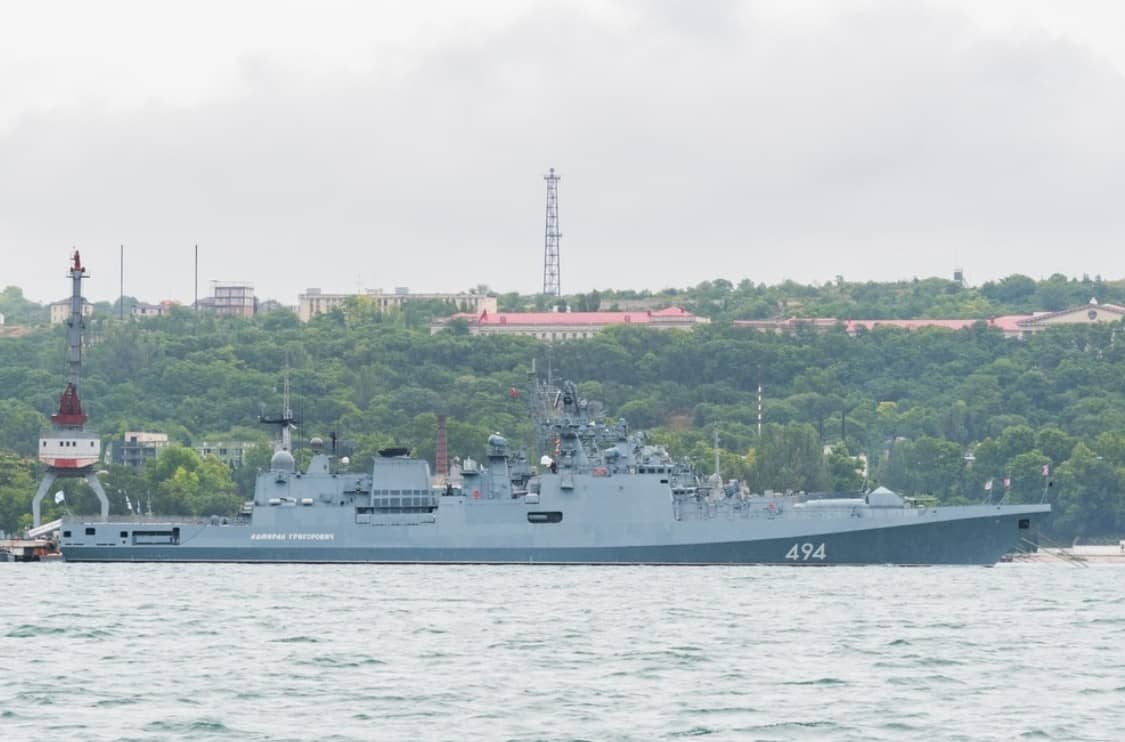
A Russian Navy frigate fired warning shots near a British-flagged civilian yacht in the English Channel on Tuesday morning, escalating concerns over maritime safety and growing friction between London and Moscow in a strategically vital waterway. The incident occurred more than 20 nautical miles south of the Isle of Wight, in international waters between the Isle of Wight and Normandy, France.
The vessel involved was the Admiral Grigorovich, a Project 11356M frigate from Russia’s Black Sea Fleet. Commissioned in 2016, the 4,000-ton warship is armed with Kalibr cruise missiles, advanced air defense systems, and other weaponry capable of striking both sea and land targets. It has been operating in the region for weeks, frequently shadowing or escorting tankers associated with Russia’s so-called “shadow fleet” — a network of vessels used to circumvent Western sanctions on Russian oil exports.
According to Russia’s Defense Ministry, the frigate’s crew made repeated attempts to establish radio contact with the yacht after it followed a “dangerous course” under engine power toward the warship. When those efforts, along with signal flares and audible warnings, failed, the crew fired warning shots with small arms into the yacht’s path once it closed to about 150 meters. The yacht, identified in reports as the 40-foot Bright Future, then altered course and moved away. No injuries or damage were reported.
The UK Ministry of Defence confirmed the event and stated that the shots “were not aimed at the vessel” but served as an “attempt to prevent a possible collision.” British officials are investigating. Defense sources indicated the Russian frigate may have been drifting rather than under full power, possibly due to mechanical issues, heightening its crew’s sense of vulnerability in busy shipping lanes. At the time, the offshore patrol vessel HMS Mersey was actively monitoring the Grigorovich as part of routine Royal Navy shadowing operations.
The yacht’s owners, a retired British couple in their 60s, Jane and Alan Kelvey, described the experience as “a bit scary.” Speaking to media after arriving in Cherbourg, France, Jane Kelvey said they did not hear radio contact attempts and crouched down upon hearing the shots, fired from roughly 500 yards away. “We didn’t think our safety was in danger… but it was certainly unusual,” she remarked. A UK government source confirmed the couple was aboard.
This episode unfolds against a backdrop of heightened naval tensions. Just days earlier, on June 14 (or around the weekend), Royal Marines and National Crime Agency officers boarded the Cameroon-flagged tanker Smyrtos in the Channel. The operation targeted a “shadow fleet” vessel carrying over 100,000 tonnes of Russian crude, sanctioned for helping Moscow evade oil export restrictions imposed after its invasion of Ukraine. The UK hailed the seizure as a significant blow to Russian revenues funding the war.
The Admiral Grigorovich has drawn particular scrutiny. Earlier reports noted it patrolling near sensitive UK infrastructure, including offshore wind farms off the Suffolk coast, and escorting shadow fleet tankers. In April, it was closely tracked by multiple Royal Navy vessels, including RFA Tideforce, as it transited the Channel. Such passages are now routine points of friction, with British forces maintaining persistent surveillance of Russian naval activity near UK waters.
The English Channel remains one of the world’s busiest shipping routes, handling massive commercial traffic alongside naval movements. Incidents like this underscore the risks of miscalculation in congested waters, especially amid broader geopolitical strains. UK Prime Minister Keir Starmer described the warning shots as “reckless” but not necessarily “sinister,” emphasizing the need for caution.
Experts suggest the Russian commander’s decision may reflect heightened alertness following the recent tanker seizure and ongoing monitoring. Retired Royal Navy officers have noted that a drifting warship could feel exposed, prompting stronger measures to assert presence and ensure separation from civilian traffic.
No further details on the yacht’s itinerary or the full Russian operational intent were released immediately. The event has prompted calls for clearer communication protocols between naval and civilian vessels in the Channel. As investigations continue on both sides, the incident highlights the delicate balance of navigation rights, sanctions enforcement, and security in a region where military posturing increasingly intersects with everyday maritime activity.