





How Police Shields Enhance Safety In High-Risk Situations

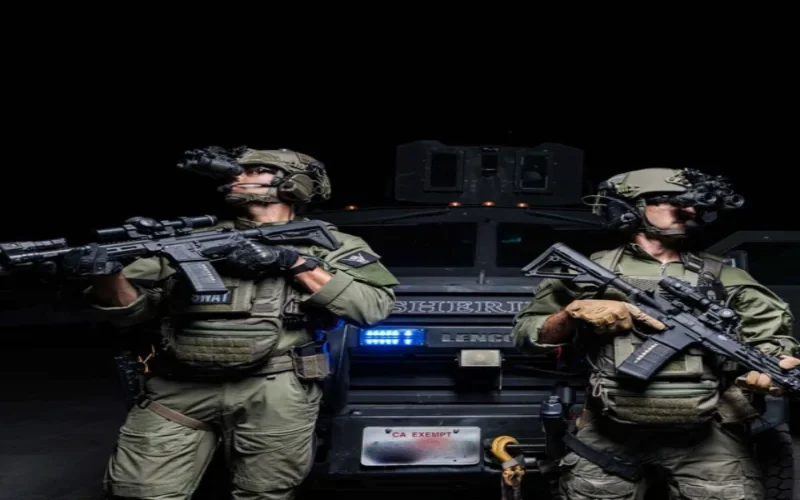
Police officers are frequently confronted with dangerous situations in which their lives are jeopardized. These may include protests and riots or violent encounters with armed men. Under these circumstances, the officers’ gear becomes a determining factor in maintaining their and other people’s safety. Among the many pieces of equipment at their disposal, one of the most important and useful tools in the arsenal of law enforcement officers is the police shield. Meant to defend officers against projectiles, blunt trauma, and even certain types of weapons, police shields are a key component of contemporary law enforcement tactics.
This blog entry will discuss how police shields increase safety in dangerous situations and why they are a mainstay of law enforcement gear.
What Is a Police Shield?
A police shield is a portable protective barrier an officer carries or positions between themselves and a threat. Depending on the model, it may be rated to deflect thrown objects and blunt-force impacts, or independently tested and certified to stop specific handgun or rifle rounds. Not every shield offers the same protection. Riot shields and ballistic shields are built for different threats, which the next section breaks down.
Significance Of Police Shields in Policing
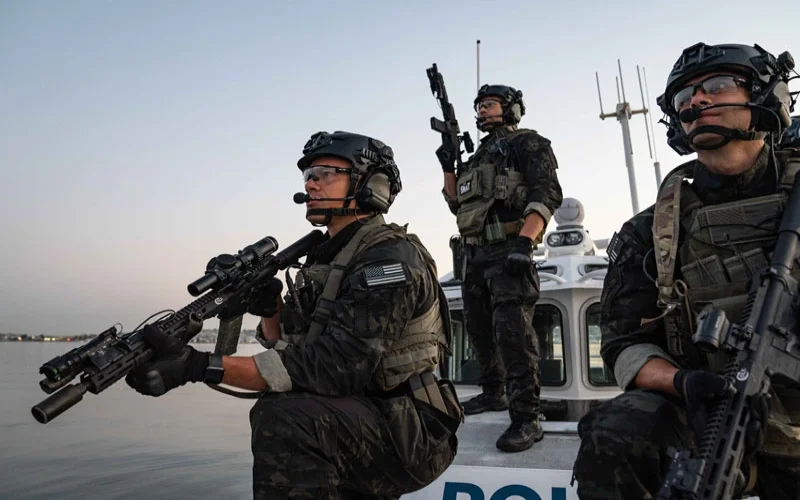
Police shields are frequently the first items officers grab during life-threatening encounters. Whether used in crowd management or in defense during a shootout, shields provide an unyielding wall of protection between officers and danger. They have become increasingly advanced, specialized, and multifaceted tools for repelling attacks. Police shields play a crucial role by safeguarding officers from direct assaults and enabling them to retain command of the situation.
Types Of Police Shields And Their Purposes
Police shields are not one-size-fits-all. Law enforcement organizations use different shields for different threats depending on the circumstances. Some shields are intended to withstand blunt force and projectiles, while others are designed to offer ballistic protection. Knowing these types enables one to better understand the important role shields play in officer safety.
Riot Shields
Used to control crowds, riot shields are designed from transparent and hard materials such as polycarbonate or acrylic. They are lightweight but strong enough to buffer against objects thrown at them. Handgrips can be added to riot shields to make moving around in tense situations easier. Riot shields are built for impact and debris, not firearm threats; they are not a substitute for a ballistic-rated shield.
Ballistic Shields
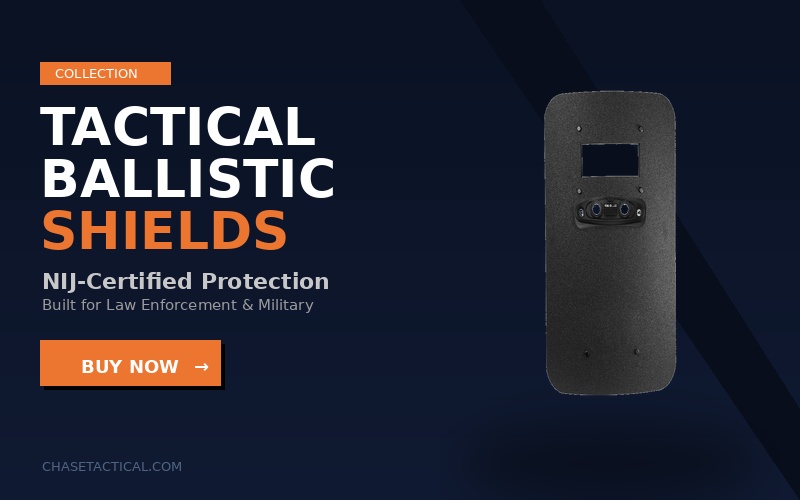
Ballistic shields are manufactured to counter bullets. Constructed using Kevlar, composite metal, and high-tech polymers, these shields provide far greater protection than standard riot shields. Police officers can count on these ballistic shields to defend them against direct weapons fire so they can apprehend suspects or seek cover while being in harm’s way.
Tactical Shields
Usually employed by elite units such as SWAT teams, tactical shields integrate aspects of riot and ballistic shields. They are more versatile and typically feature cutouts for shooting or viewing while keeping officers safe from gunfire or other physical harm.
Riot Shields vs. Ballistic Shields at a Glance
| Type | Primary Purpose | Typical Threat Category | Common Materials | Mobility | Common Applications |
|---|---|---|---|---|---|
| Riot shield | Impact and debris deflection | Thrown objects, blunt-force contact | Polycarbonate, acrylic | High | Crowd control, public-order policing |
| Ballistic handgun-rated shield | Stop handgun rounds | Handgun fire | Kevlar, UHMWPE, composite laminates | Moderate | Patrol, active-shooter response |
| Ballistic rifle-rated shield | Stop rifle rounds | Rifle fire | Reinforced composite, ceramic-faced options | Lower | SWAT, high-risk warrant service |
| Entry/bunker shield | Combined ballistic and breach support | Rifle or handgun, per configuration | Composite panel with structural frame | Low | Hostage rescue, structured breach |
What Are Police Shields Made Of?
Materials determine how much protection a shield provides and how easily an officer can carry it through a shift. Chase Tactical’s ballistic shield lineup spans several material categories, each suited to a different threat level.
Polycarbonate and Acrylic
Riot shields rely on transparent polycarbonate or acrylic panels because these materials flex on impact instead of shattering, absorbing repeated blows from bricks, bottles, and batons without failing. The transparency also keeps an officer’s field of view open during a crowd control operation, which opaque materials cannot offer.
Kevlar, Aramid, and UHMWPE
Handgun-rated ballistic shields are typically built from layered Kevlar or other aramid fibers, sometimes combined with ultra-high-molecular-weight polyethylene (UHMWPE). These woven fiber layers catch and spread a bullet’s energy across the panel rather than letting it punch straight through, which is how a soft-armor shield can stop a handgun round while staying light enough to carry one-handed.
Ceramic and Composite Laminates
Rifle-rated shields add a hard ceramic or composite-laminate face over the fiber backing. The ceramic strike face fractures and blunts the bullet on impact, while the laminate underneath catches the fragments and remaining energy. This construction is heavier than a handgun-rated shield, which is why rifle-rated models are usually reserved for SWAT and high-risk warrant service rather than everyday patrol.
Viewports and Ballistic Glass
Tactical and ballistic shields include a small viewport, typically made of multi-layer ballistic glass or polycarbonate, so the operator can see and aim without exposing more of their body than necessary. Viewport size is a deliberate trade-off: a larger opening improves visibility but reduces the protected surface area.
Shield Sizes, Shapes, and Weight Considerations
Beyond material, agencies also weigh a shield’s shape and weight, since both affect how long an officer can hold a defensive position. Riot shields are usually rectangular or curved-rectangular, standing about 36 to 48 inches tall to cover most of an officer’s body while still allowing a full range of arm motion. Ballistic shields tend to be round or teardrop-shaped, a design that deflects rounds at an angle rather than presenting a flat surface for a direct hit.
Weight varies just as much as shape. A polycarbonate riot shield typically weighs 8 to 12 pounds, light enough for extended crowd control shifts. A handgun-rated ballistic shield runs closer to 15 to 25 pounds, and a rifle-rated shield with a ceramic strike face can weigh 30 pounds or more. Most models include reinforced handles or forearm straps so officers can distribute that weight and keep a shield raised for longer without fatigue.
Why Do Riot Police Bang Their Shields?
One of the more recognizable riot control tactics involves officers striking their shields in unison with a baton or open hand. This shield-banging is not about the shield’s protective function; it is a coordinated show of force. The synchronized rhythm signals that a formation is unified and disciplined, which can discourage a crowd from testing the line before any physical contact occurs.
The tactic also serves a practical communication purpose. In a loud, chaotic crowd environment, verbal commands can be hard to hear, so a unit may bang shields together as a non-verbal cue to advance, hold position, or prepare for a formation change. Some departments use it as a final warning before deploying less-lethal tools, giving a crowd one more chance to disperse.
How Police Shields Protect Officers In High-Risk Situations
Whether during a protest, a high-risk criminal chase, or an active shooter situation, police officers are exposed to risks that can threaten their lives. Shields are vital in these situations, providing a defensive shield between officers and harm.
In the following sections, we will discuss how police shields ensure officer safety by shielding against different threats.
Protection from Blunt Force Trauma
One of the key roles of a police shield is to defend officers against blunt force trauma. This may include objects tossed amid a riot, hand-to-hand combat with suspects, or impacts from homemade weapons. Because of their durability and size, Riot shields work well in such situations.
For example, during protests or riots, crowds may hurl rocks, bottles, or other objects at police officers. A shield absorbs the force of these projectiles, preventing officers from sustaining injuries. The large surface area of a shield allows officers to block multiple threats simultaneously, giving them time to react or retreat to a safer position.
The ability to deflect blunt-force objects also ensures that officers remain in a state of readiness, allowing them to focus on handling the situation rather than worrying about immediate injury.
Defense Against Firearms and Gunfire
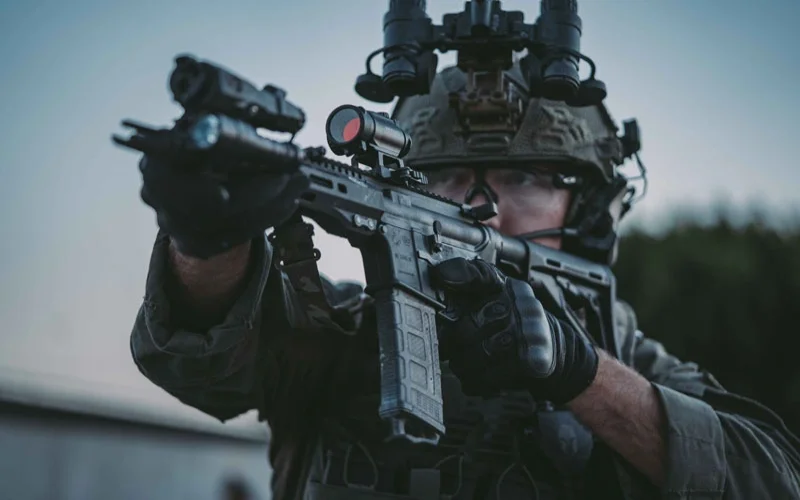
In active shooter situations or armed confrontations, firearms present a significant danger to law enforcement officers. Ballistic shields, designed specifically to withstand gunfire, are an essential piece of equipment for officers responding to these high-risk events.
Made from advanced materials like Kevlar, carbon fiber, and other reinforced composites, ballistic shields offer protection from handgun rounds and, in some cases, even rifle fire. The exact level of protection depends on the shield’s independently tested rating; for example, NIJ 0108.01 Level IIIA for handgun threats versus Level III for rifle threats. No shield should be assumed to stop every caliber or angle of attack. Learn more about how ballistic shields stop bullets.
In tactical operations, like SWAT operations or hostage rescues, these shields play a key role in offering a protected route towards suspects or going inside a building where there is a possibility of a shootout.
Increasing Mobility and Visibility
Although police shields are designed for protection, they also accommodate some mobility and visibility. Riot shields, for instance, tend to be transparent so officers can view what is on the other side. This is particularly crucial during crowd control, where situational awareness is necessary to maintain the safety of both civilians and officers.
In addition, shields are light and portable, enabling officers to travel fast while protected. This combination of agility and protection is essential in dangerous situations where an officer’s speed can decide.
A good shield assures officer mobility so officers can move around crowds, get close to suspects, or withdraw safely without sacrificing their defensive capability.
Shielding from Chemical and Biological Threats
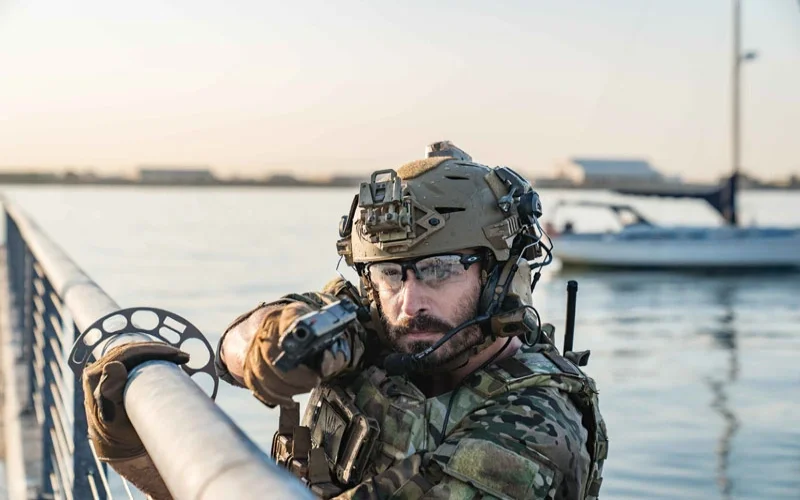
In some high-risk environments, police officers are exposed to threats other than physical assault, including chemical or biological agents. Protesting or rioting crowds might release smoke bombs, tear gas, or other chemicals that can incapacitate police officers. Police shields with resistant materials can protect against harmful substances in such situations.
Some shields have protective coatings resistant to chemicals, minimizing the chance of exposure. This extra protection is particularly valuable for riot police, who will likely be exposed to numerous irritants while conducting crowd control operations.
The Psychological Impact of Police Shields
While the physical protection that police shields provide is obvious, it’s also important to recognize their psychological impact. Knowing they have a reliable tool to shield themselves from danger helps officers maintain focus and control in high-stress situations.
Having a shield in one’s hand can offer security, enabling officers to carry out their duties proficiently, even during intense pressure. This psychological edge cannot be overlooked, as it allows for officers to act firmly when needed and keep their cool in the face of threatened violence.
Understanding Ballistic Protection Levels (NIJ Standards)
Not every shield described as “bulletproof” is actually rated to stop a bullet, which is why agencies rely on National Institute of Justice (NIJ) testing rather than marketing language. Riot shields are not ballistic-rated at all; they are built to deflect thrown objects and blunt-force impacts, and they should never be treated as a substitute for a tested ballistic shield in a firearms encounter.
Ballistic shields are independently tested against NIJ Standard 0108.01 and assigned a protection level. Level IIIA is rated to stop most handgun rounds, including high-velocity 9mm and .44 Magnum. Level III is rated for rifle threats such as standard 7.62mm rounds, and Level IV adds protection against armor-piercing rifle rounds. A shield’s certified level, not its thickness or price, is what determines which threats it can actually stop, so agencies should confirm current NIJ certification before deploying a shield in an active-shooter or high-risk warrant scenario.
Factors Agencies Evaluate When Selecting a Shield
Agencies typically weigh threat level, weight and mobility trade-offs, viewport visibility, and how the shield integrates with other worn armor before selecting a shield. A deeper walkthrough of these factors is covered in Chase Tactical’s ballistic shield buying guide.
Ballistic Shield Versus Body Armor
A ballistic shield is a portable barrier an officer carries and positions, while body armor is worn directly on the body. The two are complementary, not interchangeable, and agencies typically deploy shields alongside body armor rather than as a replacement for it. See the full comparison in ballistic shields versus body armor.
Conclusion
In extreme-risk scenarios, police shields are not merely a physical barrier but are vital to law enforcement tactics. From defending officers against blunt trauma to protecting them from bullets, shields add safety that other gear cannot. Their versatility in offering protection against multiple threats while permitting mobility and visibility means they are irreplaceable in most law enforcement situations.
FAQs about Police Shields
What are police shields made of?
Police shields are normally constructed with protective materials like polycarbonate, acrylic, Kevlar, and composite polymers. These materials are selected based on the shield type for their high impact resistance, blunt force resistance, and ability to withstand gunfire.
How do ballistic shields shield against gunshots?
Ballistic shields are made with reinforced materials such as Kevlar or composite metals, which absorb and dissipate the energy of gunshots. The shields can deflect handgun rounds and, in certain instances, rifle fire, giving officers valuable protection in high-risk situations.
Are police shields applicable in crowd control scenarios?
Yes, police shields are commonly utilized for crowd management, particularly for protests or riots. Riot shields, which are light and see-through, allow officers to deflect thrown objects while keeping their eyesight intact and easily navigating through the crowd.
What is the difference between a riot shield and a ballistic shield?
Riot shields are built to deflect thrown objects and blunt-force impacts during crowd control, but they are not rated to stop firearm rounds. Ballistic shields are separately rated and tested to stop specific handgun or rifle threats, depending on their certified protection level.
Does a ballistic shield replace body armor?
No. A ballistic shield is a portable barrier an officer carries and positions, while body armor is worn directly on the body. Agencies typically use shields alongside body armor, helmets, and standard operating procedures rather than as a substitute for any of them.
Why do riot police bang their shields?
Officers strike their shields together in a synchronized rhythm as a show of force and a non-verbal signal to the crowd and to each other. It communicates discipline and unit cohesion, can cue a formation to advance or hold position, and often serves as a final warning before other crowd control measures are used.
Are riot shields bulletproof?
No. Riot shields are made from polycarbonate or acrylic and are designed to deflect thrown objects and blunt-force impacts, not to stop bullets. Only independently NIJ-rated ballistic shields, built with materials like Kevlar or ceramic composites, are tested to stop specific handgun or rifle rounds.
How much do police shields weigh?
Weight depends on the shield type. A polycarbonate riot shield typically weighs 8 to 12 pounds, a handgun-rated ballistic shield runs about 15 to 25 pounds, and a rifle-rated shield with a ceramic strike face can weigh 30 pounds or more.