


Ukraine Claims Operation Veles Sent Troops 15 km Underground

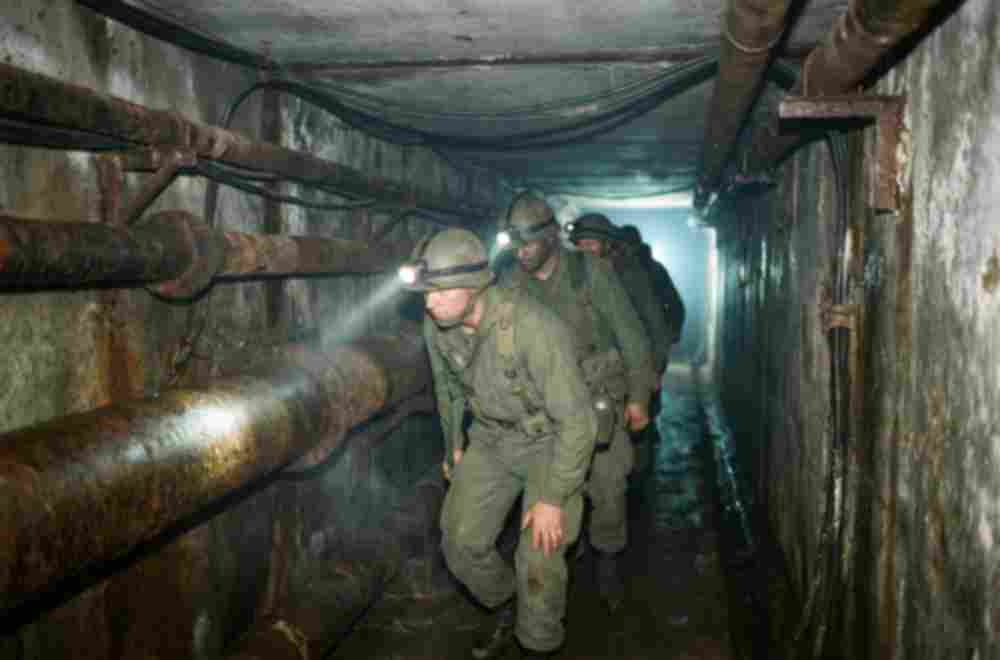
Ukraine's National Guard says it moved troops roughly 15 kilometers through underground infrastructure and emerged behind Russian positions near Kupiansk in the Kharkiv region. The unit calls it the world's first full-scale underground counteroffensive. The 2nd Khartiia Corps announced the operation, code-named Veles, on Oct. 21 and detailed it on Oct. 22. Nearly everything about its scale and results comes from the Ukrainian side, and the reporting reviewed for this article contains no Russian response.
According to the corps, soldiers trained for confined-space movement, engineers prepared the route, and the force carried communications, navigation and life-support systems the unit developed itself. The underground push was paired with surface assaults and drone strikes, so Russian troops faced pressure from two directions at once.
The corps claims its force took more than 30 Russian personnel prisoner and that Russian casualties exceeded 100. Participants named in the corps' statement include the 13th Khartiia Brigade, the 23rd R.U.G. Assault Regiment, the Lava unmanned systems regiment, the 429th Achilles Unmanned Systems Brigade, and Defense Intelligence units such as the Freedom of Russia Legion and the Russian Volunteer Corps. Drone strikes were synchronized through a joint coordination center with the Achilles brigade.
Corps commander Brig. Gen. Ihor Obolenskyi framed the operation as a reversal of Russian tactics. "So we went underground ourselves," he said, explaining that Russian forces had intended to use gas routes to penetrate Ukrainian rear areas. The corps says the maneuver denied Russian troops the chance to reach the rear of Kupiansk.
The reporting is consistent on the headline claims but differs on specifics. The Kyiv Independent and National Security Journal describe the route as gas pipelines, while Ukrinform refers to underground utility routes. UNITED24 Media notes that its source material describes only underground infrastructure and never names pipelines.
The announcement date also varies: the Kyiv Independent says the corps first announced Veles on Oct. 21, while other outlets date the announcement to Oct. 22. Kyiv Post cautions that the 15-kilometer figure describes underground travel, not a confirmed gain of frontline territory. The corps' own figures, including the claim to be first, have not been independently verified, and the Kyiv Independent said it could not verify the capture and casualty numbers.
One outlet's account is internally inconsistent. Gwara Media's headline says the operation cut off Russian access to Kupiansk from the north, yet its body text says Veles enabled Russian troops to advance deeper into the city from the north. The article does not resolve the contradiction, and the corps' own statement points to the first reading.
Boots under ground!
— Khartiia Corps in English (@khartiia_eng) October 22, 2026
Asymmetric breakthrough in the Kharkiv Region: Khartiia Corps conducts the subterranean counteroffensive Operation VELES, advancing 15 km underground.
Corps Commander General Ihor Obolenskyi explains a unique operation. pic.twitter.com/qRQ93kckpK
Russian forces have used underground passages around Kupiansk before. DeepState reported in September 2025 that Russia had used pipelines to infiltrate Kupiansk for the third time, after earlier cases near Sudzha and Avdiivka. DeepState described groups traveling about four days inside the pipes, with rest points and supplies staged along the way.
In January 2026, Ukrainian troops said they stopped a Russian assault of about 50 soldiers moving through the Soyuz gas pipeline. More recently, Khartiia alleged that retreating Russian troops used civilians, including children and elderly people, as cover while moving through a pipeline near Kupiansk. Ukrainian troops said they held fire. That allegation comes from Khartiia and is not independently confirmed in the coverage reviewed.
National Security Journal's recap lists Avdiivka in January 2024 and Sudzha on March 8, 2025 as earlier Russian pipeline infiltrations. That piece is commentary and also states that Ukraine controls about 90 percent of Kupiansk while Russia claims control of the city, a dispute this article could not resolve.
The operation also carries risk for whoever copies it. Troops moving without GPS, daylight or reliable radio face severe navigation, sustainment and psychological strain, and an exit point is also a place where a defender can concentrate fire. Ukrainian units have also flooded and damaged pipes Russia was using, according to National Security Journal.
For now, Veles is best read as a credible but unverified claim built on a real and documented trend. Both sides have contested the same buried infrastructure around Kupiansk for more than a year. Whether this was a one-off or the opening of a new maneuver model will depend on whether Khartiia, or anyone else, can repeat it and show the results.