







Riot Gear for Law Enforcement: What Officers Need and Why

Civil unrest incidents are unpredictable. Departments that wait until a protest turns volatile to evaluate their protective equipment are departments that respond with gear that is insufficient, aging, or incompatible across officers. The time to assess riot gear is during training and procurement – not during deployment.
This guide covers the equipment categories that define a complete law enforcement riot response kit, the protection standards that apply to each category, and the operational logic behind what is issued and why. Whether you are a procurement officer building department standards or an operator evaluating personal loadout for civil unrest assignments, this is the framework.
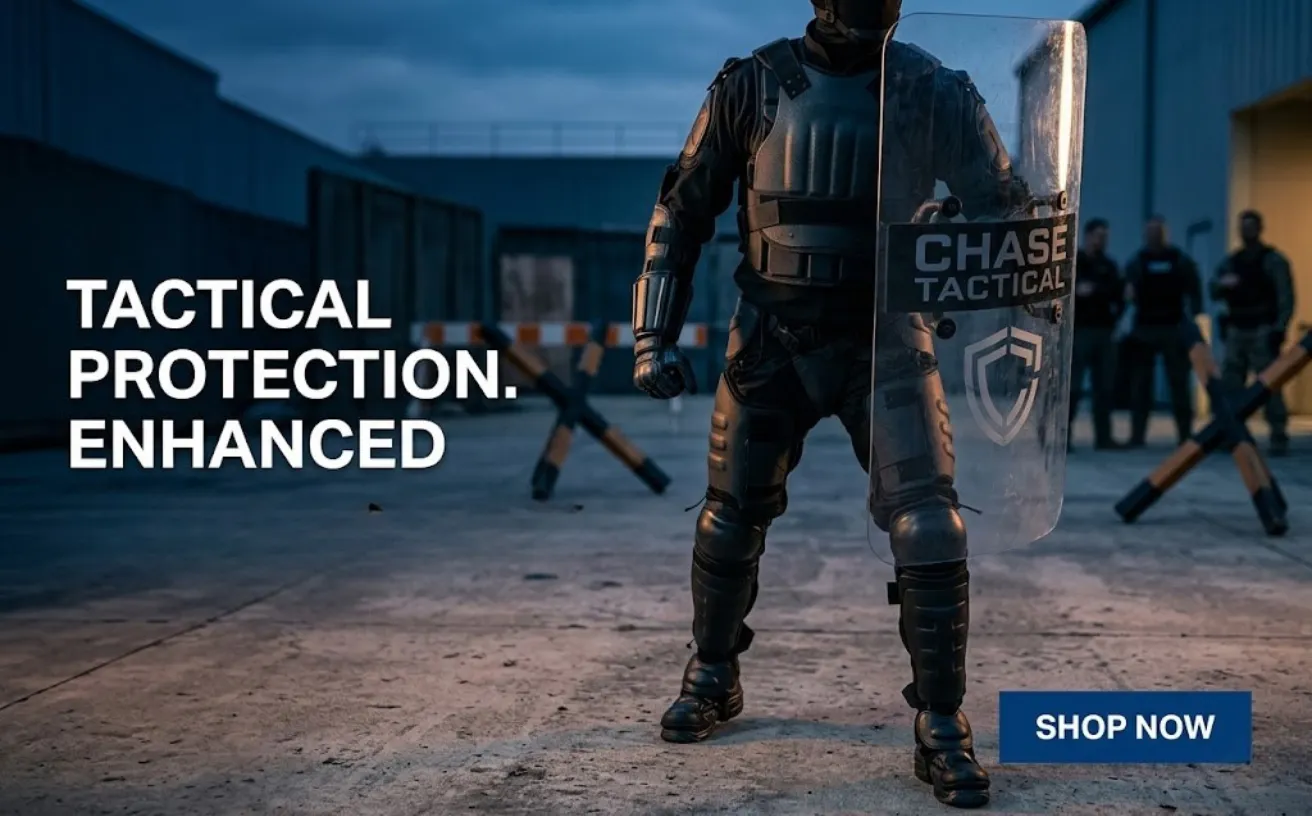
Riot response confronts law enforcement officers with a threat profile that differs significantly from a standard patrol or tactical callout. The threats are not primarily firearms-based. They are:
- Impact projectiles: Rocks, bottles, bricks, frozen bottles, and improvised projectiles thrown at velocity
- Improvised incendiary devices: Molotov cocktails and other ignition-based threats
- Edged weapons and improvised tools used in close-contact confrontations
- Chemical threats: Caustic substances thrown at officers
- Crowd pressure and physical contact: High-density crowd scenarios where officers face aggressive forward pressure
The gear required to address these threats is not the same configuration used for patrol or for tactical warrant service. Riot gear is a specialized, mission-specific kit, and departments that equip officers with standard duty gear for riot conditions are accepting unnecessary risk to officers.
Core Equipment Categories for Riot Response
Ballistic Helmets
Riot response places officers in direct impact threat zones. An unprotected head is an unacceptable liability. Ballistic helmets – specifically ACH-pattern helmets rated to Level IIIA – provide protection against both ballistic threats and the severe impact threats present in civil unrest scenarios.
Chase Tactical’s ACH helmets are Level IIIA rated, meaning they meet certified standards for protection against high-velocity handgun rounds as well as significant impact forces. Rail systems on ACH helmets allow the integration of face shields, which are critical in riot environments where eye and face protection is a front-line requirement. For a full breakdown of what ballistic helmet ratings mean and how NIJ standards apply, see our Ballistic Helmet Ratings Explained: NIJ Standards and Levels.
What a ballistic helmet adds to riot response specifically:
- Certified impact protection against thrown objects
- Ballistic protection against any firearm threat that may emerge
- Mount a platform for integrated face shields and communication
- Consistent protection standard across all deployed personnel
Body Armor: Soft and Hard Armor
Riot response officers should be wearing body armor. The question is whether the armor on their body is configured for the mission profile.
Soft armor (Level IIIA) provides the baseline protection tier for law enforcement. Level IIIA soft armor is certified against high-velocity handgun rounds – the most common firearm threat in law enforcement. For riot response specifically, soft armor also provides meaningful resistance to edged-weapon threats and to blunt-force impacts at close range.
Hard armor plates (Level III and Level IV) are not typically the primary consideration for standard riot response; their value lies in rifle-threat environments. However, in scenarios where the intelligence picture includes potential firearm threats, adding hard plates in a plate carrier over soft armor creates a layered protection system.
Chase Tactical carries both Level IIIA soft body armor and Level III/IV hard armor plates. The correct configuration for a specific riot deployment depends on the threat assessment made by command.
Plate Carriers for Riot Assignments
When officers deploy to riot-response assignments wearing hard armor plates, they need a carrier designed to properly present those plates and withstand the mission’s physical demands.
Chase Tactical’s MOLLE-compatible plate carriers are mil-spec and designed for real-world use by military and law enforcement personnel. Key features for riot assignments:
- Quick-release cummerbund systems allow rapid doffing if an officer goes down or needs to be removed from the scene
- MOLLE webbing throughout allows integration of pouches, radio carriers, and medical pouches specific to the mission
- Mil-spec construction that holds up under the physical demands of sustained crowd control operations
MOLLE Pouches and Configuration
A riot-response loadout requires a specialized pouch configuration that differs from the standard patrol loadout. Officers need rapid access to mission-appropriate tools.
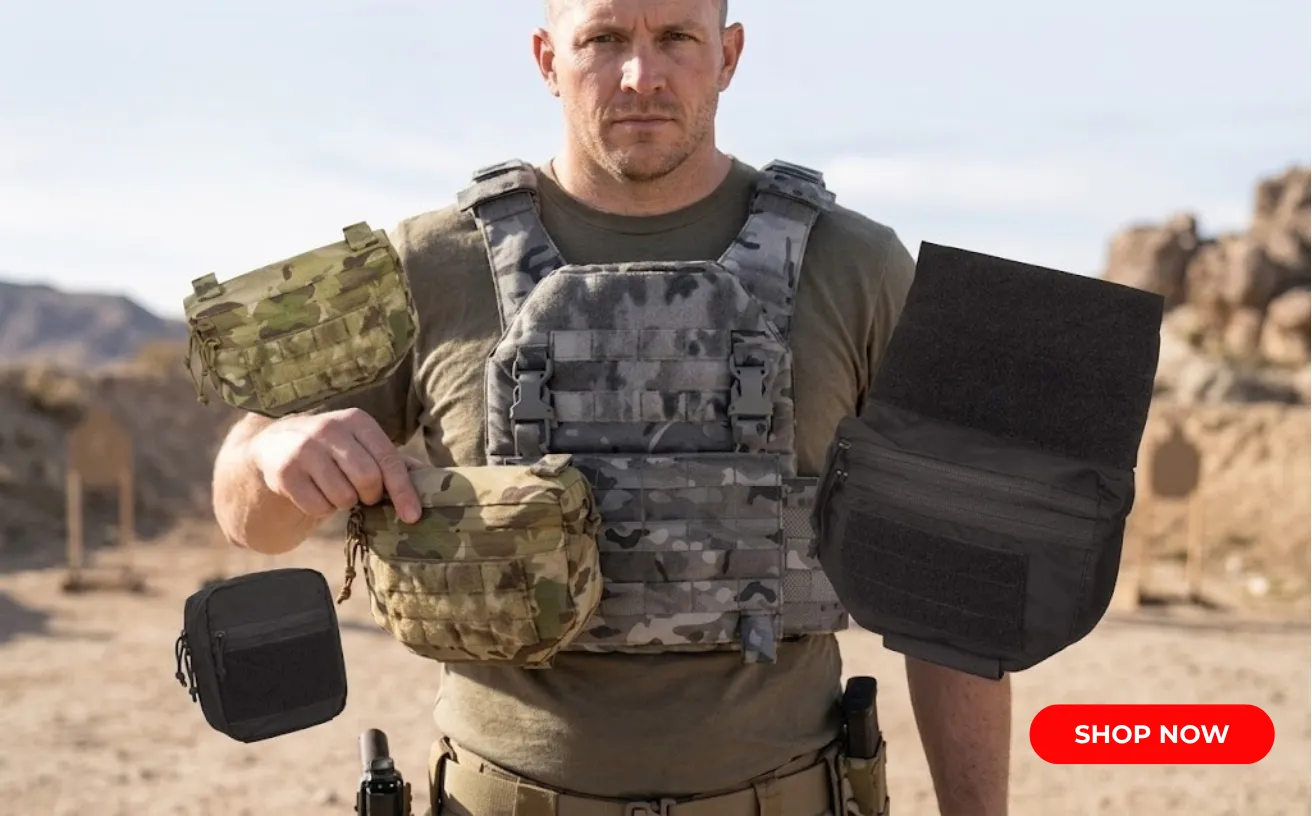
Utility pouches carry mission-specific tools: disposable restraints, chemical agent deployment equipment, and communication accessories. Chase Tactical’s utility pouches mount to any MOLLE carrier or belt, providing organized access without cluttering the primary draw zones.
Medical pouches and IFAK pouches belong to every operator in a riot assignment. Officers in close contact with a volatile crowd face an elevated risk of injury. A tourniquet and hemostatic dressing accessible on the body – not in a vehicle – is a non-negotiable component of the kit. For a complete guide on tourniquet types, correct placement, and when to deploy one, see our Tactical Tourniquet Guide: Types, Placement, and When to Use One. Chase Tactical’s IFAK pouches and tourniquet pouches integrate into any MOLLE carrier configuration.
Radio pouches in riot assignments address a specific problem: crowd noise and physical contact can dislodge or damage unsecured radios. A mounted radio pouch keeps communication equipment secure and positioned for easy access during sustained activity in a riot response deployment.
Tactical Gloves
Impact contact is a constant in civil unrest operations. Officers who deploy without gloves sustain hand injuries from crowd physical contact, thrown objects, and the physical demands of crowd control tools.
Chase Tactical carries PIG (P.I.G.) brand tactical gloves, specifically the FDT Delta Utility Gloves, which are the top-performing gloves in the Chase Tactical product line. These are not consumer work gloves. They are purpose-built tactical gloves used by law enforcement and military personnel for high-demand physical operations.
For riot response specifically, tactical gloves provide:
- Hand and knuckle protection from impact contact
- Grip retention when handling shields, batons, or restraints while wearing gloves
- Protection from environmental hazards, including chemical splash at the hand and wrist
Department Procurement vs. Individual Officer Loadout
Riot gear procurement decisions happen at two levels, and the logic differs at each.
Department-level procurement establishes a minimum standard across all officers deployed to a civil unrest assignment. The goal is consistent protection levels for all personnel, interoperable equipment, and logistical simplicity. Departments procuring for units should standardize on a carrier system, armor rating, and pouch configuration so that gear is compatible across all deployed officers.
Individual officer loadouts, within department parameters, allow officers to configure their personal kit to their body, their role in the unit, and their personal preferences within the issued gear framework. MOLLE-based systems support this flexibility: the same carrier can be configured differently by different officers based on their specific role in the formation.
Chase Tactical’s mil-spec equipment line supports both procurement scales. Bundles and active shooter kits provide complete setups that reduce procurement complexity. Individual components allow custom configuration.
Bundles and Complete Kits for Rapid Deployment
Civil unrest events do not always allow extended preparation time. Departments that maintain complete, pre-configured riot response kits in ready inventory can mobilize faster and with greater confidence in their equipment readiness than departments that rely on officers to assemble personal kits at the time of callout.
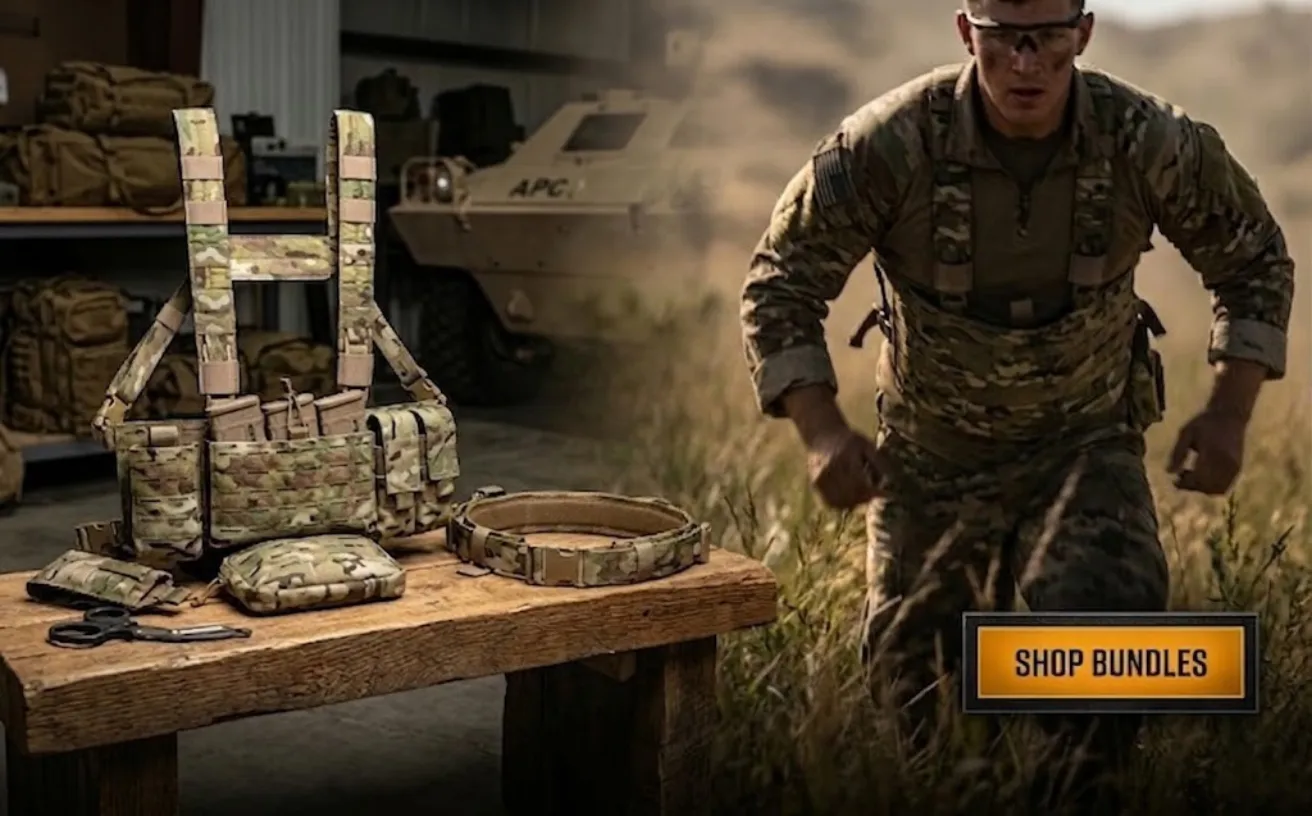
Chase Tactical’s bundle-and-save options and active shooter kits provide complete armor-plus-carrier setups that represent tested, compatible equipment combinations. For departments building response kit inventories, these bundles offer procurement efficiency and the assurance that components are designed to work together.
View Chase Tactical Bundle and Save Options
Conclusion
Riot response is a mission profile that demands dedicated preparation, not improvised solutions. The threat environment – thrown projectiles, incendiary devices, crowd pressure, edged weapons, and potential firearm threats – does not respond well to gear that was configured for a different role.
Departments and individual officers who build their riot response kit with the same rigor applied to any high-threat deployment are the ones who come home with injuries that are manageable rather than catastrophic. That means ballistic helmets rated to Level IIIA, not bump helmets. Soft armor at minimum, with hard plate options for elevated threat environments. MOLLE-configured carriers that allow rapid doffing and customized pouch placement. Medical gear is staged on the body, not in a vehicle.
Chase Tactical’s mil-spec product line covers every tier of that kit, built to the standards demanded by military and law enforcement procurement. When the call comes, the time for gear assessment is already past. Build the kit now.
For law enforcement training standards and officer safety guidelines, the National Institute of Justice’s technology and equipment resources provide research-based reference material for departments evaluating protective equipment standards.
Browse Chase Tactical’s Riot Gear and Law Enforcement Protection Range
FAQs
What body armor rating is appropriate for riot response?
Level IIIA soft armor is the baseline standard for law enforcement riot assignments, providing certified protection against high-velocity handgun rounds and meaningful resistance to blunt force and edged weapon threats. Hard armor plate additions depend on the threat assessment for the specific deployment. Chase Tactical carries both Level IIIA soft armor and Level III/IV hard plates.
Do riot response officers need ballistic helmets or impact helmets?
Ballistic helmets – specifically Level IIIA-rated ACH-pattern helmets – are the appropriate choice for riot response. They provide protection against both impact threats (thrown objects) and ballistic threats. Impact-only helmets provide no ballistic protection and are not appropriate for environments where firearm threats are possible.
What is a quick-release cummerbund, and why does it matter in riot response?
A quick-release cummerbund is a plate carrier side panel system that can be released with a single pull, allowing the carrier to be removed quickly if an officer needs to be stripped of their gear during a medical emergency or extraction. Chase Tactical’s plate carriers include quick-release cummerbund systems.
Are Chase Tactical products available for department procurement?
Chase Tactical is trusted by military and law enforcement professionals and carries mil-spec equipment suitable for department procurement. Contact chasetactical.com for information on bulk ordering and available products.
What MOLLE pouches should be on a riot response kit?
At minimum: tourniquet pouch (accessible), IFAK pouch, radio pouch, and utility pouches for mission-specific tools. All pouches should mount to the carrier’s MOLLE webbing for a secure, organized configuration. Chase Tactical’s full nylon and pouch line is MOLLE-compatible throughout.