





Best Military Backpack Sizes: Choosing by Mission Type

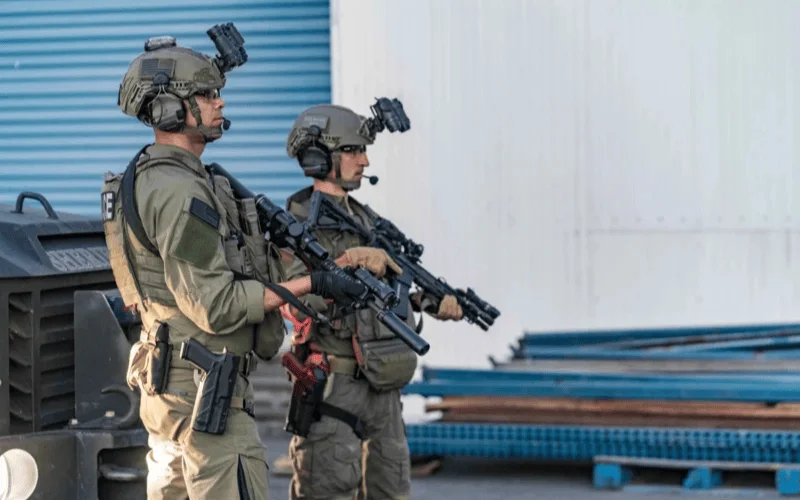
When selecting the best military backpack, it’s essential to tailor your choice to the mission type. You’re faced with options that range from compact urban patrol packs to larger field operation bags. Each mission demands a specific size for peak performance. Understanding mission requirements and environmental factors is key to determining the best fit for various conditions, such as hot climates or high-altitude missions.
Whether you’re selecting a tactical backpack or building a complete mission-ready loadout, shop our selection of tactical backpacks and gear bags designed for professional operations.
How to choose the right military backpack size
Before matching a pack to a mission, it helps to know the standard size bands and pack types. Tactical backpack size is measured in liters of internal volume, and most military packs fall into a few recognizable classes. Frame, MOLLE webbing, and fabric thickness all reduce usable space, so treat these as starting points rather than exact figures.
| Pack type | Capacity | Typical use |
| Assault pack / day pack | 20 to 35 L | Patrol, quick-reaction, 12 to 24 hour missions |
| Medium rucksack (24 to 72 hour) | 35 to 60 L | Multi-day field operations, recon |
| Large ruck / bergen | 60 to 100+ L | Extended deployment, cold-weather and mountain sustainment |
| Hydration carrier | 2 to 3 L bladder | Add-on water capacity for any pack |
Types of Military Backpacks: Rucksacks, Assault Packs & Frame Systems
Military backpacks aren’t a single product category. The type you need depends on how you carry weight and how fast you need to move, not just how many liters you want.
- Assault packs are the smallest category, built as a grab-and-go day pack or as a secondary pack that clips onto a larger rucksack for a short trip away from a main camp.
- Rucksacks (medium and large) are the primary load carriers for multi-day operations, built around a frame that transfers weight to the hips rather than the shoulders.
- Internal-frame packs use a frame sheet or stays sewn into the body of the pack. They sit closer to your back, which helps with balance and keeps a lower profile, and they’re the standard on most current military rucksack systems.
- External-frame packs use a rigid frame outside the pack body. They’re less common in current-issue gear but still show up in surplus and some cold-weather or mountaineering loadouts, since the standoff between pack and back improves airflow and lets you strap on bulky loads like sleep systems.
- MOLLE-compatible packs aren’t a separate size category. Any of the above can carry PALS webbing for attaching pouches, so “MOLLE backpack” describes the attachment system, not the pack’s capacity or frame type.
Matched against a civilian hiking pack, a military backpack trades some weight and comfort for heavier fabrics, a stronger frame, and MOLLE compatibility, since it has to survive drops, abrasion, and mission loads that a hiking pack isn’t built for.
How Heavy Is a Military Backpack? Weight by Pack Size
Size tells you how much a pack can hold. It doesn’t tell you how much you should actually carry. Once you’ve matched a capacity band to your mission, check it against a safe loaded weight, since an oversized pack invites overpacking and a smaller frame can’t support a heavy load safely. The figures below reflect the pack loaded with mission gear, not the empty shell:
| Pack size | Safe loaded weight | Typical use |
| 20L assault / day pack | 5–8 kg (11–18 lb) | Short patrols, quick-reaction missions |
| 20–30L day-patrol pack | 7–12 kg (15–26 lb) | Combat essentials without excess bulk |
| 40–65L medium rucksack | 10–18 kg, up to 20 kg with MOLLE (22–44 lb) | Multi-day field operations |
| 50L+ large ruck / bergen | Up to 25 kg (55 lb) | Extended deployment, cold-weather sustainment |
These figures match the safe carrying weights covered later in this guide under Load Density Considerations, converted here to pounds for quick reference. Heavier fabrics add base weight before you pack anything, and MOLLE attachments can add 10-15 liters without pushing you past a safe load.
What Backpack Does the Military Actually Issue?
There’s no single “military backpack.” Each branch fields its own system, and the exact model changes as contracts are updated. The U.S. Army’s current field pack system is the MOLLE II rucksack, available in medium and large sizes, built around a lightweight polymer frame that replaced the older ALICE pack. It’s typically paired with a smaller assault pack that clips onto the front for a lighter, shorter-duration load.
The Marine Corps, Air Force, and Navy field their own variants suited to each branch’s mission profile, and special operations units often run commercial or semi-custom packs chosen for a specific role rather than one standardized issue item. If you need the exact current specification for a branch or unit, the manufacturer’s technical data sheet or your unit’s supply channel is the authoritative source, since fielded equipment changes over the life of a contract.
Urban Patrol and Law Enforcement Backpack Sizes
Urban patrol and law enforcement backpack sizes vary widely depending on mission and environment, providing essential adaptability for officers. For foot or bike patrols in bustling cities, a 10–20 L pack works best. It keeps you agile and prevents snagging while maneuvering through crowds or tight spaces.
If you’re in plainclothes or an administrative role, a 15–30 L pack is ideal, accommodating laptops and files without compromising mobility. A backpack with a padded back-carrier pocket can fit most 15″ laptops comfortably, making it perfect for administrative duties.
For vehicle-based patrols, a larger 35–40 L bag acts as a “go bag” in your vehicle, while a smaller 10–20 L pack ensures you’re ready when dismounted. In rapid-response scenarios, a 20–30 L pack provides sufficient space for tactical gear, enabling quick access and movement. When selecting tactical gear, understanding low-profile versus full tactical loadouts helps optimize your operational readiness.
Field and Infantry Operations Backpack Sizes
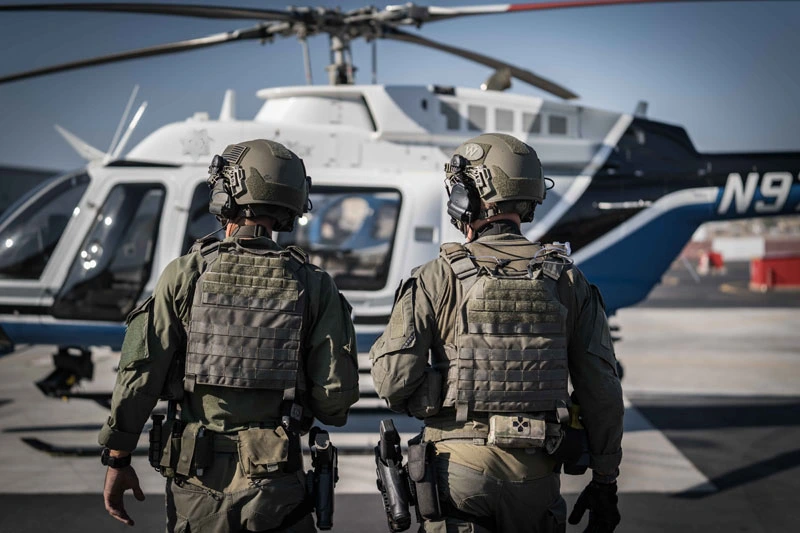
When preparing for field and infantry operations, choosing the right backpack size is vital for mission success and personal comfort. For multi-day missions, a 40L–65L backpack is ideal, offering ample space for clothing, sleeping systems, rations, ammunition, and communication equipment.
These packs support a safe carrying weight of 10–18 kg, expandable to 20 kg with MOLLE attachments. The long frame, with a torso length of 50–56 cm, ensures proper weight distribution. Tactical backpack sizes are measured in liters, indicating the total internal volume, which helps select a pack that meets specific storage needs.
For day-patrol missions, opt for a 20L–30L pack to carry combat essentials without excess bulk, limiting load to 7–12 kg. Both pack types prioritize strong frame support and full MOLLE compatibility, enabling mission-specific gear attachment and load customization, which are vital for maintaining mobility and endurance. When building your complete tactical setup, consider pairing your backpack with tactical plate carriers for optimal load distribution.
Reconnaissance and Special Operations Backpack Sizes
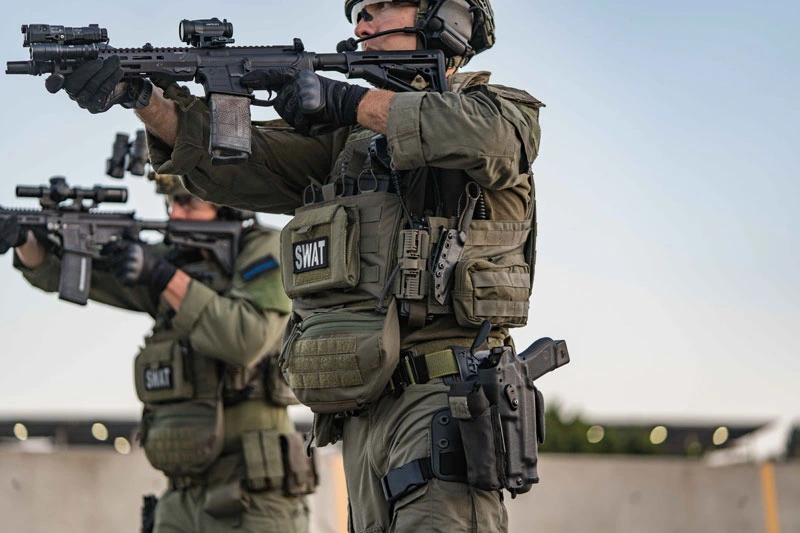
When selecting a backpack for reconnaissance and special operations, you must consider pack capacity, optimal access features, and stealth. Choose a pack size that aligns with your mission’s duration and environment, ensuring there’s room for all essential gear without compromising on speed.
Pack Capacity Guidelines
For short-range recon missions up to 24 hours, a day pack between 20–35 liters is perfect. As mission duration increases to 24-72 hours, consider a medium pack of 30–50 liters, which allows carrying additional rations and observation gear. For long-range recon or patrol base support lasting 3–7 days, a 60–80-liter pack is necessary to handle both sustainment and mission-specific equipment.
Ensuring compliance with military backpack regulations is crucial, as it affects mission readiness and operational effectiveness. Choose wisely based on mission type and duration to maintain optimal performance in the field.
Optimal Access Features
Efficient gear retrieval during high-stress moments requires optimal access features. Full-length clamshell zippers let you access your entire loadout quickly, while top-lid pockets keep optics and comms within easy reach. Dual-zipper pulls with paracord tabs mean you can open compartments one-handed, even with gloves on.
Bottom and side-zippered panels allow swift access to pre-staged items, such as med kits, without unloading the vehicle. Front access panels improve organization of essentials like navigation tools, while side-zip openings enable quick retrieval of cameras or UAV controllers. External pockets fit NVGs, minimizing internal bulk, and elastic side pockets provide instant access to water or tripods. For optimal gear organization, explore tactical utility pouches that integrate seamlessly with MOLLE systems.
Stealth and Modularity
For optimal stealth and modularity in reconnaissance and special operations, selecting the right backpack size is essential. Opt for stealth recon packs between 18–30 L for day missions, and 30–45 L for longer surveillance. Special operations assault packs typically range from 25–40 L, balancing gear without excess bulk.
A recon patrol pack of 60–65 L supports multi-day missions, while ruck-assault hybrids offer about 37 L for mobility. Choose packs with a shorter height (approximately 17–20″) and limited depth (approximately 6–7″) to minimize your visual profile. Modular designs with PALS/MOLLE fields allow for loadout customization without altering the base size. Use dark, non-reflective fabrics to minimize IR signatures, ensuring you remain undetected across various observation methods.
Backpack sizing for armor inserts and ballistic panels
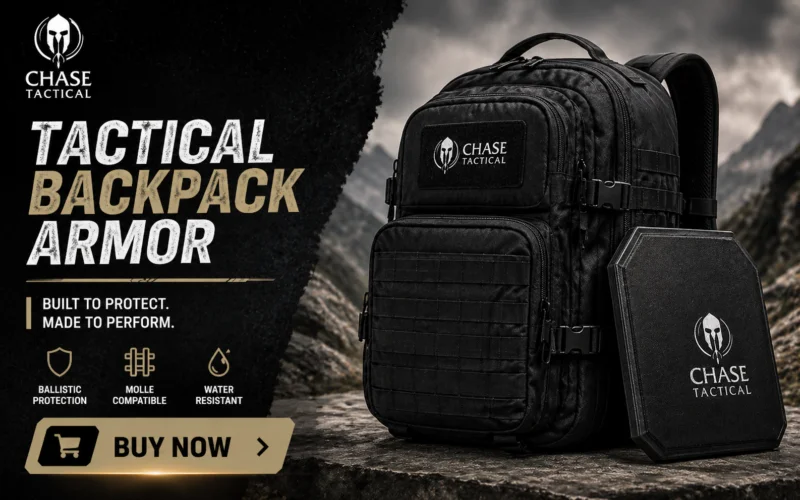
If you plan to run a backpack armor insert or soft ballistic panel, size the pack around the panel, not the other way around. Most backpack armor inserts are cut to fit a laptop or hydration sleeve, commonly in 11-by-14-inch or 10-by-12-inch formats, so the pack needs a flat back-panel sleeve at least as large as the insert. A 20 to 30 L assault pack comfortably accommodates a single soft panel for everyday, low-profile carry, while a 35 L or larger ruck leaves room for the insert plus mission gear. Check the sleeve dimensions and the insert weight against the pack’s safe load before committing, since an insert adds roughly 1-2 lb that count against the pack’s structural limit.
For panel options and compatibility, see our selection of backpack armor.
Vehicle and Quick Reaction Force Backpack Sizes
When preparing for vehicle, convoy, and quick reaction force operations, selecting the right backpack size is crucial for maneuverability and efficiency. A compact 20–25L pack is ideal for these scenarios, with dimensions around 18″ H × 14″ W × 9″ D, making it perfect for tight spaces.
Look for packs with distinct organizational sections, including padded laptop sleeves and side pockets for quick-access gadgets. Padded mesh back panels and detachable waist belts ensure comfort during long hours. MOLLE webbing for modular gear attachments and hydration compatibility are essential features. Choose durable 600 denier construction built for both urban and outdoor settings. Complement your vehicle loadout with tactical chest rigs for rapid deployment scenarios.
Backpack Sizes for Hot Climate Missions
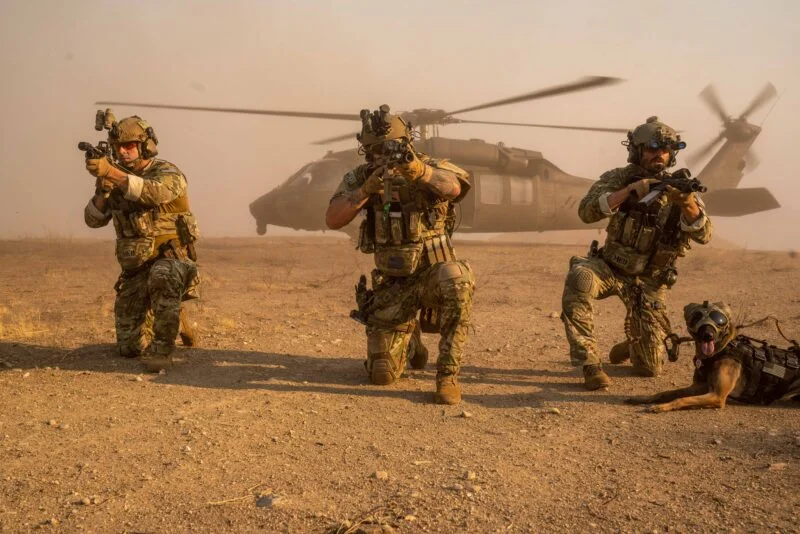
When you’re gearing up for hot-weather missions, choosing the right backpack size is essential to balance capacity and comfort. You’ll need a pack that can handle your hydration needs and features proper ventilation to manage heat effectively.
Optimal Capacity Range
For short patrols under 12 hours, a 15–25L pack minimizes weight and heat strain. If you’re out for a full day with resupply options, a 20–35L pack is ideal, holding extra clothing and mission tools. For 24–36-hour outings, opt for 25–40 L, including space for consumables and a lightweight shelter.
When resupply is uncertain over 48–72 hours, use a 40–50L pack for expanded sustainment. Extended operations demand a 50–65L pack, prioritizing self-sufficiency over mobility. Keep in mind, larger packs increase thermal stress, so balance is key. Always choose mission-critical gear to maintain agility and reduce performance degradation in the heat.
Ventilation and Hydration
Opt for backpacks with attachable ventilation frames that create a gap between your back and the pack. These frames improve airflow by up to 100%, helping sweat vapor escape and reducing heat, moisture, and odor buildup. This design ensures comfort during extended activity in hot environments.
Integrated hydration systems with a 50 fl oz capacity can be frozen to cool or heated to warm, maintaining hydration while regulating body temperature. These systems are essential for extended operations in extreme heat conditions. For complete hot-weather preparation, consider breathable tactical gloves designed for high-temperature operations.
Backpack Sizes for Cold and Winter Missions
Venturing on cold-weather missions requires careful consideration of backpack size to ensure you carry all essential gear efficiently. For short cold-weather patrols lasting 12 to 24 hours, opt for a 30–40 L pack to fit extra layers and gloves.
On standard 72-hour missions, choose a 55–65 L backpack to accommodate a sleep system and stove. For extended operations spanning 4–7 days, you’ll need a 65–80 L pack, while extreme conditions call for 80–100+ L to carry group gear and survival equipment. Proper insulation, cold-weather clothing, and increased fuel storage are critical considerations for these larger packs. When operating in cold environments, protecting your extremities with appropriate cold-weather tactical gloves is equally important.
Backpack Sizes for Wet and Maritime Operations
When embarking on wet, maritime operations, selecting the right backpack size is vital to ensure mobility and efficiency. For short missions such as boarding or small-boat operations, a 15–25 L assault pack is ideal. It lets you carry ammo, a medical kit, entry tools, and a compact hydration system without being cumbersome.
For 24-hour patrols, opt for a 25–35 L pack to accommodate extra clothing, rations, and communication gear. If you’re on a 48–72-hour mission, a 35–45L pack is necessary for shelter and a sleep system while managing bulk in surf zones.
Ensure your pack has drainage grommets, mesh pockets, and corrosion-resistant materials. Proper hydration management is vital, so use a 3L bladder with redundant sealing to prevent contamination in maritime environments.
Backpack Sizes for Mountain and High-Altitude Missions
After navigating the intricacies of wet and maritime operations, the focus shifts to the rugged demands of mountain and high-altitude missions. Choosing the right backpack size is vital for tackling these environments. Aim for a pack between 50L and 65L to balance carrying capacity with weight distribution.
This range supports high-altitude gear, like oxygen equipment and insulation layers, necessary for survival. Remember, your torso length matters: longer torsos (50–56 cm) work well with 40–65L packs. 50L packs handle multi-day expeditions with clothes, sleeping bags, and camping gear, while 65L+ packs are ideal for extended missions without resupply and integrate survival systems.
40–55 L packs ensure stability during extended tactical missions. Harness adjustability is essential for adapting to steep, variable terrain commonly encountered in mountain operations. When preparing for high-altitude missions, ensure your protective equipment includes tactical helmets compatible with cold-weather accessories.
Load Density Considerations for Backpack Sizing
Understanding load density is crucial for choosing the right backpack size, particularly in military operations where gear efficiency matters. You need to evaluate how weight capacity and material density affect usable space. A 20L backpack can safely hold 5-8 kg, while a 50L+ pack supports up to 25 kg, thresholds aligned with established safe load-carrying guidelines from occupational health research.
Heavier fabrics, such as 1000D nylon, take up more space than lighter 500D fabrics. Organize heavier items close to your back to minimize strain. Use MOLLE systems for expansion; a 40L backpack can add 10-15 liters for essential gear without compromising structural integrity or comfort during extended missions. Understanding proper weight distribution is similar to layering armor effectively for optimal protection and mobility.
Conclusion
When choosing a military backpack, always choose a size that matches your mission’s requirements. For urban patrols, stick to smaller packs for agility, while vehicle-based patrols need mid-sized options for gear readiness. Field and reconnaissance tasks demand larger packs, but adjust based on mission length and environmental conditions.
In hot climates, go light with proper ventilation; in cold or mountainous areas, opt for larger packs with adequate insulation capacity. Remember, your backpack should enhance, not hinder, your mission effectiveness and comfort. When building your complete tactical loadout, consider integrating tactical belts and harnesses with your backpack system for optimal load management. Choose wisely based on duration, environment, and operational requirements.
Frequently Asked Questions
How much weight should a military backpack safely carry?
Safe carrying weight depends on backpack size and frame design. A 20L pack should carry 5-8 kg, while 40–65L packs can handle 10–18 kg safely, expandable to 20 kg with proper MOLLE attachments and load distribution. Always organize heavier items close to your back to minimize strain and maintain balance during extended operations.
What’s the difference between MOLLE and PALS systems on tactical backpacks?
MOLLE (Modular Lightweight Load-carrying Equipment) is the overall system concept, while PALS (Pouch Attachment Ladder System) refers to the specific webbing grid used for attachments. For full MOLLE system specifications, refer to the official PEO Soldier documentation. PALS webbing features horizontal rows of heavy-duty nylon that allow you to attach pouches, holsters, and accessories. This modularity enables mission-specific customization, allowing you to add 10-15 liters of capacity via external attachments.
Can civilian hikers use military-style backpacks effectively?
Yes, civilian hikers can use military backpacks, though they should consider the trade-offs. Military packs offer exceptional durability, modular storage, and gear protection, making them suitable for rugged hiking trips. However, they’re typically heavier and less comfortable for long-distance trekking than civilian hiking packs designed for extended backcountry travel. Military packs excel in situations requiring robust construction and tactical organization.
How do you properly adjust a tactical backpack for optimal weight distribution?
Proper adjustment starts with selecting the correct torso length (typically 50–56 cm for longer frames). Load heavier items close to your back and centered between your shoulder blades. Tighten hip belts first to transfer 70-80% of weight to your hips, then adjust shoulder straps for a snug fit without bearing all the weight. Finally, secure load lifter straps at a 45-degree angle and adjust chest straps for stability. Readjust periodically during missions as loads shift.
What is a 72-hour military backpack?
A “72-hour bag” is shorthand for a medium rucksack sized to sustain one person for three days without resupply, typically in the 35–65 L range depending on climate and gear list. It’s the same capacity band covered above as the medium rucksack (24 to 72 hour) size, built to carry a sleep system, food, and mission gear for a standard 3-day patrol or field problem.