








Low-Profile vs. Full Tactical Plate Carriers: Which Is Better?


When choosing between low-profile and full tactical plate carriers, consider your specific needs and mission requirements. Low-profile carriers offer mobility and comfort, while full tactical carriers provide more protection and gear capacity. Your decision hinges on striking the right balance between agility and coverage. Explore the nuances to find the best fit for your tactical demands.
Looking for the perfect balance of mobility and protection? Our Lightweight Plate Carrier (LOPC) combines low-profile design with tactical versatility, giving you the best of both worlds for mission-critical operations.
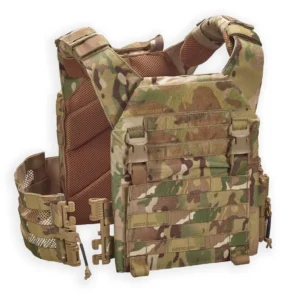
Durability and Material Construction
When choosing a plate carrier, durability and material construction are paramount. You’ll find that 500D or 1000D Cordura nylon is the go-to choice for its superior abrasion resistance in tough environments. For optimal balance, choose ripstop nylon blended with Cordura. Tactical carriers often feature laser-cut MOLLE webbing, offering exceptional strength without unnecessary weight.
Full tactical carriers prioritize high-level ballistic protection against high-velocity projectiles and armor-piercing threats. They use thicker fabrics and reinforced stitching to manage heavy loads and multiple gear attachments. Bar-tack stitching and reinforced seams enhance endurance at high-stress points. Whether you’re carrying steel, ceramic, or polyethylene plates, the carrier’s material should match the armor’s weight requirements.
Protection Level and Coverage
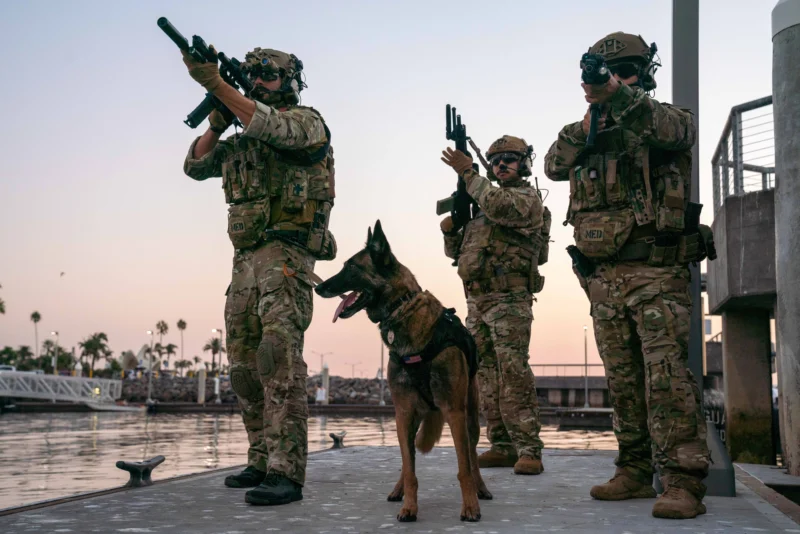
Understanding body armor protection levels is crucial for selecting the right plate carrier. Low-profile carriers typically accommodate Level III or III+ plates, prioritizing mobility while providing essential front and rear protection. They’re ideal for scenarios where weight reduction and agility are vital, such as urban operations or executive protection. Full tactical carriers provide comprehensive coverage with Level IV plates, including side panels and optional shoulder or groin armor.
Level 4 plates are specifically tested to defeat armor-piercing rifle rounds, ensuring maximum protection in high-risk environments. However, this superior protection comes at the cost of increased weight and reduced mobility. The choice depends on your operational needs: prioritize mobility with low-profile carriers, or opt for extensive protection with full tactical setups when facing high-threat scenarios.
Mobility and Comfort Considerations
Modern tactical scenarios demand both speed and agility, making the mobility-comfort balance crucial in selecting a plate carrier. Lightweight plate carriers offer significant advantages by using advanced materials such as polyethylene and carbon fiber. These materials reduce weight without sacrificing protection, giving you the edge in fast-paced operations.
Lightweight Design Benefits
Low-profile carriers are lightweight and customizable while still providing ballistic protection. You’ll notice improved freedom of movement, essential for quick transitions or maneuvering through tight spaces. The ergonomic design features adjustable straps and strategic padding, ensuring even weight distribution. This minimizes pressure points and increases comfort during extended wear.
Moisture-wicking liners and mesh backing keep you cooler and drier in hot climates. The reduced bulk prevents chafing and allows natural movement, ideal for dynamic operations.
Load Distribution Challenges
Proper load distribution greatly impacts a carrier’s effectiveness. You need a carrier that evenly distributes weight across your shoulders and torso to prevent pressure points and fatigue. Modern plate carriers use advanced materials such as high-strength polyethylene and aramid fibers to balance durability and reduced weight. Adjustable cummerbunds and shoulder straps let you customize the fit, improving balance. High-density foam or gel padding helps absorb shock and disperse weight during extended operations. For additional comfort, explore alternatives to shoulder pads to enhance your carrier setup.
Low-profile carriers maximize mobility by minimizing bulk, enabling better arm movement than full tactical carriers. Properly positioning ballistic plates optimizes protection without sacrificing range of motion. An uneven load can impair balance and natural movement, impacting tactical effectiveness.
Modularity and Load-Bearing Capacity
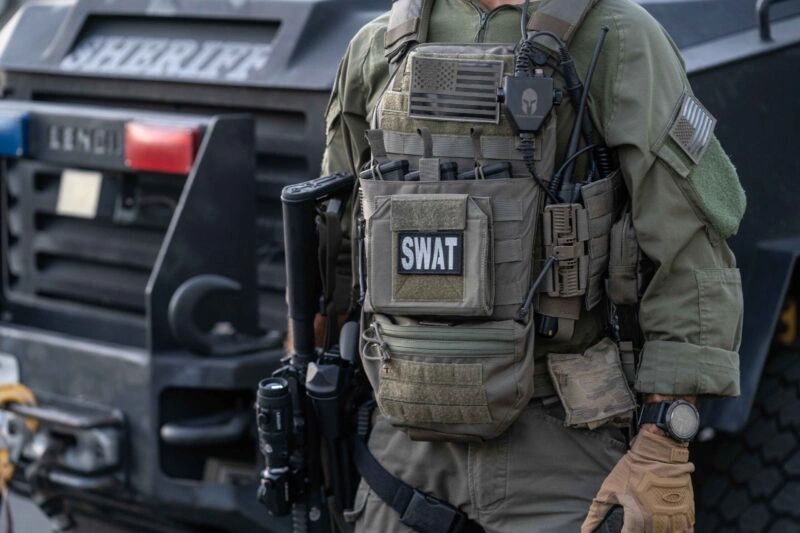
Plate carriers balance modularity and load-bearing capacity for diverse tactical needs. Full tactical carriers feature extensive MOLLE webbing and multiple attachment options, including Velcro and G-hooks. This lets you customize your setup with pouches, holsters, medical kits, and communication gear. They’re built to manage heavier loads, supporting soft armor, trauma pads, and additional equipment through robust cummerbunds.
Low-profile carriers focus on sleekness and minimal weight, featuring reduced MOLLE webbing for limited attachments. They prioritize agility and concealability, ideal for covert operations or situations requiring discretion. While standard ballistic plates support standard ballistic threats, their load-bearing capacity is lower and less scalable. The choice depends on your need for customization and gear capacity versus mobility and concealability.
Tactical Use Cases and Suitability
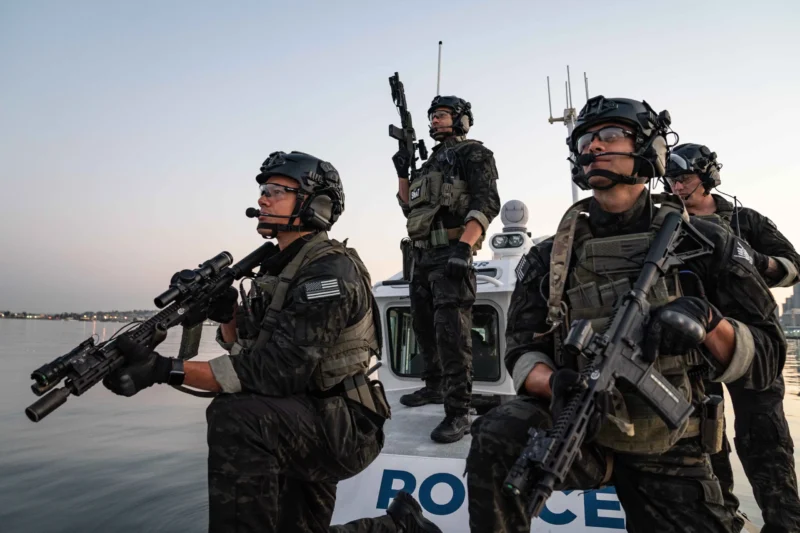
The choice between full tactical and low-profile plate carriers hinges on your specific operational needs. Understanding the psychological effects of tactical equipment can also help you make the right decision.
Full Tactical Carriers offer maximum ballistic protection, ideal for open combat, high-threat zones, and military operations where extensive coverage is critical. They accommodate multiple pouches, communication systems, and medical equipment. However, they can hinder agility in confined spaces, such as vehicles or buildings.
Low-Profile Carriers prioritize mobility and discretion, perfect for covert operations, urban law enforcement, executive protection, or undercover assignments. They provide essential ballistic protection while enhancing speed and reducing operator fatigue.
Your mission type, threat level, and need for swift movement dictate which carrier suits you best. Consider protection requirements, mobility constraints, concealment needs, and the operational environment to achieve optimal performance.
Cost, Maintenance, and Practical Considerations
Understanding the financial and practical aspects of plate carriers helps you make an informed decision that balances budget with operational requirements.
Cost Comparison: Low-profile carriers generally cost between $75 and $350, offering budget-friendly options for those prioritizing mobility. Full tactical carriers often exceed $549.98 due to their extensive features and superior materials. Military and first responder discounts may be available to reduce costs.
Maintenance Requirements: Both types require periodic cleaning, especially for high-strength materials like 500D Cordura®. Low-profile models are simpler to maintain, lacking the broad attachment systems of full tactical versions.
Regular inspection of stitching, straps, and buckles ensures longevity and reliability.
Practical Trade-offs: Low-profile carriers enhance mobility with their lighter design, making them ideal for dynamic environments and extended wear. Full tactical carriers offer superior protection and gear capacity but at the expense of added weight.
Your choice hinges on balancing affordability, ease of upkeep, and the trade-off between mobility and protection based on your specific operational requirements.
Conclusion
Choosing between low-profile and full tactical plate carriers depends on your specific operational needs. If you value mobility, comfort, and discretion, a low-profile carrier is your best choice—it’s lightweight, easy to maintain, and perfect for fast-paced operations.
If you need maximum protection and extensive gear capacity in high-risk scenarios, opt for a full tactical carrier. Consider your mission parameters, threat environment, budget, and the balance between protection and agility. Neither option is universally superior; the best choice aligns with your operational requirements and maintains tactical effectiveness.
Frequently Asked Questions
Which plate carrier is better for beginners?
Low-profile carriers are ideal for beginners. They’re easier to wear, less expensive ($75-$350), simpler to maintain, and help you build comfort with body armor before upgrading to heavier setups.
How much weight difference is there between low-profile and full tactical carriers?
Low-profile carriers typically weigh 2-4 lbs without plates. Full tactical carriers weigh 5-8 lbs due to additional MOLLE, reinforced materials, and attachment systems. Add 15-30 lbs for plates and gear.
Can I use the same plates in both carrier types?
Yes, most carriers accept standard 10×12-inch ballistic plates. However, full tactical carriers also accommodate side plates, shoulder armor, and trauma pads that low-profile carriers cannot support.
Which carrier is better for hot weather operations?
Low-profile carriers excel in hot climates. They feature mesh backing, moisture-wicking materials, and better ventilation. Full tactical carriers trap more heat due to additional padding and gear layers.