








How Police Tactical Units Choose Their Gear: Standards & Requirements

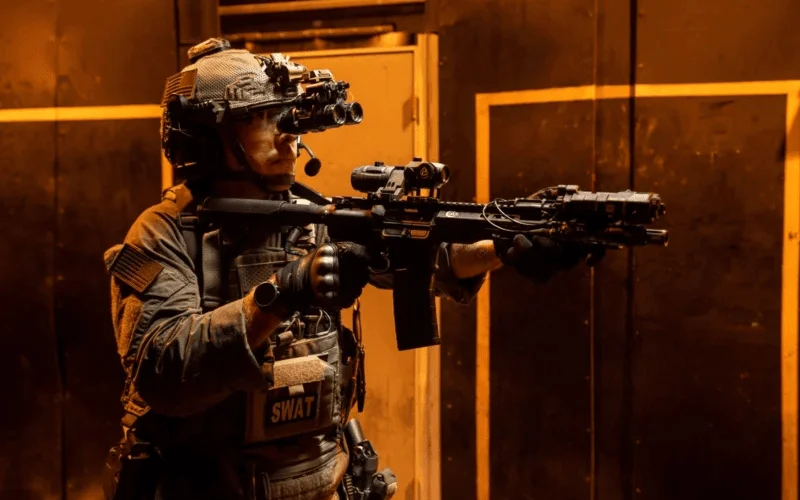
When you think about police tactical units, gear selection isn’t just about picking the latest gadgets. It’s a complex process guided by standards such as NIJ and CALEA and shaped by local crime threats. Each piece of equipment, from protective gear to weapons, is chosen for compliance and effectiveness. Explore our selection of tactical body armor designed to meet the highest protection standards.
Threat Assessment and Mission Profile
When evaluating threats, it’s crucial to assess the intent, ability, means, and opportunity of potential adversaries. These elements define the risk level and gear requirements for police tactical units. During deployment, active threat assessments help refine pre-mission intel and adjust gear, such as less-lethal options or armored assets, in real time.
Local crime data shows approximately 90% of firearm crimes involve handguns, prompting the use of Level IIIA soft armor. However, rifle threats justify deploying Level III or IV plates and heavier armor for high-risk situations.
Standards, Certification, and Policy Constraints
Police tactical units must adhere to rigorous standards, certifications, and policies to ensure they’re equipped with the right gear. Compliance with federal and national standards is essential. The NIJ standards, like 0101.06 and 0101.07, define the performance levels for armor, ensuring reliability.
The NIJ Compliance Testing Program (CTP) certifies armor models before they’re listed on the Compliant Products List (CPL). CALEA standards establish policies for weapons authorization and training prerequisites, while agency policies mandate state-approved SWAT courses and internal certifications for tactical roles.
Personal Protective Equipment Baseline
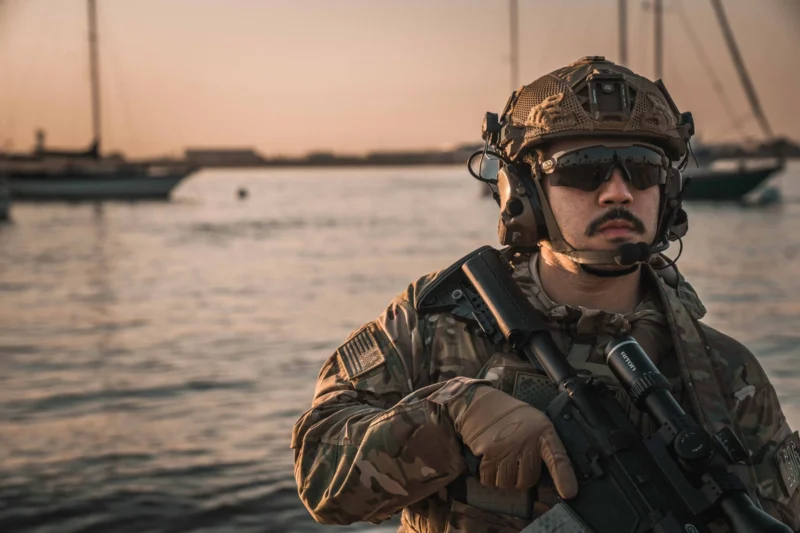
Every officer in a tactical unit relies on personal protective equipment (PPE) to secure their safety during missions. The NIJ 0104.02 standard ensures that tactical helmets and face shields meet national safety standards, providing officers with reliable protection against a range of threats.
Personal protective equipment must integrate seamlessly with existing tools, such as radios and holsters. Understanding how to properly layer armor with plate carriers can maximize safety without compromising mobility.
Weapons and Less-Lethal Options
In tactical operations, selecting the right weapons and munitions is essential for ensuring both officer safety and mission success. Handguns in calibers such as 9×19 mm and .40 S&W are standard, with patrol rifles in 5.56×45 mm common. Precision rifles in calibers like .308 are vital for long-range engagements.
For optimal weapon handling during high-stress operations, tactical operators rely on high-performance shooting gloves that enhance grip without sacrificing dexterity. Less-lethal options involve 12-gauge shotguns or 37/40 mm launchers with beanbag or foam rounds for crowd control.
Team Equipment and Technology
Ballistic shields and blankets provide advanced protection for tactical units. NIJ Level IIIA is commonly chosen for handgun threats, with higher levels like III and IV for rifle protection. Armored Rescue Vehicles (ARVs) offer robust protection with Mil-Spec steel armor, capable of withstanding 7.62 mm AP and .50 BMG rounds.
Tactical robotics and ISR technology revolutionize police tactical units’ approach by enhancing safety and efficiency during high-stakes operations. Ground robots and tactical drones minimize officer exposure by providing remote reconnaissance and situational awareness.
Training and Maintenance Requirements
Operators must complete 16–40 hours of documented tactical training each month, totaling 192–480 hours annually. Training must be task-based, focusing on critical skills relevant to your unit’s mission. Initial qualifications include a POST-certified Basic SWAT course, physical agility tests, and firearms qualification.
Legal and Community Considerations
Selecting gear for police tactical units requires balancing legal frameworks and community perceptions. State “military equipment” statutes require public hearings and approval for acquiring military-style gear. Federal transfer restrictions limit access to certain military items, ensuring gear isn’t overly militarized.
When building complete tactical loadouts, consider the benefits of low-profile versus full tactical plate carriers based on mission requirements and operational environments.
Conclusion
In choosing gear for police tactical units, you must balance compliance with standards and the unique needs of your community. Start with a thorough threat assessment and align your equipment with NIJ and CALEA guidelines. Prioritize protective gear, weapons, and technology that fit your mission profile.
When equipping your unit, explore professional-grade solutions including tactical plate carriers, night vision compatible helmet systems, and tactical gloves designed for law enforcement professionals. Remember, continuous improvement is key to mission success.
Faqs
What are the main standards governing tactical unit gear selection?
The primary standards include NIJ (National Institute of Justice) standards for body armor and protective equipment, and CALEA (Commission on Accreditation for Law Enforcement Agencies) standards for weapons and training. NIJ 0101.06 and 0101.07 define armor performance levels, while the NIJ Compliance Testing Program certifies equipment before it’s approved for use.
How do tactical units determine what level of body armor is needed?
Armor selection is based on local crime data and threat assessments. Since approximately 90% of firearm crimes involve handguns, Level IIIA soft armor is standard for most operations. However, units facing rifle threats deploy Level III or IV hard plates for enhanced protection against higher-velocity rounds.
What role does community input play in tactical gear acquisition?
Community input is increasingly important in tactical gear selection. State statutes often require public hearings and approval for acquiring military-style equipment. Public inventory lists and annual use reports enhance transparency, allowing community oversight while balancing operational security needs.
How often must tactical operators undergo training and qualification?
Tactical operators must complete 16–40 hours of documented training monthly, totaling 192–480 hours annually. Initial qualifications include POST-certified Basic SWAT courses, physical agility tests, and firearms qualification. Ongoing training involves monthly critical skills sessions, and physical fitness tests are conducted biannually.
What is the difference between low-profile and full tactical plate carriers?
Low-profile plate carriers prioritize concealment and mobility, ideal for covert operations or reduced visual impact. Full tactical plate carriers offer maximum protection and load-bearing capacity with MOLLE webbing for mission-specific gear attachment. Selection depends on mission requirements, threat level, and operational environment.