





NIJ 0101.07 Explained: What the New Body Armor Levels Mean

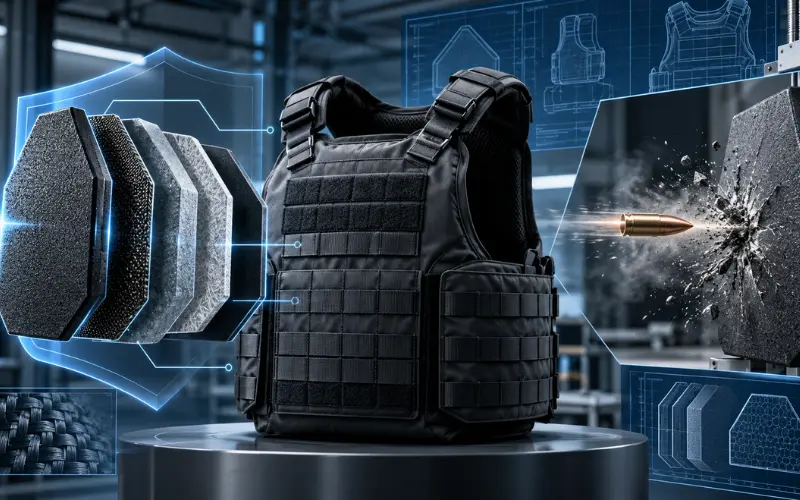
Pick up a new plate or vest today and you may see a label that looks unfamiliar. Instead of Level IIIA or Level IV, it reads HG2 or RF3. Nothing is wrong with the armor. The rulebook behind it has changed.
For years, body armor buyers relied on Roman numerals: II, IIIA, III and IV. If you already know the classic NIJ levels, you know how much those labels shaped every vest and plate decision. NIJ 0101.07 replaces them with a clearer naming system, adds a brand-new rifle level and tightens how armor is tested before it can be certified.
This guide explains exactly what NIJ 0101.07 changes, how the old and new levels line up, which test threats sit behind each level, and what the update means for officers, agencies, security teams and civilians choosing armor right now.
Rifle Protection You Can Trust
Chase Tactical armor plates are built for professionals who need rifle-rated protection on duty and in training. Compare plate weights, cuts and protection levels in one place.
NIJ 0101.07 at a Glance
Before the details, here are the five changes that matter most.
- Level names change from Roman numerals to HG (handgun) and RF (rifle) levels.
- A new RF2 level formally covers 5.56mm M855 green tip.
- Level IIA is dropped from the system.
- Test threats move into a separate document, NIJ 0123.00.
- Testing is tougher and more realistic, with new shot locations, better women’s armor testing and stricter conditioning.
What Is NIJ 0101.07?
NIJ 0101.07 is the National Institute of Justice performance standard for ballistic-resistant body armor, published in 2023. It replaces NIJ 0101.06, which had been in place since 2008. The update changes the structure of the standard itself, not just the level names.
Why the Standard Needed an Update
A lot changed between 2008 and 2023. Rifle threats became far more common in incidents involving law enforcement, and green tip 5.56 ammunition became widely available. Armor materials also moved forward, with lighter polyethylene and ceramic composites reaching the market. The old standard had no clean way to describe protection between Level III and Level IV, and its women’s armor testing was minimal.
The Standard Is Now Split in Two
Earlier versions listed the test threats inside the main document. Under the new system, NIJ 0101.07 explains how armor is tested, while a separate specification, NIJ 0123.00, defines the protection levels and the ammunition used for each one. This lets NIJ update threats in the future without rewriting the entire test standard. NIJ’s own overview of the standard describes this structure.
Testing Now References ASTM Methods
NIJ 0101.07 points to a set of standardized ASTM test methods and laboratory practices. That makes results more consistent from one accredited lab to the next, which helps agencies compare products with more confidence.
Old Levels vs New Levels
The new names are simpler: HG stands for handgun and RF stands for rifle. The table maps each legacy level to its new equivalent.
| NIJ 0101.06 level | NIJ 0101.07 level | Threat type | Typical armor |
| Level IIA | Dropped | Handgun | Not used |
| Level II | HG1 | Handgun | Thin concealable soft armor |
| Level IIIA | HG2 | Handgun | Duty and concealable soft armor |
| Level III | RF1 | Rifle | Hard plates |
| None | RF2 (new) | Rifle | Hard plates |
| Level IV | RF3 | Rifle | Hard plates, usually ceramic |
What Each New Level Covers
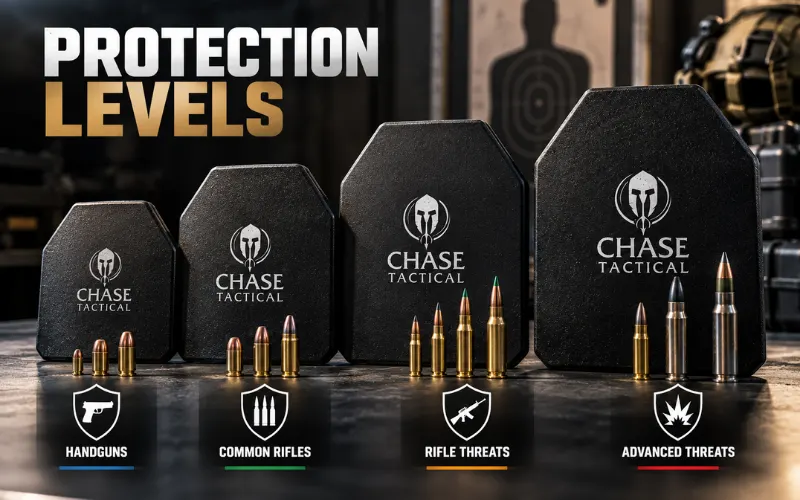
Each HG and RF level is defined by a set of test rounds in NIJ 0123.00. Here is where each level sits in practice.
HG1: Entry-Level Handgun Protection
HG1 takes the place of Level II. It is tested against common handgun rounds including 9mm full metal jacket and .357 Magnum jacketed soft point. HG1 armor is usually thinner and more flexible, which makes it easier to conceal under clothing for long periods.
HG2: The Duty Standard for Handgun Threats
HG2 takes the place of Level IIIA. It is tested against higher-velocity 9mm and .44 Magnum rounds, covering the widest range of handgun threats. HG2 remains the common choice for patrol vests and concealable carriers because it balances coverage, weight and comfort for a full shift.
RF1: The New Name for Level III
RF1 replaces Level III and is tested against common rifle ball ammunition: 7.62x51mm M80, 7.62x39mm and 5.56x45mm M193. If you have read our guide on Level III plates, RF1 covers that same role under the new name. Because the 5.56 M193 round is now part of the test, an RF1 rating also confirms the plate handles that common high-velocity threat.
RF2: The New Middle Level
RF2 is the biggest addition in NIJ 0101.07. It includes every RF1 threat plus 5.56x45mm M855, the steel-penetrator round often called green tip. Before RF2, there was no official NIJ level for this threat, so buyers had to rely on maker claims such as “Level III+”, which had no single meaning. RF2 gives that middle ground a formal, tested rating.
RF3: The New Name for Level IV
RF3 replaces Level IV and is tested against .30-06 M2 armor-piercing ammunition. It remains the highest rifle level in the NIJ system. Our guide to Level IV plates explains the materials and weight trade-offs that come with this level of protection, and our comparison of steel vs ceramic armor shows why most RF3 plates use ceramic.
Which Level Matches Which Threat?
The quick guide below helps you match a level to the threats you expect.
| If your main threat is… | Look for |
| Common handguns, concealed wear | HG1 or HG2 |
| Full range of handguns, duty wear | HG2 |
| Rifle ball ammunition | RF1 |
| Rifle ammunition including 5.56 green tip | RF2 |
| Armor-piercing rifle rounds | RF3 |
Pair Your Plates With the Right Soft Armor
Handgun-rated soft armor keeps you protected where plates do not reach and works as a backer behind in-conjunction plates. See Chase Tactical soft armor options.
How Testing Changed Under NIJ 0101.07
The new names get the headlines, but the testing changes matter more to the person wearing the armor. Each one closes a gap that existed in the old standard.
New Shot Locations on Soft Armor
NIJ updated perforation and backface deformation testing so soft armor panels take an additional shot near the top center edge. Edges are where panels are often weakest, so this shot better reflects hits that land near the collar area in real incidents.
Crown Shots on Curved Plates
Hard plates now face reconfigured testing that includes striking the crown of curved plates. Curved plates are shaped to fit the chest, and the crown is where the curve peaks. If you are deciding between shapes, our guide to single curve vs multi curve plates explains how curvature affects fit and coverage.
Backface Deformation and Blunt Trauma
Stopping a round is only half the job. Armor also has to limit how far the back of the panel or plate pushes into the body, which is measured as backface deformation. The new standard revises how this is tested across all armor types. Our article on how trauma pads reduce blunt force impact explains why this number matters for injury.
Conditioning That Reflects Real Wear
Armor is conditioned before testing to simulate heat, moisture and the stress of daily wear. Under NIJ 0101.07, conditioned armor is tested at the same velocities as new armor, so a certified model has to perform after simulated wear, not just fresh off the line.
Dedicated Testing for Women’s Armor
NIJ 0101.06 had only a short passage on armor shaped for women. NIJ 0101.07 adds a full annex on testing curved, female-fit soft armor, including exact shot placement above, below and between the bust cups. This gives female officers more confidence in fitted designs, and our guide to soft armor for women covers fit and sizing in more detail.
What NIJ 0101.07 Means for Buyers
The new standard does not make existing armor unsafe overnight. Instead, it changes what you should look for on labels and spec sheets, depending on who you are.
Law Enforcement Agencies
Many agencies require armor listed on the NIJ compliant products list for purchasing and grant programs, and NIJ has now begun listing armor tested to 0101.07. As products move to the new standard, procurement documents should name the level in both formats, such as “HG2 (formerly IIIA)”, to avoid confusion during the transition. Our guide to police body armor covers other duty requirements that sit alongside the NIJ rating.
Civilians and Security Professionals
For private buyers, the most useful change is RF2. If a common 5.56 rifle round is part of your threat picture, an RF2 rating tells you the plate was tested against M855, not just softer ball ammunition. Always check the exact standard and level printed on the label rather than relying on product names or marketing terms.
Reading Labels During the Transition
For a while, you will see both systems on the market. A plate labeled Level III under 0101.06 and a plate labeled RF1 under 0101.07 target the same threat group, but the testing behind the newer label is stricter. When comparing two products, confirm which standard each was certified to, the protection level, whether the plate is standalone or in-conjunction, and the size and model listed.
Does Your Current Armor Still Work?
Yes, as long as it is within its service life and undamaged. A change in standard does not change how your existing armor performs. Follow the warranty, inspect it regularly, and use our guide on how to care for body armor to keep it in service condition.
Common Misunderstandings About NIJ 0101.07
A few myths come up often when people first see the new labels.
- “RF3 is stronger than Level IV.” RF3 covers the same armor-piercing threat. The difference is the updated testing behind it.
- “HG2 armor stops rifle rounds.” It does not. HG levels are handgun ratings only.
- “Level III+ means RF2.” Not necessarily. Only armor tested and certified to RF2 can claim it.
- “My 0101.06 armor is now illegal.” No. Older certified armor remains usable within its service life.
Does NIJ 0101.07 Apply to Helmets and Shields?
No. NIJ 0101.07 covers body armor only. Ballistic helmets are tested under their own standard, which we break down in our guide to helmet ratings. Ballistic shields also fall under a separate NIJ standard.
Conclusion
NIJ 0101.07 makes body armor ratings easier to read and better matched to modern threats. HG1 and HG2 cover handgun protection, RF1 and RF3 replace Level III and Level IV, and the new RF2 level finally gives 5.56 green tip a formal rating. Behind the new names sit tougher edge and crown shots, stricter conditioning and real testing for women’s armor. When you choose armor, check the standard, the level and the label, and match your soft armor and ceramic plates to the threats you actually expect to face.
Frequently Asked Questions
What is NIJ 0101.07?
It is the current NIJ performance standard for ballistic-resistant body armor. It replaced NIJ 0101.06 and introduced the HG and RF level names.
What does HG2 mean?
HG2 is the NIJ 0101.07 handgun level that replaces Level IIIA. It is the most common rating for concealable and duty soft armor.
Is RF1 the same as Level III?
RF1 replaces Level III and covers rifle ball threats, including 7.62x51mm M80 and 5.56x45mm M193. The difference is the updated test procedure behind it.
What does RF2 stop that RF1 does not?
RF2 adds 5.56x45mm M855 green tip to the RF1 test threats. It fills the gap between RF1 and RF3 that buyers used to call Level III+.
Is RF3 the same as Level IV?
RF3 is the new name for Level IV protection and is tested against .30-06 M2 armor-piercing ammunition. Products must pass the new test methods to carry the RF3 label.
Is my Level IIIA or Level IV armor still good?
Armor certified under NIJ 0101.06 does not stop working because the standard changed. Follow the manufacturer’s warranty and service life, and check for damage.
What is NIJ 0123.00?
NIJ 0123.00 is the companion document that defines each protection level and its test ammunition. NIJ 0101.07 explains how the testing is done.
Is women’s body armor tested differently under NIJ 0101.07?
Yes. The standard adds a dedicated section on testing female-fit soft armor, with set shot locations around the bust area.
Does NIJ 0101.07 cover ballistic helmets?
No. Helmets and shields are tested under separate NIJ standards. NIJ 0101.07 applies only to body armor.