





Ballistic Eye Protection for Helmet Setups: Glasses vs Goggles

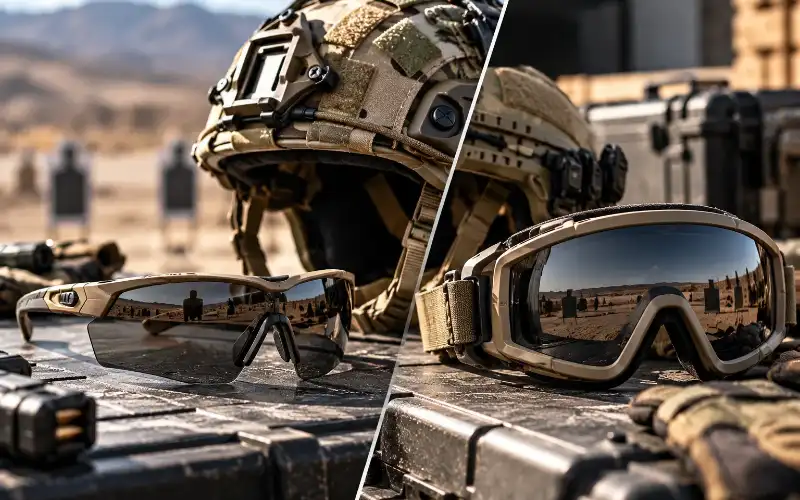
You can spend serious money on a helmet, plates and a carrier and still walk around with the most vulnerable part of your body almost uncovered. Your eyes sit in the one gap your helmet cannot close. Fragments, ricochets, spall, hot brass, rock chips, dust and branches all arrive at face level, and it only takes one small, fast piece to end a career.
That is why ballistic eye protection belongs in every serious head protection system. The challenge is not just choosing a rated lens. It is making that eyewear work with your helmet, your headset and any optic you mount up front, without gaps, fog or pressure points.
This guide compares ballistic glasses and goggles, explains the standards printed on good eyewear, walks through lens tints and coatings, and shows how to build eye protection into a helmet setup that stays comfortable all day.
Protect the Rest of Your Head
Eye protection covers your face. A Chase Tactical ballistic helmet covers everything above it, with a shell built to work alongside goggles, headsets and mounts.
Why Ballistic Eye Protection Matters
A helmet stops threats to the skull, but it leaves the face open by design. Understanding what ballistic eyewear is built to stop helps you choose the right level of protection.
What It Protects Against
Ballistic eyewear is designed to stop small, fast fragments, not bullets. In the field, most eye injuries come from secondary debris such as fragments, spall from steel targets, rock chips, glass and hot brass. This is the same fragmentation threat our guide on fragmentation protection explains for armor and helmets.
Why Regular Glasses Fall Short
Everyday sunglasses and prescription lenses can shatter on impact and push sharp pieces toward the eye. Ballistic lenses are made from impact-resistant polycarbonate and are tested to absorb high-velocity hits without breaking apart. Frames are also built to keep the lens in place when struck. A general background on the category is available on Wikipedia’s ballistic eyewear page.
Where Eye Injuries Happen
Eye injuries are not limited to combat. They happen on ranges from steel target splash and ejected brass, during vehicle work from wind-blown debris, during forced entry from wood and glass fragments, and on patrol from branches and thrown objects. Any role that puts you near these hazards calls for rated eyewear.
Standards to Check Before You Buy
Look for the standard printed on the frame or lens rather than trusting a product name or the word “tactical”. Two standards matter most.
ANSI Z87.1
ANSI Z87.1 is the main U.S. standard for occupational eye protection. Eyewear marked Z87+ has passed high-impact testing, while plain Z87 marking means basic impact only. Z87+ is the baseline for range and workplace use, and it is the standard OSHA’s eye and face protection guidance points employers to.
MIL-PRF-32432
MIL-PRF-32432 is the U.S. military ballistic fragmentation standard for eyewear. It tests lenses against a much faster projectile than ANSI Z87.1, which makes it the stronger choice for roles with real fragmentation risk.
The APEL List
The U.S. military keeps an Authorized Protective Eyewear List, or APEL, of eyewear that meets its requirements. Eyewear on this list has been checked against military ballistic and optical standards, which makes APEL status a useful shortcut when comparing options.
How to Read Eyewear Markings
Markings are usually printed on the temple arm, the frame or the lens edge. Look for the standard number, the impact rating such as Z87+, and sometimes a mark showing the lens tint or that the lens is suitable for prescription use. If there is no marking at all, treat the eyewear as unrated.
Ballistic Glasses vs Goggles
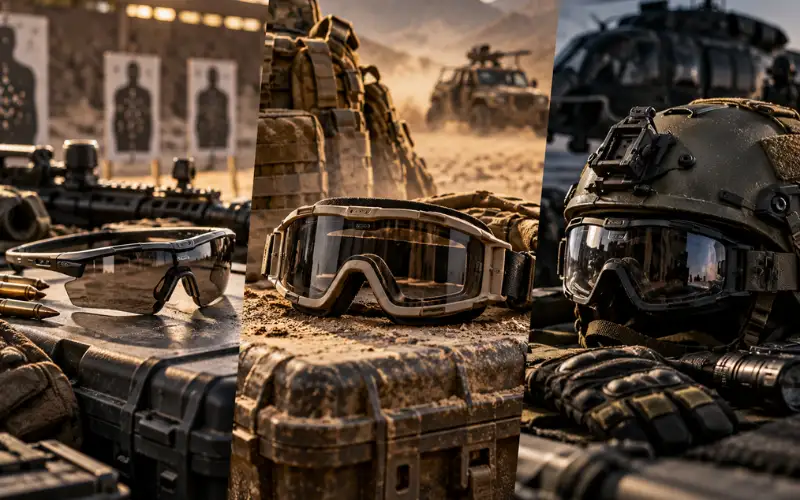
Both styles can carry the same ballistic rating. The difference is coverage, comfort and how well each one works with the rest of your head-borne gear.
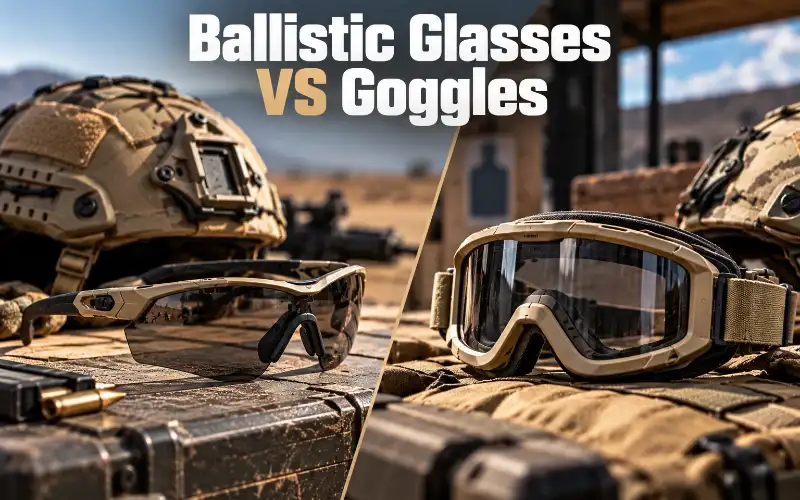
Ballistic Glasses
Glasses are light, cool and easy to wear for a full shift. They take seconds to put on and fit easily in a pocket or pouch. They leave some gap at the sides and bottom, so they offer less protection from dust and wind-driven debris.
Ballistic Goggles
Goggles seal around the eyes for full coverage. They keep out dust, sand and wind and stay in place during hard movement. They can fog more easily, feel warmer and need a strap path that works with your helmet.
Side-by-Side Comparison
| Factor | Ballistic glasses | Ballistic goggles |
| Coverage | Front and partial side | Full seal around the eyes |
| Dust, sand and wind | Limited | Strong |
| Fogging | Lower risk, more airflow | Higher risk without venting or anti-fog |
| Comfort over long wear | High | Moderate |
| Fit with over-ear headset | Temple arms can break the ear seal | Strap clears the ear cups |
| Fit with prescription lenses | Prescription inserts available | Some models fit over glasses |
| Stays on during hard movement | Moderate | Strong |
| Best for | Patrol, range, daily wear | Vehicles, rotor wash, breaching, desert |
Lens Tints and Coatings
The right lens can make the difference between clear vision and squinting through glare all day. Most quality eyewear offers interchangeable lenses.
Choosing a Lens Tint
| Tint | Best conditions | Notes |
| Clear | Night, indoors, low light | Maximum light for all-day and night work |
| Smoke or gray | Bright sun | Reduces glare without changing colors |
| Yellow or amber | Overcast, dawn, dusk | Boosts contrast in flat light |
| Mirrored | Very bright sun, snow, water | Reflects extra glare away |
Anti-Fog and Anti-Scratch Coatings
Anti-fog coatings help lenses stay clear as you heat up, and anti-scratch coatings protect the lens from daily wear. Both wear down over time with rough cleaning, so treat them with care.
A Note on Polarized Lenses
Polarized lenses cut glare well, but they can make some digital screens, radio displays and optics harder to read. Test polarized eyewear with your own gear before relying on it in the field.
A Lighter Base for Training Days
For range work, training and non-ballistic roles, a Chase Tactical bump helmet gives you head protection at a fraction of the weight of a ballistic shell.
Making Eye Protection Work With Your Helmet
Eyewear rarely fails on its own. It fails when it fights the helmet, the headset or the optic. These three areas cause most of the problems.
Helmet Fit and Goggle Straps
Goggles should sit flat against the face with the strap running around the back of the helmet, not under it. Some helmets have goggle clips or bungees on the rear to hold the strap in place. If the helmet sits too low on the brow, the goggle frame gets pushed down onto the nose, so adjust the helmet harness first. Our guide to NIJ helmet ratings covers how the shell itself is rated.
Working With Headsets
Thin, flat temple arms slide under over-ear cups with the least gap. Thick arms break the seal and let noise in, which reduces the hearing protection you rely on. If your glasses always break the seal, goggles or an in-ear headset may be the better match.
Working With Night Vision
A helmet-mounted optic needs a set distance from your eye. Bulky goggles can push the device forward and cut your field of view. Low-profile glasses usually work better under night vision, and our guide to helmet rig compatibility explains how to set the mount so both fit.
Quick Fit Check
Before relying on any eyewear, put on your full helmet setup and check that:
- The lens covers your eyes with no gap at the top under the helmet brim
- The frame does not press on your nose or temples
- Your headset still seals over the ears
- Your optic reaches its normal eye position
- Nothing shifts when you run, kneel and go prone
Prescription Options
Many users need vision correction, and there are three common ways to handle it. Some ballistic glasses accept a prescription insert that clips behind the main lens. Some goggles are sized to fit over regular glasses. Contact lenses are another option for users who wear them comfortably. Whichever you choose, the outer lens must still carry the ballistic rating.
Choosing Eye Protection by Role
The right eyewear depends on where you work and what you wear around it.
Patrol and Duty Use
Officers on patrol usually prefer ballistic glasses with interchangeable clear and tinted lenses. They are light, easy to carry and work with a duty belt and radio earpiece. For crowd control, goggles pair better with a face shield and full riot gear.
Military and High-Threat Work
Where fragmentation risk is high, choose eyewear that meets MIL-PRF-32432 and pairs with your combat helmets and headset. Carry both glasses and goggles if your mission moves between vehicles, open ground and close quarters.
Range and Training
On the range, ANSI Z87+ glasses are the minimum. Pair them with a bump helmet for movement drills, as our guide to choosing a bump helmet vs ballistic helmet explains, and with proper shooting gloves to protect your hands from heat and brass.
Vehicle, Aviation and Desert Work
Open vehicles, rotor wash and desert wind drive sand and grit into the eyes. Goggles with a full seal and good venting are the standard choice here, with a tinted lens for daylight and a clear lens for night.
Care, Cleaning and Replacement
Ballistic eyewear only protects you if the lens and frame are in good condition.
Cleaning
Rinse grit off with clean water before wiping, so you do not grind sand into the lens. Dry with a soft microfiber cloth, never your shirt or a paper towel, and avoid harsh chemicals that strip coatings.
When to Replace Eyewear
Replace eyewear immediately after it takes a significant impact, even if no damage is visible, because the lens may be weakened. Also replace it when lenses are deeply scratched, coatings have worn away or the frame no longer holds the lens firmly.
Common Mistakes to Avoid
These errors leave users less protected than they think.
- Wearing unrated sunglasses because they “look tactical”
- Pushing eyewear up onto the helmet and forgetting to pull it back down
- Choosing thick temple arms that break the headset seal
- Using a dark lens indoors or at night
- Cleaning lenses with clothing and wearing off the coatings
- Keeping eyewear in service after a hard impact
Conclusion
Ballistic eye protection closes the gap your helmet leaves open. Check for ANSI Z87+ at a minimum and MIL-PRF-32432 for higher-threat work. Choose glasses for comfort, airflow and daily wear, and goggles for full seal, dust and vehicle work. Pick the right tint for the light, look after the coatings and replace eyewear after any hard hit. Most of all, test your eyewear with your actual helmet, headset and optic before you rely on it, because a good fit is what keeps every part of your head protection working together.
Frequently Asked Questions
What is ballistic eye protection?
It is eyewear with impact-resistant lenses tested to stop small, high-velocity fragments. It protects against debris, spall and ricochets, not direct bullet hits.
Are ballistic glasses bulletproof?
No. Ballistic glasses are rated for fragments and small projectiles. They are not designed to stop bullets.
What is the difference between ANSI Z87.1 and MIL-PRF-32432?
ANSI Z87.1 is the U.S. occupational safety standard. MIL-PRF-32432 is the military ballistic standard and tests against a faster projectile.
What does Z87+ mean on safety glasses?
Z87+ means the eyewear passed the high-impact test in ANSI Z87.1. Plain Z87 marking means it passed basic impact testing only.
Should I choose ballistic glasses or goggles?
Glasses suit daily wear and long shifts. Goggles suit dust, wind, vehicles and high-fragment work because they seal around the eyes.
Can I wear ballistic glasses with an over-ear headset?
Yes, if the temple arms are thin and flat. Thick arms break the ear cup seal and reduce hearing protection.
Can I wear eye protection under night vision?
Yes. Low-profile glasses usually work best because they leave room for the optic’s eye relief.