





Zelensky Says US Intel Sharing Is Back; Rubio Denies a Pause

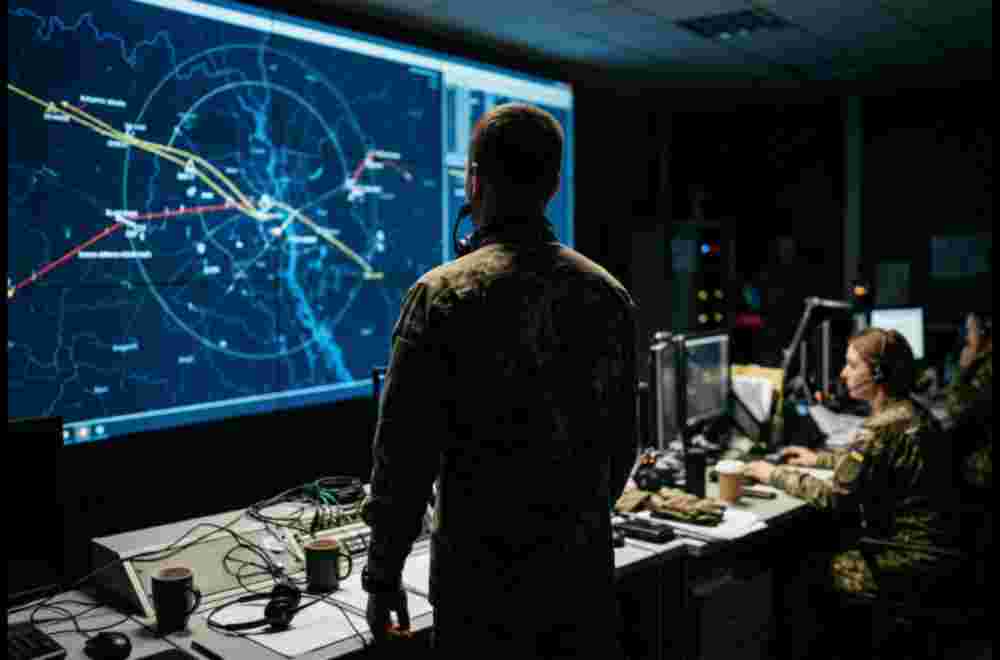
Ukrainian President Volodymyr Zelensky said on Sunday that the United States has restored the intelligence Kyiv uses to spot incoming Russian ballistic missiles. Zelensky told NBC's "Meet the Press" that the sharing had been interrupted and then "de-blocked," adding, "Now it works." A day later, Secretary of State Marco Rubio told reporters in Uzbekistan that "There has been no pause". Both statements are on the record, and they cannot both be fully right.
Ukraine's account is of a suspension lasting about three days. Kyiv Post reported that Zelensky said the block was lifted "by the American side" after three days, during a run of Russian ballistic attacks. Zelensky also said Ukraine received no advance warning of launches on two successive nights, a detail that sits slightly apart from the three-day figure.
Some summaries have gone further. The SOFX Report described a week-long halt, but the reporting traced to Zelensky's own words points to three days, and the start date of the pause is not given in the sources reviewed.
The clearest evidence is the October 12 attack on Kyiv. Reuters reported that five Russian ballistic missiles hit civilian infrastructure before air-raid alerts sounded, and that Ukraine's air force said it received no surveillance warning before the launch. Zelensky called the attack "particularly vile." He did not link the missing warning to any U.S. decision at that point.
President Donald Trump rejected the idea of a cutoff the next day. "We are helping them, and we are sharing intel," he said, according to the Associated Press. An anonymous senior Ukrainian official quoted in the same report described the missed warning as a "failure" and suggested circumstances such as weather rather than a deliberate decision. Foreign Minister Andrii Sybiha said Ukraine still receives U.S. military intelligence and attributed the gap to the specific weapons Russia used.
Rubio's denial on Monday matches that line. He told reporters the focus should be on ending the war.
The dispute did not start in a vacuum. The Washington Post reported, citing one source familiar with the matter, that U.S. intelligence officials warned Ukraine's embassy that further strikes on Russian energy sites would lead Washington to halt intelligence sharing immediately. The same source said sharing had not been cut off, at least not fully, but that the threat stood. According to Kyiv Post's summary of the Post report, U.S. officials acknowledged that access to some feeds had been limited. The Kyiv Independent and CNN reported similar warnings.
The political backdrop is the "energy ceasefire" Trump announced on October 11, which Russia never confirmed. Trump has blamed Ukraine's refinery strikes for high fuel prices, and Al Jazeera reported he accused Kyiv of targeting refineries to hurt Republicans in the November 3 midterms. Most analysts attribute the price rise mainly to the U.S. war with Iran, Reuters noted.
Zelensky's NBC interview also covered satellite communications. NPR reported that he believes the U.S. government was behind limits on Starshield, the military version of Starlink that the Pentagon has shared with Ukraine since 2024. Rubio called the claim of deliberate slowdowns false, and Trump denied interfering. Retired Navy Adm. Mark Montgomery described the disruptions as a White House signal to stop the refinery strikes, which is his interpretation, not an official position.
A bipartisan group of eight senators wrote to the Pentagon inspector general asking for an investigation and an initial briefing by November 1. They said the cause "remains unclear" and could be technical failure, intelligence interruption or policy change.
Zelensky said in a video post from Oslo on October 20 that Ukraine supported the American energy-ceasefire proposal but Russia kept attacking. He said Kyiv offered to avoid sensitive parts of Russia's energy sector if Russia stopped hitting Ukraine's, that "Putin said no," and that U.S. envoy Steve Witkoff was going to Russia the next day. That is Zelensky's account; Moscow has not confirmed it in the sources reviewed.
Three questions matter next. Will the Pentagon inspector general open the review the senators want? Will any U.S. official say plainly what, if anything, was restricted? And will Russia's next ballistic salvo arrive with warning or without it?
Today, we had important talks with our American partners and with our other partners from Europe. Steve Witkoff was also here with us in Oslo, and Jared Kushner joined us online.
— Volodymyr Zelenskyy / Володимир Зеленський (@ZelenskyyUa) October 20, 2026
Ukraine immediately supported American proposal for an energy ceasefire. But Russia responded by… pic.twitter.com/WEGon2JjHA