








License Plate Readers Move Beyond Plates to Track Phones, Wearables, and Pet Microchips

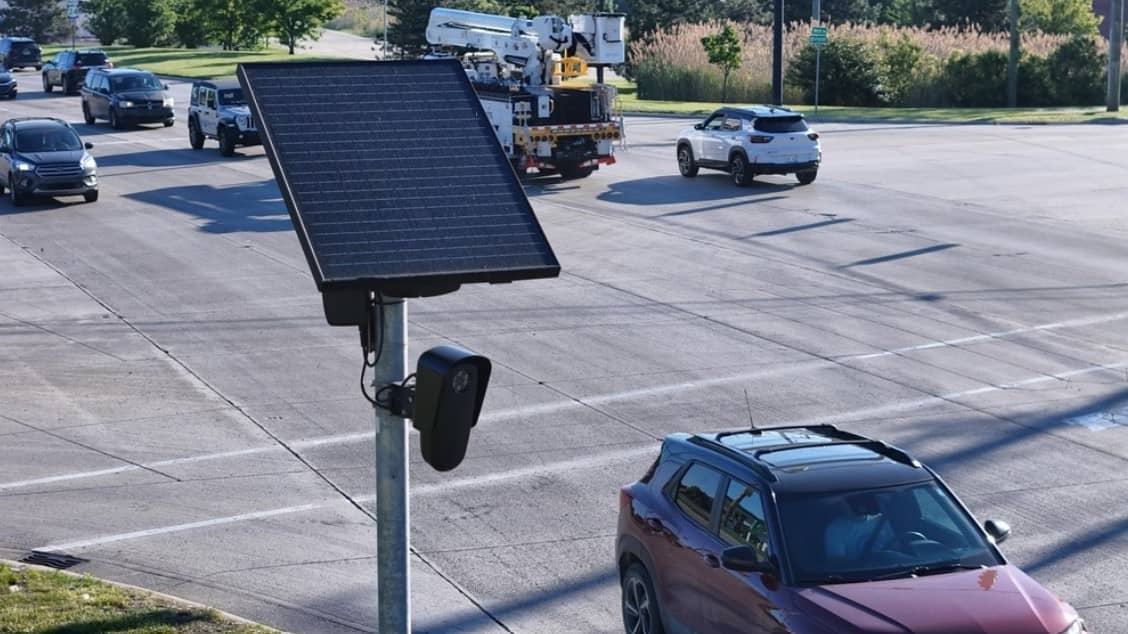
A new surveillance technology could allow law enforcement agencies to track not only vehicles, but also phones, smartwatches, wireless earbuds and other electronic devices linked to people inside those vehicles, according to recent reports.
The technology, called SignalTrace, was developed by defense contractor Leonardo and is designed to work with automated license plate reader (ALPR) cameras, which are already widely used to record vehicle license plates.
According to the product sheet cited by 404 Media, SignalTrace combines license plate recognition data with identifiers collected from devices such as mobile phones, Bluetooth-enabled wearables and RFID-enabled devices, including workplace access badges and pet microchips, to create a unique, trackable “electronic fingerprint” that can aid in the identification of suspects or witnesses.
“When multiple devices consistently move together with a vehicle, SignalTraceʼs algorithms link them to that vehicleʼs license plate and time-stamped location data. This correlation provides investigators with another layer of actionable intelligence, even if a suspect changes or removes a plate,” the sheet reads.
Privacy advocates have long raised concerns about automated license plate readers. The Electronic Frontier Foundation has said that repeatedly capturing images of vehicles at different locations can reveal a person’s “pattern of life” and even identify people they regularly associate with.
The company has not yet commented on privacy concerns surrounding SignalTrace.
Leonardo received a patent for the technology behind SignalTrace in 2024. In a press release announcing the milestone, the company defended the technology, saying it “captures device frequencies emitted into the air” and “does not decrypt or capture the contents of the devices or their communications.”
On its website, Leonardo also said that “SignalTrace was designed to ensure it does not infringe on the rights of individuals.”
It added that “the SignalTrace system simply stores data until a specific request is made of the system by an investigator” and is used only after a crime has occurred.
Leonardo’s customers include police departments, security agencies and other government organizations.
Critics argue that SignalTrace represents a significant escalation in everyday surveillance capabilities. By fusing passive signal detection with existing ALPR networks, the system could enable law enforcement to maintain persistent profiles of individuals based on the unique combination of devices they carry—essentially turning routine travel into a datastream of identifiable movements. Privacy experts warn this could erode anonymity in public spaces far beyond what license plate tracking alone achieves.
The Electronic Frontier Foundation (EFF) has long criticized ALPR systems for creating detailed “patterns of life” from vehicle movements alone. SignalTrace amplifies these concerns by linking personal electronics, which many people cannot easily disable or leave behind. Bluetooth MAC addresses, Wi-Fi probes, and RFID emissions are often unique or semi-unique identifiers that, when correlated over time, could reveal associations with family members, colleagues, or even sensitive locations like medical clinics, places of worship, or political gatherings.
Potential for abuse and mission creep is a major worry. While Leonardo emphasizes that data is only queried post-crime and does not involve decrypting communications, historical precedents with ALPR data show broad retention and sharing across agencies. Civil liberties groups fear “function creep,” where tools marketed for serious investigations end up supporting minor enforcement, traffic stops, or even political monitoring. In an era of widespread protests and polarized discourse, the ability to retroactively map device clusters around events raises chilling-effect concerns for free assembly and expression.
On the other side, proponents highlight public safety benefits. Law enforcement could more reliably track suspects who swap plates, use stolen vehicles, or operate in high-crime areas. The technology might aid in locating missing persons, recovering stolen property (including vehicles with associated wearables), or disrupting organized crime networks by revealing convoy patterns. Leonardo positions it as a natural evolution of proven ALPR tools, backed by decades of law enforcement partnerships and designed for seamless integration with existing infrastructure.
As adoption spreads, questions of regulation, transparency, and oversight will intensify. Should agencies be required to obtain warrants for device-correlation queries? How long should “electronic fingerprints” be retained? Will there be public audits of usage? Without robust safeguards, technologies like SignalTrace could accelerate the shift toward ubiquitous, passive surveillance—blurring the line between targeted policing and mass tracking. The coming months will likely see increased debate as more departments evaluate the system.