






Tactical Tourniquet Guide: Types, Placement, and When to Use One

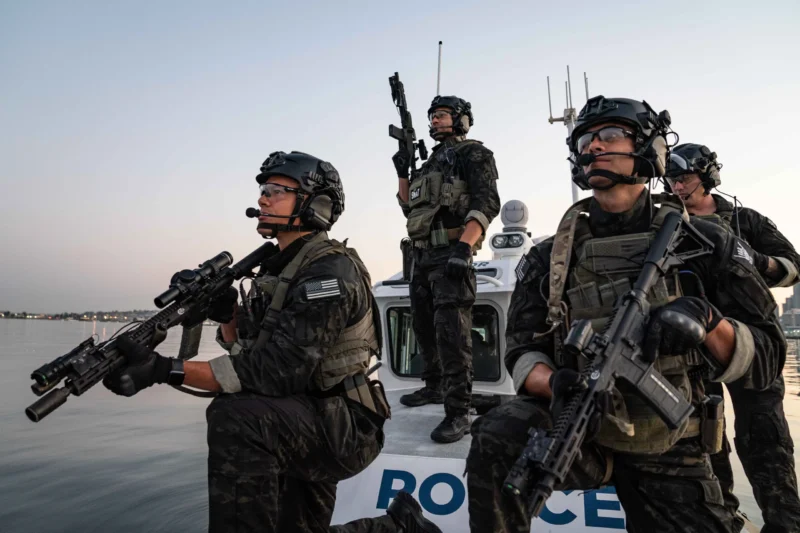
Hemorrhage is the leading cause of preventable death in trauma situations. Not just on the battlefield – in law enforcement confrontations, vehicle accidents, industrial incidents, and active shooter events. The tourniquet is the single most effective immediate intervention for extremity hemorrhage, and the difference between proper use and improper use is the difference between a life saved and a life lost.
This guide covers tourniquet types, proper application, placement in your kit, and the circumstances that warrant immediate deployment. If you carry a firearm, you should carry a tourniquet. If you carry a tourniquet, you should know how to use it before you need it.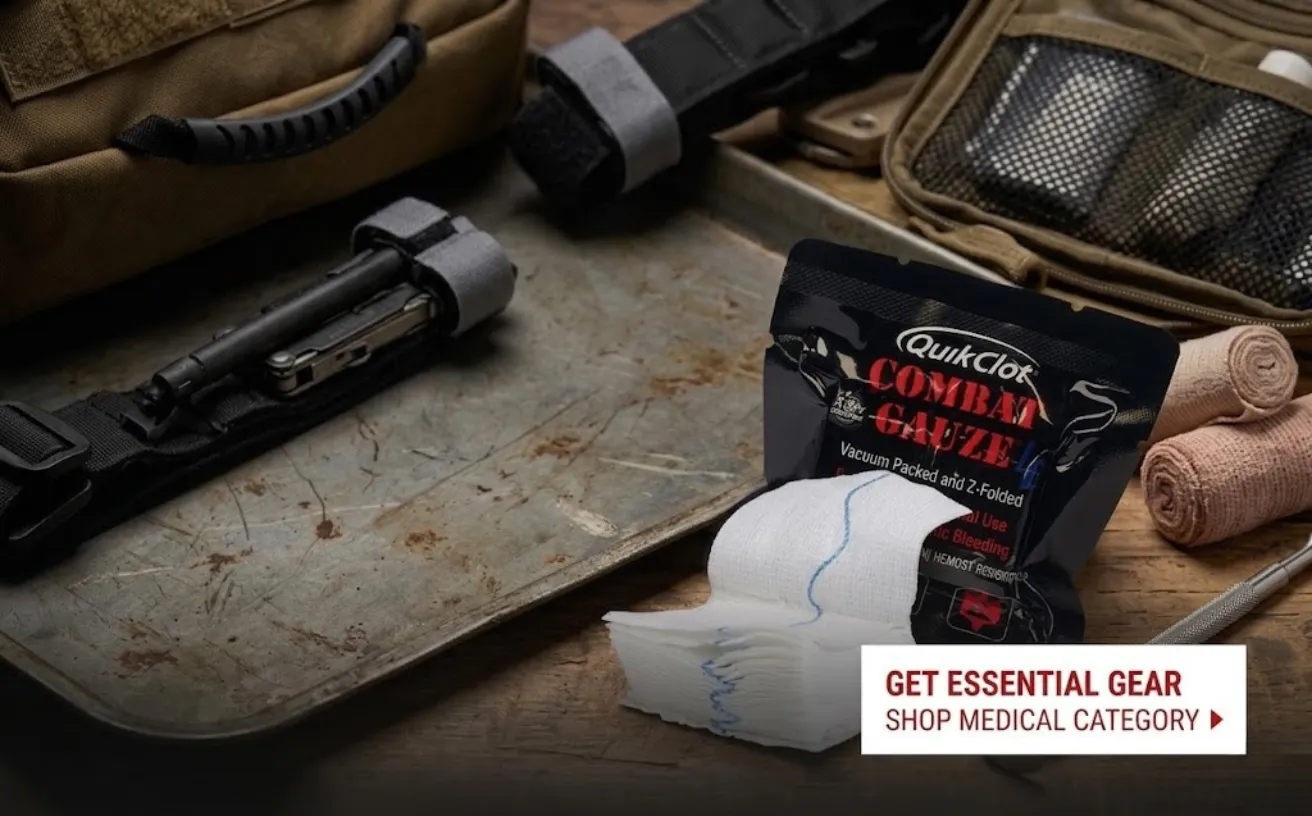
Why Every Operator Needs a Tourniquet
The tactical medicine community – military trauma surgeons, combat medics, law enforcement trainers – reached consensus years ago: a tourniquet applied correctly within the first few minutes of a severe extremity bleed is the single most life-saving intervention available to a person without advanced medical training.
“Stop the Bleed” campaigns and Tactical Combat Casualty Care (TCCC) protocols have mainstreamed tourniquet use in law enforcement, military, and civilian preparedness communities precisely because the skill is teachable, the equipment is portable, and the difference in outcomes between doing it and not doing it is unambiguous.
The caveat is equally important: a tourniquet carried but not accessible is functionally useless. A tourniquet that cannot be deployed within seconds under stress is a problem. This guide addresses both.
Types of Tactical Tourniquets
Not all tourniquets are equal. Two main categories define the field of tactical tourniquets used by military and law enforcement:
Combat Application Tourniquet (CAT)
The CAT tourniquet is the most widely used and recognized tactical tourniquet in U.S. military and law enforcement applications. Its one-handed application capability makes it the standard for self-application under field conditions. The windlass mechanism provides the mechanical advantage needed to compress an extremity sufficiently to stop arterial bleeding.
Key features of the CAT:
- One-handed self-application capability
- Windlass rod with securing clip for lock-off
- Wide band design that distributes pressure
- Time indicator on the securing strap for medical personnel tracking
The CAT is the tourniquet referenced in TCCC protocols and is the standard-issue tourniquet for U.S. military personnel.
Soft-T Wide (SOFTT-W)
The SOFTT-W is a narrower profile tourniquet that competes with the CAT in military and law enforcement adoption. Its tri-ring buckle system allows faster initial application before windlass tightening, and the lower profile makes it compatible with tighter carry positions.
Key features of the SOFTT-W:
- Tri-ring buckle for rapid single-hand application
- Windlass with pull-rod mechanism
- Narrower profile than CAT for certain carry positions
- Compatible with standard tourniquet pouch sizing
Both types are represented in law enforcement and military kits. Either is an appropriate choice when obtained from a legitimate source and properly maintained.
Tourniquet Placement on Your Kit
The most critical rule about tourniquet placement is also the simplest: it must be immediately accessible with either hand.
An extremity bleed requiring a tourniquet is often accompanied by a wound to that extremity. That means the tourniquet may need to be applied with the non-dominant hand, with one hand injured, or while the operator is physically compromised. Accessibility is not a secondary consideration.
Belt Placement
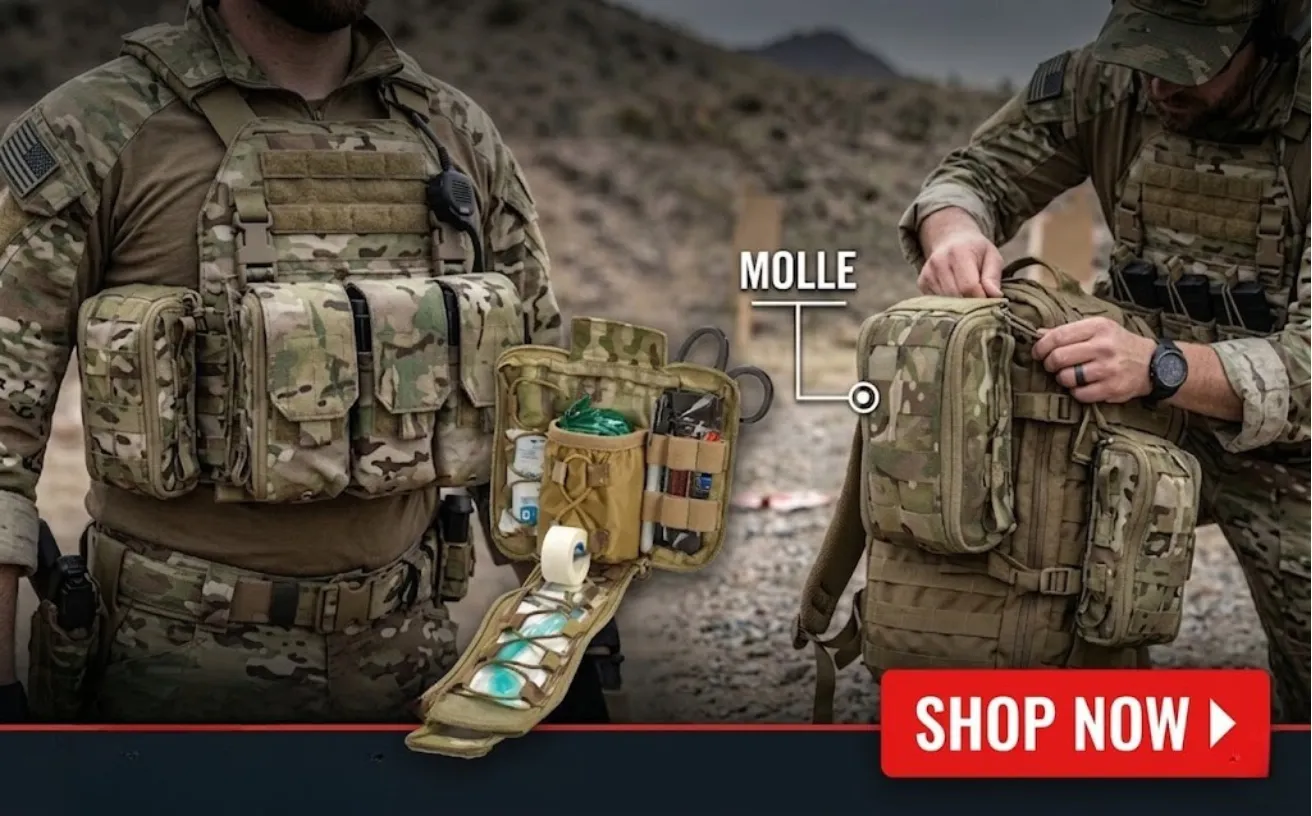
The front or non-dominant side of a duty belt is the standard carry position for operators not running a full plate carrier. Chase Tactical’s MOLLE-compatible tourniquet pouches attach to any standard MOLLE belt, keeping the tourniquet visible, accessible, and protected from environmental exposure.
Plate Carrier Placement
When running a plate carrier, the tourniquet pouch moves to the carrier. Standard placement options include:
- Front of the cummerbund, accessible by both hands
- Low on the carrier’s chest panel, within easy reach from standing or prone positions
- On a dedicated tourniquet MOLLE attachment at a consistent position, trained to muscle memory
Chase Tactical carries tourniquet pouches in multicam and standard colorways compatible with MOLLE plate carriers and belt systems.
The Absolute Rule: Never bury a tourniquet in a bag, a main compartment, or behind other gear. If accessing the tourniquet requires removing or moving another piece of equipment, the placement is wrong. It needs to be a single motion drawing.
When to Apply a Tourniquet
Understanding when to apply is as important as knowing how. The civilian instinct is to hesitate – to consider whether the wound “really” requires a tourniquet. In a tactical or trauma scenario, hesitation costs time that cannot be recovered.
Apply a tourniquet immediately in the following situations:
Arterial bleeding: Bright red blood that pulses or spurts with the heartbeat. Without intervention, arterial bleeding from a major extremity can be fatal within minutes.
Severe extremity trauma: Traumatic amputation or near-amputation of a limb requires immediate tourniquet application. Do not wait to assess further.
Uncontrolled bleeding from direct pressure: If two to three minutes of firm direct pressure on a wound has not controlled the bleeding, apply a tourniquet. Do not continue with ineffective methods.
Tactical situations where wound assessment is not possible: Under fire, if a limb wound is visible but the situation does not permit detailed wound assessment, applying a tourniquet and continuing to move is correct. A tourniquet applied in error causes temporary injury to tissue. Uncontrolled hemorrhage causes death.
How to Apply a Tourniquet Correctly
Field application follows a consistent sequence:
- Position high and tight: Place the tourniquet 2 to 3 inches above the wound site on the limb – as high on the limb as practical. Never place directly over a joint.
- Secure the band: Loop around the limb and route through the buckle. Tighten the band until snug against the limb before engaging the windlass.
- Windlass until bleeding stops: Turn the windlass rod until the bleeding stops. This typically requires multiple rotations. “Tight enough” means bleeding stops – not tight until it hurts.
- Secure the windlass: Lock the windlass rod into the securing clip or keeper strap to prevent unwinding.
- Mark the time: Record the application time on the tourniquet strap or with a permanent marker on the patient’s skin. Medical personnel need to know how long the tourniquet has been in place.
- Do not remove in the field: Once applied, a tourniquet remains in place until the patient reaches definitive medical care. Do not loosen to check, do not remove to “give the limb a rest.” Leave it in place.
Tourniquet Training and Certification
Reading about tourniquet application is not the same as being able to apply one under stress in degraded conditions. The Stop the Bleed program, TCCC courses, and law enforcement first aid certifications all include hands-on tourniquet training. Physical practice on training tourniquets – not your carry tourniquet – builds the muscle memory required for field application.
The Stop the Bleed program offers free training resources and course locators for civilian and professional hemorrhage control training.
Conclusion
A tourniquet carried but never trained with is almost as dangerous as no tourniquet at all. The equipment is only half of the equation. The other half is knowing how to apply it in under 30 seconds, with one hand, under stress, with degraded motor control. That skill does not come from reading. It comes from hands-on repetition on a training tourniquet before you ever need to use a real one.
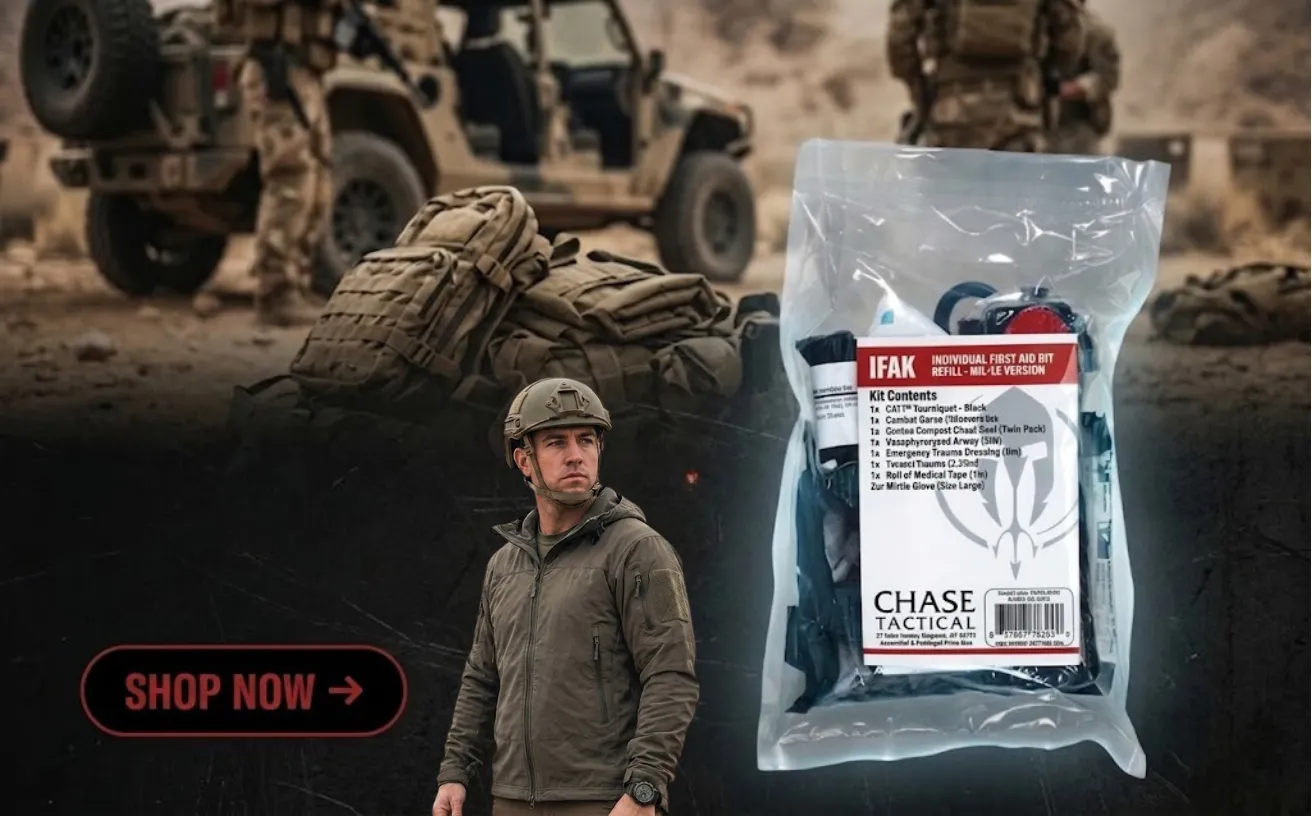
Carry it on your belt. Carry it on your carrier. Keep it accessible to both hands. Train to it until the draw and the application are automatic. And make sure the rest of your medical kit – the IFAK, the hemostatic gauze, the pressure dressing – is staged with the same intentionality. Chase Tactical’s medical gear and MOLLE pouch line exists to make that configuration possible for every mission profile. The gear is the easy part. The training is what saves lives.
The Stop the Bleed program provides hemorrhage-control training resources for civilians and professionals at stopthebleed.org.
FAQs
Should I carry a tourniquet on my belt or on my plate carrier?
Both, if mission requirements allow. A tourniquet on your belt is accessible when you are not wearing your carrier. A tourniquet on your carrier is accessible when you are. Consistent placement on both systems prevents hesitation about which one to reach for under stress.
Can a tourniquet pouch hold both CAT and SOFTT-W tourniquets?
Most standard tourniquet pouches are sized to accommodate both the CAT and the SOFTT-W. Chase Tactical’s tourniquet pouches use MOLLE attachment and are sized for standard tactical tourniquets. Verify dimensions against your specific tourniquet model before ordering.
Does applying a tourniquet permanently damage the limb?
A tourniquet applied correctly and removed within the window managed by medical professionals causes temporary tissue compression without permanent injury. The injury risk from an improperly applied tourniquet is substantially lower than the survival risk from uncontrolled hemorrhage. Apply when indicated.
What else should be in a tactical medical kit beyond a tourniquet?
A complete IFAK typically includes hemostatic gauze, a pressure bandage, a chest seal (for penetrating chest wounds), a decompression needle (for trained users), gloves, and a tourniquet. Chase Tactical carries IFAK pouches and tactical medical kits covering these categories.
How often should I replace my tourniquet?
Replace tourniquets that have been used in a real application, that have been used extensively for training (training should be done on designated training tourniquets), or that show signs of material degradation. Do not leave a tourniquet in a vehicle exposed to high heat for extended periods – heat degrades the webbing and windlass mechanism over time.