







Supreme Court Says Geofence Location Sweeps Count as Fourth Amendment Searches

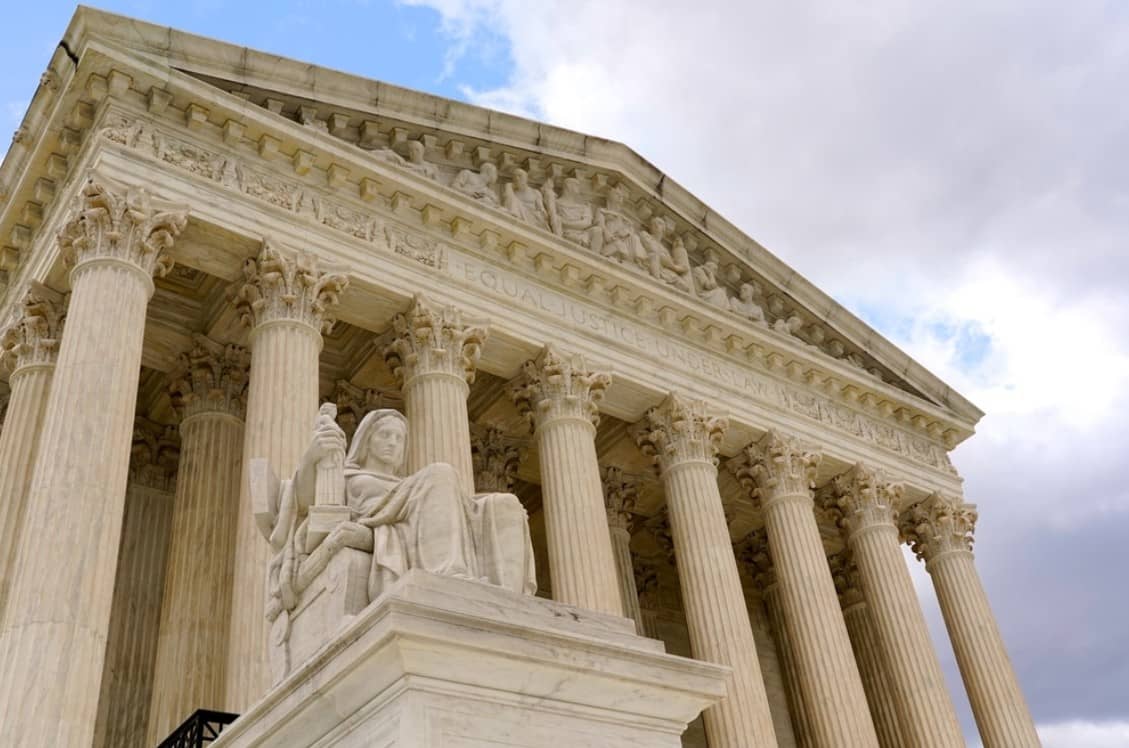
The U.S. Supreme Court on Monday ruled that law enforcement’s use of geofence warrants is subject to Fourth Amendment protections, requiring police to meet constitutional standards before obtaining cellphone location data from technology companies.
Geofence warrants require technology companies to search their databases for devices that were within a defined geographic area during a specific period. Investigators typically draw a virtual boundary around a crime scene and ask companies such as Google to identify devices that were present, a practice critics say can also collect the location data of people not connected to a crime.
In the 6-3 decision, Justice Elena Kagan wrote that “an individual has a reasonable expectation of privacy in records about his cell phone’s location, and police intrude on that constitutionally protected interest when they demand the information – even though for only a limited time, and from a third-party tech company.”
The court stressed that it does not matter if law enforcement officials “access[ed] only a short amount of cell-phone location information,” noting that even a limited amount of cellphone location data can reveal deeply personal details individuals may wish to keep private, including visits to “‘the psychiatrist, the plastic surgeon, the abortion clinic, the AIDS treatment center, the strip club, the criminal defense attorney, [or] the by-the-hour motel.’”
The court also rejected the argument that users automatically surrender privacy rights by sharing location information with companies such as Google through their devices and apps. Instead, it concluded that the Fourth Amendment applies to such data, requiring law enforcement to demonstrate probable cause before obtaining it through a warrant.
The decision, concurred in by Chief Justice John Roberts and Justices Sonia Sotomayor, Brett Kavanaugh and Ketanji Brown Jackson further added that the purpose of the Fourth Amendment “is ‘to safeguard the privacy and security of individuals against arbitrary invasions by governmental officials.’”
Kagan wrote that while the Supreme Court’s early Fourth Amendment cases focused on whether law enforcement “obtain[ed] information by physically intruding” on private property, the court has since recognized that a government “search” can also occur when it intrudes on an area “an individual seeks to preserve … as private” and where the “expectation of privacy is one that society is prepared to recognize as reasonable.”
The case, Chatrie v. United States, stemmed from the 2019 armed robbery of a federal credit union outside Richmond, Virginia. After the investigation stalled, detectives obtained a geofence warrant directing Google to provide location information for devices near the bank around the time of the robbery, eventually leading investigators to Okello Chatrie.
Google initially identified 19 anonymous accounts within a 150-meter radius during the relevant period. Investigators later narrowed the list before obtaining identifying information for three users, including Chatrie. Police subsequently found nearly $100,000 in cash, a handgun and demand notes linked to the robbery.
Chatrie pleaded guilty to bank robbery but challenged the use of the geofence evidence, arguing the warrants allowed investigators “to search first and develop suspicions later.”
The justices sent the 2019 bank-robbery case of Chatrie back to a lower court to determine whether the search was reasonable under Fourth Amendment standards, stopping short of banning geofence warrants outright.
Justice Samuel Alito, joined in part by Justices Clarence Thomas and Amy Coney Barrett, dissented from the Supreme Court decision, arguing that the majority’s ruling “will send seismic waves through our Fourth Amendment doctrine” but would ultimately have no effect on Chatrie’s case.
The ruling has sparked immediate reactions across legal, law enforcement, and privacy advocacy circles. Civil liberties organizations, including the ACLU and Electronic Frontier Foundation, hailed the decision as a significant victory for digital privacy in an era of ubiquitous location tracking. “This opinion reaffirms that the Fourth Amendment is not frozen in the analog era,” said EFF Senior Staff Attorney Jennifer Granick. “Geofence warrants cast an indiscriminate digital dragnet that sweeps up innocent Americans’ movements. Today’s ruling demands individualized suspicion before the government can rifle through our digital footprints.”
Law enforcement officials expressed concern that the heightened probable cause requirement could slow investigations, particularly in time-sensitive cases involving violent crime or terrorism. “Geofence data has become an indispensable tool,” said a spokesperson for the Major Cities Chiefs Association. “While we respect constitutional limits, crafting warrants that satisfy this new standard without compromising speed will require updated training and resources.”
Legal analysts predict the decision will prompt states and federal agencies to refine warrant applications, potentially increasing judicial scrutiny and reducing the volume of broad geofence requests. The remand to lower courts in Chatrie will serve as a critical test case, clarifying what constitutes a “reasonable” geofence search in practice.
Broader implications extend to other forms of digital surveillance, including cell-site location information and emerging tracking technologies. Privacy experts anticipate follow-on litigation challenging reverse keyword warrants and similar investigative methods. As smartphones continue to generate vast troves of sensitive data, the Supreme Court’s emphasis on reasonable expectations of privacy signals a recalibration of the balance between public safety and individual liberty in the digital age.
In the meantime, technology companies like Google may face pressure to strengthen user controls and transparency around location data retention. For Okello Chatrie, the case returns to the district court, where judges must now weigh whether the original geofence warrant met the newly clarified constitutional threshold. The 6-3 ruling underscores the Court’s ongoing struggle to apply 18th-century principles to 21st-century technology, ensuring that government power does not outpace protections for personal privacy.