








Military Vs Civilian Survival Rifles: Key Differences

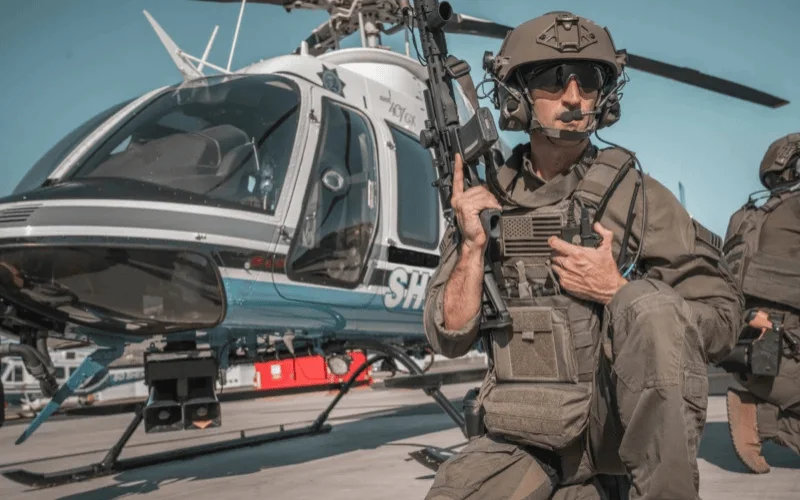
When comparing military and civilian survival rifles, you’ll notice distinct differences in their design and function. Military rifles emphasize durability and reliability, often using NATO-caliber cartridges and semi-automatic actions. They’re built for extreme conditions and rapid fire. Civilian rifles, on the other hand, prioritize versatility and ease of use, often choosing calibers like .22 LR for cost-effectiveness. Curious about how these differences impact performance and usability in various scenarios?
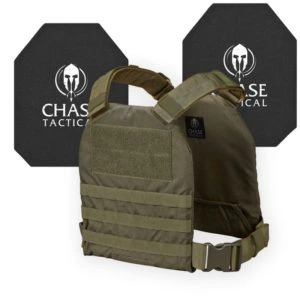
Whether you’re selecting a survival rifle or building a complete tactical loadout, understanding how different gear components work together is essential. Explore our selection of tactical plate carriers designed to integrate seamlessly with your mission requirements.
Role and Design Purpose
When comparing military and civilian survival rifles, understanding their distinct roles and design purposes is essential.
Military survival rifles are crafted for aircrew and special operations personnel who may find themselves separated from their primary combat weapons, with a focus on rescue and evasion capabilities. These rifles must be durable, fit into compact spaces, and integrate seamlessly with ballistic helmets and other military gear.
On the other hand, civilian survival rifles cater to hikers, campers, and outdoor enthusiasts, emphasizing versatility and ease of use. They’re designed for small-game hunting, emergency signaling, and recreational shooting.
Civilian rifles prioritize cost-effectiveness, legal compliance, and user-friendly features. While military rifles require adherence to strict specifications, civilian options allow for modularity and customization, making them adaptable to individual needs and preferences. For those building a complete loadout, consider pairing your rifle with tactical backpacks for efficient gear transport.
Calibers, Ballistics, and Terminal Effect
Understanding the specific calibers, ballistics, and terminal effects of survival rifles provides insight into their design and application.
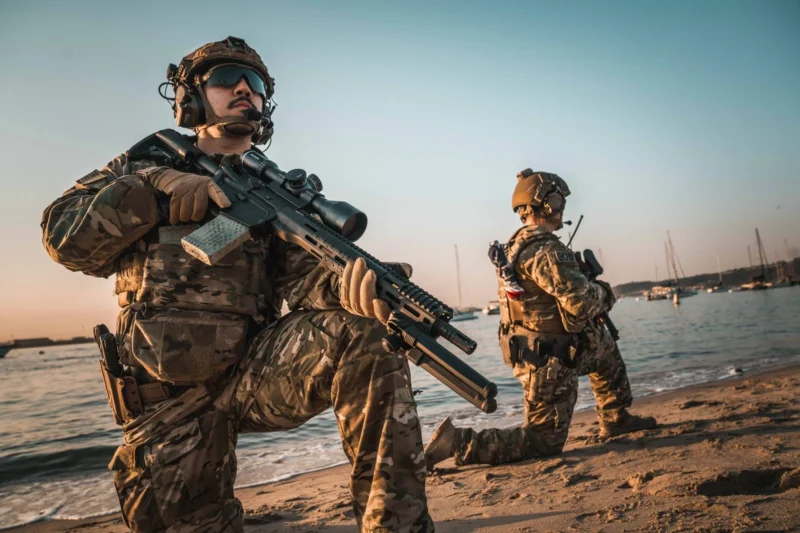
Military survival rifles often use standardized NATO calibers such as 5.56×45mm and 7.62×51mm for logistical and interoperability purposes. Civilian options favor calibers such as .22 LR and .308 Winchester, prioritizing availability and versatility.
Caliber Performance Breakdown
5.56×45mm NATO offers high velocity with fragmentation at ideal ranges, but effectiveness drops with distance. The 7.62×51mm NATO cartridge provides deeper penetration and larger permanent cavities, making it suitable for larger targets and for penetrating barriers. .22 LR, despite lower energy, is common for small game and close-range use, with limitations at longer distances due to wind sensitivity and bullet drop.
Each caliber has unique benefits and trade-offs for survival scenarios. When selecting ammunition for your rifle, it’s important to understand ballistic protection levels and how different threats interact with body armor systems.
Action Type, Fire Control, and Capacity
While exploring survival rifles, understanding the action type, fire control, and capacity of both military and civilian models is essential.
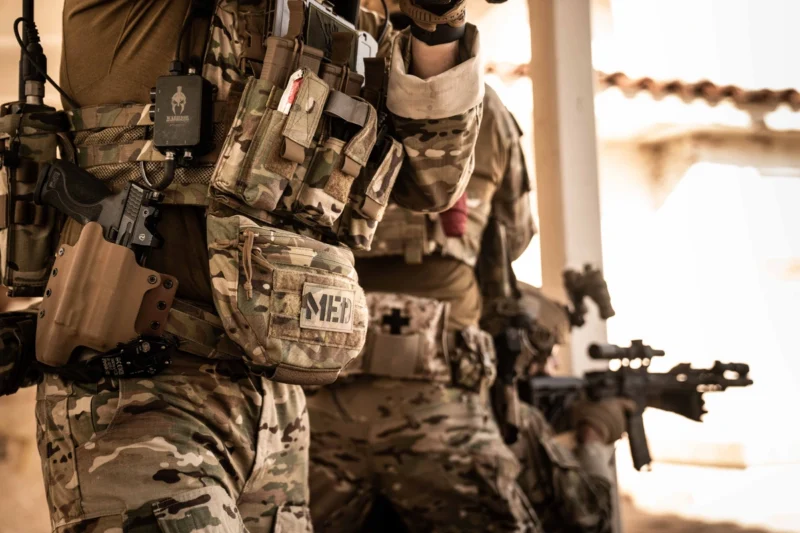
Military survival rifles often use semi-automatic gas-operated actions, like AR-15 variants, to offer rapid follow-up shots. Civilian models, however, lean toward break-open, bolt, or simple semi-auto blowback actions, such as the Henry AR-7, for simplicity and reliability.
In terms of fire control, military-derived rifles feature familiar ergonomic selectors, while civilian versions use simpler safeties, such as cross-bolt or tang safeties. For optimal handling and control, many operators invest in high-performance shooting gloves to enhance grip and trigger control.
Magazine Capacity Differences
Magazine capacity differs, too; military models utilize detachable box magazines with 10 to 30 rounds, facilitating quick reloads, whereas civilian rifles, like break-open combos, have limited capacity to balance compactness and multi-role use, relying on stored ammo for flexibility. Efficient ammunition management is crucial, which is why tactical chest rigs and ammo pouches are essential components of any tactical setup.
Durability, Materials, and Field Maintenance
Examining survival rifles, it’s just as important to contemplate their durability, materials, and field maintenance as it is to understand their action types and capacities.
Military rifles are built to withstand extreme conditions through formalized standards, such as MIL-STD tests, while civilian models prioritize lightness and packability, often using less impact-resistant materials like aluminum alloys. This same durability principle applies to military-grade body armor, which must meet rigorous testing standards.
Material Construction Standards
Military models use robust materials like forged steel and advanced finishes for corrosion resistance, whereas civilian rifles may rely on lighter, less durable options. Military rifles are designed to fire reliably when dirty, contrasting civilian rifles’ focus on tight tolerances for accuracy. Military rifles endure adverse conditions with longer service life, while civilian options might require more meticulous care.
Ergonomics, Accessories, and Modularity
When choosing between military and civilian survival rifles, ergonomics, accessories, and modularity greatly impact user experience and adaptability. Military rifles often feature textured grips, adjustable cheek rests, and agile magazine releases, improving control and comfort. Civilian rifles, however, frequently surpass these with replaceable grips and optimized ergonomics.
Accessory Systems and Customization
Accessories like M-LOK handguards and free-floating rail systems in civilian models enhance accuracy and modularity. Military setups with quadrails may cause discomfort during extended use. Civilian rifles are typically simpler to accessorize, with AR-15 carbines allowing easy customization. Optic-ready designs and interchangeable components via M-LOK and Picatinny standards support flexibility. While military triggers have heavier pull weights, civilian rifles focus on precision with lighter triggers, improving accuracy and engagement speed.
For those looking to optimize their loadout, understanding the differences between low-profile and full tactical plate carriers can help inform decisions about weight distribution and mobility when carrying survival rifles in tactical situations.
Conclusion
As an outdoor enthusiast or tactical professional, you know the importance of choosing the right survival rifle for your specific needs. By understanding the key differences between military and civilian survival rifles, you gain specialized knowledge of durability, caliber selection, and modularity. These rifles serve distinct purposes and feature unique design philosophies tailored to their intended users. Military rifles excel in extreme environments with standardized NATO calibers and rugged construction, while civilian options offer versatility and customization for recreational use.
When building your complete tactical setup, consider how your rifle integrates with other essential gear like night vision helmet systems, tactical gloves, and protective equipment. With this comprehensive comparison, you’re making a wise choice that aligns with your requirements and usage scenarios.
Faqs
What are the legal restrictions for civilian ownership of survival rifles?
You must follow federal laws, including age limits, background checks, and barrel length requirements. State laws vary, affecting features, magazine capacity, and purchase limits. Some places ban assault-style rifles, requiring permits or registration for legal ownership.
How does training differ between military and civilian survival rifle users?
You’re diving into two different worlds. Military training is intense, focusing on combat tasks and teamwork, while civilian training emphasizes personal defense, hunting, and emergencies. You’ll find civilian courses shorter, with more personalized coaching and legal focus.
What logistics impact the availability of parts for civilian rifles?
You’ll find that civilian rifle parts availability depends on manufacturing cycles, demand fluctuations, and supply chain constraints. Geographic clustering and legal factors also play a role, affecting how quickly and easily you can access the components you need.
How do international laws influence the configurations of military survival rifles?
International law shapes military rifle configurations by ensuring compliance with IHL, prohibiting the use of harmful projectiles, and requiring distinction between combatants and civilians. You must align designs with these regulations to avoid legal issues and ensure humane, effective use of weapons.
What are the licensing requirements for civilian survival rifles in different regions?
You need to understand that licensing requirements for civilian survival rifles vary globally. In the U.S., states differ widely, while Canada mandates a PAL. EU countries impose strict regulations, and Australia’s system is highly controlled.