







What to Look for in a Plate Carrier Cummerbund

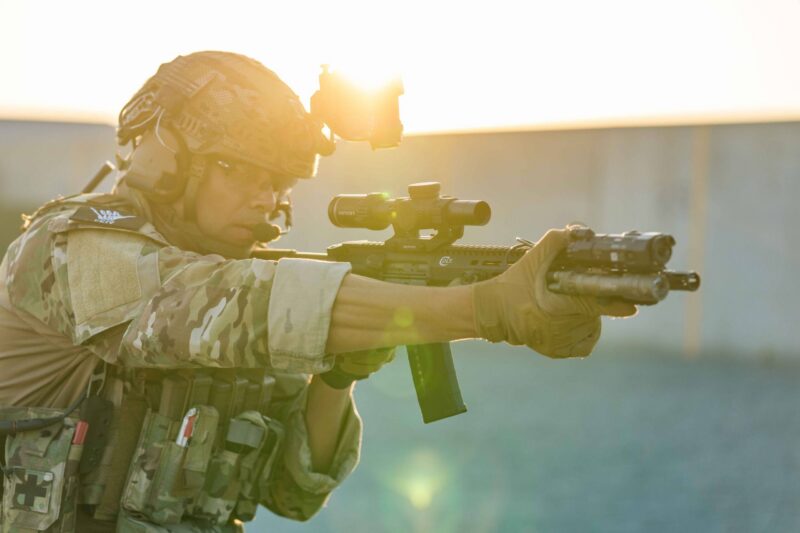
The cummerbund is one of the most functional and most overlooked components of a plate carrier system. While most attention goes to plate selection and carrier cut, the cummerbund is what actually holds the entire system together under dynamic movement. It secures your ballistic plates laterally, distributes load across the torso, provides a mounting surface for pouches and side armor, and, in a well-designed system, allows for rapid removal when seconds matter.
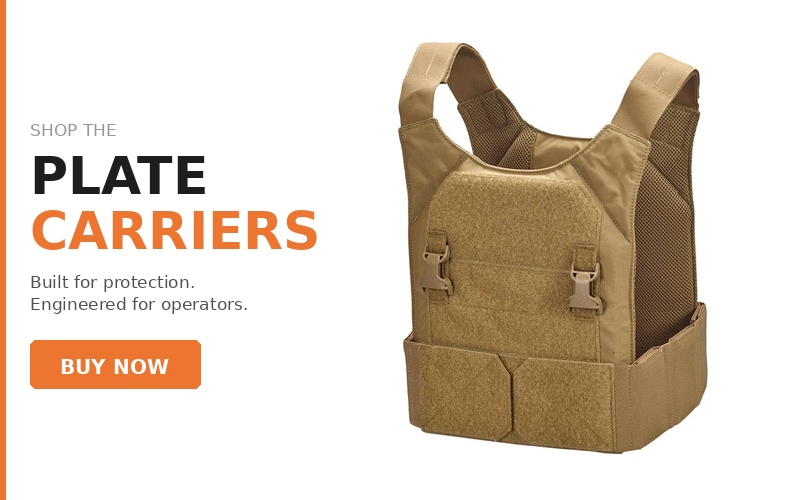
A poor cummerbund introduces play into your plate positioning, creates pressure points during extended wear, and limits your ability to attach the gear you depend on. Choosing the right one means evaluating adjustability, modularity, stability, material construction, and compatibility with your existing carrier platform. This guide breaks down each factor so you can build a setup that holds up in the field.
Adjustability and Fit
A cummerbund that cannot be properly sized to your body creates real operational risk. Plates that shift or bounce compromise both protection and movement. Look for adjustable hook-and-loop closure systems that let you dial in fit across a range of body types and clothing layers. A well-designed cummerbund should accommodate sizes from small to extra-large without requiring separate hardware swaps.
Quick-release buckles are equally important. In a high-pressure scenario, medical emergency, extraction, or rapid disarmament, the ability to shed your carrier in seconds can be critical. Prioritize designs where the release mechanism is accessible with one hand and operates reliably under load.
Proper fit starts with measuring roughly two finger-widths above your belly button. The cummerbund should sit snug enough to prevent lateral movement without restricting breathing or torso rotation during dynamic activity.
Modularity and Attachment Options

Modularity determines how well your cummerbund adapts to changing mission requirements. The most versatile designs use MOLLE/PALS webbing on both exterior sides, providing a full mounting surface for pouches, side-plate pockets, radios, and medical kits. Laser-cut laminate platforms reduce overall weight while maintaining structural integrity across the full webbing surface.
An internal soft armor pocket adds another layer of utility. Rather than relying solely on the front and back plates, a cummerbund with integrated soft-armor pockets provides side coverage a critical gap in most hard-plate setups. This is particularly relevant for operators working in environments where lateral threats are a realistic concern. For a full breakdown of protection levels and what each rating defends against, see our body armor protection levels guide.
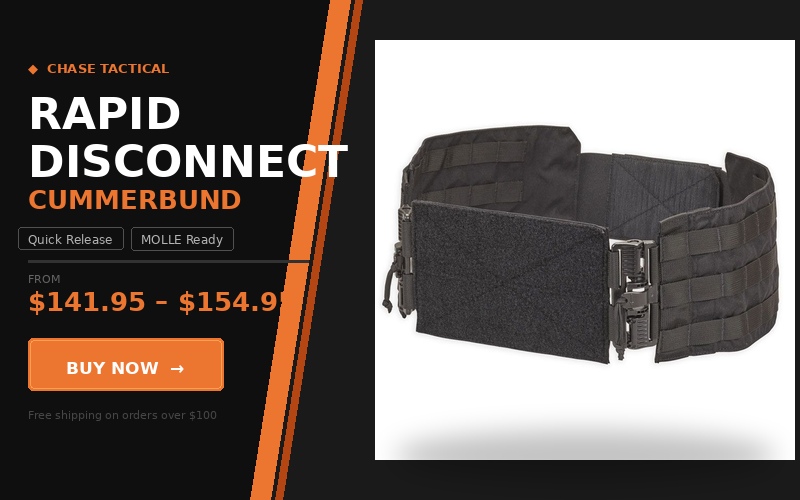
The Chase Tactical Rapid Disconnect Cummerbund is built around these priorities. Constructed from MIL-Spec 500D Cordura, it features three rows of MOLLE/PALS webbing on each exterior side, an internal soft armor pocket, and our proprietary Rapid Disconnect System (RDS) for one-motion detachment. It is available in SM/MD (26″–38″) and LG/XL (38″–44″) and is compatible with our MEAC, LOPC, and LVPC-E plate carriers, as well as most carriers with a rear pass-through cummerbund pocket.
Stability and Load Distribution
A cummerbund that sags or shifts under load is not just uncomfortable it pulls your plates out of position, reducing the coverage they are designed to provide. Look for semi-stiffened construction that maintains its shape across a full day of wear and movement. Wrap-around designs that extend across the full torso distribute weight more evenly than narrow-panel alternatives, reducing shoulder fatigue during extended operations.
Bar-tacked stress points and reinforced stitching at all attachment joints are non-negotiable indicators of construction quality. These are the areas that fail first under sustained load, and reinforcement here directly extends the cummerbund’s service life. According to NIJ body armor standards, carrier systems, including cummerbunds, must maintain structural integrity throughout their rated service life to ensure consistent ballistic performance.
Material and Construction Quality
500D Cordura nylon is the benchmark material for duty-grade cummerbunds. It offers high abrasion resistance, maintains its shape under load, and withstands moisture, friction, and field conditions that degrade lower-quality fabrics over time. Look for cummerbunds that combine Cordura shell construction with 3D mesh interior padding, which improves breathability and reduces sweat buildup during extended wear in warm conditions.
Low infrared (IR) signature treatment is a feature worth prioritizing for military and law enforcement applications. Quality tactical nylon, including all Chase Tactical products, is treated at the source to minimize IR signature across all fabrics, webbing, and hardware, maintaining a lower visual profile under night-vision equipment.
Comfort and Breathability
Comfort directly affects how long an operator can maintain focus and perform at full capacity. Elastic rear panels allow the cummerbund to flex with natural body movement, particularly important during transitions between standing, kneeling, and seated positions. This elasticity also allows the cummerbund to accommodate slight variations in clothing layers across different environments without requiring a full readjustment.
Breathable mesh lining and moisture-wicking properties prevent sweat accumulation against the body. In sustained operations or warm climates, heat buildup under a poorly ventilated cummerbund creates real fatigue. Prioritize designs that balance load-bearing rigidity where it matters with breathable flexibility in rear and lateral panels.
Conclusion
The cummerbund is not an afterthought it is a load-bearing, plate-securing, gear-mounting component that directly determines how well your carrier functions under real conditions. Every factor covered in this guide feeds into a single outcome: whether your system holds together and stays in position when it matters most. Adjustability ensures your plates don’t shift during high-movement activities. Modularity gives you the mounting surface to carry what your mission demands. Stability keeps your load distributed and your armor aligned. Material quality determines whether the system holds up over years of use or degrades after a season in the field.
Beyond the technical specs, the right cummerbund should also fit seamlessly into your existing carrier setup without requiring modifications or compromises. Cross-compatibility, reliable hardware, and proven construction methods, bar tacking, reinforced stitching, quality buckles, are the difference between gear that performs consistently and gear that fails at the worst possible moment. Whether you are building a new kit from scratch or upgrading a system that is already in use, getting the cummerbund selection right is one of the highest-leverage decisions in your overall loadout.
Frequently Asked Questions
How do I properly size a plate carrier cummerbund?
Measure approximately two finger-widths above your belly button. This is the correct anchor point for most plate carrier cummerbunds. From there, select a size based on your waist measurement at that point. For the Chase Tactical RDC, SM/MD covers 26″–38,” and LG/XL covers 38″–44″. When in doubt, the SM/MD fits most users.
Can a cummerbund be used across multiple plate carriers?
Yes, provided the carrier features a rear pass-through cummerbund pocket, the most common attachment design. Universal cummerbunds like the Chase Tactical RDC are designed for cross-compatibility and will work with most standard plate-carrier platforms, in addition to our own MEAC, LOPC, and LVPC-E carriers.
What is the lifespan of a tactical cummerbund?
A well-maintained cummerbund made from quality materials, such as 500D Cordura, typically lasts 5–7 years with regular use. Inspect periodically for fraying at stress points, degraded hook-and-loop adhesion, and wear at buckle attachment zones. Proper storage — flat or loosely rolled, away from prolonged UV exposure significantly extends service life.
Does a cummerbund add meaningful side protection?
On its own, a cummerbund does not provide ballistic protection. However, models with integrated internal soft-armor pockets like the Chase Tactical RDC allow you to insert soft-armor panels for side coverage, filling the gap between your front and rear hard plates. This is a meaningful addition for operators who face lateral threat exposure in their environment.