








Head Protection 101: What Every Tactical Loadout Needs

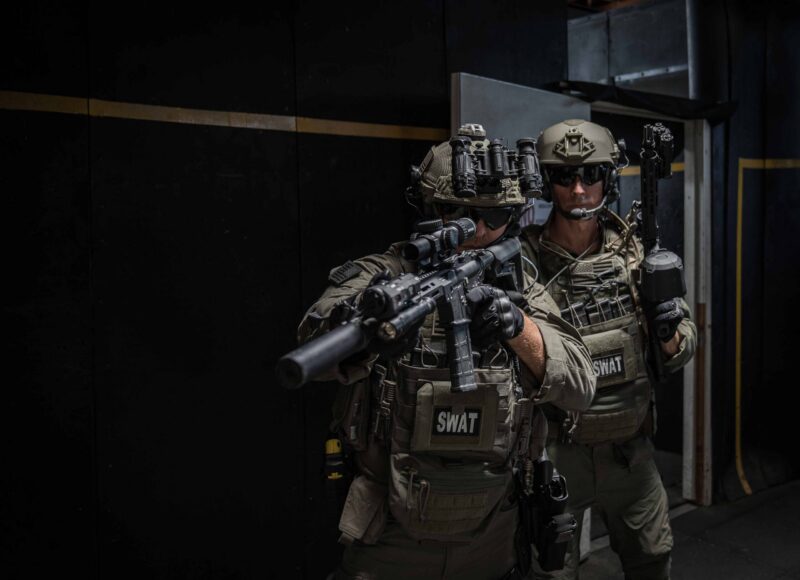
Head protection is one of the most consequential decisions in building a tactical loadout, yet it often gets less attention than plate selection or carrier configuration. The right helmet does more than protect against blunt impacts; it serves as the mounting platform for night-vision equipment, communication headsets, illuminators, cameras, and other accessories that define how you operate in low-light and high-tempo environments. Getting the choice right means understanding the difference between ballistic and non-ballistic protection, how helmet construction materials affect weight and performance, how to properly fit and configure the retention system, and how to integrate the helmet into a complete loadout. This guide covers each of those decisions clearly so you can build head protection that matches your mission requirements.
Ballistic vs. Non-Ballistic Helmets: Choosing the Right Type
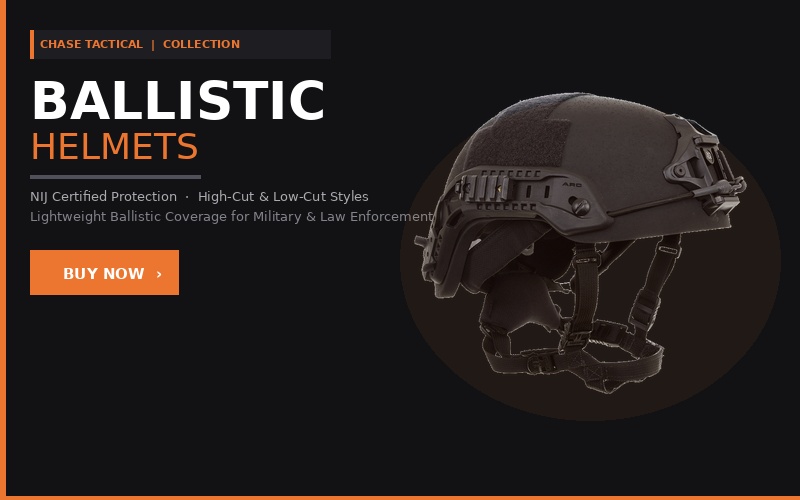
The first and most fundamental decision is whether your application requires ballistic protection. Ballistic helmets rated to NIJ Level IIIA are designed to stop handgun rounds, including .357 SIG and .44 Magnum, as well as fragmentation threats. They are heavier than non-ballistic alternatives and are required for roles where direct exposure to ballistic threats is a realistic operational factor. For military, law enforcement, and high-threat security roles, a ballistic helmet is the appropriate choice.
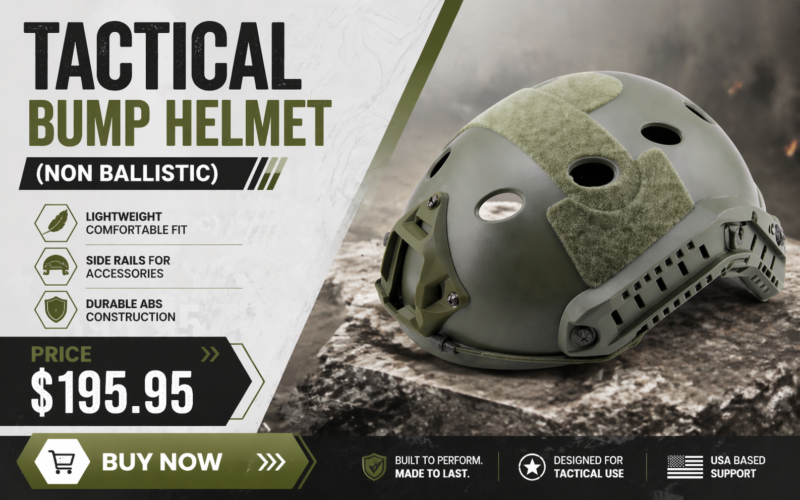
Non-ballistic bump helmets serve a different but equally valid role. They protect against blunt-impact falls, head strikes, and non-ballistic environmental hazards while providing a full accessory-mounting platform at a significantly lower weight. At 24 ounces, the Chase Tactical BUMP Helmet delivers upper and lower dovetail accessory rails, a front NVG/camera mount, top and side loop strips for illuminators and strobes, and a padded 4-point adjustable harness all in a universal-fit package across 13 color and pattern options. For training environments, airsoft operations, vehicle operations, and scenarios where ballistic threat is not the primary concern, the weight savings and full accessory compatibility of a bump helmet offer a genuine operational advantage.
Tactical Helmet Types and Their Role
Understanding the evolution of tactical helmet designs helps clarify which form factor suits a given application. Each generation addressed specific limitations of what came before it.
Key Helmet Form Factors
- Full-cut (PASGT/ACH style): Maximum cranial and ear coverage, heavier, well-suited to fragmentation and blunt impact threats. Standard for combat infantry.
- High-cut (FAST style): Reduced ear coverage for better communication headset compatibility and improved hearing range. Preferred for operations where accessory integration and situational awareness outweigh full-coverage protection.
- Bump/non-ballistic: Lightweight, full accessory-compatible platform for environments where blunt impact — not ballistic threat — is the primary concern. Best suited to training, vehicle operations, and technical roles.
For a deeper breakdown of military helmet types and their fielded applications, see Chase Tactical’s types of military helmets guide.
Protection Levels and Materials
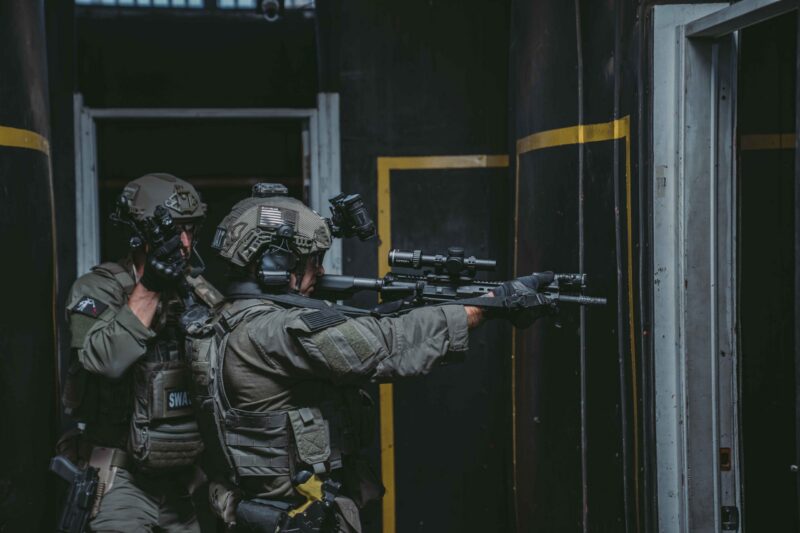
Helmet protection is governed by the same NIJ ballistic standards that apply to body armor. For ballistic helmets, NIJ Level IIIA is the practical standard — it defends against high-velocity handgun rounds and fragmentation threats, which represent the dominant head-level threats in law enforcement and military environments. Helmets rated above IIIA exist but come at a significant weight cost that impacts neck fatigue and sustained wear performance.
Helmet Construction Materials
- Kevlar (para-aramid): The longstanding standard for ballistic helmets. Excellent impact absorption through multilayer construction, proven NIJ certification track record, reliable in both fragmentation and handgun threat environments.
- Dyneema / UHMWPE: Ultra-high-molecular-weight polyethylene offering 15 times the strength-to-weight ratio of steel. Fully waterproof, UV-resistant, and approximately 25–50% lighter than comparable Kevlar configurations. Premium cost but significant weight benefit for sustained operations.
- Advanced composites: Hybrid combinations of para-aramid and polyethylene layers that optimize energy absorption across different impact and threat types. Used in higher-specification ballistic helmets.
For non-ballistic bump helmets, the shell material prioritizes impact resistance over ballistic performance. The Chase Tactical BUMP Helmet meets ANSI EN1385:2012 the European standard for whitewater sports helmets, which requires rigorous impact attenuation testing under a defined set of contact conditions.
Fit and Retention System Setup
A helmet that does not fit correctly provides neither reliable protection nor stable accessory mounting. Accurately measuring head circumference before selecting a helmet is the starting point. Measure around the widest point of the head, typically just above the ears and across the forehead.
For helmets with modular pad systems, adjust pad thickness and position to achieve a snug, level fit with no rocking during movement and no pressure points during sustained wear. The retention system, typically a four-point harness with an adjustable chin strap, should be tightened to hold the helmet securely without restricting jaw movement. A helmet that rocks forward, backward, or side-to-side under dynamic movement is not fitted correctly and will not perform reliably when it matters.
Fit Verification Checklist
- Helmet sits level — not tilted forward or back at rest
- No rocking in any direction during head movement
- No pressure points during sustained wear — adjust pad positions if needed
- Chin strap holds the helmet in place through jaw-open movement without constricting
- Accessories mounted without affecting the level seating of the helmet
Accessory Integration
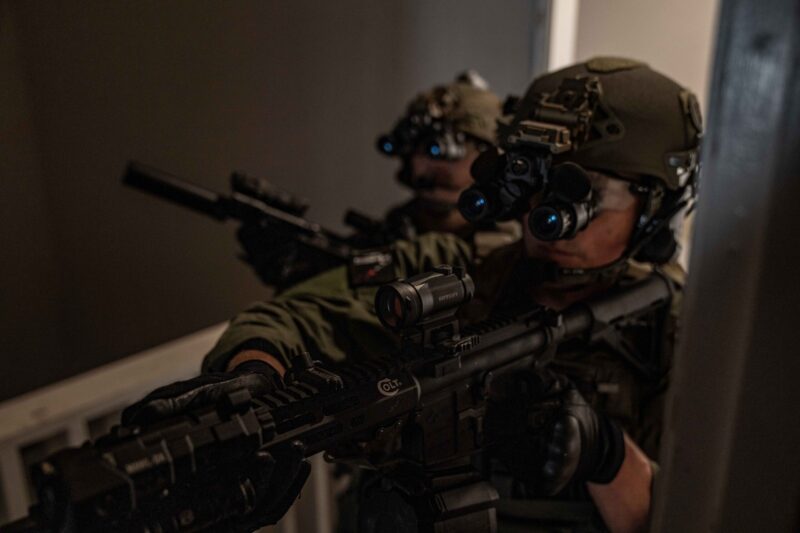
The accessory-mounting capability of a tactical helmet is as important to many operators as its protective rating. A helmet that cannot mount the devices your mission requires creates a system gap that cannot be closed elsewhere in your loadout. Key accessory categories and their mounting requirements include:
Night Vision Devices
Night vision mounts attach to the front shroud of the helmet via a standardized interface. The shroud must be compatible with the NVG mount you are running. Most tactical helmets, including the Chase Tactical BUMP Helmet, feature a front shroud mount designed to accept standard NVG interface arms. Counterweights are typically run on the rear of the helmet to offset the forward mass of NVG devices, reducing neck strain during extended low-light operations.
Communication and Audio
Tactical communication headsets attach to side rails on high-cut and bump helmet designs. Rail-mounted headsets position the ear cups correctly relative to the ear canal without requiring the helmet to be removed. Lower dovetail rails on the Chase Tactical BUMP Helmet accept communication headset mounts, battery packs, and other rail-compatible accessories.
Lights and Illuminators
Helmet-mounted lights attach to dovetail rails or loop fields, depending on the device. The Chase Tactical BUMP Helmet features both upper dovetail rails for low-profile lights and camera mounts, and top and side loop strips for hook-compatible illuminators, strobe lights, and battery packs covering the full range of common helmet accessory types in a single platform.
Helmet Maintenance
A helmet that has not been inspected and maintained cannot be trusted to perform when needed. Build inspection and cleaning into your regular gear maintenance routine.
- Inspection: Check the shell for cracks, dents, and deformation after every use where impact occurred. Inspect all rails, shrouds, and attachment hardware for looseness. Verify retention system straps and buckles are intact and functional.
- Cleaning: Wipe the shell with mild soap and lukewarm water. Clean pads and retention straps separately remove pads and hand-wash if heavily soiled. Dry with a microfiber cloth, then allow to air-dry completely before storage.
- Storage: Store in a padded bag or case away from direct sunlight, extreme heat, and chemical exposure. UV exposure and heat degrade both ballistic and non-ballistic shell materials over time.
- Replacement: Replace any helmet that has sustained a significant impact, even if external damage is not visible; internal structural compromise is not always detectable by inspection.
Conclusion
Head protection in a tactical loadout is not a single decision — it is a set of connected decisions about threat environment, protection level, weight, accessory requirements, fit, and integration with the rest of your kit. Ballistic helmets are required where direct head-level ballistic threats are a realistic factor. Non-ballistic bump helmets offer a lighter, fully accessory-compatible alternative for training, vehicle operations, and technical roles where impact protection rather than ballistic protection is the governing requirement. Both categories require proper fit, correct retention setup, and regular maintenance to perform reliably.
The right head protection choice is the one that matches your actual operational requirements, not the heaviest option or the most accessory-loaded option, but the one that gives you the protection level you need, the accessory platform your mission demands, and a fit that stays stable and comfortable through a full day of use.
Frequently Asked Questions
What is the lifespan of a tactical helmet?
Most tactical helmets have a rated service life of 5–10 years from the date of manufacture under normal storage and use conditions. Ballistic performance degrades over time as shell materials age, regardless of visible condition. Follow the manufacturer’s replacement guidelines and replace any helmet that has sustained a significant impact, even if damage is not externally visible. Proper storage away from UV, heat, and chemical exposure extends service life toward the upper end of that range.
What is the difference between a bump helmet and a ballistic helmet?
A bump helmet protects against blunt impact falls, head strikes, and non-ballistic environmental hazards but provides no rated ballistic protection. A ballistic helmet is constructed from para-aramid or UHMWPE materials that meet NIJ standards for stopping ballistic threats. Bump helmets are significantly lighter and often offer the same or better accessory mounting platforms. The correct choice depends entirely on whether ballistic threat exposure is a realistic factor in your operational environment.
Can I mount night vision on a bump helmet?
Yes, provided the bump helmet features a front shroud mount compatible with your NVG interface system. The Chase Tactical BUMP Helmet includes a front mount designed for night vision devices, cameras, and other optic accessories, making it a capable NVG platform at significantly lower weight than most ballistic alternatives.
How do I know if my helmet fits correctly?
A correctly fitted helmet sits level without tilting, does not rock in any direction during normal head movement, has no pressure points during sustained wear, and stays in place through jaw-open movement when the chin strap is properly adjusted. If the helmet rocks, shifts, or creates hot spots during extended wear, adjust the pad system and retention harness before use. Universal-fit helmets like the Chase Tactical BUMP Helmet use an adjustable 4-point harness and modular padding to achieve a secure fit across a wide range of head sizes.