







F-35 Jet Parts Diverted to Hong Kong End Up in China’s Hands

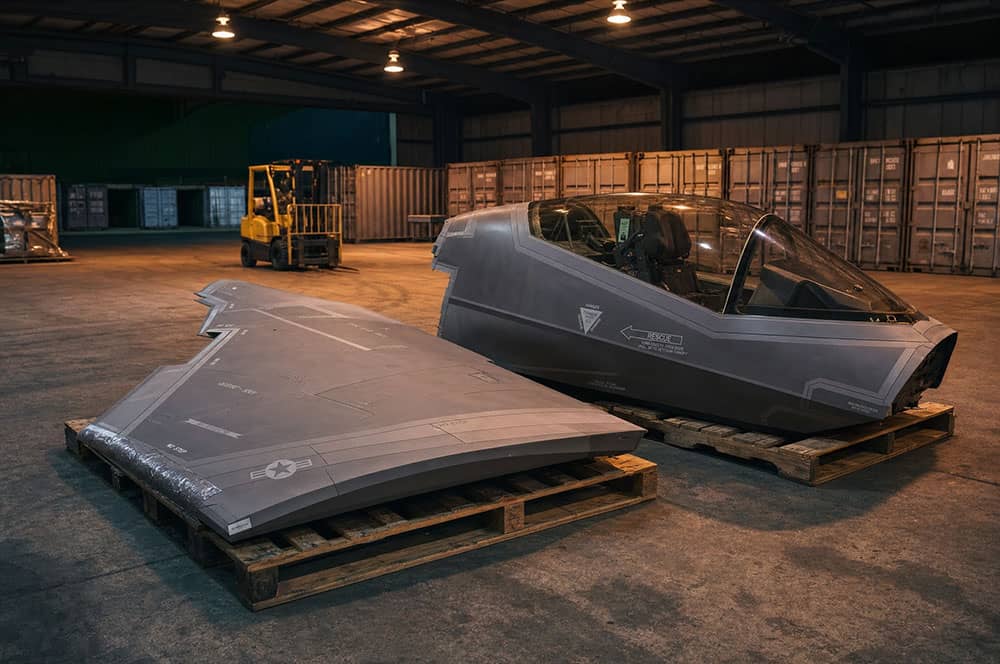
Sometime in late May 2026, a routine shipment of worn-out F-35 components left Australia bound for the United States for inspection and possible repair. Four months later, American officials are still trying to explain how it ended up instead in the hands of the Chinese government.
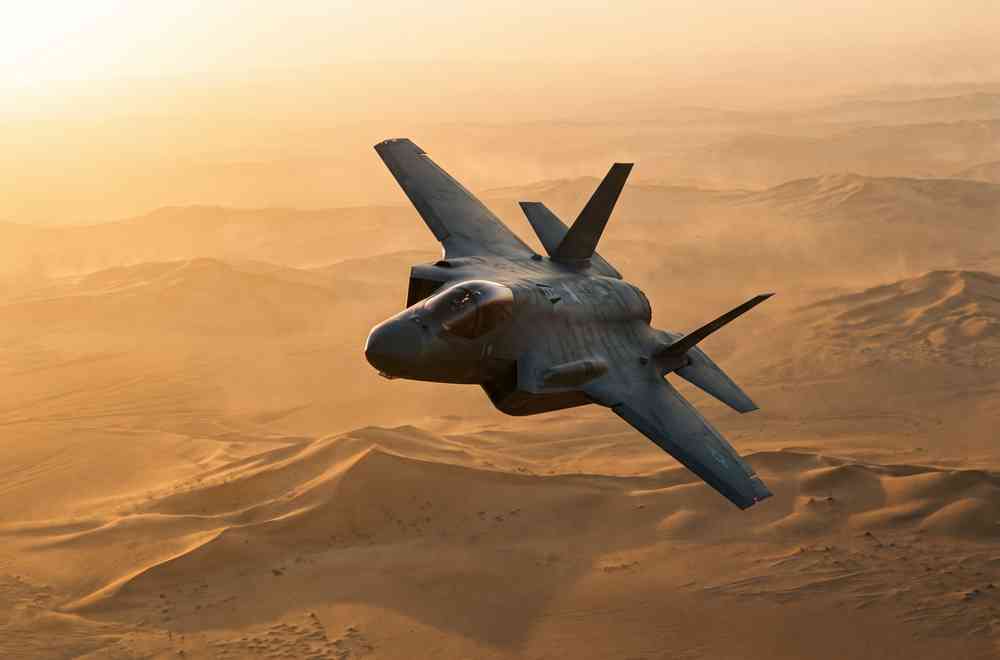
Bloomberg reported this week that Beijing has taken possession of two F-35 parts — a cockpit canopy and a weapons-bay door — after the shipment was rerouted through Hong Kong rather than delivered to its intended destination. The pieces came from an Australian F-35A that had been pulled from service for repair or disposal.
The diversion first became public nearly a week earlier, when Politico reported on September 18 that a shipment of F-35 parts had wound up in Hong Kong, an account that described the components as belonging to the F-35's highly-classified program and said the discovery had already triggered an investigation on Capitol Hill. State Department and Pentagon officials reportedly began briefing congressional staff on the incident as early as June.
SCOOP: A shipment of F-35 parts, including a canopy, wound up in Hong Kong — sparking an investigation on Capitol Hill and raising the possibility that China could have access to key components of the highly-classified program.
— Audrey Decker (@audrey_decker9) September 18, 2026
with @marksatter https://t.co/Y0ufsqEcY0
The F-35 Joint Program Office has acknowledged the incident but has been careful about what it will say. In a statement, the office said it was "actively working with U.S. authorities and industry partners to retrieve these components, investigate the incident, and place safeguards to avoid a future occurrence". That statement stops short of confirming that China's government now physically holds the parts — a claim that, as of this writing, rests on Bloomberg's reporting rather than an official U.S. acknowledgment.
Canberra has offered a notably different read on the stakes involved. Australian Defence Minister Richard Marles told reporters the components in question are not "sensitive equipment", pushing back on characterizations of the incident as a serious security breach. That assessment sits uneasily next to Politico's framing of the parts as tied to a highly classified program and Bloomberg's description of them as "potentially sensitive" — a genuine disagreement between officials and reporters that has not been resolved as of this writing. Canberra separately confirmed on September 22 that the parts were mistakenly diverted, saying Australia was examining its own end of the shipment while framing the broader investigation as a matter for the United States and Lockheed Martin to manage.
Reporting on the logistics has been piecemeal. One account states that UPS was the carrier handling the shipment, and that it stopped in South Korea en route from Australia before being routed on to Hong Kong — though why it stopped in South Korea, and why it was then sent to Hong Kong, remains unexplained. A separate trade-press account instead describes the shipment as having moved through an intermediary working for Lockheed Martin, the F-35's prime contractor, and states plainly that the shipping method itself "was not immediately identified" [6]. Reporters have not been able to establish whether the rerouting was a clerical accident or a deliberate act, and Hong Kong authorities have declined to comment on the matter.
However this particular shipment went astray, it lands on top of a supply chain that government auditors have already flagged as troubled. A Government Accountability Office assessment found that F-35 contractors have recorded losses of more than one million parts, worth over $85 million, dating back to 2018, a reflection of weak real-time inventory tracking across a program that spans multiple countries, private contractors and logistics handlers. The same GAO reporting this year found the jet's mission-capable rate has fallen from 67 percent in 2021 to 44 percent in 2025, with the Pentagon estimating it needs roughly $13.7 billion in additional sustainment funding through 2031 to reverse the slide. None of that is new to this episode, but it is the backdrop against which two sensitive parts disappearing into Chinese custody is landing in Washington.
Congress has opened an inquiry, first reported by the South China Morning Post citing the Politico investigation, though which committees are leading it and what oversight steps may follow have not been made public. The Pentagon says it is still working to recover the parts and determine how the diversion occurred; Lockheed Martin has not issued its own public statement on the incident. Until investigators establish whether this was negligence or something more deliberate, the episode stands as an illustration of a problem that predates it: a global supply chain built to keep one of the world's most sensitive aircraft flying has struggled, again, to keep track of its own pieces.