







Ukraine’s Flamingo, Pelican Missiles Hit Moscow Oil Refinery

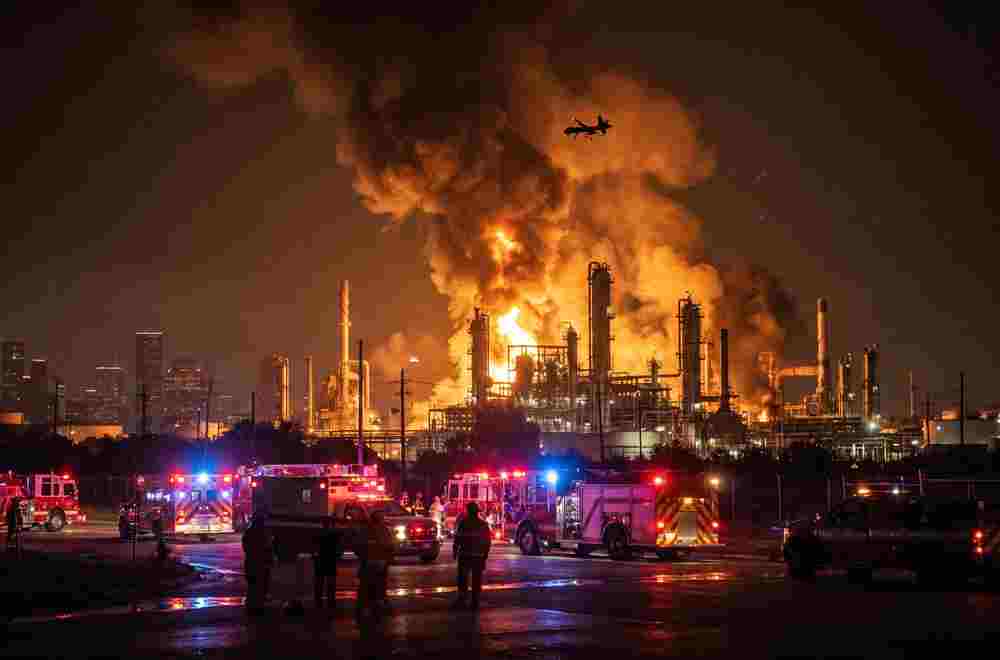
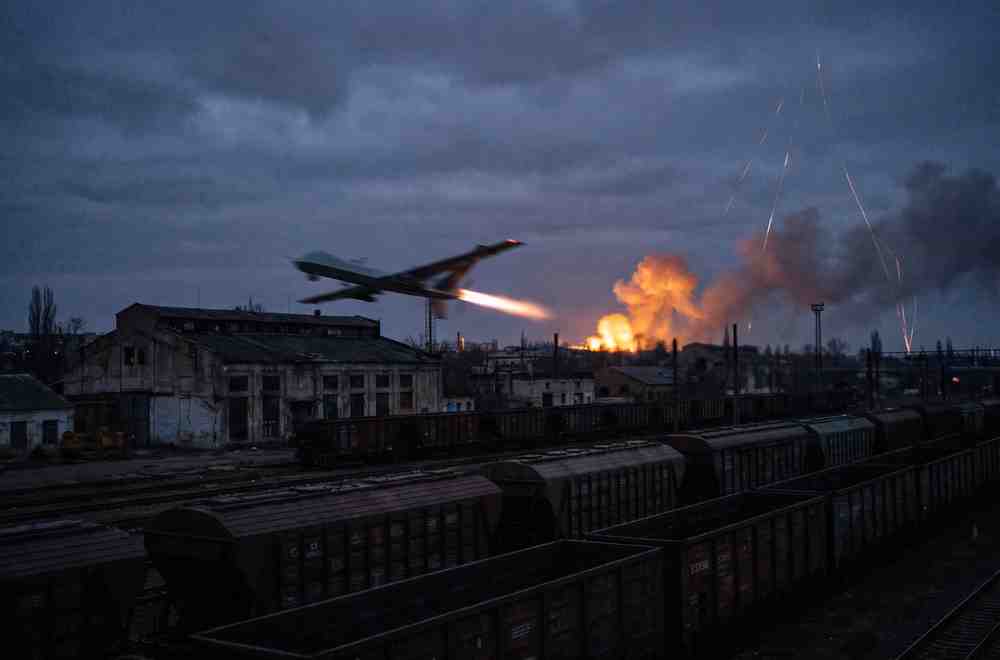
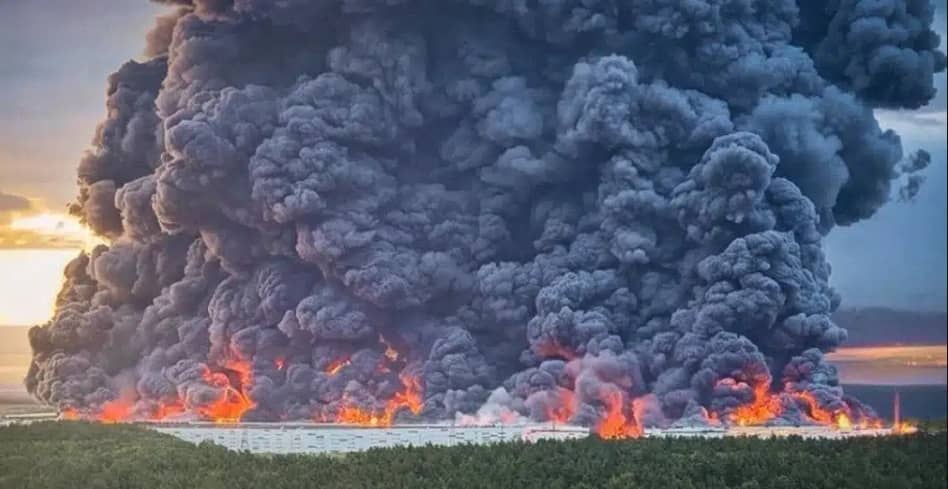
On the final day of Russia's first wartime parliamentary election, Ukraine launched the largest drone barrage of the war against the Russian capital. Ukrainian forces fired more than 1,000 drones at targets across Russia overnight into September 20, with roughly 450 aimed at Moscow alone. Mayor Sergei Sobyanin called it the "largest ever" attack on the city and said defenses destroyed 450 drones before they reached the capital. Even so, strikes hit the Moscow Oil Refinery in the Kapotnya district, roughly 10 miles from the Kremlin, and a residential building in Sofyino, south of the city.
Writing on social media, Ukrainian President Volodymyr Zelenskyy confirmed Kyiv used several types of missiles and drones in the operation, including two of Ukraine's newest domestically produced weapons: the FP-5 Flamingo cruise missile and FP-7 Pelican ballistic missile. "These are billions of dollars that sustain the war machine," Zelenskyy said of the refinery and an associated logistics facility, framing the strike as financial pressure rather than a purely military operation.
The reported pairing of the Pelican with the more established Flamingo matters beyond one night's damage. Fire Point, the Ukrainian firm behind both systems, is fielding what defense trade publication Army Recognition describes as a developing three-tier missile family: the Flamingo, a long-range cruise missile with roughly 1,900 miles of range and a warhead of about 2,540 pounds; the Pelican, a faster short-range ballistic missile reported to reach speeds near 1,500 meters per second out to roughly 185 miles; and the still-developing FP-9, meant to push ballistic range past 500 miles.
That mix creates a harder targeting problem than either missile alone. A cruise missile gives defenders more time to react but carries a heavier payload over vast distances; a ballistic weapon trades range for speed, cutting the warning window for point defenses guarding command posts or missile batteries. Fielding both — even in limited numbers so far — signals Ukraine intends to make Russia defend multiple threat profiles at once.
Moscow region Governor Andrei Vorobyov initially said the attack killed two people — a 74-year-old man and a 44-year-old woman — and wounded 20, including three children. Vorobyov later said a third person died of injuries, and that 400 residents were evacuated from a 21-story building in the Ramenskoye district after a drone-sparked fire. The Moscow Oil Refinery, which processed 11.6 million metric tons of crude in 2024 per the latest available data, sustained damage to a processing unit; officials did not specify which weapon caused it. One resident of the damaged Sofyino block, who gave only his first name, Vitaliy, described the moment of impact: "Glass went flying; people started screaming and shouting... the entrance doors had already been blown out, debris everywhere."
A separate incident was reported in Russian-occupied Kherson region, where Russian-installed officials said a drone strike on a civilian bus killed a local election commission member. The reported toll varied between two and three people by outlet, and the claim has not been independently verified by Ukraine.
The strike extends a duel of long-range aerial attacks that has intensified as movement along the roughly 780-mile front line has slowed, with both militaries leaning on drones and short-range robots to blunt ground offensives. Ukraine has become a significant developer of long-range strike drones since 2022, and its homegrown missile arsenal has drawn attention from Western governments and defense manufacturers. Kyiv's stated goal is to pressure the Russian economy directly, in hopes of pushing President Vladimir Putin toward negotiations; Putin has given no sign he intends to do so.
Official numbers diverged by source and timing: Russia's Ministry of Defense said it shot down 1,100 drones nationwide on Sunday, while Sobyanin cited more than 1,600 intercepted since Saturday — a gap likely reflecting different time windows, not a direct contradiction. The casualty count evolved similarly: a third victim later died of injuries, raising the regional toll from two to three as hospitals reported outcomes in the hours after.
The timing was not incidental. It landed on the final day of a Russian parliamentary vote that international observers broadly expect to be neither free nor genuinely competitive, and Sobyanin directly accused Kyiv of trying to disrupt it — an accusation Ukraine did not deny. Whether disruption was the primary objective or a secondary benefit of an already-planned strike, hitting a refinery a few miles from the Kremlin, on live television, during an election meant to project Kremlin stability, carries a message independent of the material damage.
For a military and SOF-focused audience, the more durable story may be the apparent debut of a faster ballistic missile alongside the established Flamingo. A single long-range strike system is a persistent nuisance; a layered arsenal forcing defenders to solve for mass and speed at once is a harder problem, one Russia will need to weigh well beyond Moscow if Fire Point's production ambitions for the Pelican and future FP-9 pan out. That said, evidence has not established which missile caused the refinery damage, and Pelican production scale remains unconfirmed — claims about its maturity should be treated as directional, not settled.
Sunday's attack does not appear to have altered the broader trajectory of a war settled into a grinding exchange of long-range strikes paired with a static front line. But it sharpened the profile of Ukraine's indigenous missile program at a moment when Kyiv's Western-supplied stocks face their own constraints, and it reaffirmed that Russian air defense — even around its own capital, during a vote the Kremlin needed to look orderly — cannot guarantee a quiet news cycle on command. Whether the barrage changes anything about the election Moscow just finished counting is unlikely; whether it changes how Russian planners defend the capital going forward depends on how quickly Fire Point can turn prototypes into a fielded force.