






Utility Pouch vs Dump Pouch: Which One Goes on Your Kit?

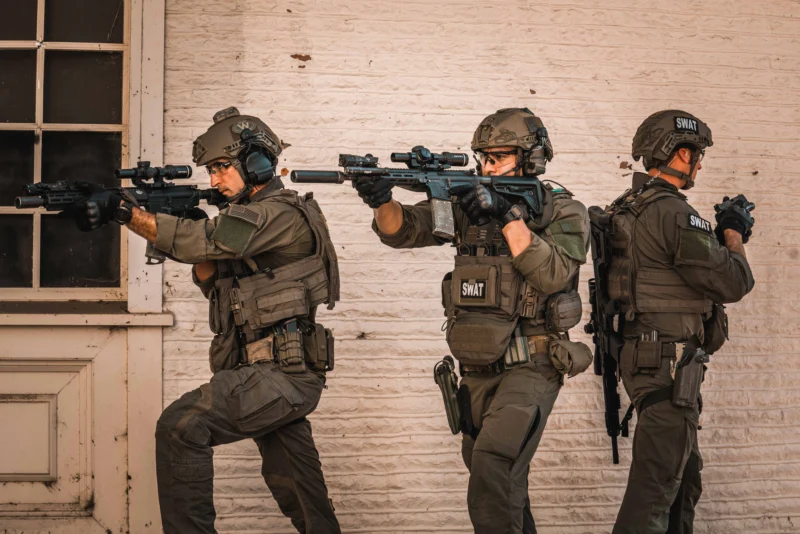
Walk into any conversation about building out a plate carrier or battle belt, and two pouch types come up almost immediately: the utility pouch and the dump pouch. Both are common. Both get described as essential. And both get mixed up by people who are new to configuring tactical gear. They are not the same thing, they do not do the same job, and putting the wrong one in the wrong place on your kit will create problems when you actually need your gear to perform. This guide explains what each pouch does, how they differ, when to run each one, and whether you need both.
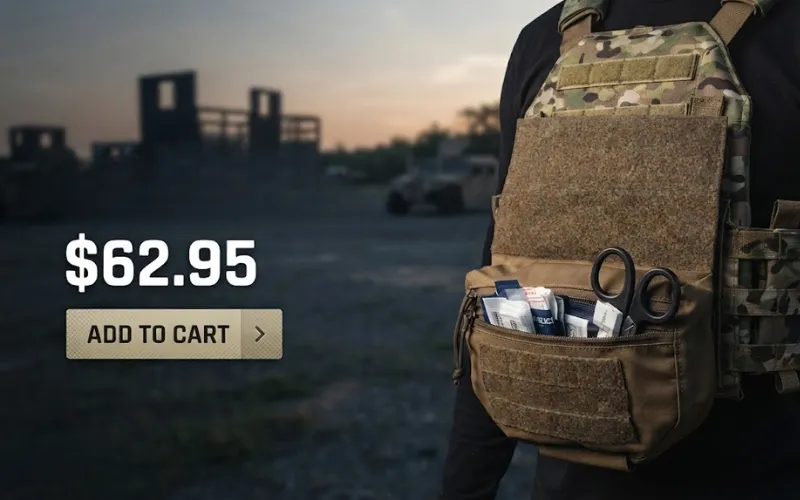
The Chase Tactical JOEY Utility Pouch GEN2 is built for exactly this role.
What Is a Utility Pouch?
A utility pouch is a general-purpose storage pouch designed to carry mission-specific gear that you need to access intentionally and deliberately. The defining characteristic of a utility pouch is organized, secure storage. It typically features one or more zippered compartments, sometimes combined with a hook-and-loop or MOLLE attachment system, and holds its contents securely, whether you are sprinting, going prone, or climbing into a vehicle.
The contents of a utility pouch depend entirely on the mission and the operator. Common uses include multitools, knives, first-aid supplies, flashlights, radio accessories, flex cuffs, extra batteries, and small consumables that do not belong in a dedicated medical or magazine pouch. The pouch is not designed for speed of access in the way a magazine pouch is. It is designed for organized, reliable retention of items you will reach for with some deliberation.
The Chase Tactical JOEY GEN is a well-regarded example of this category. It features two alternating zipper pockets on the front and one on the rear, with the main compartment sized for multitools, knives, and first aid supplies. It attaches under the front flap of most plate carriers via hook-and-loop, which keeps it low-profile and out of the way of your magazine draw.
What Is a Dump Pouch?
A dump pouch is a single-purpose tactical pouch designed for one thing: rapidly stowing spent magazines during a reload so they are not lost or dropped. The entire design philosophy of a dump pouch is optimized around speed of insertion and large capacity, not organization. Most dump pouches have a single open or cinch-cord-closed mouth and no interior compartments. You reach down, stuff the empty mag in, and get back on the trigger. Retrieval for later reloading is a secondary function.
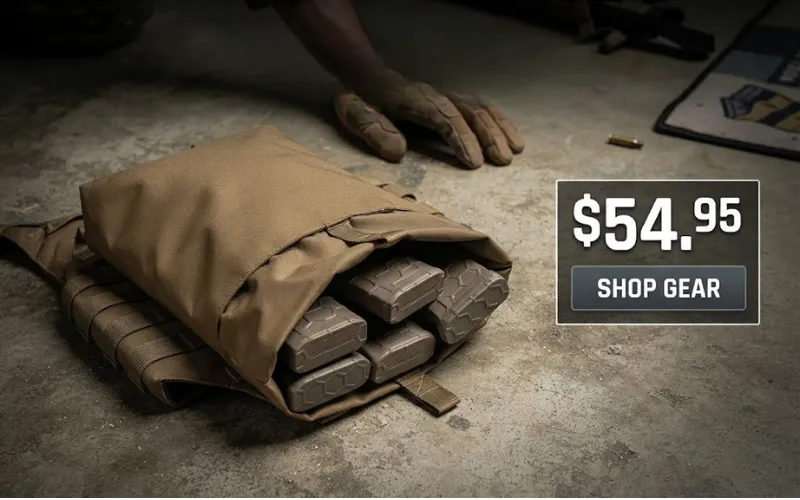
The Chase Tactical Roll-Up Dump Pouch is a good example of a field-proven design. It is constructed from Mil-Spec 500D Cordura, uses a roll-up stow configuration so it takes up minimal space when empty, and deploys quickly to full size when needed. It is MOLLE compatible and attaches to most plate carriers and belt configurations.
Beyond spent magazines, dump pouches also see use for expended shell casings, zip ties, and any other small item that needs to go somewhere quickly without getting lost. However, their primary design purpose is magazine management, and everything else is secondary to that.
Key Differences Side by Side
Storage Method
A utility pouch stores items in organized, secured compartments. Zippers, hook-and-loop closures, and internal dividers keep contents in place and separated. A dump pouch is a single unsecured or loosely cinched volume. Items go in quickly and sit loose inside until you retrieve them. There is no organization inside a dump pouch, by design.
Speed of Access
Dump pouches are optimized for rapid insertion. The mouth is wide and accessible, and the pouch typically collapses when empty, so it does not interfere with movement. Utility pouches require deliberate access, unzipping or unfolding a closure, which makes them inappropriate for any item you need to grab in a split second under stress.
Retention Security
Utility pouches retain their contents securely regardless of body position or movement. Dump pouches vary. Open-top dump pouches will spill contents during aggressive movement unless the cinch cord or closure is used. Roll-up designs like the Chase Tactical version address this by collapsing the pouch when not in use, but once deployed and loaded, contents are still subject to spilling without some form of cinch retention.
Placement on Kit
Utility pouches most commonly attach to the front lower section of a plate carrier or to a battle belt where they are accessible without interfering with the primary magazine draw. The JOEY, for example, is specifically designed to hang under the front flap of a plate carrier. Dump pouches are typically mounted on the strong-side hip, lower back, or belt, positioned so that the draw hand can quickly find the pouch mouth after a reload without looking. Placing a dump pouch on the front panel of a plate carrier is generally a mistake because it creates interference with your magazine draw and reload cycle.
Shape and Bulk
Utility pouches maintain their shape whether empty or full. Dump pouches are designed to be compact when empty, either rolling up or collapsing flat, and expand to accommodate volume when loaded. This compressibility is a feature, not a flaw. A rigid dump pouch that holds its shape when empty adds unnecessary bulk to your kit when it’s empty.
When to Run a Utility Pouch
Run a utility pouch any time you need to carry mission-specific gear that does not fit cleanly into your magazine, medical, or administrative pouches. If your kit needs to carry items such as a multitool, trauma shears, a secondary flashlight, zip cuffs, or a secondary medical item that does not warrant a full IFAK, a utility pouch is the right solution. It keeps those items accessible, organized, and secure without creating a chaotic loose-item situation inside a larger pouch.
For operators building out a full plate carrier accessory setup, the utility pouch typically fills in after the critical pouches (mag, medical, communication) are placed. It is the flexible workhorse that handles whatever the primary pouches do not cover.
When to Run a Dump Pouch
Run a dump pouch any time you anticipate performing magazine exchanges under pressure and want those empty magazines recovered rather than thrown away. This applies to training just as much as operational use. During range drills and force-on-force training, a dump pouch allows you to practice realistic reload procedures without constantly stopping to retrieve magazines from the ground. In an operational context, it keeps your expenditure manageable and allows re-indexing of partially loaded magazines after a lull in contact.
Dump pouches are particularly valuable on belt-based setups where the pouch can be positioned at the strong-side hip in a location the hand naturally returns to after a reload. They are less critical on chest-rig-only setups where the focus is on speed and minimalism rather than magazine recovery.
The Chase Tactical Roll-Up Dump Pouch is built from Mil-Spec 500D Cordura with full MOLLE compatibility.
Do You Need Both?
In most operational or training setups, yes. They do different jobs, and they do not overlap in a meaningful way. A utility pouch does not replace a dump pouch for magazine management because it is too slow to access under fire, and its compartmentalized interior makes rapid, no-look insertion unreliable. A dump pouch does not replace a utility pouch for organized gear storage because its open interior makes deliberate retrieval of specific items slow and unreliable, especially under load.
The question is less about whether to run both and more about where to run each one. Keep your utility pouch accessible on your plate carrier’s front panel or on your strong-side lower belt. Keep your dump pouch at the hip where your reload hand naturally travels. Position them so neither interferes with your magazine draw, your medical kit draw, or your sidearm draw if you carry one.
If your setup is strictly minimalist, such as a lightweight QRC-style carrier for rapid response, a dump pouch on a belt may be more practical than mounting it to the carrier itself. See the guide on essential gear to pair with a plate carrier for more on balancing loadout weight and accessibility.
Common Mistakes
Putting a Dump Pouch on the Front Panel
Front-panel dump pouches interfere with your magazine draw and your reload. They also create a large protruding mass at the center of your body that catches on everything. Dump pouches belong on the hip or lower back, not competing for front-panel real estate with your magazine pouches.
Using a Utility Pouch as a Dump Pouch
Utility pouches are too slow to access and too small for reliable magazine insertion under stress. Attempting to stuff an empty magazine into a zippered utility pouch during a firefight is a fine motor skills problem at exactly the moment fine motor skills are degraded. Use the right tool for the job.
Running a Dump Pouch Fully Deployed When Empty
A fully open, empty dump pouch hanging from your belt is a snag hazard and catches on everything. Roll-up designs solve this entirely. If your dump pouch does not roll or collapse, cinch it closed when empty.
Overloading the Utility Pouch
A utility pouch packed so tightly that zippers strain and items are difficult to retrieve defeats the purpose of organized storage. If your utility pouch is consistently overstuffed, either move some items to a secondary pouch or evaluate whether your kit has too many small items in the wrong places.
Frequently Asked Questions
What is the difference between a utility pouch and a dump pouch?
A utility pouch is for organized, secure storage of mission-specific gear accessed intentionally. A dump pouch is for rapid stowage of empty magazines and other items you need to get rid of quickly during a reload. Their design, placement, and intended use cases are fundamentally different.
Where should a dump pouch be mounted?
On the strong-side hip or lower back, positioned so your reload hand can find it naturally after ejecting an empty magazine without looking. Avoid front-panel placement on a plate carrier as it interferes with your magazine draw.
Can a dump pouch be used for anything other than magazines?
Yes. Dump pouches can stow expended shell casings, zip cuffs, snacks, and other small items that need a quick deposit. However, their primary design purpose is magazine management and they are optimized for that use case.
Is the JOEY utility pouch MOLLE compatible?
The JOEY GEN2 attaches via hook-and-loop and hangs under the front flap of most plate carriers. It also features MOLLE loops for additional customization options and includes chem-light slots. An optional Level IIIA armor insert is available.
Do I need both a utility pouch and a dump pouch on my kit?
For most operational and training setups, yes. They serve different purposes and do not substitute for each other. A utility pouch handles organized gear storage. A dump pouch handles rapid magazine management. Both have clear roles on a well-configured kit.