






Tactical Gear for EMS and Paramedics: What to Carry in the Field

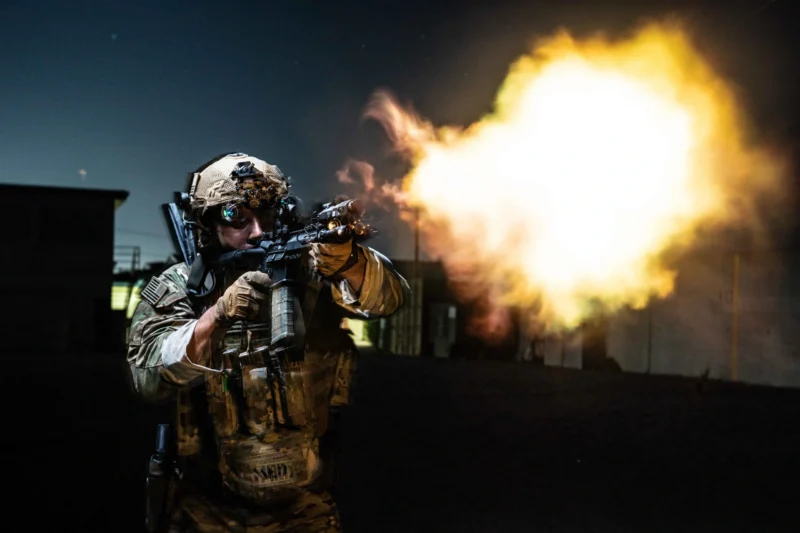
EMS providers and paramedics operating in high-risk environments face a threat profile that standard medical training does not fully prepare them for. Responding to active shooter scenes, gang-related incidents, domestic violence calls, and civil unrest puts medical personnel inside the same danger zones as law enforcement. The difference is that EMS arrives to treat casualties, often without the protection that officers carry as standard issue.
Tactical Emergency Medical Support (TEMS) has grown as a discipline specifically because the gap between medical competence and personal survivability is real. This guide covers the protective and tactical gear EMS providers and paramedics need when operating in high-threat environments.
Why EMS Providers Need Tactical Gear
The traditional model of EMS response assumes a secure scene before medical personnel enter. That model does not reflect how active threat incidents unfold. Law enforcement, fire, and EMS now train together under Rescue Task Force (RTF) frameworks that position medical providers within the warm zone, the area adjacent to active fire, to reach casualties more quickly.
Operating in a warm zone without personal protective equipment is not an acceptable operational posture. EMS providers who enter these environments need the same protective baseline that their law enforcement counterparts carry, configured for the demands of medical work rather than combat.
The gear categories that matter most for tactical EMS are body armor, ballistic helmets, plate carriers, tourniquets and hemorrhage control equipment, and MOLLE-configured medical pouches.
Body Armor for EMS and Paramedics
Body armor for tactical EMS should be rated at least Level IIIA. Level IIIA soft armor provides certified protection against high-velocity handgun rounds, which represent the most common firearm threat in the environments EMS operates in during civil or criminal incidents.
Soft armor panels at Level IIIA are flexible, wearable under or over clothing, and light enough to allow the full range of motion required for patient care. EMS providers cannot afford armor that restricts their ability to perform CPR, airway management, or extremity wound treatment.
For scenes where rifle threats are part of the intelligence picture, Level III hard plates worn in a plate carrier over soft armor create a layered protection system. The combination addresses both the handgun and rifle threat tiers without sacrificing the soft armor coverage that wraps around the torso sides.
Proper care and inspection of soft armor panels is essential for EMS providers who deploy frequently. Review the guidance on body armor maintenance to understand inspection intervals, cleaning procedures, and service life limits that keep armor performing to its certified rating.
Plate Carriers for Tactical EMS Operations
A plate carrier configured for tactical EMS use differs from a standard law enforcement or military setup in one important way: the front panel needs to accommodate medical tools, not just weapons and magazines.
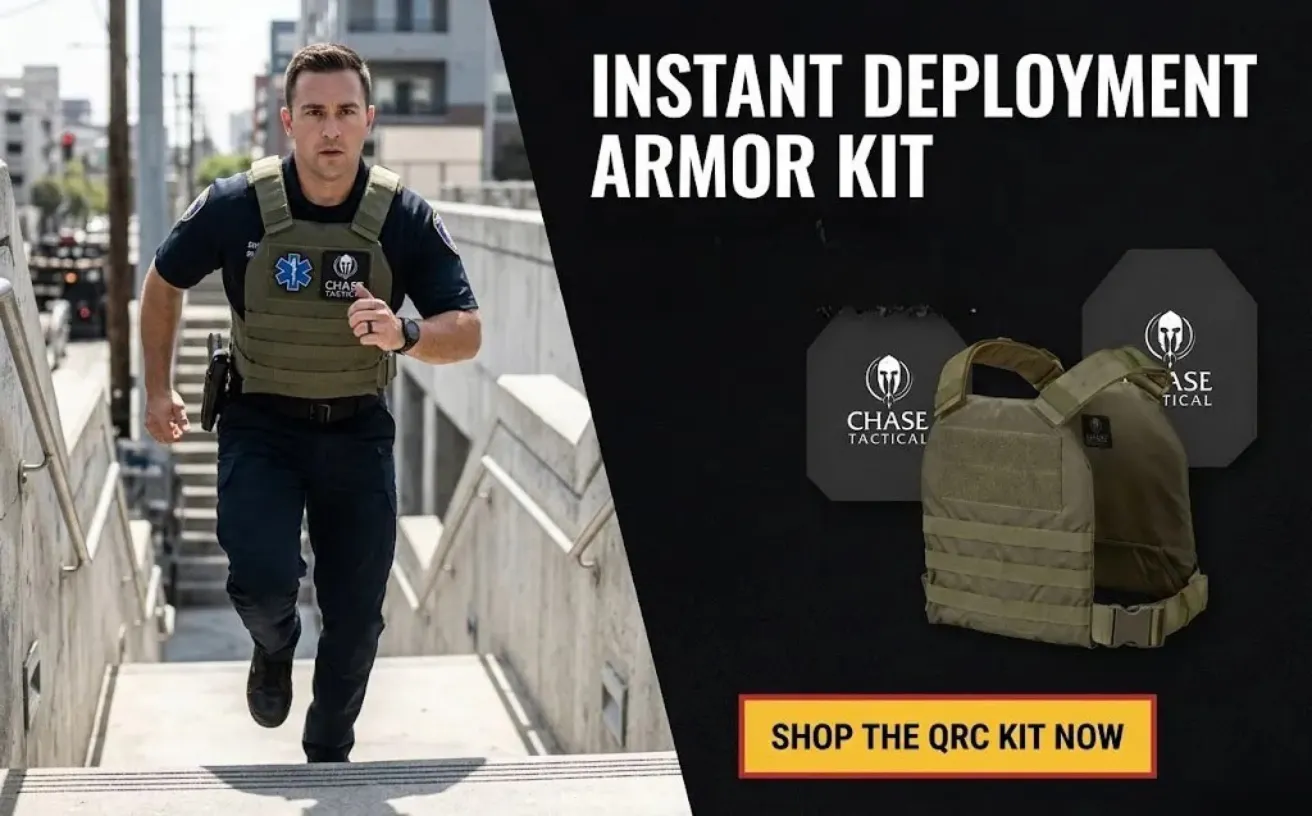
MOLLE-compatible plate carriers allow EMS providers to configure their chest panel with medical-specific pouches, tourniquet holders, chest seal pouches, and airway management equipment within arm’s reach. The same MOLLE platform that carries magazine pouches for law enforcement also carries hemorrhage-control tools for medical providers.
Key plate carrier features for EMS use:
- Quick-release cummerbund for rapid doffing if the provider goes down or needs extraction
- MOLLE webbing across the front panel and cummerbund for modular medical pouch attachment
- Low-profile design that does not interfere with patient assessment or treatment positioning
- Side plate pockets for additional coverage without bulk that restricts bending and kneeling
Ballistic Helmets for High-Threat Medical Response
Head protection is not optional for warm-zone EMS operations. A ballistic helmet rated to Level IIIA protects against both ballistic threats and the significant impact threats present at active incident scenes, including thrown projectiles, debris, and structural hazards.
ACH-pattern helmets provide the protection tier required for warm-zone work and include rail systems for mounting lights, cameras, and communication gear. EMS providers working in low-light environments benefit from helmet-mounted illumination that keeps both hands free for patient care.
Bump helmets are not appropriate for warm-zone deployment. They carry zero ballistic rating. Any environment where EMS operates alongside law enforcement in an active threat scenario demands a certified ballistic helmet, not an impact-only solution.
Tourniquet and Hemorrhage Control Equipment
For tactical EMS, a tourniquet is the highest-priority individual piece of medical equipment. Extremity hemorrhage is the leading cause of preventable death in trauma, and the window for effective tourniquet intervention is measured in minutes.
EMS providers should carry at least one tourniquet on their person, accessible with either hand, at all times during tactical deployments. The tourniquet should be mounted to the plate carrier or belt in a position that allows single-motion access, not buried in a bag or medical kit.
Beyond the tourniquet, the hemorrhage control kit for tactical EMS should include:
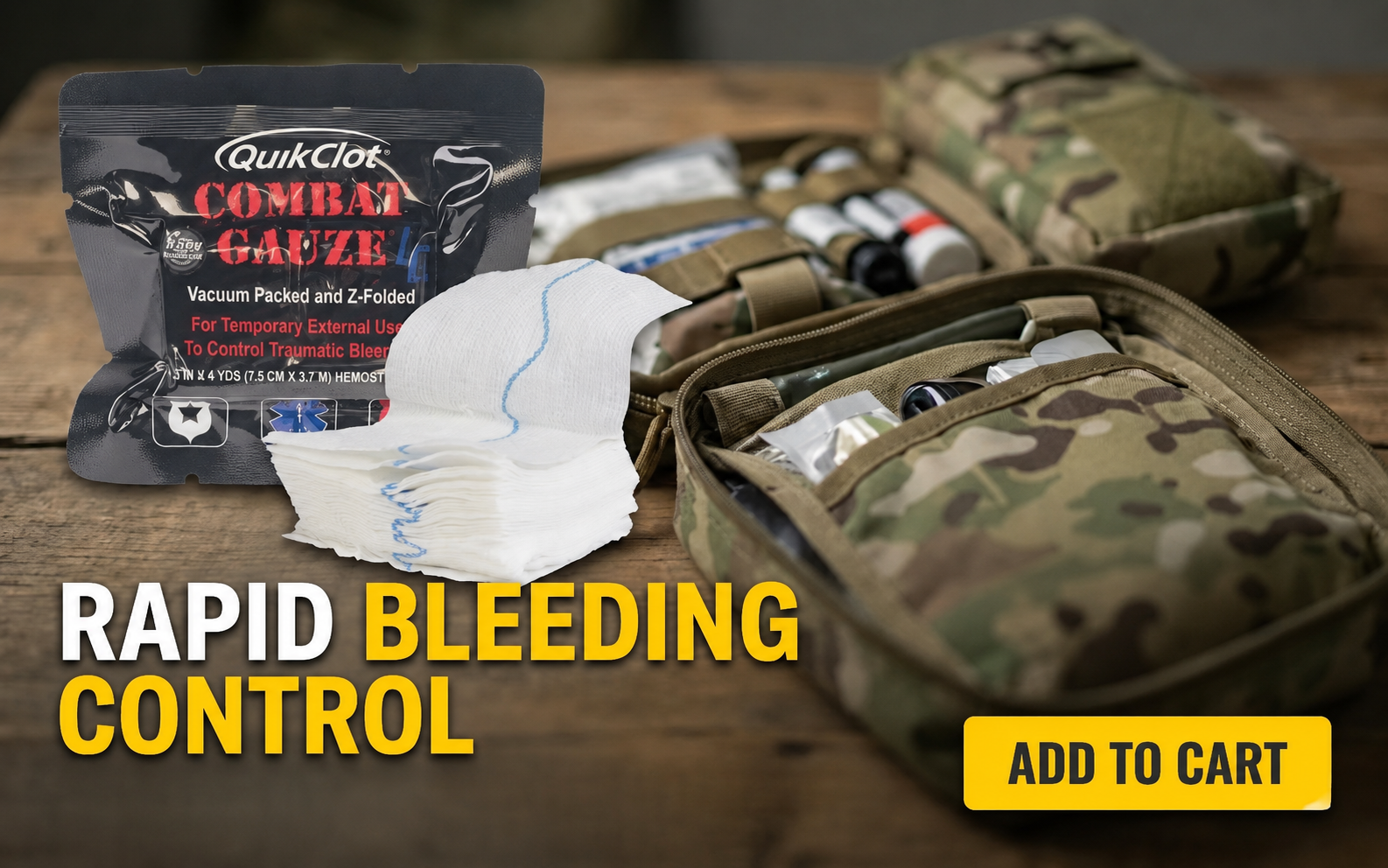
- Hemostatic gauze for junctional and wound-packing applications
- Pressure bandages for wound site management after tourniquet application
- Chest seals, both vented and non-vented, for penetrating chest wound management
- Nasopharyngeal airway adjuncts for airway management under fire
- Nitrile gloves staged for immediate access
MOLLE Pouches and Medical Equipment Organization
The difference between a fast medical intervention and a slow one in a tactical environment is often organization. Equipment that requires searching through a bag or repositioning other gear to access costs time that casualties do not have.
MOLLE-configured pouches allow tactical EMS providers to stage every piece of critical equipment in a fixed, trained position on the plate carrier or duty belt. Tourniquet pouch on the front cummerbund. Chest seal in the upper left chest panel. Hemostatic gauze and pressure dressing in the IFAK pouch on the right side. Every item in the same position every deployment.
Chase Tactical’s MOLLE-compatible pouch line includes tourniquet, IFAK, and utility pouches that integrate with plate carriers and duty belts. The same modular system that configures law enforcement kit configures the tactical EMS kit.
Tactical Gloves for EMS
Hand protection in tactical EMS serves two functions: protecting the provider from environmental and ballistic hazards, and maintaining the dexterity required for medical procedures under stress. A glove that protects the hand but prevents handling of IV access or airway management tools is not acceptable for medical work.
Purpose-built tactical gloves provide impact protection at the knuckles and back of the hand while preserving fingertip sensitivity for clinical tasks. For tactical EMS, gloves need to perform in both the threat-mitigation and patient-care roles without requiring a change between them.
Conclusion
Tactical EMS is not standard EMS in a different scenery. It is a distinct operational discipline that places medical providers in active-threat environments and requires them to deliver patient care while managing their personal safety. The gear that supports that mission, body armor, ballistic helmets, plate carriers configured for medical access, and staged hemorrhage control equipment, is not optional for providers who operate in those conditions.
Chase Tactical’s product line covers every tier of tactical EMS kit, built to the standards demanded by military and law enforcement procurement. The same equipment trusted by operators in lethal threat environments is the appropriate baseline for EMS providers working alongside them.
For TEMS training standards and Rescue Task Force protocols, the National Institute of Justice and the Committee for TCCC provide evidence-based reference material for departments building tactical medical programs.
FAQs
Q: Do all paramedics need tactical gear?
Not all EMS operations involve tactical threat environments. Tactical gear is particularly relevant for providers who respond to active shooter incidents, operate within Rescue Task Force frameworks, support law enforcement operations, or work in urban environments with elevated risk of violence. Departments assess their operational environment to determine appropriate protective standards.
What body armor level is appropriate for EMS?
Level IIIA soft armor is the appropriate minimum for EMS providers operating in warm-zone environments. It provides certified protection against the handgun-caliber threats most common in civil and criminal incidents while allowing the range of motion required for patient care.
Can EMS wear the same plate carrier as law enforcement?
Yes. The same MOLLE-compatible plate carriers used by law enforcement are appropriate for tactical EMS. The difference lies in how the MOLLE front panel is configured: law enforcement configures it for weapon and magazine access, while EMS configures it for hemorrhage control and airway equipment access.
Where should a tourniquet be positioned on an EMS kit?
On the body, accessible with either hand, in a fixed position that is trained to muscle memory. The front of the cummerbund or the non-dominant side of the plate carrier are standard positions. A tourniquet in a bag or medical kit is not accessible when needed.
Does Chase Tactical supply gear for EMS providers?
Chase Tactical carries body armor, plate carriers, ballistic helmets, MOLLE pouches, tourniquet pouches, and IFAK kits for military and law enforcement use. These same products are appropriate for tactical EMS providers. Review the product selection at chasetactical.com for available options.