





OD Green vs. Other Military Colors: A Comprehensive Guide


OD green stands for Olive Drab green, the muted, yellow-brown green that has been the U.S. military’s signature uniform and equipment color for more than a century. Today it is a staple in tactical apparel, outdoor gear, and everyday carry accessories, and it is often used interchangeably with Army Green, Olive Green, and Military Green, even though each name describes a slightly different shade.
Whether you’re selecting a plate carrier, matching uniform colors for a field deployment, or trying to settle whether army green and olive green are the same thing, this guide covers what you need: what OD green is, its color codes, how it compares to Army Green, Olive Green, Coyote Brown, Ranger Green, Multicam, and other military colors, and which OD green gear is available from Chase Tactical.
Gear Available in OD Green
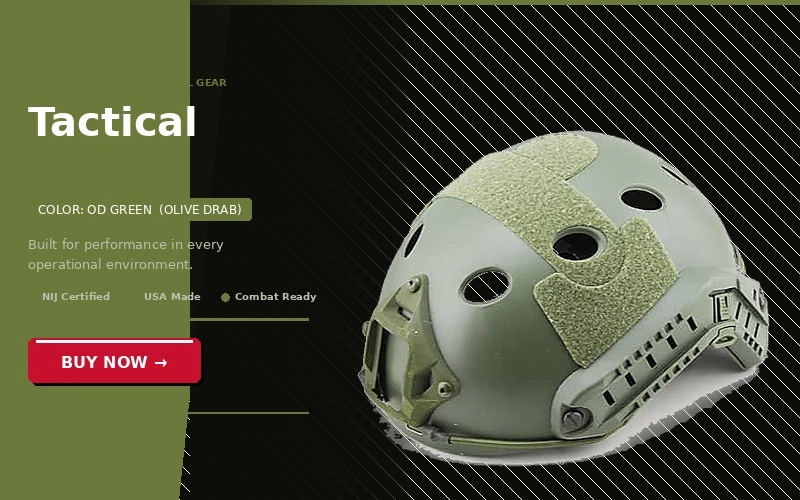
Chase Tactical offers OD green options across plate carriers, ballistic and bump helmets, and helmet accessories, built for military, law enforcement, and civilian users.
What Is OD Green (Olive Drab)?
OD is short for Olive Drab. “Olive” refers to the green of an unripe olive, and “drab” refers to a dull, brownish, low-visibility tone. Put together, OD green is a dark, earthy green with a yellow-brown undertone, designed to blend into vegetation rather than stand out against it. OD green and olive drab are the same color family; OD green is simply the shorthand used across the tactical gear and apparel industry.
The U.S. Army adopted olive drab in 1902 for its ability to blend into temperate, forested terrain, and it remained the standard through World War I, World War II, Korea, and Vietnam. For the full history of the color across those conflicts, see The Significance of OD Green in Military Uniforms.
OD Green Color Specifications
Understanding the exact shade matters when matching gear, paint, or fabric. OD green is not a single fixed color. It refers to a family of olive drab hues used across military branches, eras, and manufacturers. These are the most commonly referenced screen values for OD green and its close relatives:
| Color | HEX | RGB |
|---|---|---|
| OD Green (Standard) | #4A4E28 | 74, 78, 40 |
| Dark Olive Green | #556B2F | 85, 107, 47 |
| Army Green | #4B5320 | 75, 83, 32 |
| Ranger Green | #6B7C45 | 107, 124, 69 |
| Foliage Green | #7C7F5B | 124, 127, 91 |
Treat these values as screen approximations. Real fabric shifts with dye lot, material, wear, and lighting, so a physical swatch will always look slightly different from a hex code on a monitor. For paint and color-critical work, cross-reference the Federal Standard reference commonly cited for olive drab (FS 34087) or the European RAL 6014 (Yellow Olive) to keep uniform, plate carrier, and accessory items consistent. For more shade variations and color codes, see our OD Green Color History guide.
OD Green vs. Army Green vs. Olive Green
These three names get mixed up more than any other colors in the military green family. In casual conversation the overlap is real, and many people use them as synonyms. For gear, paint, and fabric matching, though, the differences are worth knowing.
OD Green vs. Army Green
Army Green is one of the most commonly searched terms in this color family. It is commonly cited around HEX #4B5320 and sits as a slightly more saturated, mid-tone olive between standard OD green and brighter olive greens. In everyday use, people often treat Army Green as a synonym for Olive Drab or Military Green.
For color-critical matching, the three are related but not identical: OD Green (Olive Drab) is the traditional, more yellow-brown military standard; Army Green tends to read a touch brighter and more saturated; and Ranger Green is the coolest, most gray-toned of the group. Army Green does not have a single official military specification the way olive drab does, which is why you’ll see it marketed under slightly different shades from brand to brand.
Army Green vs. Olive Green
Army green and olive green are close, but they are not exactly the same color. Olive green is a general color name taken from the color of olives, and it covers a wide range, from bright yellow-green to deep olive. Army green is narrower. It describes the darker, more muted olive shades associated with military uniforms. Put simply, most army greens are olive greens, but not every olive green is dark or muted enough to read as army green.
Web color standards show how wide the olive range is. The named web color “olive” is #808000, a bright yellow-olive, and the named web color “olivedrab” is #6B8E23. Both are noticeably brighter than military OD green at #4A4E28. That gap is why a product labeled “olive” can look very different from one labeled “OD green” or “army green,” so always compare swatches or photos before mixing items.
Olive Drab vs. Olive Green
Olive drab is a specific military color family, while olive green is the broader civilian color name. The “drab” in olive drab adds a brown, dulling tone to the green for camouflage, so OD green looks darker, browner, and less saturated than most olive greens.
What Is Military Green?
“Military Green” is not an official color standard. It’s an umbrella term people use to describe any of the muted, earthy greens associated with the armed forces, including OD Green, Olive Drab, Army Green, and Ranger Green, and it shows up across uniforms, gear, and civilian clothing alike. When someone searches for “military green” or “tactical green,” they’re usually looking for one of these specific shades rather than a single fixed color.
OD Green (Olive Drab) remains the most historically accurate answer to “what shade of green is used in military uniforms,” since it was the U.S. military’s standard color for most of the 20th century, while Ranger Green and Army Green represent more modern, specific variations within that same family.
Military Green vs. Forest Green and Dark Green
Forest green belongs to a different color family. It is a deeper, truer green with cooler undertones (the named web color “forestgreen” is #228B22), while military greens such as OD green and army green are muted with yellow and brown. Forest green and generic dark green read as rich and saturated. Military greens read as dull and earthy, which is exactly what helps them blend into vegetation and shadow instead of standing out.
Military and Tactical Color Names Explained
Part of the confusion around OD green comes from naming. Manufacturers, military branches, and retailers often use different names for similar shades, and some names describe a color while others describe a pattern. If you’ve ever wondered what military green is called, or whether there’s another name for army green, this quick glossary covers the tactical color names you’re most likely to see on gear:
- OD Green / Olive Drab / ODG: The traditional U.S. military green with a yellow-brown tinge. OD, ODG, and olive drab all refer to the same color family.
- Army Green / Military Green: Informal names for muted olive greens. Neither is a single official standard, so the exact coloring varies by brand.
- Ranger Green: A cooler, more gray-toned green used on modern tactical gear.
- Foliage Green: A lighter, neutral gray-green suited to mixed environments.
- Coyote Brown: A muted, medium brown widely used on modern tactical gear and accessories.
- Coyote Tan: Generally lighter and more tan than coyote brown, although naming varies by manufacturer, which is why “coyote” alone can describe either shade.
- Flat Dark Earth (FDE): A muted tan-brown that sits between desert tan and coyote brown.
- Desert Tan / Khaki / Sand: The lightest military earth tones, built for open, sun-bleached terrain. These are the names most people mean when they ask for the military tan color name.
- Multicam, M81 Woodland, Flecktarn, and Digicam: These are camouflage patterns rather than solid colors. They combine several tones to break up the wearer’s outline.
When you shop by color name, always check product photos or a physical swatch. Two items labeled “coyote” or “olive” from different makers can look noticeably different side by side.
Comparing OD Green to Other Military Colors
While OD green is ideal for temperate, forested, and woodland environments, modern military and law enforcement operations span deserts, cities, and jungle terrain, requiring a broader color palette. Here is how OD green stacks up against the most widely used military colors and patterns.
Tactical Gear Across Every Color & Environment
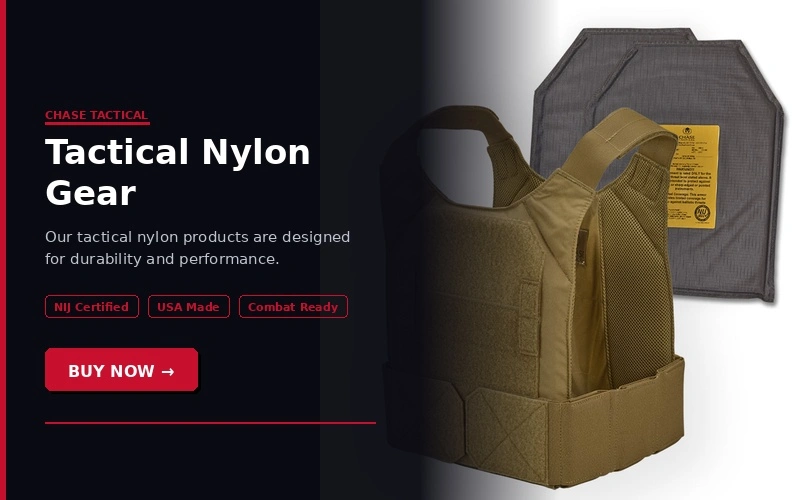
From coyote brown to Multicam, Chase Tactical’s plate carriers and nylon gear are available in colors that match your operational environment.
Military Color Comparison at a Glance
| Color | Undertone | Best Terrain | Versatility | Common Use |
|---|---|---|---|---|
| OD Green | Warm, yellow-brown green | Temperate forest, foliage | Moderate | U.S. military standard, LE patrol, outdoor apparel |
| Army Green | Brighter mid-tone olive | Temperate forest, mixed terrain | Moderate | Historical uniform term, often used interchangeably with OD green |
| Coyote Brown | Muted brown | Desert, urban, arid | Good | USMC gear, combat vests, tactical accessories |
| Desert Tan / Khaki | Light sand | Sandy desert, open terrain | Low | Gulf War era, desert deployments, khaki apparel |
| Ranger Green | Cool, gray-toned green | Forest, shadowed terrain, low light | Moderate | Special operations, tactical gear, uniform items |
| Foliage Green | Light, neutral gray-green | Forest, jungle, urban | Good | Special operations, all-environment fabric |
| Multicam | Multi-tone pattern | All environments | Excellent | U.S. Army OCP, allied forces, tactical equipment |
| Flecktarn | Spotted green, brown, and black pattern | European forest, grassland, urban | Moderate | German Bundeswehr, EU allied forces |
| Digital Camo (Digicam) | Pixelated pattern | Variable and pattern-dependent | Good | U.S. Army UCP, USMC MARPAT, modern LE gear |
OD Green vs. Coyote Brown
Coyote brown is OD green’s closest modern rival for military and tactical gear. While OD green excels in woodland and foliage-heavy environments, coyote brown is the better choice for desert, arid, and urban terrain. The U.S. Marine Corps uses coyote brown widely across its gear and accessories, and the color now appears across belt systems, pouches, and plate carrier colorways. If your operational environment involves concrete and earth tones rather than vegetation, coyote brown will outperform OD green. Browse Chase Tactical’s coyote gear if your terrain leans that way.
OD Green vs. Desert Tan
Desert tan, also known as khaki or sand, is another color used in arid environments. It became particularly prominent during the Gulf War, when U.S. forces used it extensively. Desert tan is lighter than coyote brown and suited to the bright, sun-bleached landscapes of open desert.
Because of light-colored sand and rocky terrain, desert tan is effective in environments with minimal vegetation and high visibility. Like OD green, desert tan has seen various iterations and shades, but its purpose stays the same: effective camouflage in desert conditions, where OD green would stand out as a dark shape.
Coyote Brown vs. Tan and Flat Dark Earth
Coyote brown is often confused with other earth tones. Desert tan is the lightest of the group, a pale sand color. Flat Dark Earth (FDE) sits in the middle as a muted tan-brown that is lighter than coyote brown. Coyote brown is the darkest of the three, which is why it pairs more easily with OD green than lighter tans do. Exact shades vary by manufacturer, so compare swatches before mixing earth tones in one loadout.
OD Green vs. Ranger Green

Ranger Green is one of the most commonly cross-shopped alternatives to OD green, and the two are easy to mix up at a glance. Ranger Green leans more gray and desaturated, which makes it better suited to darker forests, shadowed terrain, and low-light or urban settings. OD green carries a warmer, more yellow-brown undertone that performs best in bright, sunlit foliage and temperate woodland.
Because the two colors don’t blend cleanly, pairing an OD green plate carrier with Ranger Green pouches can create a visible contrast in daylight, so most operators standardize on one or the other for a matched loadout. For a full side-by-side breakdown, including how Ranger Green pairs with coyote brown and Multicam, see our OD Green vs. Ranger Green guide, or browse the Ranger Green collection directly.
OD Green vs. Foliage Green and Multicam
Multicam blends greens, browns, and tans into a single adaptive pattern. It’s the most versatile option for operators who move between environments within a single deployment, and it is the basis of the U.S. Army’s OCP uniform. Foliage Green, with its neutral gray-green hue, is the best all-environment substitute for OD green when operating across forest, jungle, and urban settings. If you want pattern coverage instead of a solid color, browse Chase Tactical’s Multicam gear.
OD Green vs. Flecktarn and Digital Camouflage
Two additional patterns worth understanding: Flecktarn, used by the German Bundeswehr, layers small spots of green, brown, and black to break up a soldier’s silhouette in European forest and grassland terrain, something OD green as a solid color cannot achieve on its own. Digital camouflage, also known as digicam, uses pixelated patterns rather than organic shapes and is designed to disrupt the eye’s ability to focus on a soldier’s outline.
The U.S. Army’s Universal Camouflage Pattern, or UCP, uses gray, green, and tan pixels, though it has largely been replaced by Multicam-based OCP for field use. Both patterns show that modern military color science has moved well beyond solid OD green, though OD green remains the baseline against which other options are measured.
When to Choose OD Green Over Other Colors
Choose OD green when your primary operational environment contains dense foliage and temperate vegetation, or when your unit’s uniform standard specifies OD green items. It suits law enforcement and military users operating in wooded regions, and it pairs well with khaki and coyote items, making it easy to build a mixed-color loadout without a clash in tone. For terrain-specific advice, see our guide to plate carrier setups for different environments.
Is OD Green Good Camouflage?
OD green is effective camouflage in the right setting, but it works differently from a printed camo pattern. A solid color hides you by matching the average tone of your surroundings. In woods, woodlands, grass, and leafy vegetation, OD green’s muted, yellow-brown undertones sit close to the colors of foliage, bark, and soil, so it blends in rather than standing out.
What a solid color cannot do is break up your outline. The human eye picks out shapes, edges, and movement, and a single block of OD green still shows a clear silhouette against a lighter background. That is why patterns such as M81 Woodland, Flecktarn, and Multicam replaced solid OD green on most modern combat gear and uniforms. OD green camo works best when:
- The environment is green and vegetated, such as temperate forests, field edges, and dense undergrowth.
- You are partly concealed by cover, shadows, or terrain, so your outline is already broken up.
- OD green is paired with a patterned uniform, such as Multicam, where the solid color reads as one more tone in the overall pattern.
OD green is a weaker choice in deserts, snow, and concrete-heavy urban areas, where its dark tone creates contrast. In jungles, it performs reasonably well, although lighter greens and patterns usually blend better with bright, layered foliage. Low visibility also depends on more than color. Under night vision, the IR treatment of the fabric matters as much as the shade, which is why Chase Tactical treats its fabrics, webbing, and hardware for a low IR signature.
How Lighting and Wear Change the Look of OD Green
OD green rarely looks the same in every photo or setting, and that is not a defect. The same fabric shifts with light, weather, and age, which is one reason buyers often see a difference between product photos and the item in hand.
- In natural light and bright sunlight: OD green’s yellow-brown undertones come forward, and it can read as a warmer, slightly lighter olive.
- In shade, shadows, and overcast weather: The yellow tinge fades and OD green reads darker, browner, and closer to gray-green. This is also where the contrast with Ranger Green becomes harder to see.
- Under indoor or artificial light: Two greens that match outdoors can look different indoors. This effect, called metamerism, is why it is worth checking gear colors together in daylight before building a matched loadout.
- Over time: UV exposure, repeated washing, and abrasion fade dyed nylon. Faded OD green often drifts lighter and can take on a more yellow or khaki look. How quickly any green fades depends more on the dye, fabric, and exposure than on the shade itself.
To keep colors consistent across your kit, buy matching items from the same product line where possible, store gear out of direct sunlight, and follow the care tips further down this guide.
Choosing the Best Plate Carrier Color
There is no single best plate carrier color. The right choice depends on where you operate, what you wear underneath, and whether you need to stand out or stay low profile. Here is a practical way to decide:
- OD Green: Best for woodland and vegetated environments, and for users who want a traditional military look. Chase Tactical’s Trooper TAC Carrier is offered in OD Green and Black.
- Black: The common choice for law enforcement, security, and urban use, where blending into vegetation matters less than a uniform, professional appearance.
- Coyote: A versatile earth tone for desert, arid, and mixed terrain that also pairs well with OD green accessories.
- Ranger Green: A darker, gray-toned green for shadowed forest and low-light use.
- Multicam: The most adaptable option when you move between environments. A solid Ranger Green or OD green carrier over a Multicam uniform is also a common setup, since the greens in the pattern tie the two together.
Several Chase Tactical carriers, including the LVPC-E and QRC, are offered in Black, Coyote, Ranger Green, and MultiCam. For help comparing sizes, features, and plate compatibility beyond color, see our guide to choosing plate carriers.
OD Green on Uniforms, Vehicles, and Equipment
OD green’s popularity comes from how widely the U.S. military applied it. It was not only a uniform color. Olive drab covered field jackets, helmets, web gear, tents, and the vehicles of World War II, which made it the most recognizable military use of color of the 20th century.
On uniforms, olive drab carried through the cotton utility uniforms of the Korea and Vietnam eras, including the OG-107 utilities, before the military moved to camouflage patterns such as M81 Woodland on the BDU. Today, solid OD green still appears on combat gear, tactical apparel, and some law enforcement uniforms, especially for teams working in rural or wooded areas. On the civilian side, olive green military shirts, jackets, and t-shirts remain a staple of outdoor and workwear style. Browse Chase Tactical’s tactical clothing to pair apparel with your gear, and see our article on color psychology in tactical uniforms for how uniform colors shape perception.
OD Green Tactical Gear and Accessories from Chase Tactical
Knowing the color is half the decision. The other half is finding gear in that colorway that holds up to real use. Chase Tactical, a U.S.-based, veteran-owned, service-disabled small business, offers OD green options across several categories:
- Plate carriers: The Trooper TAC Carrier is made in the USA from CORDURA nylon and is offered in Black and OD Green.
- Ballistic helmets: The Striker Level IIIA ACH helmet is rated Level IIIA according to NIJ 0106.01 and is offered in OD Green alongside other colors. See the full range of ballistic helmets.
- Bump helmets: The Tactical BUMP Helmet is a non-ballistic option available in OD green.
- Helmet accessories: OD green options include a helmet rail system, a hook and loop system, an NVG shroud, and a helmet carry bag. Browse all helmet accessories.
Chase Tactical treats its fabrics, webbing, and plastic hardware at source to keep IR signature as low as possible, so color choice and low visibility work together.
Caring for OD Green Fabric and Gear
OD green nylon gear requires minimal maintenance to keep its color and performance. Machine wash fabric items on cold with mild detergent, and avoid bleach because it fades the earthy olive tone. Air dry only, as high heat can degrade the fabric and its coatings. For helmets and plate carriers, wipe them down with a damp cloth after outdoor use and store them in a cool, dry place away from direct sunlight to prevent fading. For a broader routine, see our tactical gear maintenance guide.
What Colors Go with OD Green?
OD green pairs naturally with earthy, neutral tones. These are the most common combinations used across military, law enforcement, and tactical gear:
- OD Green + Coyote Brown is the most popular combination for mixed loadouts. Use an OD green plate carrier with utility pouches and a belt in coyote brown. This combination works well in both woodland and transitional environments.
- OD Green + Black is common in law enforcement and urban tactical applications. Pair a black plate carrier or helmet with an OD green chest rig or OD green accessories.
- OD Green + Khaki / Tan is a classic military combination. Use OD green nylon gear over khaki or tan uniform items for woodland-to-desert transitions.
- OD Green + Multicam is popular for operators who use Multicam uniforms but prefer a solid-color plate carrier. The green tones in Multicam blend naturally with OD green gear.
For tips on combining colors and components without losing function, see our guide to running a mixed loadout on your plate carrier.
Matching OD Green Paint, Dye, and Finishes
Many people searching for OD green, army green, or Ranger Green want to match a color on something other than fabric, such as a helmet, a rifle stock, a storage case, or a vehicle. Paint and dye behave differently from dyed nylon, so a few rules help you get a closer match:
- Start with a reference code: Use FS 34087 or RAL 6014 rather than a product name like “army green” or “military green,” which varies between brands. In the Federal Standard 595 system, the first digit 3 means a flat, lusterless finish and the second digit 4 means a green, so FS 34087 describes a flat green.
- Choose a flat or matte finish: Gloss and semi-gloss finishes reflect light and make any green look brighter and more noticeable. Flat finishes keep the drab, low-visibility look.
- Test on a scrap surface: Different materials, primers, and surfaces change the final shade. Test first, let it dry fully, and compare it outdoors in daylight next to your gear.
- Expect dye results to vary: Fabric dye takes differently on cotton, polyester, and nylon, so a home-dyed item may not match factory-dyed tactical gear.
- Two-tone setups work well: OD green paired with FDE or coyote brown is a popular combination on firearm furniture, helmets, and accessories, following the same pairing logic used for nylon gear.
Conclusion
OD green earned its place as the baseline military color because it blends into temperate vegetation and stays dull under most light. Army green, olive green, and military green describe close relatives in the same family, while Ranger Green, Foliage Green, Coyote Brown, Desert Tan, and Multicam each solve a different terrain problem.
Pick OD green for woodland and foliage-heavy environments, lean toward earth tones for desert and urban work, and choose a pattern like Multicam when you move between environments. Once you know your terrain, building a matched loadout is straightforward. Start with an OD green plate carrier or helmet from Chase Tactical and build the rest of your kit around it.
Frequently Asked Questions
What does OD stand for in OD green?
OD stands for Olive Drab. OD green and olive drab describe the same dull, yellow-brown green used in U.S. military uniforms and equipment since the early 20th century. “OD green” is the shorthand most commonly used in the tactical gear and apparel industry.
Why is OD green used in the military?
OD green is used because its muted, yellow-brown green blends into temperate forests, grass, and foliage, making soldiers and equipment harder to spot. The U.S. Army adopted olive drab in 1902, and it remained the standard color through both World Wars, Korea, and Vietnam.
What are the RGB and hex values for OD green?
Standard OD green is commonly represented as HEX #4A4E28 (RGB 74, 78, 40). A lighter dark olive green variant is HEX #556B2F. These are screen approximations, so verify against a physical swatch or the applicable Federal Standard or RAL reference when matching paint, fabric, or gear.
Is army green the same as olive green?
Not exactly. Olive green is a broad color name that ranges from bright yellow-green to deep olive, while army green describes the darker, more muted olive shades associated with military uniforms. Most army greens fall within the olive green range, but many olive greens are too bright to read as army green.
Is army green the same color as OD green or olive drab?
No, but they are close relatives. Army green is commonly cited around HEX #4B5320, a slightly more saturated mid-tone olive, while OD green is darker and more yellow-brown. People often use the names interchangeably, but for accurate color matching, compare the specific swatch or manufacturer reference.
What is the difference between military green and forest green?
Military green is an umbrella term for muted, earthy greens like OD green, army green, and Ranger Green, which carry yellow or brown undertones. Forest green is a deeper, truer green with cooler undertones and more saturation, so it reads as rich rather than drab.
Is Ranger Green the same as OD green?
No. Ranger Green is a separate, more gray-toned shade used on modern tactical and special operations gear, while OD green is the traditional yellow-brown military standard. Ranger Green performs better in darker terrain, low light, and urban settings, while OD green performs better in bright, temperate foliage.
Is OD green or coyote brown better?
It depends on your terrain. OD green is the better choice for woodland, grass, and foliage-heavy environments. Coyote brown is the better choice for desert, arid, and urban settings. Many users combine the two, pairing an OD green carrier with coyote brown pouches and belts.
What colors go with OD green?
Coyote brown, khaki, tan, and flat dark earth are the most natural pairings for tactical gear and apparel. Black works well for urban or law enforcement setups, and Multicam uniforms blend well with solid OD green gear.
What OD green gear does Chase Tactical offer?
Chase Tactical offers OD green options including the USA-made Trooper TAC Carrier, the Striker Level IIIA ACH ballistic helmet, the Tactical BUMP Helmet, and helmet accessories such as a rail system, NVG shroud, and helmet carry bag. Browse the OD green collection for current availability.
Is OD green good camouflage?
Yes, in green, vegetated environments such as temperate forests and woodlands, where its muted tone matches foliage and soil. As a solid color, it does not break up your outline the way a pattern like Multicam or M81 Woodland does, and it stands out in deserts, snow, and urban settings.
What is the difference between coyote tan and coyote brown?
Coyote tan is generally lighter and more tan, while coyote brown is a darker, more muted brown. Naming varies by manufacturer, so “coyote” on its own can describe either shade. Compare product photos or swatches before mixing the two in one loadout.
What is the best plate carrier color?
It depends on your environment. OD green suits woodland terrain, black suits law enforcement and urban use, coyote suits desert and mixed terrain, Ranger Green suits shadowed forest, and Multicam is the most adaptable across environments.
Why does OD green look different in photos and in person?
OD green shifts with lighting. Bright sunlight brings out its yellow-brown undertones, while shade and overcast light make it look darker and grayer. Screens, indoor lighting, and fading from UV exposure and washing also change how the color appears.