





Night Vision vs Thermal Optics: Which Fits Your Mission?

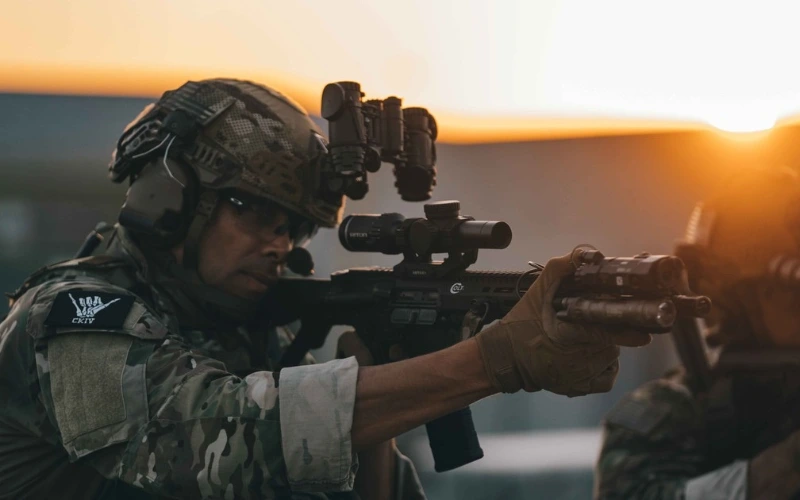
It is 0200. The streetlights are out, a fog bank is rolling off the tree line, and somewhere in the next 300 yards is the person you need to find. One optic will show you every root and rut on the trail but lose that person behind a curtain of mist. The other will light that person up like a beacon but leave you guessing where the ditch starts. That is the night vision vs thermal decision in a single moment, and getting it wrong costs time, safety and sometimes the mission.
Both technologies let you work after dark, but they do it in opposite ways. Night vision amplifies the light that is already there. Thermal reads the heat that every object gives off. Each one is outstanding at certain jobs and surprisingly weak at others, and the right choice also shapes your tactical helmet, your power plan and the way you carry the rest of your kit.
The Quick Answer
If you only have a minute, here is the short version before we go deeper.
- Choose night vision when you need to move, drive, read terrain, identify faces or uniforms, or work around glass and vehicles.
- Choose thermal when you need to find people or animals, search large areas, see through light smoke and brush, or work in total darkness.
- Choose fusion when your mission demands both movement and detection at the same time and the budget allows it.
Everything below explains why, so you can match the tool to the job instead of guessing.
How Night Vision Works
Night vision is image intensification. It takes tiny amounts of light, from starlight, moonlight, sky glow or an infrared illuminator, and multiplies it thousands of times into an image your eye can use. Understanding what is inside the housing explains both its strengths and its limits.
Inside a traditional analog unit is an image intensifier tube. Light passes through the objective lens and strikes a photocathode, which turns photons into electrons. Those electrons pass through a microchannel plate that multiplies them, then strike a phosphor screen that glows to form the picture you see through the eyepiece. A general technical overview is available on Wikipedia’s night-vision device page.
Tube Generations Explained
Night vision is sorted into generations, and the generation sets the ceiling on performance.
- Gen 1: The earliest tubes. Noticeable distortion at the edges, short range and heavy reliance on an IR illuminator.
- Gen 2: Adds the microchannel plate for a sharper, brighter image. A real step up for patrol and observation use.
- Gen 3: Uses a gallium arsenide photocathode for far better low-light sensitivity. This is the class used by the U.S. military and most serious tactical users.
Within each generation, tube quality still varies. Specs such as resolution and signal-to-noise ratio decide how clean the image looks on a moonless night.
Digital Night Vision
Digital units replace the tube with a camera sensor and a small screen. They cost less, tolerate daylight without damage and can often record video. The trade-off is weaker performance in very low light, a slight delay in the image and higher battery drain, which is why most head-mounted professional setups still use tubes.
Green vs White Phosphor
The phosphor screen sets the color of the image. Green phosphor is the classic look, chosen originally because the human eye picks out more shades of green. White phosphor shows the scene in black and white, which many users find more natural for judging depth, shadows and contrast during long shifts.
Night Vision Strengths and Weaknesses
Night vision gives you a picture your brain already knows how to read.
Strengths:
- High detail: faces, text, uniforms, hand signals and terrain texture
- Natural depth perception for walking, driving and climbing
- Works through windshields and windows
- Lighter and more compact than most thermal devices
- Pairs with IR lasers and illuminators for aiming and marking
Weaknesses:
- Needs at least some light, or an IR illuminator, to work
- Fog, heavy rain, smoke and dust scatter light and cut the image quickly
- Bright sources such as headlights and muzzle flash bloom or wash out the view
- A person standing still in shadow or brush is easy to miss
How Thermal Optics Work
Thermal imaging ignores visible light completely. Every object gives off infrared energy as heat, and a thermal sensor reads the tiny differences between those temperatures and turns them into an image. That is why thermal works the same at noon as it does at midnight.
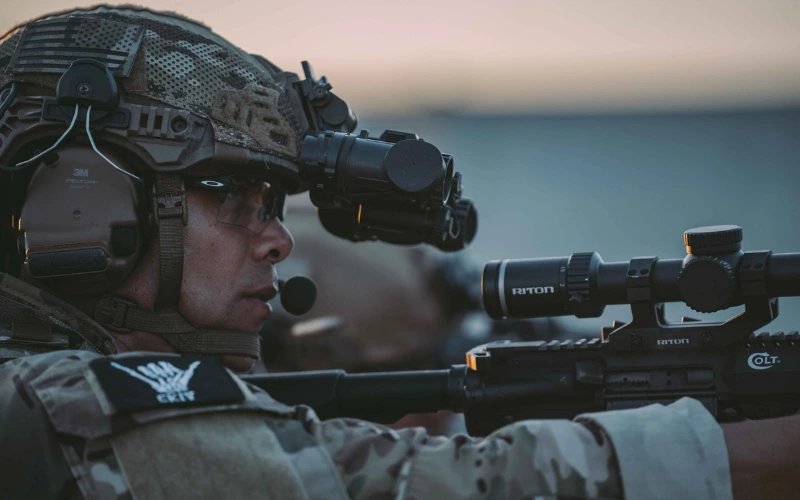
The heart of a thermal device is a sensor called a microbolometer, which detects long-wave infrared energy. Each pixel measures how warm its part of the scene is, and the processor builds an image from those readings. The same principle drives the thermographic cameras used in building and electrical inspection.
Sensor Resolution and Refresh Rate
Two specs define how useful a thermal optic is in the field. Sensor resolution sets how much detail you get at distance, so a higher pixel count lets you tell a person from a deer farther out. Refresh rate sets how smooth the image is when you or the target move, which matters most for helmet and weapon-mounted use.
Display Palettes
Thermal devices let you choose how heat is shown. White hot shows warm objects as white on a dark background. Black hot reverses it, which many users find easier on the eyes. Color palettes such as red hot or rainbow highlight the hottest object in the scene, which helps with fast searches.
Thermal Strengths and Weaknesses
Thermal turns a dark, cluttered scene into a simple map of heat.
Strengths:
- Works in total darkness with no illuminator
- Spots people and animals fast, even when they are not moving
- Sees through light smoke, haze, dust and thin vegetation far better than night vision
- Not affected by headlights, flares or muzzle flash
- Works in daylight as well as at night
Weaknesses:
- Shows heat outlines, not fine detail, so identification is limited
- Cannot see through ordinary glass
- Terrain can look flat and uniform, which makes movement harder
- Contrast drops when targets and background share a temperature, such as at dawn and dusk
- Generally more expensive for the same level of performance
Night Vision vs Thermal: Head-to-Head Comparison
The table below puts the two technologies side by side on the factors that matter most for tactical use.
| Factor | Night vision | Thermal |
| What it detects | Amplified ambient and IR light | Heat (long-wave infrared) |
| Total darkness | Needs an IR illuminator | Works without any light |
| Detection of people | Moderate | Excellent |
| Identification | Excellent | Limited |
| Fog, smoke and dust | Weak | Moderate to strong |
| Through glass | Yes | No |
| Movement and navigation | Excellent | Fair |
| Bright light exposure | Can bloom or wash out | Not affected |
| Daytime use | Analog tubes: no | Yes |
| Weight on the helmet | Lighter | Usually heavier |
Detection, Recognition and Identification
Optic makers often talk about range in three stages. Knowing what each one means stops you from buying the wrong tool for the distance you actually work at.
What the Three Stages Mean
Detection means you can tell something is there. Recognition means you can tell what class of object it is, such as a person versus an animal. Identification means you can tell who or what exactly it is, such as a specific person or whether they are holding something.
How Each Technology Performs
Thermal usually wins detection by a wide margin, because a warm body against a cool background is hard to miss. Night vision usually wins identification, because it shows the faces, clothing and objects that thermal flattens into heat shapes. For many teams, the smart move is to detect with thermal and then identify with night vision or white light as they close the distance.
Your Optic Needs a Stable Base
Helmet-mounted night vision and thermal add weight to the front of your head. Pair your optic with a Chase Tactical helmet built for rails, mounts and long wear.
How Weather and Environment Change the Picture
The same optic can be excellent one night and nearly useless the next. Weather and surroundings play a big part in the night vision vs thermal choice.
Fog, Rain and Smoke
Water droplets and smoke particles scatter visible and near-infrared light, so night vision degrades fast in fog, heavy rain or a smoky room. Thermal handles light smoke and haze far better, though very dense fog and heavy rain still cut its range because water absorbs heat energy too.
Urban Areas and Bright Light
Cities are full of streetlights, headlights and lit windows. Night vision can bloom around bright sources, while thermal ignores them completely. On the other hand, cities are full of glass, which thermal cannot see through, so night vision keeps an edge around vehicles and storefronts.
Woodland, Brush and Open Ground
In woodland and brush, thermal picks out a warm body behind leaves that night vision would blend into the background. In open ground under a bright moon, night vision gives excellent detail and natural depth. Rocky, uneven terrain favors night vision for safe movement.
Cost, Battery Life and Durability
Performance is not the only factor. What you can afford and sustain in the field matters just as much.
Cost
Entry-level digital night vision is the cheapest way into night operations. Quality Gen 3 tube devices sit at the high end of the market. Thermal pricing depends heavily on sensor resolution, and capable thermal often costs as much as or more than good tube night vision. Fusion devices cost the most.
Battery Life
Tube night vision is very efficient and can run for many hours on a single small battery. Thermal sensors and digital devices draw more power, so plan for spare batteries or a rear-mounted battery pack, which also helps balance the helmet.
Durability and Care
Analog tubes can be damaged by prolonged exposure to bright light, so always use lens caps during daytime checks. Thermal lenses are made from special materials and should be cleaned only with the right lens kit. Both devices need dry storage and regular checks of seals and battery contacts.
Which Optic Fits Your Mission?
There is no single winner in the night vision vs thermal debate. The better choice depends on whether your job is detection, identification or movement.
Patrol and Law Enforcement
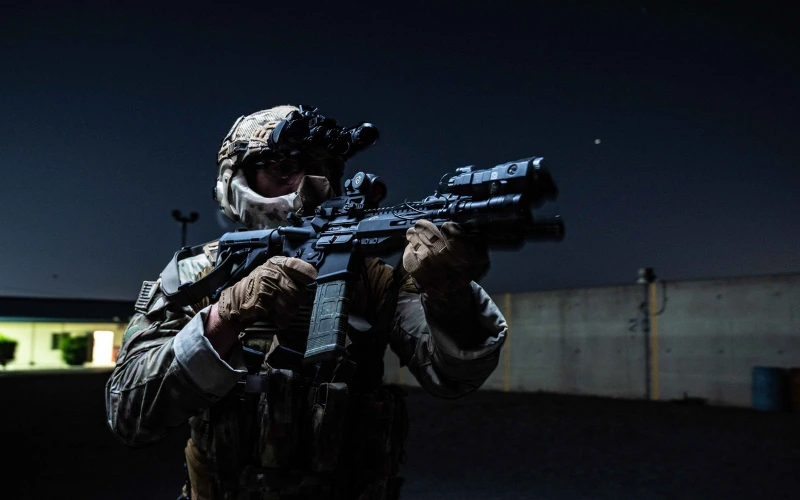
Officers often need to identify a person, read a plate or confirm what someone is holding before acting. That makes night vision the stronger primary tool, because detail drives decisions. A handheld thermal scanner is a valuable second tool for locating a suspect hiding in a yard or tree line.
SWAT and Building Entry
Inside a structure, teams move fast, read hands and work around doors, windows and furniture. Night vision paired with IR illumination is the common choice. Thermal is useful for perimeter teams watching for movement around the building.
Search, Rescue and Perimeter Security
When the goal is finding a warm body in a large area, thermal leads. It picks out a lost hiker in a tree line or an intruder moving along a fence far faster than night vision. Teams then switch to night vision or white light once they close in.
Navigation and Foot Movement
Walking, driving and climbing at night all depend on ground texture and depth. Night vision handles this far better, because thermal can make a muddy trail and a solid path look nearly identical.
When You Need Both: Fusion Optics
Fusion devices overlay a thermal image on top of a night vision image in one view. You keep night vision’s terrain detail and gain thermal’s ability to make heat sources stand out instantly.
The trade-offs are higher cost, more weight on the helmet and more battery demand. Fusion makes the most sense for units that must move and search at the same time, such as teams clearing large wooded areas at night. Many users get similar benefits more affordably by wearing night vision on the helmet and carrying a handheld thermal monocular.
How Your Optic Choice Affects Your Helmet and Kit
Whichever technology you choose, mounting it on your head changes how the rest of your gear needs to work. These are the points most users underestimate.
Weight, Balance and Mounting
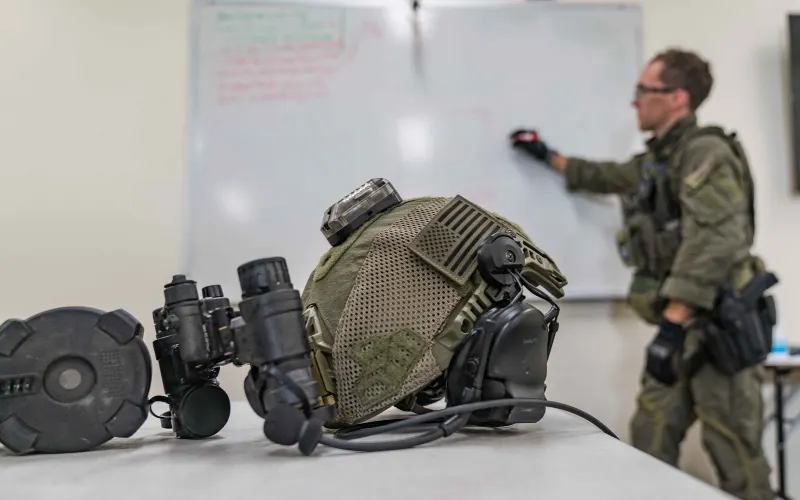
A helmet-mounted optic pulls the front of the helmet down and strains the neck over a long shift. Most users add a counterweight or a rear battery pack to balance it. A proper shroud and mount arm keep the device at a repeatable eye position and let you flip it up when not in use. Our guides on night vision mounts and helmet rig compatibility cover mount types in detail.
Choosing the Right Helmet Platform
Ballistic helmets suit roles with real threat exposure, while lighter bump helmets are a common base for training, search and rescue and non-ballistic roles. If you are unsure what level of head protection a shell gives, our article on whether ballistic helmets are bulletproof explains the limits clearly.
Planning the Rest of Your Loadout
Night work adds spare batteries, IR markers, chem lights and backup power to your load. Keep these on your carrier or belt so the helmet stays as light as possible. Our breakdown of plate carrier setups shows how to place small pouches without crowding your draw path, and the right helmet accessories finish the system.
Common Mistakes to Avoid
A few errors show up again and again with new night optic users.
- Buying on price alone and ending up with an optic that cannot do the core task
- Choosing thermal for a mission that is mostly driving and foot movement
- Skipping the counterweight and fighting neck fatigue all night
- Leaving lens caps off analog night vision during daylight checks
- Never training with the optic before using it for real
Conclusion
Night vision gives you detail, depth and the ability to identify what you see. Thermal gives you fast detection in total darkness, smoke and cover. If your work centers on movement and identification, start with night vision. If it centers on finding people or heat sources, start with thermal. If you need both at once, fusion or a helmet-and-handheld combination is the answer. In every case, build the optic onto a stable, well-balanced helmet and train with it before you take it into the field.
Frequently Asked Questions
What is the main difference between night vision and thermal?
Night vision amplifies existing light to create a detailed image. Thermal detects heat and shows temperature differences, so it works without any light.
Is thermal better than night vision for spotting people?
Yes, for detection. A warm body stands out clearly on thermal, even in brush or light smoke. Night vision is better once you need to identify that person.
Can night vision work in complete darkness?
Not on its own. A night vision device needs some ambient light. In total darkness, an infrared illuminator supplies light the device can see but the naked eye cannot.
Can thermal optics see through walls or glass?
No. Thermal cannot see through walls, and ordinary glass blocks long-wave infrared, so a window shows up as a reflective surface rather than a view inside.
Does thermal work in fog and rain?
Thermal handles light fog, haze and smoke better than night vision. Very dense fog and heavy rain still reduce its range because water absorbs heat energy.
Can I use night vision during the day?
Digital night vision can usually be used in daylight. Analog tube devices can be damaged by bright light, so keep lens caps on during daytime checks.
What is white phosphor night vision?
It is night vision that displays the image in black and white instead of green. Many users find it more natural for judging contrast and depth.
Do I need a special helmet to mount night vision or thermal?
You need a helmet with a shroud for the mount and, ideally, side rails for accessories. A counterweight helps balance the front load during long wear.