








Level 3 vs Level 4 Body Armor Plates: Key Differences Explained


Choosing the right body armor can be the difference between life and death in high-risk situations. For anyone evaluating hard armor plates, whether for law enforcement, military, or civilian preparedness, the choice between Level 3 and Level 4 body armor plates is one of the most consequential decisions you will make. Both offer rifle-rated protection, but the threat levels they cover, the materials they use, and the weight they add to your loadout are significantly different.
This guide breaks down the key differences between Level 3 and Level 4 body armor plates, covering protection capability, weight, material composition, NIJ standards, cost, and which level is right for your specific threat environment. Use the comparison table below for a quick reference, then read each section for the full details.
Level 3 vs Level 4 Plates: At a Glance
The table below gives you a direct comparison across the factors that matter most when selecting body armor plates.
| Factor | Level 3 (NIJ RF1) | Level 4 (NIJ RF3) |
| NIJ test round | 7.62×51mm NATO M80 FMJ at 2,780 fps | .30 cal M2 AP at 2,880 fps |
| Stops armor-piercing? | No — M2 AP will penetrate Level 3 | Yes — rated specifically for AP rounds |
| Typical weight (per plate) | 3–5 lb (UHMWPE) / 5–7 lb (steel) | 6–8 lb (ceramic composite) |
| Typical thickness | ~0.5–0.8 in (UHMWPE) / ~0.25 in (steel) | ~1.0–1.3 in (ceramic composite) |
| Primary material | UHMWPE polyethylene or hardened steel | Ceramic composite (alumina / silicon carbide) |
| Typical price (per plate) | $150 – $350 | $250 – $650 |
| Multi-hit rated? | Yes — NIJ rated for 6 rounds | Single AP hit rated; multi-hit on ball rounds |
| NIJ standard | 0101.06 Level III / 0101.07 RF1 | 0101.06 Level IV / 0101.07 RF3 |
| Best for | Law enforcement patrol, range training, extended wear | Military, high-risk tactical, AP threat environments |
Importance Of Body Armor

Body armor has been one of the most important forms of protection for military personnel, law enforcement officers, and civilians who face potentially dangerous situations. It is designed to absorb or deflect ballistic and stabbing impacts, reducing the risk of fatal injury. The right degree of body armor can be the difference between life and death. Therefore, it is essential to understand the various levels of protection offered by body armor.
Level III Body Armor
Level 3 body armor plates are hard armor designed to provide ballistic protection against high-velocity rifle rounds. Under NIJ standard 0101.06, Level 3 plates are tested against six shots of 7.62×51mm NATO M80 full-metal-jacket ammunition, the round commonly fired from AR-10 and similar battle rifles. Level 3 is the entry point for rifle-rated hard armor and is the most widely used plate configuration in law enforcement plate carrier setups across the United States.
Level 3 plates are manufactured in three primary materials: hardened steel, ceramic composite, and UHMWPE (Ultra-High-Molecular-Weight Polyethylene). Each material has distinct characteristics affecting weight, thickness, durability, and resistance to specific threats. Steel Level 3 plates offer the highest multi-hit durability and lowest cost, but are heavier and require an anti-spall coating. UHMWPE Level 3 plates are the lightest option available, while ceramic plates strike a balance between weight savings and ballistic performance.
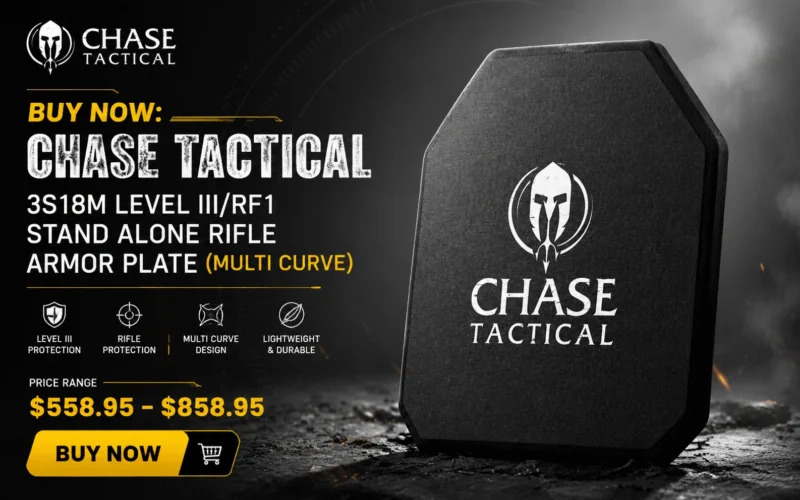
Shop Chase Tactical’s 3S18M Level III/RF1 Stand-Alone Rifle Armor Plate — NIJ-tested, multi-curve, mission-ready:
Major Characteristics Of Level III Armor
Protection from M855 and M80: Another significant advantage of Level III body armor is its ability to stop standard rifle rounds such as the 5.56mm NATO M855 and 7.62mm NATO M80. These rounds are popular in military and police missions and are intended to penetrate most types of armor. The effectiveness of a Level III vest is demonstrated by its ability to adequately repel these higher-velocity threats.
Spalling Consideration (Steel Plates): When a bullet strikes a steel plate, it can fragment and produce metal splinters, a risk known as spalling. Quality steel Level 3 plates address this by using a bonded anti-spall coating on the strike face that captures fragments and significantly reduces the risk of secondary injury. Always confirm that any steel plate you purchase includes an anti-spall or fragmentation-mitigation coating.
Durability: Level III vests are highly durable, providing long-term protection when well-maintained and cared for.
Size and Coverage: Level III vests come in multiple sizes and configurations to accommodate a wide range of body types. They typically cover critical areas such as the torso, and certain models offer optional side panels for added protection.
Thickness: UHMWPE Level 3 plates are typically 0.5 to 0.8 inches thick, making them the lowest-profile option. Steel Level 3 plates are typically 0.25 inches thick but heavier. Ceramic composite Level 3 plates fall between 0.6 and 1.0 inches, depending on construction. Thickness directly affects fit within plate carrier pockets and should be verified against your carrier’s specifications.
Backface Deformation: Although Level III vests provide strong protection, backface deformation (bulging of the rear of the armor when struck) can still occur, leading to blunt-force trauma.
What Is Level III+ Body Armor?
You will often see plates marketed as Level III+. This is a manufacturer designation, not an official NIJ rating. Level III+ plates are engineered to handle threats beyond standard Level III performance most commonly M855 green-tip (5.56mm penetrator) rounds, which are designed to defeat hard materials and can penetrate certain standard Level III plates while stopping short of the full NIJ Level IV armor-piercing requirement.
Think of Level III+ as a performance upgrade within the Level III category. It fills the gap for buyers who face M855 green-tip threats but do not need full Level IV armor-piercing protection and want to avoid the additional weight that Level IV ceramic plates add to the loadout. Level III+ plates are not independently verified by the NIJ as a defined standard, so always review the manufacturer’s published testing data and confirm the specific threats the plate has been tested against.
If your threat environment includes genuine armor-piercing rounds such as the .30-06 M2 AP, only a fully NIJ-certified Level IV plate provides verified protection. No Level III+ designation substitutes for that certification.
Level IV Body Armor
Level 4 body armor plates represent the highest rifle protection rating defined by the NIJ. Under NIJ standard 0101.06, Level 4 plates are tested to stop a single shot of .30 caliber M2 AP (armor-piercing) ammunition at 2,880 feet per second a round capable of defeating Level 3 plates of any material. Level 4 is the only hard armor rating specifically designed for armor-piercing threat resistance and is the standard choice for military operators and personnel in high-threat environments where AP ammunition is a realistic concern.
Level 4 plates are almost exclusively manufactured from ceramic composite materials, typically alumina oxide or silicon carbide, ceramic bonded to a composite backing. The ceramic’s extreme hardness erodes and deforms the bullet’s hardened-steel penetrator on impact, preventing penetration. Unlike steel, which deflects and fragments projectiles, ceramic defeats them through material hardness. This construction is heavier and more expensive than Level 3 options, and ceramic plates can require replacement after taking a direct hit, even when external damage is not immediately visible.
Key Features of Level 4 Armor
- Resists Armor-Piercing Rounds: Level 4 armor is rated to resist penetration from .30-06 M2 AP rounds the standard NIJ AP test projectile. This is the defining capability that separates Level 4 from all lower protection levels. M2 AP rounds feature a hardened steel penetrator core that defeats Level 3 ceramic, steel, and polyethylene plates. Level 4 ceramic composite construction is specifically engineered to stop this penetrator.
- Cost: Level 4 plates typically cost between $250 and $650 per plate, compared to $150 to $350 for Level 3 plates. The higher cost reflects the ceramic materials and manufacturing processes required to achieve AP resistance. Multi-curve and lighter-weight Level 4 models sit at the upper end of that range.
- Durability: Level 4 ceramic plates deliver excellent ballistic performance but are more fragile than steel. Most manufacturers warrant Level 4 ceramic plates for five years from the date of manufacture. Heavier Level 4 plates require proper plate carrier support and positioning to remain functional and comfortable during extended use.
- Thickness: Level 4 ceramic composite plates are typically 1.0 to 1.3 inches thick — noticeably thicker than Level 3 UHMWPE or steel plates. This thickness is a direct function of the ceramic strike face and composite backing required to defeat AP rounds. Verify plate thickness against your plate carrier pocket depth before ordering.
- Size and Weight: Level 4 plates are heavier than equivalent Level 3 plates due to ceramic construction. A two-plate Level 4 setup adds roughly 14 to 16 pounds to your torso. This weight difference has a real impact on mobility, fatigue during extended operations, and total combat load, and should factor directly into your selection decision.
Differences Between Level III And Level IV Armor
The differences between these two levels of body armor do make a huge difference as regards your personal needs:
1. Weight Difference between Level 3 and Level 4 Body Armor Plates
Weight is one of the most significant practical differences between Level 3 and Level 4 plates. Level 3 UHMWPE plates typically weigh between 3 and 5 pounds per plate light enough for most users to wear for a full 8 to 12-hour shift without significant fatigue. Level 3 steel plates weigh 5 to 7 pounds per plate but offer greater multi-hit durability at a lower cost. Level 4 ceramic composite plates typically weigh 6 to 8 pounds per plate. A two-plate Level 4 setup adds 14 to 16 pounds to your torso, compared to roughly 8 to 12 pounds for a comparable Level 3 setup. Over a full operational shift, this difference has a measurable impact on endurance and mobility.
2. Ballistic Protection Level 3 and Level 4 Plates
The core difference in protection between Level 3 and Level 4 plates is armor-piercing resistance. Level 3 plates are designed to resist penetration by standard rifle rounds .223/5.56mm, 7.62×51mm NATO M80 FMJ, and most common rifle calibers but they will not stop armor-piercing rounds. The .30-06 M2 AP carries a hardened steel penetrator core capable of punching through Level 3 steel, ceramic, and polyethylene plates.
Level 4 body armor provides resistance against those same standard rifle threats, plus AP rounds, including the .30-06 M2 AP. This elevated protection comes at the cost of greater weight, a higher price, and reduced plate longevity compared to Level 3 options. For most law enforcement officers, Level 3 protection covers the realistic threat range encountered on patrol. For military operators or personnel in environments where AP rounds are a genuine threat, Level 4 is the appropriate choice.
Note that some Level 3 plates marketed as Level III+ offer resistance against M855 green-tip penetrator rounds that standard Level 3 plates may not reliably stop. If M855 is a specific threat concern but full AP resistance is not required, a Level III+ plate may represent a viable middle ground. See the Level III+ section above for detail.
3. Material Composition: What Level 3 and Level 4 Plates Are Made From
The materials used in each protection level directly determine weight, thickness, durability, and threat resistance:
- UHMWPE (Ultra-High-Molecular-Weight Polyethylene): The lightest Level 3 plate material. UHMWPE plates are water-resistant and provide excellent ballistic resistance for their weight. One limitation: UHMWPE degrades at sustained heat above approximately 150°F, making long-term storage in closed vehicles in hot climates inadvisable.
- Hardened Steel: The most durable Level 3 material. Steel plates offer multi-hit capability and a long service life at lower cost but add more weight than ceramic or polyethylene options. Requires an anti-spall coating to manage fragmentation risk.
Ceramic Composite (Level 3 and Level 4): Ceramic plates balance weight and ballistic performance for Level 3, and are the primary material used in all NIJ-certified Level 4 plates. The ceramic strike face shatters on impact, disrupting the bullet’s structure and absorbing energy. Ceramic plates are more fragile than steel and should be inspected after any significant impact.
4. Proper Storage of Level 3 and Level 4 Body Armor
The Environment could easily affect the integrity of the plates when the armor is stored. Composite body armor can be stored at home because it is less likely to be exposed to extreme temperatures. Steel composite body armor plates are recommended if vehicle storage is intended, especially in the trunk. Steel will withstand temperature fluctuations in vehicle environments, where temperatures can swing dramatically and potentially degrade composite materials. Therefore, steel plates provide additional protection for those who need armor storage in less-controlled climates.
Level 4 ceramic plates require particular care. Most manufacturers warrant them for five years from the date of manufacture, and this expiration reflects internal ceramic matrix degradation — not just visible surface condition. Plates with an unknown impact history should be treated as expired regardless of apparent condition. Always follow the manufacturer’s stated replacement schedule.
4. NIJ Certification and Impact
NIJ is a globally accepted standard for rating body armor effectiveness, but certification is prohibitively expensive for most manufacturers. In place, most opt for independent labs that replicate NIJ testing protocols and test their products. Manufacturers often advertise their plates as meeting or exceeding NIJ standards, so at least some assurance of the armor’s protective capability is provided. Not officially certified by NIJ, the independently tested plates carry some trust when manufactured by a reputable company that has published the testing results, which is quite transparent.
NIJ 0101.07: The 2023 Standard Update
In November 2023, the National Institute of Justice released updated body armor standard NIJ 0101.07, which renames the rifle protection tiers. What was previously called Level III is now designated RF1, and Level IV is now designated RF3. The new standard also introduces RF2 as an intermediate tier covering threats between RF1 and RF3. These designations are the same underlying protection levels under the new nomenclature; the ballistic requirements are closely aligned with the 0101.06 definitions buyers are already familiar with.
The NIJ 0101.06 Compliant Products List remains the authoritative certification reference through at least the end of 2027. Products certified under 0101.06 remain fully valid for procurement and use. When evaluating any plate, Level 3 or Level 4, always confirm its NIJ CPL listing before purchasing.
Level 3 or Level 4: Which Is Right for You?
The right choice depends entirely on your realistic threat environment, how long you need to wear the armor, and your total load tolerance. Here is a practical framework for making that decision.
Choose Level 3 if you:
- Are in law enforcement and need plates you can wear comfortably for a full 8 to 12-hour shift
- Face standard rifle threats 5.56mm, 7.62mm FMJ, .308 but not armor-piercing ammunition
- Need a balance of protection, mobility, and cost — Level 3 UHMWPE plates weigh significantly less than Level 4 ceramic and cost substantially less per plate
- Are you building a plate carrier setup for range training, active shooter response preparedness, or everyday patrol use
- Need armor that can be worn for extended periods without significant fatigue or load management concerns
Choose Level 4 if you:
- Operate in military or high-risk tactical environments where armor-piercing ammunition is a realistic threat
- Are a security contractor, government operator, or special operations personnel in a hostile threat environment
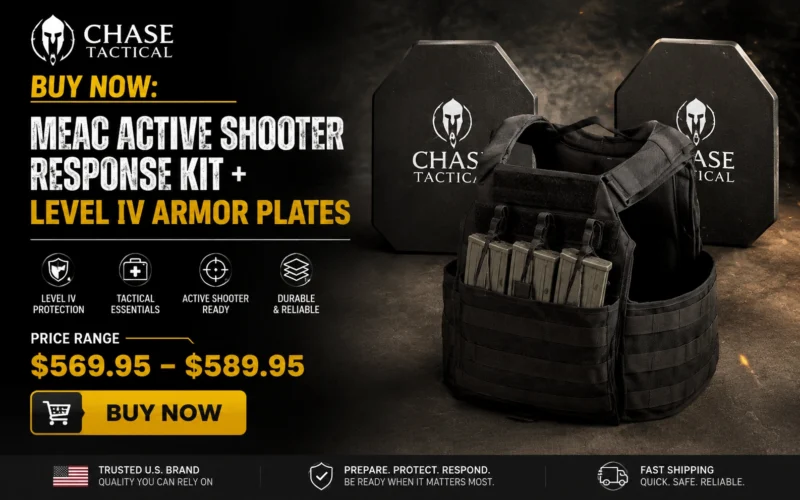
- Are equipping an active shooter response kit and require the highest available protection rating regardless of weight
- Prioritize maximum ballistic resistance over weight and have the physical conditioning and plate carrier setup to manage the added load over an operational period
For most law enforcement officers and civilian preparedness use cases, Level 3 plates strike the right balance between protection and wearability. Level 4 is the correct choice when armor-piercing threats are part of your realistic operational threat profile, not simply the maximum available option.
How To Choose Your Body Armor
Choosing body armor is one of the most crucial decisions for personal protection, and it depends on various factors, including the most likely threat, location, comfort, and legal restrictions. Here is a guide to help you in choosing the right body armor:
Understanding Threat Levels (NIJ Standards)
The NIJ defines the threat protection levels for certified body armor. For rifle-rated hard armor:
Level III (RF1 under NIJ 0101.07): Protects against rifle rounds including 7.62mm FMJ. It is the first protection level rated for rifle threats and is available in ceramic, steel, and UHMWPE materials. This is the most common hard-armor specification used in law-enforcement plate carriers.
Level IV (RF3 under NIJ 0101.07): Protects against armor-piercing rifle rounds up to .30-06 M2 AP. This is the highest NIJ-defined protection level for rifle threats and is manufactured almost exclusively in ceramic composite. It is the appropriate choice where AP ammunition is a credible threat.
Level III+ (manufacturer designation, not NIJ standard): Plates marketed as Level III+ typically offer resistance to M855 green-tip and similar penetrator threats beyond standard Level III performance, but do not meet the full Level IV AP requirement. Review the manufacturer’s independent test data carefully for any plate carrying this designation.
For a full breakdown of all body armor protection levels from Level IIA through Level IV, see Chase Tactical’s complete armor levels guide.
Soft vs. Hard Armor
Soft Armor: Soft armor is made of flexible materials, including Kevlar. Law enforcement primarily wears it because it is light and comfortable. Its levels are mostly IIA, II, and IIIA.
Hard Armor: Hard armor is made with ceramic, steel, or polyethylene plates. Hard armor generally protects against guns, but feels heavy and clumsy. It should be rated Level III or IV.
Comfort and Fit
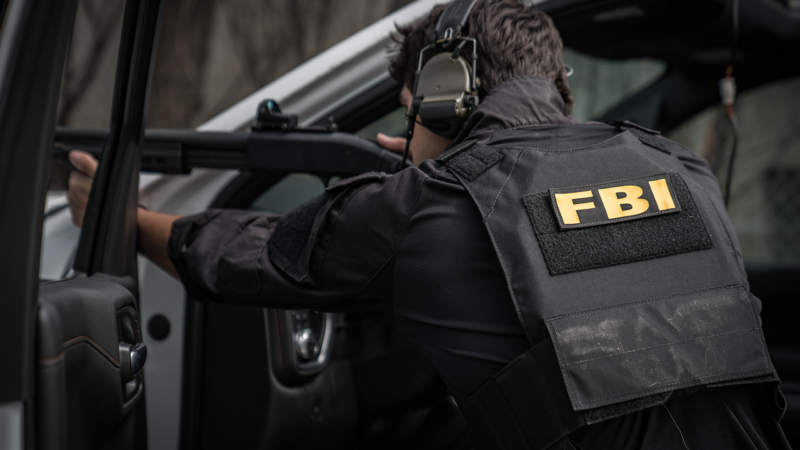
To fully protect, body armor must be fitted very well. It must cover your inner body organs (heart, lungs, liver) yet not be too tight or loose. Choose armor with adjustable straps and sizing.
Concealed body armor is more practical and generally soft for standard use. If you carry extra gear, overt armor with MOLLE webbing would be useful.
Material
Body armor is made from different materials:
Kevlar: Used extensively in soft armor. It’s light, strong, and flexible.
Ceramic Plates: These are lightweight but fragile. They stop high-powered rifle rounds but may break after impact.
Steel Plates: Steel body armor is very durable and offers multi-hit capability. However, it is heavy and likely to cause spalling (metal splinters).
UHMWPE (Ultra-High-Molecular-Weight Polyethylene): The lightest hard armor material available for Level 3 protection. UHMWPE plates offer excellent ballistic resistance for their weight and are the preferred choice for operators who need to minimize plate weight during extended wear. Note that UHMWPE can degrade if stored at sustained high temperatures.
Certification
Ensure the armor you use is NIJ-certified or meets equivalent standards in your area. Do not use untested armor, as it most likely does not provide the protection it claims to offer.
Choosing a Plate Carrier for Level 3 or Level 4 Plates
The plate carrier you choose is as important as the plates themselves. A carrier that does not properly support your plates will shift under load, reduce protection by misaligning coverage, and cause fatigue during extended wear. When selecting a plate carrier for Level 3 or Level 4 plates, look for:
- Correct pocket dimensions: The carrier’s plate pockets must match your plate size (typically 10×12 for standard SAPI sizing) and depth. Level 4 ceramic plates at 1.0 to 1.3 inches thick require deeper pockets than thinner Level 3 steel or UHMWPE plates.
- Load-bearing capacity: Level 4 plates are significantly heavier. Ensure the carrier’s shoulder and side-strap system is rated to distribute that weight comfortably across your torso throughout your operational period.
- MOLLE compatibility: MOLLE webbing allows you to configure pouches, IFAKs, and accessories around your specific mission requirements without additional infrastructure.
- Cummerbund adjustment: A properly fitted cummerbund keeps plates seated correctly during movement. Choose a carrier with micro-adjustable cummerbund sizing for a precise fit.
Browse Chase Tactical’s full range of plate carriers designed and tested alongside our body armor products to ensure full compatibility with both Level 3 and Level 4 plate configurations. For guidance on matching the right plates to your specific carrier, see our guide to choosing the right ballistic plates for your plate carrier.
Conclusion
Level 3 and Level 4 body armor plates serve distinct purposes and threat profiles. Level 3 plates provide reliable rifle protection at a lower weight and cost, making them the practical choice for law enforcement, range use, and extended patrol operations where AP ammunition is not a primary concern. Level 4 plates add armor-piercing resistance at the cost of greater weight, higher price, and reduced plate longevity. The correct choice for military operators and personnel in environments where AP threats are realistic.
The right selection comes down to your specific threat environment, the duration you need to wear the armor, and your total load tolerance. Whatever level you choose, verify NIJ certification against the official Compliant Products List, confirm correct fit in your plate carrier, and maintain your armor according to the manufacturer’s guidance. The armor only protects you if it is correctly fitted, properly maintained, and appropriate for the threats you actually face.
Frequently Asked Questions
Is Level IV body armor legal for civilian use?
Civilians are authorized to purchase and wear Level IV body armor, though some states have regulations limiting civilians’ possession of body armor.
How often is body armor to be replaced?
Most body armor manufacturers recommend replacing it every 5 to 10 years, depending on usage and maintenance. Inspect your armor often for wear and damage.
Can I wear body armor plates concealed?
Hard armor plates in a plate carrier are not concealable in practice due to their thickness and rigidity. Concealable soft armor vests rated at Level IIIA can be worn discreetly under clothing and provide handgun protection. For concealed applications requiring rifle protection, a low-profile plate carrier worn under a jacket is the most practical solution, though it is not as concealable as soft armor.
What is the difference between Level III and Level III+ body armor?
Level III+ is a manufacturer designation, not an official NIJ standard for plates that exceed standard Level III performance. Level III+ plates typically provide resistance against M855 green-tip (5.56mm penetrator) and similar high-velocity threats that can defeat standard Level III plates, while stopping short of the full NIJ Level IV requirement for armor-piercing resistance. Always review the manufacturer’s independent test data for the specific threats against which a Level III+ plate has been verified.
How much do Level 3 and Level 4 body armor plates weigh?
Level 3 UHMWPE plates typically weigh 3 to 5 pounds per plate. Level 3 steel plates weigh 5 to 7 pounds per plate. Level 4 ceramic composite plates generally weigh 6 to 8 pounds per plate. A full two-plate Level 4 setup adds approximately 14 to 16 pounds to your torso, compared to 8 to 12 pounds for a Level 3 UHMWPE setup. Confirm exact weights against the specific product specifications before purchasing.
What does NIJ 0101.07 mean for Level III and Level IV ratings?
NIJ 0101.07, released in November 2023, updated the nomenclature for rifle armor protection tiers. Level III is now called RF1, and Level IV is now called RF3 under the new standard. A new intermediate tier, RF2, was also introduced. The underlying ballistic protection requirements remain closely aligned with the 0101.06 definitions. NIJ 0101.06 certified products remain valid through at least the end of 2027. When evaluating any plate, verify its status on the NIJ Compliant Products List.
Can Level 3 plates stop armor-piercing rounds?
No. Standard Level 3 plates, including steel, ceramic, and UHMWPE, are not rated to stop armor-piercing rounds. The .30-06 M2 AP carries a hardened steel penetrator that will defeat Level 3 plates of all materials. Only NIJ-certified Level 4 plates provide verified armor-piercing protection. Level III+ plates may provide some resistance to green-tip penetrators but have not been verified against M2 AP or equivalent true AP threats.