





Ukraine Says Drone Evacuated Wounded Soldier in Combat First

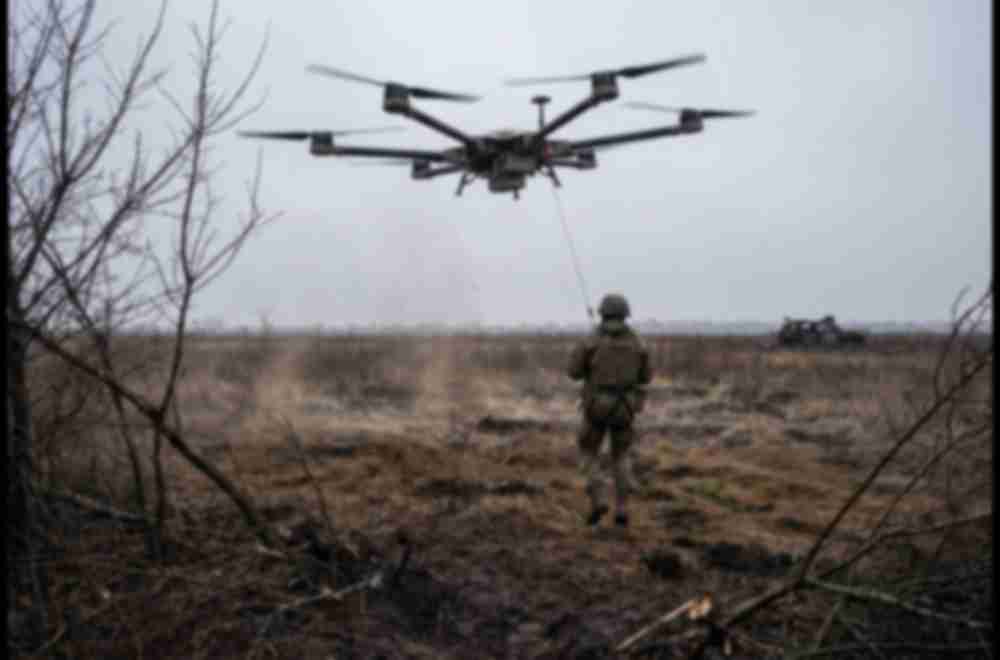
Ukrainian forces say they have used a heavy-lift drone to pull a seriously wounded soldier out of a front-line position, an evacuation the units involved describe as the first of its kind. The Ukrainian military and drone maker Gurzuf Defense announced the operation on Oct. 19, releasing video of a six-rotor aircraft carrying the casualty away from ground rescuers could not safely cross. The date and sector of the front were not disclosed, and the "world's first" label is the participants' own claim, not an independently established record.
The soldier had spent close to 500 days at an isolated position, kept supplied by drone drops of food, water, ammunition and medicine. After a severe injury, ground evacuation was ruled out by Russian drone activity and mined terrain. Rescuers first sent equipment with carabiners to the soldier, then a heavy-lift drone carrying a winch. He clipped himself to the system while comrades guided him remotely, and the aircraft moved him to a safer position, where other troops took over and arranged transport to a hospital. The flight lasted one hour, 14 minutes and 36 seconds. The units say his life is no longer in danger.
Newsweek reported that it could not independently verify the footage or establish when or where it was filmed. Gurzuf co-founder Pavlo Feldblium called air rescue "a last resort when there is no other way to save a person" and said each mission must be planned individually.
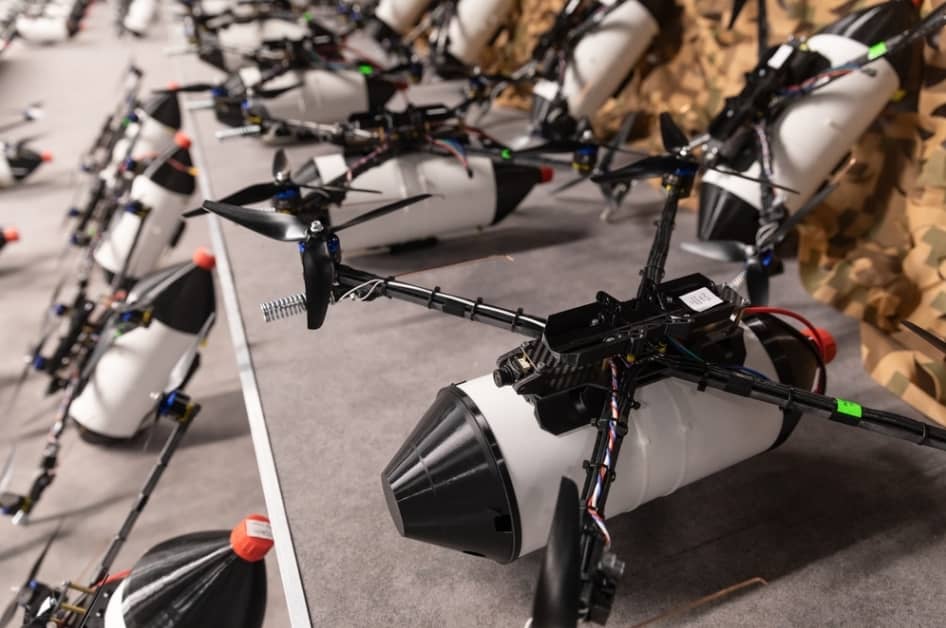
The drone was a Heavy Shot Ayudag-6, a six-motor hexacopter built by Gurzuf Defence, normally a logistics and munitions carrier. Reported figures put its range at up to 25 km, operating altitude at 150 to 300 meters, weight at about 98 kg and payload at 70 to 90 kg. For this mission it was modified. According to New Atlas, citing a Gurzuf blog post, the aircraft carried Starlink communications with anti-jamming capability, plus an electric cargo winch, night-vision and thermal imaging, and airframe changes meant to limit the swinging of the person hanging beneath it.
Several details do not line up, and no source reconciles them. Most reports say the casualty served with the 30th Separate Mechanized Brigade while the 92nd Assault Brigade supplied the drone team, but New Atlas identifies him as Kostiantyn, 49, of the 92nd. Most accounts describe nearly 500 days alone at the position; New Atlas instead describes a man trapped in a shelled "grey zone" and resupplied for several days. The reported mission length of 62 km (39 miles) is far beyond the stated 25 km maximum range. And New Atlas lists a 130 kg maximum lift where other reports give a 70 to 90 kg payload. Until the units publish a fuller account, treat these as unresolved.
Ukraine already leans heavily on unmanned ground vehicles for casualty evacuation. Ukraine's Third Army Corps reported that its ground robots evacuated more than 600 wounded soldiers in their first year, across more than 18,000 missions. Yet AP reporting summarized by the same outlet says robots can take two to three hours to reach some positions, and that kill zones in places stretch 10 to 15 km or more, with mud, craters, rivers, mines and drones able to stop them.
Aerial evacuation targets exactly that gap. One analysis argues drones are more likely to complement helicopters than replace them, moving casualties to points safe enough for crewed aircraft to land. It adds that analysts expect helicopter medevac from the front to become infeasible in a high-end war with China, and notes that heavy-lift drones have already made short rescues during floods in China and Pakistan.
Days before the Ayudag-6 announcement, AP had exclusive access to a field demonstration of StarGate, a purpose-built medevac drone from Ukrainian firm SkyFall, held Oct. 14 at an undisclosed test site. AP reported a payload of up to 150 kg (330 lb), a one-way range of about 15 km, a cruise speed of 65 km/h, a price of at least $50,000 per system and a target of up to 1,000 units a month by the end of 2026. DroneXL adds that the aircraft carries an enclosed stretcher pod, flies over Starlink and SkyFall's own L-Link with AI navigation for jammed environments.
StarGate has been handed to a combat brigade for front-line evaluation. One commander told AP his unit needs at least a month of flights before it can produce meaningful success figures. SkyFall says the drone kept flying after losing an arm, but has published no reliability data, and Euronews likewise noted that real combat performance has not been independently verified.