








NIJ Certified Level IV Plate for AR-15 Protection


Nothing can compare to the sense of security offered by a trusted, high-quality body armor system in personal protection. Advances in body armor technology have enabled civilians, police officers, and soldiers to protect themselves against different hazards. Among the range of armor, the NIJ-certified Level IV plate ranks as one of the strongest protective choices, particularly when used with an AR-15 rifle. Get top-tier protection with Chase Tactical Level IV Armor Plates!
Quick answer: A Level IV plate is the highest rifle rating under NIJ Standard 0101.06. It is tested to stop a single hit from a .30-06 M2 armor-piercing (AP) round traveling about 2,880 feet per second, and because it sits at the top of the scale, it also defeats the lower threats below it, including 9mm, .44 Magnum, and 7.62mm NATO. Standard 5.56mm rounds from an AR-15, including M193 and M855 green tip, are well within its capability, so Level IV is the rating to choose when armor-piercing ammunition is a realistic threat. For most civilians in the United States, it is legal to buy and own.
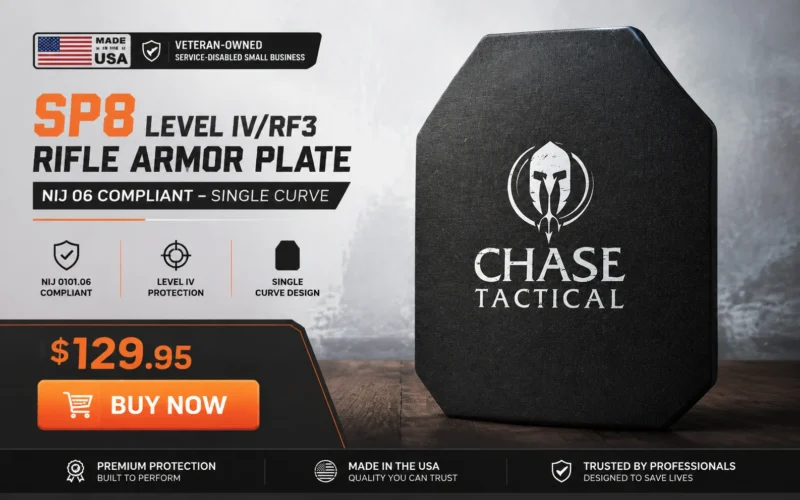
What Is NIJ Certification?
The NIJ is a U.S. Department of Justice division that establishes standards for various law enforcement equipment, including body armor. NIJ Certification guarantees that a body armor system has been tested and can effectively stop bullets, shrapnel, and other projectiles. An NIJ-compliant armor is highly reliable and effective for the intended use.
Seeing “NIJ Certified” on a body armor plate means it has been tested to the maximum and meets stringent criteria, safeguarding you from ballistic threats.
NIJ Standard 0101.06: The Standard Behind Level IV
When people search for “NIJ certified” or “NIJ compliant” Level IV plates, the standard they are really asking about is NIJ Standard 0101.06. This is the U.S. testing standard that defines the threats, velocities, and pass-or-fail rules a plate must meet, and it is the standard the NIJ Compliance Testing Program uses to decide which models qualify for the NIJ Compliant Products List (CPL).
Level IV is the highest rifle rating in that standard. To qualify, a plate is tested to stop a single hit from the .30 caliber M2 armor-piercing round (.30-06 M2 AP, the “black tip”) at a velocity of roughly 2,880 feet per second. That round has a hardened steel core built to punch through materials that stop ordinary bullets, which is why Level IV is the benchmark for armor-piercing protection.
Two points are worth understanding before you buy. First, because Level IV sits at the top of the scale, a compliant plate is also expected to defeat the lower threats beneath it, including common handgun rounds and 7.62mm NATO rifle rounds. Second, the Level IV certification only requires a plate to survive a single armor-piercing hit. Multi-hit performance is a feature some manufacturers design and validate for separately, so it should be confirmed for the specific plate rather than assumed.
What is a Level IV Plate?
Level IV is among the highest protective ratings found in personal armor. It is built to deflect high-velocity armor-piercing rounds and, as such, is the best choice when confronted with heavy-duty threats.30-06 armor-piercing rounds (which are frequently used in military-grade sniper and other high-powered rifles).
In the NIJ levels of protection, the plates are ranked from Level I to Level IV according to the caliber and power of rounds that they can withstand:
- Level I: Stopping low-velocity rounds such as small calibers (.22, 9mm)
- Level II: Stopping medium velocity rounds such as 9mm and .40 S&W
- Level III: Is made for high-velocity rounds such as 5.56mm NATO and 7.62mm NATO
- Level IV: Deflects high-caliber armor-piercing rounds such as the .30-06 AP and even bigger, more powerful ones.
Why Are Level IV Plates Necessary for AR-15 Protection?
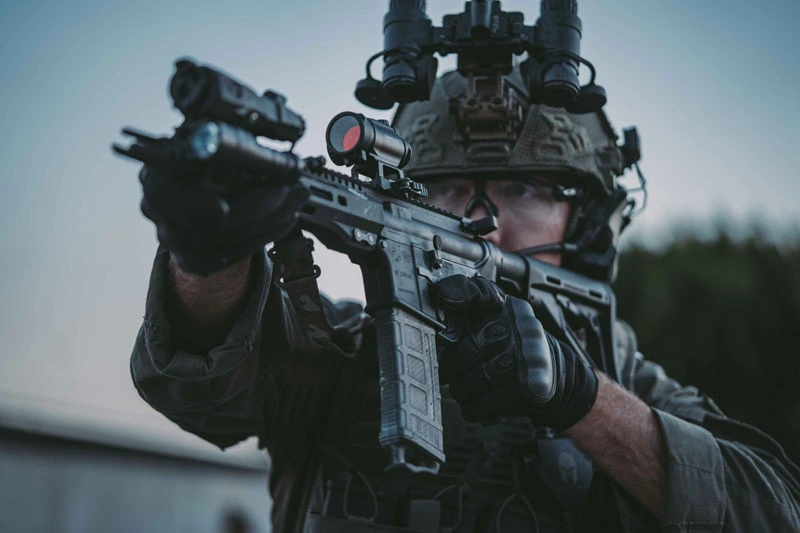
The AR-15 is one of the most widely used firearms in the United States and worldwide. It is renowned for its versatility, lightweight, and semi-automatic operation. It fires 5.56mm NATO and .223 Remington ammunition, both classified as high-velocity threats.
A Level III or III+ plate already stops most common 5.56mm rounds, including standard M193 and M855 green tip. Where Level IV earns its place is against armor-piercing ammunition, such as steel-core rounds and the .30-06 M2 AP threat, that can defeat soft armor and even some Level III plates. If there is any chance of facing armor-piercing fire, that is when a Level IV plate becomes the right call.
1. Armor-Piercing Round Protection
One of the AR-15 platform’s characteristics is its versatility in accepting different types of ammunition. Armor-piercing bullets, such as the M855 Green Tip (commonly used with military models of the AR-15), can penetrate soft armor or even certain Level III plates.
Level IV plates are rated to stop armor-piercing ammunition, providing maximum protection in a worst-case scenario.
2. High-Velocity Threats
The 5.56mm NATO cartridge, which the AR-15 generally uses, is a high-velocity cartridge that can easily penetrate lower levels of armor. A Level IV plate is designed to withstand such projectiles and provide consistent protection, even at longer ranges.
3. Multi-Hit Capability
In the real world, you might not face a single shot but a rapid succession of them. It is worth knowing that the NIJ Level IV certification itself only requires a plate to stop one armor-piercing hit, so multi-hit performance is something manufacturers design and validate beyond the base rating. Many quality Level IV plates are built and tested to take more than one round, which adds a meaningful margin of safety in an active-shooter or combat situation.
4. Versatility
The AR-15 is a versatile rifle, frequently employed for tactical and self-defense applications, which can include responding to varying levels of threats. A Level IV plate is to be ready for various possible threats, ranging from close-quarters combat to long-range shots, where more velocity rounds might be employed.
Level III vs Level IV: Which Does Your AR-15 Actually Need?
A higher number does not automatically mean a better plate for your situation. Level III and Level IV are tested against different threats and, under NIJ Standard 0101.06, against a different number of hits. The table below shows the practical difference so you can match the plate to the rounds you actually expect to face.
| Factor | Level III | Level IV |
| NIJ 0101.06 test round | 7.62mm NATO (M80 ball), 6 hits | .30-06 M2 AP, 1 hit |
| Stops common AR-15 5.56 (M193 / M855) | Yes (III+ recommended for M855) | Yes |
| Stops steel-core .30-06 AP | No | Yes |
| Multi-hit (per certification) | Tested to 6 hits | Tested to 1 hit |
| Typical material | UHMWPE or steel | Ceramic with composite backer |
| Best for | Most common rifle threats | Armor-piercing threats |
In short, if your main concern is ordinary 5.56mm fire from an AR-15, a quality Level III or III+ plate is often enough and is usually lighter. If armor-piercing ammunition is part of the threat picture, Level IV is the rating to choose.
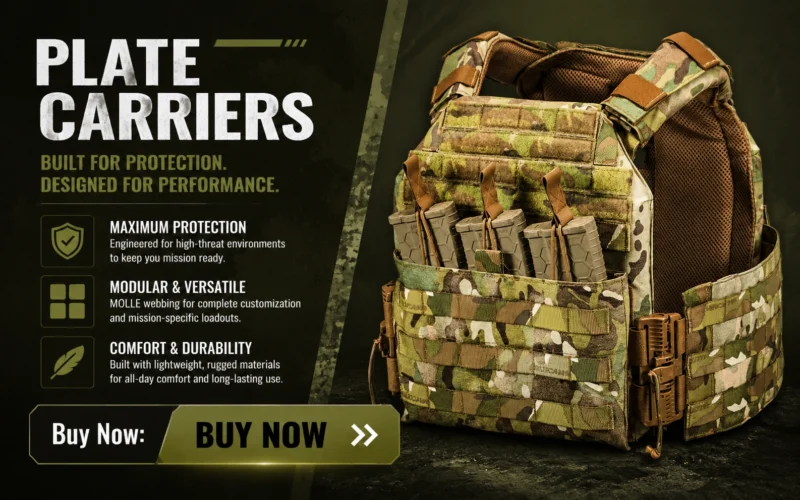
A plate only protects you if it is carried correctly. Pair your Level IV plates with a properly fitted carrier.
Types Of Materials Used in Level IV Plates
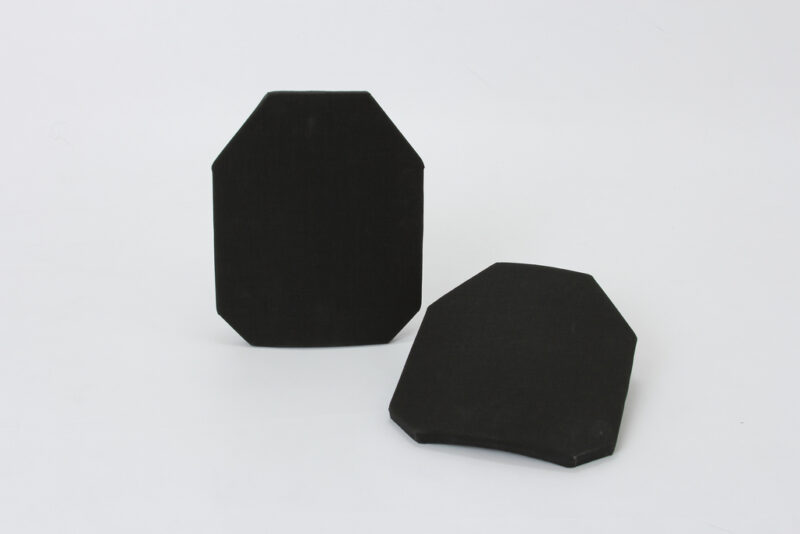
Level IV plates are manufactured from materials that offer exceptional ballistic resistance and durability, enabling them to stop high-speed armor-piercing bullets and provide the necessary protection. The most frequently used materials for Level IV armor plates are:
1. Ceramic Composite
Ceramic plates are among the most widely used options for Level IV protection. They consist of materials such as boron carbide, silicon carbide, or alumina, which are extremely hard and capable of halting high-energy projectiles. The ceramic absorbs and dissipates the bullet’s energy, cracking and shattering the projectile upon impact.
The disadvantage of ceramic plates is that they are quite brittle compared to other materials and can crack upon a direct impact. They usually have a backing material to contain the projectile fragments and avoid spall (fragments that shatter off the plate and can be injurious).
2. Steel
Steel plates, often made from AR500 steel, are another option for Level IV armor. While steel plates are very resilient and capable of stopping armor-piercing rounds, they are heavier and less comfortable to wear for extended periods than ceramic plates.
Yet, they are frequently less expensive than ceramic plates and provide excellent protection, especially for those requiring ultimate ruggedness.
3. Polyethylene/Composite
Certain Level IV plates utilize polyethylene or composite materials, which are lighter than steel and ceramics but offer excellent protection against high-caliber ammunition. Composite and polyethylene materials are frequently layered to maximize stopping power while remaining within reasonable weight constraints.
Selecting the Proper Level IV Plate for AR-15 Protection
Selecting the proper Level IV plate for AR-15 protection involves consideration of such factors as:
Weight: The plate’s weight will directly impact your mobility. If you anticipate wearing it for extended periods, opt for the lighter version (e.g., a composite or polyethylene plate).
Durability: Depending on how you’ll use the plate (e.g., law enforcement, military, personal defense), you may prefer a more durable plate. Steel plates, for instance, are extremely hardy but also heavier.
Cost: Ceramic and composite plates can be expensive, but they often offer a better balance of protection and weight. Steel plates are generally cheaper but heavier and less comfortable.
Size and Fit: Ensure the plate is sized correctly to cover vital areas such as your chest and back. Proper fit is essential for effective protection and comfort.
Conclusion
NIJ-certified Level IV plates provide the greatest protection from ballistic threats and are best used with the AR-15 rifle. As a tactical operator, member of the military, or civilian seeking advanced personal protection, a Level IV plate is your best option for protection against high-velocity and armor-piercing rounds.
When selecting body armor, consider the weight, material, cost, and comfort to find the right balance of protection and mobility.
Frequently Asked Questions
Are Level IV plates legal to own?
In the United States, Level IV plates are legal for most civilians to buy and own. Federal law prohibits anyone convicted of a violent felony from possessing body armor, and a few states or localities add their own restrictions, so you should confirm the rules where you live before purchasing.
What caliber can a Level IV plate stop?
A Level IV plate is tested to stop a single hit from a .30-06 M2 armor-piercing round, which is the most powerful threat in the NIJ rifle test. Because Level IV sits at the top of the scale, it is also expected to defeat the lower threats below it, including common handgun rounds and 7.62mm NATO rifle rounds.
Does a Level IV plate stop .30-06 armor-piercing rounds?
Yes. The .30-06 M2 AP round is the exact threat used to define Level IV under NIJ Standard 0101.06. A compliant Level IV plate is tested to stop that round at roughly 2,880 feet per second, which is why Level IV is the rating to look for against steel-core, armor-piercing rifle threats.
Will a Level IV plate stop rounds from an AR-15?
Yes. Standard 5.56mm rounds fired from an AR-15, including M193 and M855 green tip, are well within what a Level IV plate is built to handle. A Level III or III+ plate already stops most common 5.56mm rounds, so Level IV is the right choice mainly when armor-piercing ammunition is part of the threat.
What does NIJ 0101.06 compliant mean?
NIJ Standard 0101.06 is the U.S. testing standard that sets the threats, velocities, and pass-or-fail rules for body armor. A plate described as NIJ 0101.06 compliant has been built and tested to meet that standard, and models that pass at an NIJ-approved lab can appear on the NIJ Compliant Products List.
Are Level IV plates rated for multiple hits?
The NIJ Level IV certification only requires a plate to stop a single armor-piercing hit, so multi-hit performance is not part of the base rating. Many manufacturers design and validate their plates to take more than one hit, but you should check each plate’s stated multi-hit testing rather than assume it.
Will a Level IV plate stop all bullets?
No. Level IV plates provide the highest standard rifle protection and are built mainly to stop high-velocity, armor-piercing rounds and larger calibers. They are not rated for every specialized threat, such as certain incendiary or explosive rounds, so it is important to match the plate to the threats you actually expect.
How long does a Level IV plate last?
The service life of a Level IV plate depends on its material and how it is handled. Ceramic plates typically come with a 5-year warranty and should be inspected for cracks after any impact or drop, while steel plates last longer but still require regular inspections for damage. Always follow the manufacturer’s care and replacement guidance.