







What Plate Carrier Does the Army Use

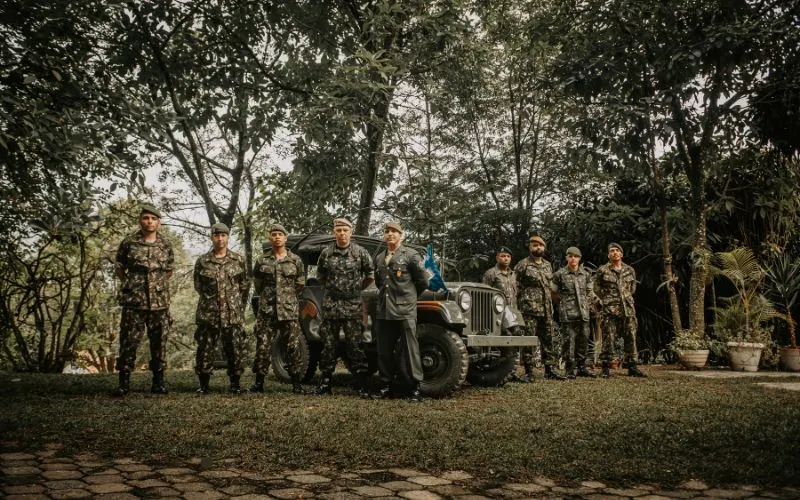
When it comes to military equipment, the plate carrier sits near the top of the list for soldiers who need to stay alive under fire. It is the vest that holds the hard armor plates protecting the chest, back, and vital organs from rifle rounds and shrapnel, and it has to do that job without slowing a soldier down.
The U.S. Army has rebuilt this system more than once over the past two decades, trading bulk for mobility as missions and threats changed. This guide covers what the Army actually issues today, how that system got here, and how it compares to the carriers available to civilians and law enforcement.
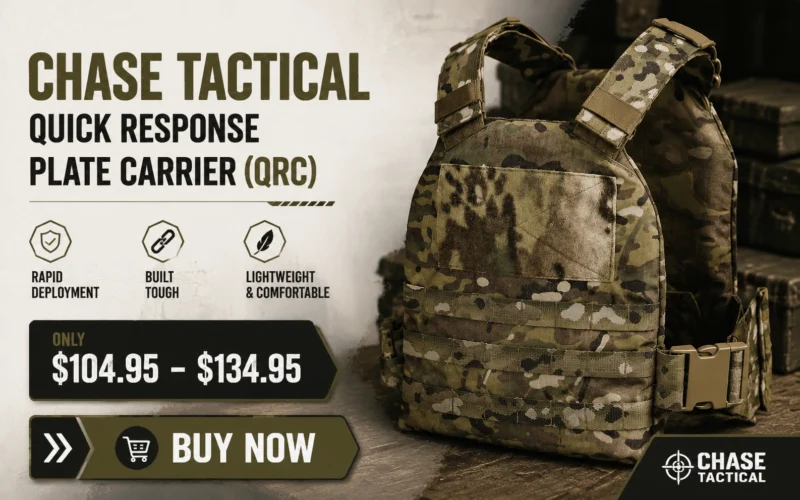
Looking for a carrier built to the same standard? See Chase Tactical’s Quick Response Plate Carrier (QRC), a SAPI-cut, MOLLE-ready carrier designed around the same plate compatibility as military-issue systems.
What Is A Plate Carrier?
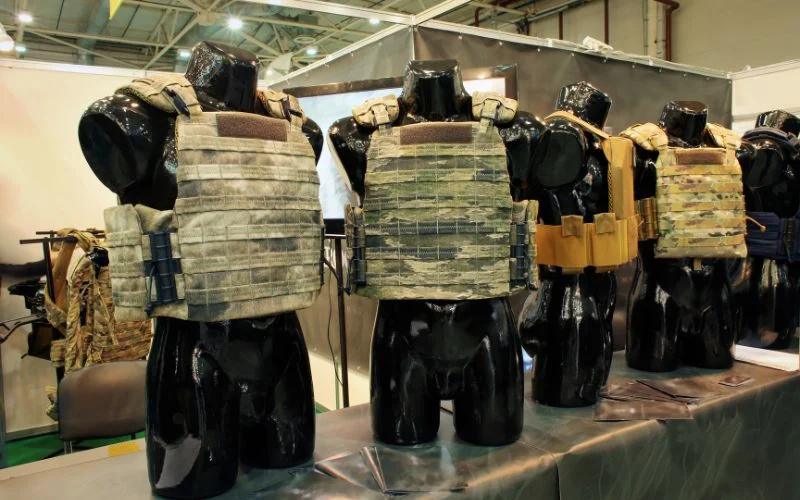
A plate carrier is a vest built to hold rigid ballistic plates over the chest and back. Unlike soft body armor alone, which stops handgun rounds and fragmentation, a plate carrier exists to carry hard armor: ceramic, steel, or polyethylene plates rated to defeat rifle threats. The shell is typically 500D or 1000D nylon or Cordura, chosen because it holds stitching and MOLLE webbing under load without adding much weight of its own.
What separates a plate carrier from an older load-bearing vest is that it is built around the plate first and the load second. The cummerbund, the shoulder straps, and the webbing all exist to keep those plates positioned correctly while a soldier moves, kneels, and fires from awkward positions.
Soldiers also carry magazines, medical supplies, and communications gear on the same platform, so the carrier doubles as the mounting point for that equipment. Most current carriers run a laser-cut or woven MOLLE grid across the front, back, and sides, which is why two soldiers issued the same base carrier can end up with two very different loadouts depending on their role in the squad.
Evolution Of The U.S. Army Plate Carrier System
The Army’s plate carrier has gone through three real generations since the early 2000s, and each one was a direct response to complaints from soldiers wearing the one before it. Materials got lighter, cuts got smaller, and the design priority shifted steadily from full-body coverage toward speed and mobility.
The Interceptor Body Armor (IBA) system, fielded in the late 1990s and carried through the early years of Iraq and Afghanistan, set the baseline: soft armor panels front and back with small hard plate inserts on the sides. It worked, but it ran heavy, trapped heat, and did not move well when a soldier had to get up and down repeatedly, which is most of what patrol work actually looks like. The body armor that followed it had a clear mandate: cut weight without cutting protection.
The Improved Outer Tactical Vest (IOTV) replaced the IBA and addressed a lot of those comfort complaints. It reduced weight, improved ventilation, and gave soldiers more adjustment points to fit the vest to their own build rather than forcing a one-size compromise. It was still, by current standards, a heavy full-coverage system, better suited to a static checkpoint than a long foot patrol over rough terrain.
That gap between full coverage and real mobility is what pushed the Army toward a minimalist carrier built specifically for combat operations, which is where the current Soldier Plate Carrier System comes in.
More recently, the Army has also started fielding the Modular Scalable Vest (MSV), a next-generation carrier built to address the limitations of both the IOTV and the early SPCS. The MSV runs lighter than the IOTV, scales more cleanly between low-threat and high-threat configurations, and is designed to integrate with the Army’s broader body armor modernization programs. Taken together, these three systems mark a real generational shift in how soldiers carry protection in the field.
Soldier Plate Carrier System (SPCS)
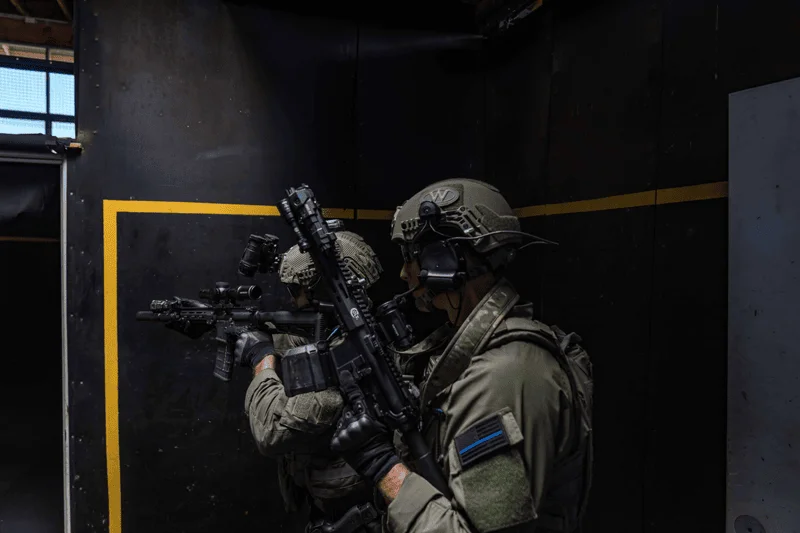
The SPCS is the current standard-issue plate carrier for U.S. Army soldiers, built to be sleeker and more customizable than anything that came before it. The first generation entered service around 2010, driven by a straightforward requirement: give soldiers rifle-rated protection without the weight and bulk that made the IOTV unpopular for high-tempo missions.
The SPCS is built for combat operations where mobility, speed, and agility matter as much as protection. It is designed to be worn alongside a helmet, tactical gloves, and a war belt, so the carrier’s job is to handle chest and back protection while other pieces of kit cover the rest of the loadout.
A fully loaded SPCS running Level IV ESAPI plates typically comes in between 20 and 30 pounds (9 to 14 kg), depending on how many side plates, pouches, and accessories are attached. The carrier shell itself is significantly lighter than the IOTV’s, which is the main reason it got adopted for high-tempo operations that demand sustained movement. It ships in standard military colorways, Multicam and OCP, with sizing from small through extra-large to fit a wide range of body types.
Beyond protection, the SPCS functions as a mounting platform for everything a soldier carries into a fight. Pouches for ammunition, radios, and medical kits attach directly to the MOLLE grid, which is why plate carrier setups vary so much from one soldier to the next even within the same unit.
The SPCS has proven adaptable across counterinsurgency work and conventional combat scenarios alike. It does not guarantee complete protection against every ballistic threat a soldier might face, but it meaningfully reduces the risk of lethal injury while keeping soldiers mobile enough to stay effective.
Key Features Of The Soldier Plate Carrier System
The SPCS balances protection, comfort, and function under real combat stress, and its modular structure lets soldiers personalize their loadout without losing mobility. Here is what actually makes it work.
Ballistic Protection and Plate Materials
The SPCS is significantly lighter and more streamlined than the body armor systems it replaced, which matters for soldiers who need to move quickly and efficiently in a firefight. It is built around standard SAPI/ESAPI plate cuts, so it accepts ceramic, steel, or polyethylene plates depending on mission requirements and weight tolerance.
Ceramic and Steel Armor Plates
Ceramic plates, most commonly the Enhanced Small Arms Protective Insert (ESAPI), are the Army’s standard choice for rifle-threat protection. Ceramic composite construction defeats armor-piercing rounds by fracturing the projectile on impact and dissipating the energy before it can penetrate.
These plates meet Level IV protection under the NIJ 0101.06 standard and run lighter than equivalent steel plates, though they hold up less well to repeated hits in the same spot. Steel plates are more durable across multiple impacts but add real weight to the carrier, which is why they see less use in standard-issue setups for deployed troops.
Polyethylene (PE) Plates
Ultra-high-molecular-weight polyethylene (UHMWPE) plates offer a weight advantage over both ceramic and steel. PE plates can meet NIJ Level III or Level IV protection at roughly half the weight of a comparable ceramic plate, which is why they show up increasingly often in modular configurations where every pound on the carrier matters. The SPCS accepts standard SAPI/ESAPI cuts, so it works with ceramic, PE, or multi-curve plates from multiple manufacturers, including options built to meet military procurement specifications.
Lightweight and Low-Profile
Weight is the single biggest complaint soldiers had about earlier carriers, and the SPCS was built directly in response to it. A lower-profile cut and a lighter carrier shell mean less drag on the shoulders and less bulk to work around when getting in and out of vehicles or moving through tight spaces, without giving up the plate coverage that actually matters in a firefight.
Improved Comfort and Weight Distribution
The SPCS is built around soldier ergonomics, not just plate coverage. Padded shoulder straps and a padded cummerbund distribute weight evenly across the torso, which cuts down on fatigue, friction, and chafing during a long wear. Moisture-wicking materials in the lining help keep soldiers cooler and drier in hot or humid environments, which matters more than most people realize on a multi-day deployment in the desert or jungle.
Quick Release Mechanism
The quick-release system is a small feature with a big job. Pulling a cord or handle disengages the entire vest from the soldier’s body in seconds, which matters enormously if a soldier is wounded and medics need immediate access, or if the vest needs to come off fast during an emergency evacuation.
Modularity, MOLLE Integration, and Compatibility
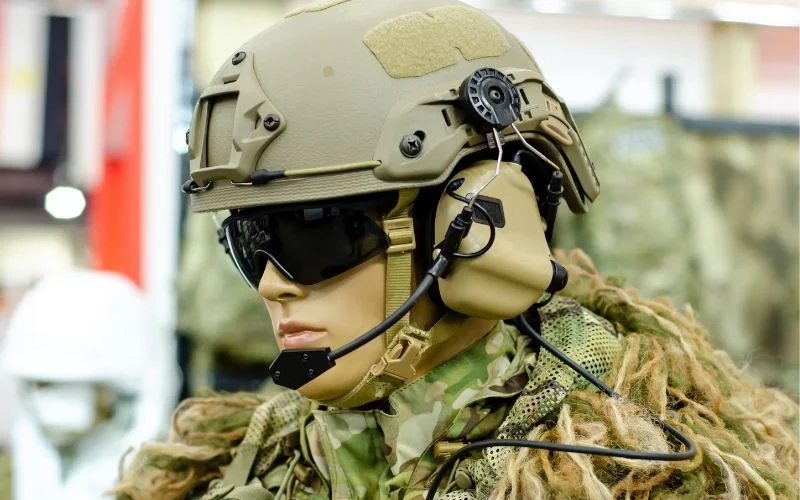
The SPCS is designed to work as one piece of a larger system, alongside helmets, war belts, and hydration carriers. Its MOLLE-based modular design keeps every other piece of a soldier’s loadout securely attached and accessible during a firefight, rather than treating the carrier as an isolated piece of equipment.
Configuration, Pockets, and Civilian Options
The SPCS supports a wide range of configurations through its MOLLE webbing and integrated pockets. Soldiers attach magazine pouches, dump pouches, medical kits, radio pouches, and admin panels to build a loadout specific to their role and mission, and that load-bearing design spreads weight evenly across the torso to reduce strain on long patrols.
Need Level IV coverage to match? Chase Tactical carries plate carriers and body armor built to NIJ 0101.06 threat levels. Browse the full body armor lineup to find a setup that fits your role.
The SPCS is military-issue, but civilians can legally purchase equivalent plate carriers that share the same MOLLE architecture and SAPI plate compatibility. Tactical gear brands including Chase Tactical build carriers to the same functional standard as military-issue systems, which gives law enforcement, security professionals, and preparedness-minded civilians access to comparable ballistic protection and modularity without going through military supply channels.
SPCS vs. IOTV vs. MSV: How Army Plate Carriers Compare
Understanding how these three systems differ explains why the SPCS became the standard for combat operations, and where the MSV fits into the Army’s current body armor posture.
| Feature | IOTV | SPCS | MSV (Modular Scalable Vest) |
| Introduced | 2007 | 2010 | Around 2019 |
| Primary Purpose | Full-torso protection, all-threat environments | Mobility-focused combat operations | Scalable protection, modular configurations |
| Plate Compatibility | ESAPI / XSAPI (SAPI cut) | ESAPI / XSAPI (SAPI cut) | ESAPI / XSAPI (SAPI cut) |
| Weight (carrier only) | Approximately 13 to 16 lbs | Approximately 5 to 8 lbs | Approximately 5 lbs |
| Quick Release | Yes (limited) | Yes | Yes |
| MOLLE Webbing | Yes | Yes | Yes |
| Side Plate Pockets | Yes (integrated) | Optional | Optional (modular add-on) |
| Best Suited For | Full-threat static operations | High-mobility combat missions | Variable-threat, scalable missions |
The IOTV offered the most complete out-of-the-box coverage, but at a weight cost that worked against troop mobility. The SPCS addressed that by stripping the carrier down to its core job: holding front and rear plates while keeping the soldier able to move fast. The MSV continues that same trend, built to scale from a minimal low-threat configuration up to full Level IV coverage, which makes it the most versatile of the three systems.
Conclusion
The Soldier Plate Carrier System represents more than a decade of hard lessons in Army body armor design. It balances protection, comfort, and mobility in a way the IBA and early IOTV never quite managed, and it remains a versatile, modular system that keeps soldiers effective across a wide range of combat environments. As threats continue to evolve, expect the Army’s plate carrier systems to keep changing with them, with the MSV already pointing toward where that development is headed next.
Frequently Asked Questions
What Is The Name Of The Army Plate Carrier?
It is called the Soldier Plate Carrier System (SPCS). It is the current standard-issue plate carrier for U.S. Army soldiers, built for rifle-rated protection without sacrificing the mobility troops need in combat.
What Plate Carrier Do Special Forces Use?
Special Forces units typically run privately purchased, low-profile carriers rather than the standard-issue SPCS, prioritizing minimal bulk and fast plate access over the extra coverage and pouch space of a full-size carrier. These commercial carriers use the same SAPI plate cut as issued systems, which is why the plate inside does most of the protective work regardless of which carrier it rides in.
What Level Plate Does The US Army Use?
The Army issues Level IV plates in its ESAPI inserts, the highest rifle-rated protection level under the NIJ 0101.06 standard, capable of defeating armor-piercing rifle rounds. Soldiers pair these plates with the carrier configuration appropriate to their mission’s threat level.
How Much Does An Army Plate Carrier Weigh?
A fully configured Army plate carrier with Level IV ESAPI plates typically weighs between 20 and 30 pounds (9 to 14 kg), depending on the number of side plates attached and the amount of gear loaded onto the MOLLE webbing. The SPCS carrier itself weighs considerably less than the older IOTV, which is one of the main reasons the Army transitioned to it for combat operations. Soldiers managing weight on long patrols often run front and rear plates only, adding side plates when moving into a higher-threat environment.