






NIJ Protection Levels Explained: A Complete Guide


Body armor is perhaps the most significant lifesaving element in tactical equipment and personal defense. Whether for law enforcement, the military, private security forces, or a civilian interested in self-defense, selecting appropriate body armor can be a matter of life or death.
The National Institute of Justice (NIJ) is the primary governing agency responsible for establishing ballistic-resistance standards in the United States. NIJ’s rating system ensures that armor is tested against known ballistic threats to verify its effectiveness against these threats. Knowing these levels, from protection for everyday handgun rounds to armor-piercing rifle rounds, is essential to making an informed decision about your protection equipment.
The NIJ Standard Is Changing: What 0101.07 Means for You
If you have recently seen body armor listed as “HG2” on one page and “Level IIIA” on another and wondered whether they refer to the same thing, they do. NIJ published Standard 0101.07 in November 2023, introducing a new naming structure for all protection levels. Most manufacturers are currently mid-transition between the two systems, and many products still carry 0101.06 certifications because the 0101.07 Compliant Products List (CPL) has not yet been published as of mid-2026.
Here is the practical situation as it stands today:
- NIJ Standard 0101.06 is still the active benchmark. The 0101.06 CPL closed to new applications on January 5, 2024, but will remain maintained through at least end of calendar year 2027.
- No products are officially listed under NIJ 0101.07 yet as of mid-2026. The 0101.07 CPL has not been published.
- If you are buying body armor today, the 0101.06 Compliant Products List at nij.ojp.gov remains the authoritative verification tool.
0101.06 vs. 0101.07: Complete Naming Crosswalk
The table below maps every old protection level name to its equivalent under the new standard, along with the primary threat each level is designed to stop.
| NIJ 0101.06 Name | NIJ 0101.07 Name | Armor Type | Primary Threat Stopped |
| Level IIA | HG1 (lower tier) | Soft Armor | 9mm FMJ at 1,165 ft/s; .40 S&W FMJ at 1,065 ft/s |
| Level II | HG1 | Soft Armor | 9mm FMJ at 1,305 ft/s; .357 Mag JSP at 1,430 ft/s |
| Level IIIA | HG2 | Soft Armor | .357 SIG FMJ at 1,470 ft/s; .44 Mag SJHP at 1,430 ft/s |
| Level III | RF1 | Hard Armor (Plate) | 7.62x51mm NATO FMJ (M80) at 2,780 ft/s |
| Level III+ (non-NIJ) | RF2 | Hard Armor (Plate) | 5.56x45mm M855 at 3,115 ft/s (manufacturer designation) |
| Level IV | RF3 | Hard Armor (Plate) | .30-06 M2 AP (armor-piercing) at 2,880 ft/s |
Important note on Level III+: This designation is a manufacturer term, not an official NIJ rating. It signals the armor has been tested to stop rounds beyond the standard Level III test set (such as M855 steel core or M193), but it does not appear on any NIJ Compliant Products List. Always request the third-party lab report before purchasing any armor claiming a “+” rating.
What Do The NIJ Protection Levels Mean?
The National Institute of Justice (NIJ) sets standards for body armor protection, categorizing it into different levels based on its ability to stop specific types of ammunition. NIJ protection levels range from Level IIA to Level IV, each designed to protect against varying calibers and threats. The higher the level, the more powerful the projectiles it can stop. Understanding these levels helps evaluate body armor performance and ensure it meets the required safety specifications.
What Is the NIJ and Why Does It Matter?
The NIJ is a U.S. Department of Justice division responsible for setting scientific and technical standards for law enforcement equipment, including body armor. Their standards—such as NIJ 0101.06 and the newer 0101.07—are globally respected and followed.
The NIJ tests body armor against various ammunition types and velocities to determine the level of protection it provides. The most recent standard categorizes armor into two classifications: handgun (HG) and rifle (RF). These ratings help users understand what threats a particular vest or plate can stop.
Level IIA: Entry-Level Handgun Protection
Level IIA is the lowest rated protection category in the NIJ 0101.06 standard. Under the new 0101.07 naming structure it falls within the HG1 tier. It is designed to stop relatively low-velocity handgun rounds fired from shorter barrel lengths, making it the thinnest and lightest soft armor category available.
What Level IIA Stops
- 9mm Full Metal Jacket (FMJ) at 1,165 ft/s (from a 4-inch barrel)
- .40 S&W Full Metal Jacket (FMJ) at 1,065 ft/s (from a 4-inch barrel)
Materials Used in Level IIA
Level IIA panels are typically constructed from multiple layers of woven aramid fibers such as Kevlar or Twaron. The panel count is lower than higher protection levels, which is what keeps the armor thin and flexible. Some manufacturers use ultra-high-molecular-weight polyethylene (UHMWPE) blends to reduce overall thickness while maintaining stopping capability.
Who Uses Level IIA
Level IIA armor is primarily selected by civilians seeking a low-profile daily carry option, plainclothes officers in low-threat environments, and security personnel who prioritize concealment and comfort over maximum protection. Because it offers the thinnest profile of any NIJ-certified armor, it is well-suited for extended daily wear situations where the threat environment does not include high-velocity handgun rounds.
Level IIA Limitations
Level IIA provides no rifle protection. It also offers less margin against common service calibers like .357 Magnum and .44 Magnum than the higher soft-armor levels do. Officers in patrol roles facing a wide range of handgun threats are typically better served by Level IIIA, which stops all common handgun calibers at higher velocities. Level IIA is appropriate when ultra-low profile is the priority and the realistic threat environment is limited to lower-powered handgun rounds.
The 5 Main NIJ Protection Levels
Each NIJ level corresponds to different ballistic threats. Let’s walk through each level to see what it protects against and who it’s designed for
Level HG1: Basic Handgun Protection
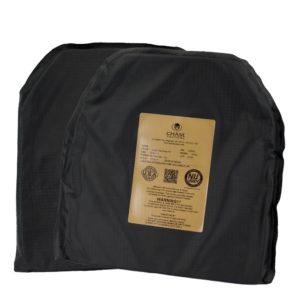
Level HG1 (previously called Level II) is considered the entry-level standard for soft body armor. It’s designed to stop lower-velocity handgun rounds, such as the 9mm Luger and .357 Magnum. This level is generally used in lower-risk environments, often by private security or law enforcement officers on standard duty in areas with less frequent violent encounters.
Armor in this category is typically lightweight, allowing high mobility and making it suitable for everyday wear over extended periods. However, its protective capabilities are limited strictly to handguns. It does not protect against high-velocity rounds or rifle fire.
Level HG2: Enhanced Handgun Protection
Building on HG1, Level HG2 offers improved protection against higher-velocity handgun threats, including the .44 Magnum. While still considered soft armor, it’s tested against higher-velocity rounds, making it suitable for officers working in urban environments where more powerful handguns are a concern.
This level strikes a good balance between comfort and enhanced ballistic resistance. For many police departments, Level HG2 is a standard issue as it offers broader handgun protection without compromising wearability.
Level IIIA: High-End Handgun Defense
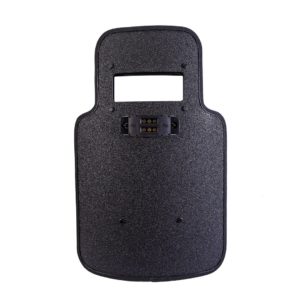
Level IIIA represents the top tier of soft body armor. It’s designed to stop virtually all handgun threats, including powerful rounds like the .357 SIG and .44 Magnum at higher velocities. It often includes additional layers of material, which can slightly increase bulk, but the added protection is worth the trade-off in higher-risk environments.
Security professionals in executive protection roles and undercover officers often rely on Level IIIA because it remains relatively concealable while offering the highest degree of protection against handgun ammunition. However, like other soft armor levels, it still cannot stop rifle rounds.
Level III: Entry-Level Rifle Protection
Moving into hard body armor, Level III is the first to offer true rifle protection. This level is tested with 7.62mm NATO full-metal-jacket rounds—equivalent to the .308 Winchester—at nearly 2,800 feet per second.
Level III plates are typically made from hard materials, such as ceramic, steel, or polyethylene. They are commonly used by military personnel, SWAT teams, and security forces operating in hostile environments. They offer strong protection against common rifle threats but may not be effective against more specialized or armor-piercing ammunition.
Level IV: Maximum Ballistic Protection
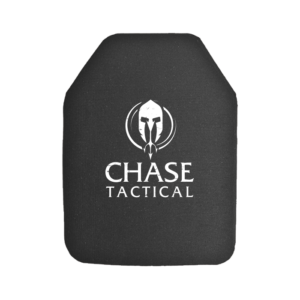
Level IV is the best-of-the-best ballistic armor. It is specially tested to repel.30-06 armor-piercing bullets are some of the most penetrative bullets available on the battlefield.
This protection is reserved for the most hostile environments, including military combat operations or hostage rescue situations. Because of the materials and thickness involved, Level IV plates are heavier and less pliable than other armor types. Unless the threat level warrants it, they are not usually worn for daily use over an extended period.
How NIJ Ballistic Testing Works
Understanding how NIJ certifies body armor removes uncertainty when comparing products. The NIJ does not test armor at its own facilities. All testing is conducted by NVLAP-accredited laboratories (National Voluntary Laboratory Accreditation Program), which are independent third-party facilities that follow NIJ protocols exactly.
The Test Process
For a given protection level, the laboratory fires a specified projectile at a specified velocity into the armor panel or plate. The test evaluates two things: whether the round penetrates the armor, and how much the armor deforms inward on impact (called backface deformation, or BFD).
Backface deformation measures the blunt trauma risk. Even if a round does not fully penetrate, a large inward depression can cause serious internal injury to the wearer. The NIJ sets a maximum allowable BFD of 44mm. If deformation exceeds this threshold, the armor fails the test even without full penetration.
Sample Conditioning
Before firing, NIJ 0101.06 requires armor samples to undergo conditioning tests that simulate real-world environmental stress. Panels are tumbled, submerged in water, and exposed to heat and humidity cycles before testing begins. This ensures the certification reflects performance under field conditions, not ideal laboratory conditions.
NIJ 0101.07 adds edge-shot conditioning as a formal requirement, addressing the concern that some panels perform well at the center but are more vulnerable near the panel edges. This is one of the key improvements in the new standard.
The NIJ Compliance Testing Program (CTP)
After passing third-party lab testing, a manufacturer must apply to the NIJ Compliance Testing Program (CTP). The CTP conducts follow-up inspection testing (FIT) on production samples purchased off the shelf to verify that commercially available units match the samples that passed certification testing. Products that pass both stages are listed on the NIJ Compliant Products List at nij.ojp.gov.
Only armor listed on the CPL carries a verified NIJ certification. Armor claiming NIJ compliance without a CPL listing has not completed the full CTP process and should be treated as unverified.
How to Verify NIJ Certification Before Buying
Before purchasing any body armor, verify the product against the NIJ CPL directly at nij.ojp.gov. Search the manufacturer name or model number. If the product does not appear, it is not NIJ-certified regardless of what the product page states.
Chase Tactical’s armor products carry NIJ 0101.06 certification. You can verify any model against the CPL using the product SKU numbers listed on each product page.
Materials Used in NIJ-Rated Body Armor
The material a panel or plate is made from determines its weight, protection level, flexibility, and durability. Here is how the primary materials map to each protection tier.
Aramid Fiber (Kevlar, Twaron)
Aramid fibers are the foundational material in soft body armor. Woven into multi-layer panels, aramid fiber is used across Level IIA, Level II, and Level IIIA soft armor. The fiber’s high tensile strength allows it to absorb and spread a bullet’s kinetic energy across multiple woven layers, stopping the projectile before it reaches the wearer. Kevlar is the DuPont brand name; Twaron is the Teijin equivalent. Both materials perform comparably when woven into equivalent panel densities.
Aramid panels degrade with repeated exposure to moisture, UV light, and heat. Most manufacturers set a 5-year service life for soft armor carriers. Panels must be stored in a cool, dry environment and inspected regularly for delamination, tears, or compression damage.
Ultra-High-Molecular-Weight Polyethylene (UHMWPE / Dyneema)
UHMWPE, marketed under trade names including Dyneema and Spectra, is a high-strength polyethylene used in both soft and hard armor applications. In soft armor, UHMWPE offers a higher strength-to-weight ratio than aramid, producing lighter panels with comparable protection. In hard armor, UHMWPE is used as a standalone Level III plate material or as a backer behind ceramic strike faces in Level IV applications.
UHMWPE plates are lighter than ceramic plates at the same protection level, making them a popular choice for operators who wear plates for extended periods. A standard 10×12 UHMWPE Level III plate typically weighs 3-4 lbs, compared to 5-8 lbs for ceramic Level III or IV plates.
Ceramic (Alumina, Silicon Carbide, Boron Carbide)
Ceramic is the most common strike face material in Level III and Level IV hard armor plates. On impact, the ceramic shatters the projectile, dissipating its energy. A fibrous backer layer (UHMWPE, aramid, or fiberglass) captures the fragmented round and absorbs residual energy.
Ceramic plates must be inspected regularly for cracks. Internal fractures from drops or blunt impacts can compromise ballistic performance even when no visible external damage appears. If a ceramic plate has taken a known ballistic hit, it must be retired regardless of remaining warranty period, as the strike face ceramic can no longer reliably defeat a follow-up round at the same location.
Steel
Steel plates provide Level III protection and are durable against multiple hits. Steel plates typically weigh more than ceramic or UHMWPE equivalents (8 to 10 lbs per plate for a 10×12 size) but resist structural damage from drops and incidental impacts better than ceramic. A critical consideration with steel plates is spalling: when a round impacts steel, bullet and jacket fragments can deflect at dangerous angles. Steel plates used without a spall coating or spall cover can project fragments toward the wearer’s neck, arms, or face. Quality steel plates include a polyurea or polyurethane spall coating to capture fragmentation.
Composite (Ceramic + UHMWPE)
The current generation of lightweight Level IV plates combines a ceramic strike face bonded to a UHMWPE backer. This construction delivers NIJ 0101.06 Level IV protection at weights approaching 5 to 6 lbs per 10×12 plate. The ceramic fractures the projectile on initial impact, and the UHMWPE backer absorbs the residual energy and fragmentation. This combination is the preferred material configuration for operators who need maximum protection with minimum weight penalty.
Comparing NIJ Levels in Real-World Terms
| 0101.06 Level | 0101.07 Name | Armor Type | Stops Handguns? | Stops Rifles? | Specialized Use |
| IIA | HG1 (lower) | Soft Armor | Yes (lower vel.) | No | Plainclothes, concealable civilian wear |
| HG1 (II) | HG1 | Soft Armor | Yes | No | Entry-level security, private use |
| HG2 (IIIA) | HG2 | Soft Armor | Yes | No | High-threat patrols, concealed carry |
| III | RF1 | Hard Armor | Yes | Yes | Tactical units, military |
| III+ (non-NIJ) | RF2 (non-listed) | Hard Armor | Yes | Yes (M855/M193) | Manufacturer designation; verify lab report |
| IV | RF3 | Hard Armor | Yes | Yes (AP rounds) | War zones, extreme-risk missions |
NIJ 0101.07 in Detail: What Changed and What It Means
NIJ Standard 0101.07 was published on November 29, 2023. It accompanied a companion standard, NIJ 0123.00, which defines the specific test threats for each new protection tier. The two documents together replace the single 0101.06 framework.
Key Changes in 0101.07
- New naming system: All protection levels are renamed. The IIA, II, IIIA, III, IV names are replaced by HG1, HG2, RF1, RF2, and RF3. The new names directly communicate whether armor is handgun-rated (HG) or rifle-rated (RF).
- New intermediate rifle tier (RF2): 0101.07 introduces a formally defined intermediate rifle tier that captures the threat space previously occupied by manufacturer “III+” claims. RF2 is tested against M855 5.56mm at 3,115 ft/s, a round that Level III (RF1) plates are not required to stop.
- Edge-shot conditioning: Panels must now pass formal edge-shot performance testing before certification. This addresses a known vulnerability in some soft armor designs.
- Updated 9mm test round: The 0101.07 HG2 test round for 9mm is updated to reflect faster contemporary commercial loads, requiring the armor to stop higher-velocity rounds than the 0101.06 IIIA test required.
- Environmental conditioning tightened: Additional wet and heat conditioning requirements are introduced to better simulate field conditions across all protection tiers.
The Transition Timeline
- November 29, 2023: NIJ 0101.07 published.
- January 5, 2024: NIJ CTP closed to new 0101.06 applications.
- February 2025: Final 0101.06 adjudications completed.
- 2024-2026: NIJ CTP begins accepting 0101.07 applications, testing underway.
- 0101.07 CPL: Not yet published as of mid-2026. No 0101.07-listed products available to purchase.
- 0101.06 CPL: Maintained through at least end of calendar year 2027.
The bottom line for buyers in 2026 is this: armor certified under 0101.06 is fully current and remains the valid standard. If a manufacturer claims compliance with 0101.07, request the NVLAP lab test report. No product is officially listed as 0101.07 yet because the CPL for that standard has not been published.
How to Choose the Right NIJ Level for Your Needs
The appropriate NIJ level depends on your environment, role, and the results of your risk assessment. Here are three core factors to consider:
1. Threat Environment
- Are you more likely to face handguns or rifles?
- Is the threat from armor-piercing ammunition a concern?
2. Mobility vs. Protection
- Soft armor (Levels HG1–IIIA) is lighter and easier to conceal.
- Hard armor (Levels III–IV) offers more protection but is heavier and less flexible.
3. Budget and Durability
- High-level armor is typically more expensive.
- Consider longevity, especially when purchasing ceramic plates, as they may degrade over time and with repeated use.
Conclusion
The NIJ levels of protection provide an essential guide to choosing armor that meets your operational needs and possible threats. From minimal handgun protection to full rifle and armor-piercing defense, the NIJ standard means a proven solution covers every situation.
Instead of thinking that higher is always better, aim for the level that best suits your environment, mobility requirements, and day-to-day reality. This will not only safeguard you but also increase your productivity in the field.
Frequently Asked Questions
Can Level IIIA body armor stop rifle rounds?
No. Level IIIA is designed only for handgun threats. To stop rifle rounds, you need at least Level III plates.
Is it legal for civilians to own Level IV armor in the U.S.?
Yes, in most states. However, some states have restrictions, and convicted felons are typically prohibited from owning body armor.
What is the difference between NIJ Level II and Level IIIA?
Level II armor protects against 9mm and .357 Magnum rounds, while Level IIIA offers enhanced protection against higher-velocity threats, such as .44 Magnum and 9mm submachine gun rounds.
Can body armor stop rifle ammunition?
Body armor with a rating of NIJ Level III or IV is designed to stop rifle ammunition, including rounds like M855 and FMJ, which are more penetrating than handgun ammunition.
How do manufacturers test body armor for compliance with NIJ standards?
Manufacturers conduct rigorous testing with a range of projectiles and calibers to evaluate armor performance, ensuring compliance with the specified NIJ standards for penetration resistance and protection.