







Chest Rigs: Key Features & Benefits


A chest rig is a lightweight harness worn over the torso that carries magazines, medical supplies, and mission gear where you can reach them without looking down. It’s a favorite of law enforcement officers, military personnel, and outdoor enthusiasts because it puts everything in your hands’ reach without the weight or heat of a full plate carrier. Unlike a plate carrier, it carries gear only, not ballistic plates, which is why operators reach for a chest rig whenever speed and mobility matter more than armor.
Quick answer: A chest rig is an open-backed, load-bearing harness worn on the chest for carrying magazines, medical gear, and mission-essential tools. It differs from a plate carrier because it does not hold ballistic plates. Its job is fast access to gear, not protection.
What Is a Chest Rig?
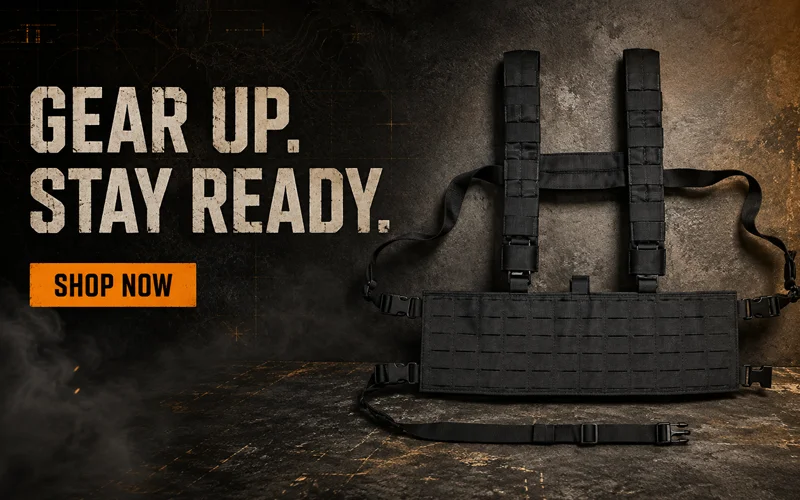
A chest rig is a lightweight, open-backed harness worn on the chest. It offers storage and quick accessibility for ammunition, tools, and other essential items. Because the back is left uncovered, a chest rig sheds weight and lets your body dissipate heat during high-exertion movement, two things a full tactical vest can’t do as well.
Whether you’re planning a military operation, a day at the range, or a long hike, a well-designed chest rig keeps your most-used gear front and center, in what operators call the “workspace,” the area directly in front of your eyes and hands. You’ll sometimes see the same piece of gear called a “chest vest,” but chest rig is the standard term in tactical and military circles.
The main strength of chest rigs is their modular nature. They range from minimalist two-mag setups to feature-rich rigs built for a full mission loadout, and most use Multicam or similar patterns for concealment across a range of environments.
Chest Rig vs. Plate Carrier: What’s the Difference?
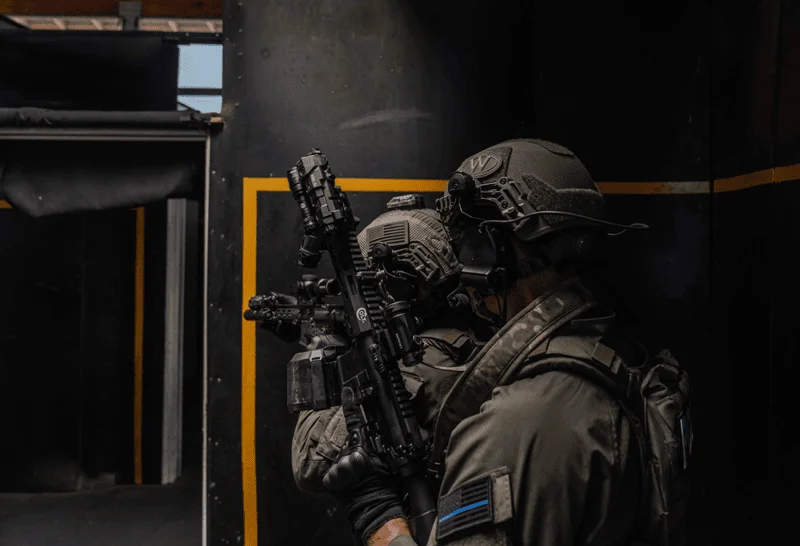
The most common point of confusion for anyone new to tactical gear is whether they need a chest rig or a plate carrier. They can look similar side by side, but they solve different problems.
- Plate carriers are built to hold hard armor plates and protect the wearer from gunfire. Because they carry armor, they’re heavier and bulkier by design.
- Chest rigs carry gear only: no plate pockets. That single difference is what makes them lighter, cooler, and lower profile than a plate carrier.
A chest rig is the right call when mobility, heat management, and speed of access outweigh the need for ballistic protection: vehicle operations, long-range patrols where every ounce matters, training and range days, and concealment under a jacket where a plate carrier’s bulk would print.
A plate carrier is the right call whenever a realistic rifle threat is in play: home defense against an armed intruder, law enforcement and security roles where armor is policy, or any scenario where going down without protection isn’t an option.
The two aren’t mutually exclusive. Many operators run a chest rig over a plate carrier, either to add gear capacity beyond what the carrier’s front panel offers, or to layer a “slick” carrier (armor with no pouches) underneath so gear can be shed quickly while the armor stays on.
Where Chest Rigs Came From
Load-bearing gear worn across the chest is not a new idea: bandoleers and shot pouches served the same purpose long before modern nylon and MOLLE. One well-known military design, sometimes called the “Ranger rig” or Ranger Assault Carrying Kit (RACK), carried the same MOLLE modularity into a more traditional chest-mounted format and became what most people picture when they think of a combat-ready chest rig today.
What’s changed over the decades is materials and modularity: today’s rigs, like the Laser Cut MOLLE Modular Chest Rig MCR1, use laser-cut nylon platforms and modular webbing in place of the fixed pouches and heavier fabric of earlier designs, giving today’s user far more control over how a rig is configured for a specific mission or role.
Types of Chest Rigs
Not every chest rig is built for the same job. Before you buy, it helps to know which style you’re actually looking at:
Full-Coverage MOLLE Rigs
A large front panel covered in MOLLE webbing, letting you attach whatever mix of mag pouches, admin pouches, and accessories your loadout calls for. This is the most configurable style and the most common choice for serious tactical use: the MCR1 falls into this category.
Purpose-Built (Fixed) Rigs
Pouches are sewn directly to the chassis in a fixed layout, usually sized for a specific magazine type. These are lighter and lower-profile than a MOLLE rig but offer little room to reconfigure if your loadout changes.
Split-Front Rigs
Two front panels meet at the chest with a buckle closure instead of one continuous panel. The center opens fully, which makes donning and doffing faster and lets the rig sit flat over a plate carrier without bunching, a real advantage if you plan to layer.
Micro Rigs
A small chassis holding just three or four rifle mags and maybe a pistol mag or small medical pouch. Best for range days, home defense, or a low-profile setup, though the limited real estate isn’t ideal if you need to carry a radio or extra admin gear.
Modular Placard Systems
A harness with a quick-detach front placard, letting you swap the mag panel for a different mission or pull the placard off the harness entirely and mount it to a plate carrier for a unified setup across platforms. This is the most flexible option of the four, since the placard clips on and off with a secure, standardized attachment rather than being sewn or webbed permanently to one harness.
Key Features of the MCR1 Chest Rig
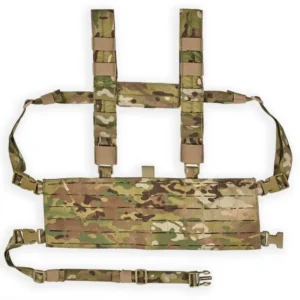
Chase Tactical exemplifies the pinnacle of modern chest rig design. The Laser Cut MOLLE Modular Chest Rig MCR1 stands out due to its innovative design and superior construction. One of its standout features is its lightweight construction, ensuring the wearer is not burdened by unnecessary weight. The laser-cut MOLLE (Modular Lightweight Load-carrying Equipment) system offers a sleek, streamlined appearance while maintaining robust attachment capabilities.
Modular Configuration
Modularity is a cornerstone of modern chest rig design. The MCR1 excels here with its laser-cut 500D nylon base, which attaches seamlessly to the Modular Chest Rig’s Shoulder and Waist Straps. This lets you tailor the rig to specific mission requirements: interchangeable pouches, adaptable mounting options, and configurable loadouts provide the versatility to reconfigure for different scenarios.
Versatile Storage Options
Chest rigs, such as the MCR1, offer storage tailored to a range of needs. The front of the MCR1 base platform features 12 MOLLE columns and 5 MOLLE rows, approximately 18 inches wide and 6 inches tall, giving ample room for attaching various pouches and accessories. The back of the base platform features a hook & loop top, giving access to the entire interior for additional storage, plus signature Hypalon tabs. That storage design ensures quick access to essential items during high-pressure situations.
The Harness: H-Frame vs. X-Frame
The front panel gets most of the attention because it carries the gear, but the harness is what keeps the rig on your body, and a poor harness makes even a great rig uncomfortable within the hour. Two geometries dominate the market:
- H-harness: Shoulder straps connect via a horizontal back strap, distributing weight evenly across both shoulders. This is generally the better choice for heavier loads and broader body types.
- X-harness: Straps cross in the back, which resists slipping off narrower shoulders and is quick to throw on, though it can restrict overhead reach slightly more than an H-harness.
The MCR1 uses padded shoulder straps that alleviate pressure, distribute weight evenly, and reduce fatigue during prolonged use, with breathable mesh panels that promote airflow and reduce sweat buildup. As a fit reference, the top of the chassis should sit roughly at mid-sternum. Too low, and the weight pulls on your lower back while your mags bounce against your stomach when you move.
Enhanced Accessibility and Efficiency

One of the primary advantages of the MCR1 chest rig is its enhanced accessibility. Gear can be accessed quickly and efficiently, which is crucial in high-pressure situations. The optimal weight distribution minimizes strain on the body and eases movement. Quick-release mechanisms add an extra layer of practicality, letting the rig be donned or doffed swiftly, which can matter in an emergency.
How to Choose a Chest Rig
There are several things to weigh when choosing a chest rig:
1. Purpose
Determine how you’ll actually use the rig. A lightweight, minimalist configuration suits wilderness excursions or range days; a maximally loaded MOLLE platform suits professional deployments where you need capacity for mags, medical gear, comms, and admin tools in one place.
2. Material
Look for sturdy materials, such as Cordura nylon, which resist abrasion. Pay attention to buckle and stitching quality (high-stress points like shoulder attachments and MOLLE loops should be box-stitched or bar-tacked, not held by a single line of thread) to make sure the rig can support your planned load.
3. Size and Type
Match the rig’s style to your actual loadout, not an aspirational one. A minimalist rig is plenty for light loads; a full-coverage MOLLE platform is better suited to heavy use with multiple pouches. Buying more rig than you’ll ever load out is just extra weight and bulk.
4. Brand and Price
Select a brand with a strong reputation, such as Chase Tactical. Read reviews, check warranty terms, and keep your budget in mind: chest rigs span a wide price range depending on materials and configuration.
5. Customization
MOLLE webbing or similar systems add flexibility, letting you tailor the rig to your specific needs and swap configurations as your mission or role changes.
How to Set Up and Load Your Chest Rig
A well-chosen rig is only half the equation: how you load it determines whether it actually speeds you up under pressure. A logical, center-out layout works best:
- Primary mags, center front: Keep your main ammunition front and center so you can reach a fresh mag with either hand. If you’re right-handed, place your first reload mag where your left hand naturally falls.
- Medical, easy reach: Medical gear (tourniquet, chest seal, pressure bandage) belongs somewhere both hands can reach instantly, typically on the wings or a dedicated pouch below the main chassis. Never bury a tourniquet inside a zippered pouch where it takes time to find.
- Admin and utility, secondary pouches: A multi-tool, flashlight, or compass goes in secondary pouches that don’t interfere with your mag reloads.
- Comms, non-dominant side: If you carry a radio, mount it on your non-dominant side to keep the antenna clear of your rifle’s buttstock and prevent wires from snagging during a reload.
Once it’s loaded, put the rig on and move: walk, crouch, get prone. If gear shifts, digs in, or falls out, adjust the tension or pouch placement before you rely on it in the field.
Fighting Load vs. Sustainment Load: How Much Gear Should You Carry?
Military load-carriage doctrine breaks gear into lines, and understanding where a chest rig fits helps explain why it’s built the way it is:
- First line: Your belt kit: sidearm, basic medical, and a spare magazine you can reach even if you lose everything else.
- Second line (fighting load): Your chest rig or plate carrier. This is your combat load: primary magazines, medical gear, and the tools you need in a direct engagement, kept light enough to move and fight in.
- Third line (sustainment load): Your ruck or pack: water, food, extra ammunition, and mission-duration supplies that don’t need to be instantly accessible.
A chest rig is purpose-built for that second-line, fighting-load role: it’s not designed to carry a sustainment load on its own. Some rigs add rear pouches or drop-pouch attachments that extend into sustainment territory (extra magazines, a radio, or bulk supplies) but loading a chest rig past its second-line role usually means the weight and bulk you were trying to avoid by skipping a plate carrier creeps back in anyway. If a mission genuinely calls for a sustainment load, pair the chest rig with a rucksack rather than overloading the rig itself.
Chest Rigs for Law Enforcement and Patrol Use
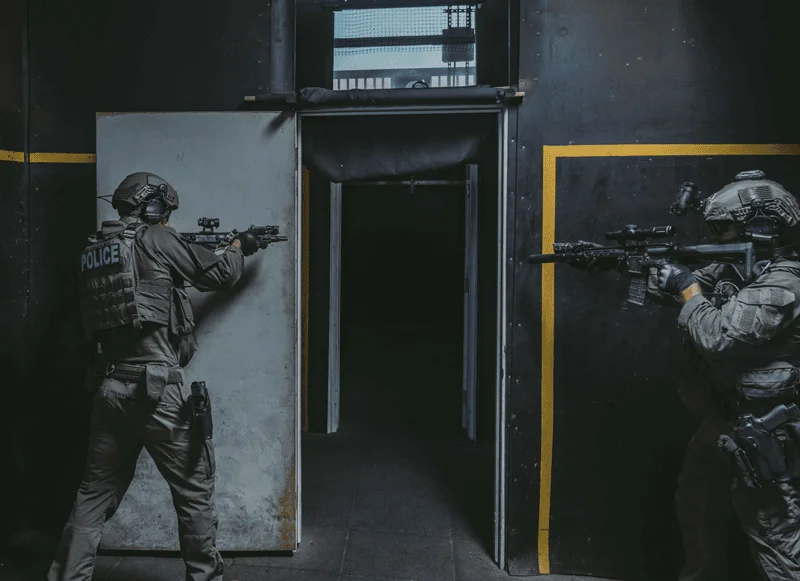
A law enforcement chest rig setup has a few considerations that don’t come up as often in a purely military or civilian context:
- Agency policy first: Many departments specify what can be worn over a duty uniform and how gear must be marked. Confirm your agency’s policy on chest rigs, identification panels, and armor requirements before configuring a loadout.
- Visibility and identification: Patrol and tactical response roles often call for a rig with a hook-and-loop panel for a “POLICE” or agency identifier, positioned so it’s visible from the front and, ideally, the back as well.
- Duty belt compatibility: A chest rig’s waist strap and cummerbund need to sit cleanly around an existing duty belt without blocking access to a holster, cuffs, or other tools already carried at the waist.
- Quick don for patrol vehicles: Officers frequently need to secure a rig fast when transitioning from a vehicle to an active scene, which makes quick-release buckles and a low-snag profile particularly valuable for chest rig police use.
Departments running an active-shooter or tactical response loadout typically pair the rig with a plate carrier rather than running it standalone, for the same reasons outlined above: a chest rig on its own is a gear-carriage solution, not a substitute for armor when a ballistic threat is a realistic possibility.
Common Mistakes to Avoid
- Buying a chest rig instead of a plate carrier: if a realistic threat calls for armor, a chest rig alone doesn’t provide it: a chest rig carries gear, not plates.
- Skimping on the harness: the panel gets the attention, but a cheap harness is what makes a good rig unwearable after an hour.
- Overloading the front panel: filling every inch of MOLLE with pouches makes the rig front-heavy, which rocks forward and tires your shoulders. Distribute weight toward the rear or sides where the rig allows it.
- Choosing the wrong style for your loadout: a full MOLLE platform is overkill if you only ever carry two mags, and a fixed mag-specific rig won’t flex if your loadout changes mission to mission.
Maintenance Tips for Your Chest Rig
To make your chest rig last for years, follow these simple maintenance steps:
Clean regularly: A damp cloth wipes off dust and debris. Avoid harsh chemicals, which can damage the material over time.
Inspect buckles and straps: Check regularly for wear and replace damaged hardware before it fails in the field.
Store properly: When not in use, keep your rig in a dry, cool location away from moisture that can cause mold and mildew.
Conclusion
Chest rigs earn their place in a serious loadout by doing one job well: keeping your most essential gear accessible without the weight, heat, or bulk of a full plate carrier. Their modular configuration, versatile storage, and adjustable harness make them equally at home in professional deployments and weekend range trips.
Whether you choose a full-coverage MOLLE platform like the MCR1 or a minimalist micro rig, the right chest rig comes down to matching the style, size, and loadout to how you’ll actually use it, and loading it in a way that puts your most critical gear within reach when it counts.
Frequently Asked Questions
What Is the Difference Between a Chest Rig and a Plate Carrier?
A chest rig carries gear only and has no pockets for ballistic plates, which makes it lighter, cooler, and lower profile. A plate carrier is built to hold hard armor plates and protect against gunfire, which makes it heavier and bulkier. Choose a chest rig when mobility and speed matter more than protection; choose a plate carrier whenever a realistic rifle threat is in play.
Can I Wear a Chest Rig Over a Plate Carrier?
Yes, this is a common setup often called layering. Wearing a chest rig over a “slick” plate carrier (armor with no pouches) lets you shed gear quickly in an emergency while keeping your armor on. Some micro chest rigs are designed to clip directly onto a plate carrier’s front panel for exactly this purpose.
How High Should a Chest Rig Sit on My Body?
A chest rig should sit high on the torso, with the top of the chassis roughly at mid-sternum. This keeps magazines in your workspace for fast reloads and prevents the rig from pulling on your shoulders or bouncing against your stomach when it sits too low.
Can I Use a Tactical Chest Rig with a Cummerbund?
Yes, some tactical chest rigs come with an integrated cummerbund for added support and comfort. This feature is especially useful for distributing weight evenly across the torso, making it easier to carry heavy gear for extended periods.
What Utility Features Should I Look for in a Tactical Chest Rig?
A good tactical chest rig should offer multiple utility features, including pouches for ammunition, tools, and first aid kits. Some rigs come with modular components that let you customize the setup to mission requirements.
What Should I Consider for Holsters When Wearing a Chest Rig?
If you’re carrying a sidearm alongside a chest rig, choose a holster mounted on a belt or drop-leg platform rather than the rig itself. The rig’s real estate is best kept clear for mags and medical gear. Look for a holster that’s adjustable for retention and doesn’t interfere with the rig’s waist strap or cummerbund.